
Trump Family Crypto Ventures Estimated At $2.3B As Investors Take Similar Hit

0
0
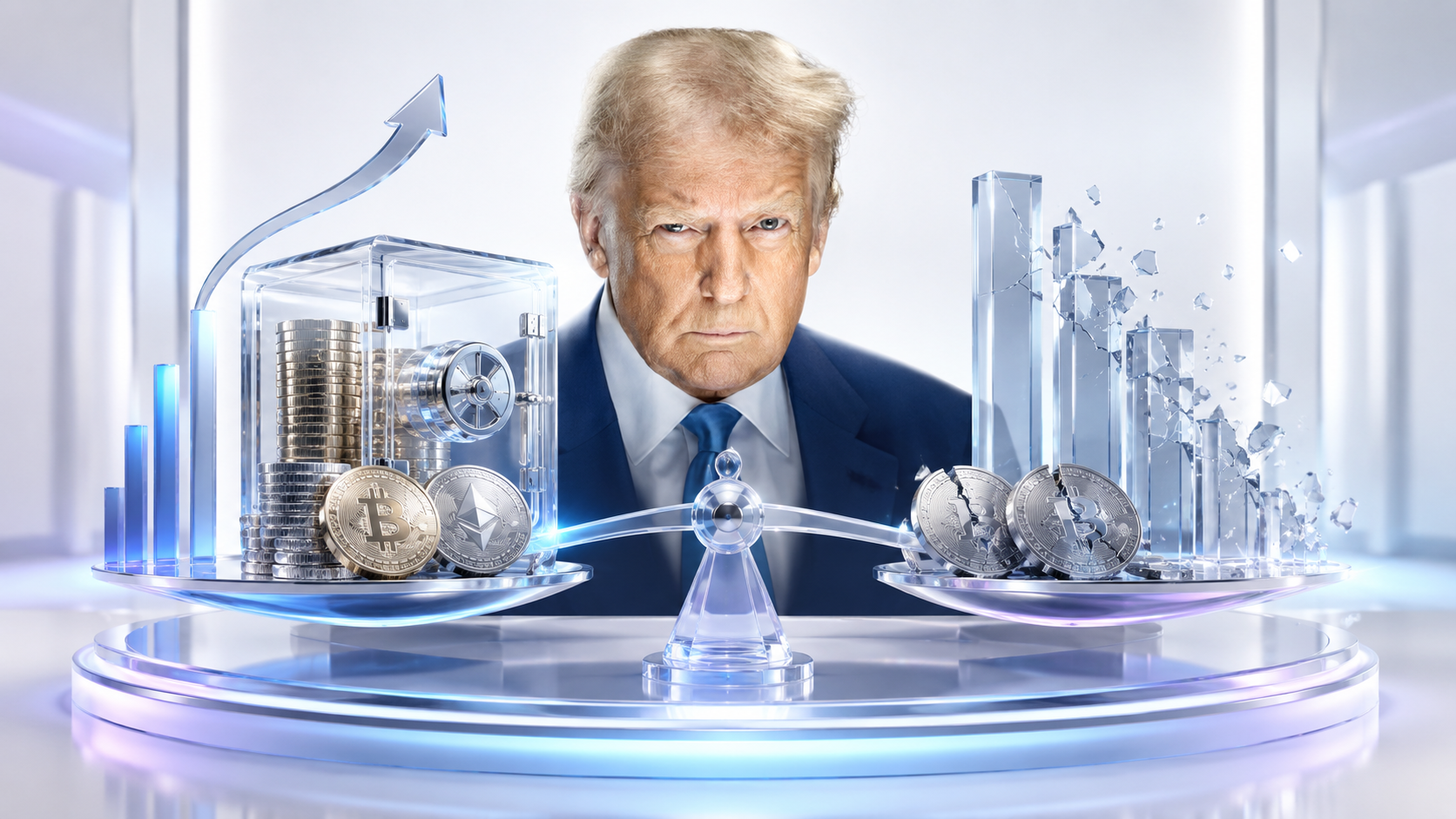
Trump family-linked crypto ventures have generated an estimated $2.3 billion in profits while outside investors have taken a similar hit, putting fresh pressure on the political, regulatory and market-risk debate around presidential crypto projects.
The estimate covers four major ventures tied to Donald Trump, Donald Trump Jr. and Eric Trump: World Liberty Financial, the $TRUMP meme coin, American Bitcoin and AI Financial Corp, formerly ALT5 Sigma. The common structure across the projects is that the family carried little direct capital risk while gaining through licensing arrangements, revenue shares, token sales and equity stakes.
The losses were concentrated among buyers who entered through token sales, open-market trading and public-stock vehicles after the Trump brand became a central part of the pitch. The investor-loss calculation includes paper losses, locked-token exposure and share-price declines through the end of April.
The numbers are not a court finding or a securities-fraud judgment. They are an investigative estimate based on filings, blockchain data, token-sale records, market prices and investor interviews. Still, the figures sharpen a growing question around politically connected crypto: who captures the upside when celebrity, policy and speculative token markets collide?
World Liberty And $TRUMP Drive The Largest Numbers
World Liberty Financial was the largest source of family-linked crypto gains. The project’s token-sale model directed a major share of revenue to Trump-linked entities, while many WLFI buyers remained locked into positions that lost value after trading began.
The token has fallen sharply from its early exchange-trading levels, and a later governance change limited full unlocks until 2030. That left some investors unable to exit most of their positions even as prices declined. World Liberty has argued that its governance token is not an investment product and has disputed calculations that mix realized and unrealized losses.
The $TRUMP meme coin created a separate pressure point. The token surged around the second Trump inauguration, then collapsed about 97% from its peak. The project generated an estimated $616 million for the Trump family, while buyers lost more than $700 million as the token’s price deflated.
The investor anger now sits beside a broader political-crypto fight. Trump-linked token markets had already drawn attention through the Justin Sun and WLFI court battle, where token freezes, governance rights and political proximity collided with one of World Liberty’s biggest backers.
Public Stocks Extended The Same Pattern
The same structure also moved into public equities. ALT5 Sigma, now AI Financial Corp, raised money to buy World Liberty tokens, sending more than $500 million to the Trump family through the token-revenue arrangement. Its share price later fell from above $9 to around 75 cents by the end of April, leaving investors with an estimated loss of about $675 million.
American Bitcoin created another public-market route into Trump-linked crypto exposure. The company emerged from a Hut 8-linked mining deal and later gained a Nasdaq listing through a merger. Eric Trump received a reported stake, while outside investors bought into the stock as Bitcoin mining and treasury narratives were still hot.
The stock later fell from $11 at launch to $1.15 by the end of April, leaving outside investors down more than $200 million. The business was already under pressure when American Bitcoin posted an $81.8 million Q1 loss as mining revenue weakened and the company’s Bitcoin-price sensitivity became harder to ignore.
Those public-stock vehicles make the story broader than meme coins. Investors were not only buying tokens on exchanges. Some were buying Nasdaq-listed exposure to Trump-linked crypto businesses through shares marketed around Bitcoin, tokenized finance and political brand power.
Ethics And Regulation Stay At The Center
The political angle is what separates this from a normal celebrity-token collapse. The Trump administration has pushed crypto-friendly policies, stablecoin rules and lighter enforcement while family-linked ventures have raised money from the same industry being regulated.
Ethics experts have raised conflict-of-interest concerns, while the White House has rejected claims that the president or his family engaged in conflicts. World Liberty has also defended itself as a private American financial technology company, not a political organization.
The regulatory backdrop remains important because World Liberty has already faced scrutiny around partnerships, foreign-linked capital and compliance optics. Its AB partnership drew questions after a sanctions-linked resort report, and the broader market has continued watching how U.S. regulators handle Trump-linked crypto supporters while enforcement priorities change.
That tension was also visible in the Justin Sun debate, where SEC enforcement changes drew questions after Sun became a major World Liberty supporter. The concern is not only whether individual trades lost money. It is whether politically connected crypto projects receive softer treatment while retail investors carry most of the downside.
For investors, the practical lesson is simpler. A token or stock can be heavily promoted, politically connected and publicly visible while still carrying asymmetric risk. If insiders earn through licensing fees, token-sale revenue or no-cost equity while buyers depend on market prices rising later, the structure can work even when the asset fails for everyone else.
The post Trump Family Crypto Ventures Estimated At $2.3B As Investors Take Similar Hit appeared first on Crypto Adventure.
0
0


 Manage all your crypto, NFT and DeFi from one place
Securely connect the portfolio you’re using to start.


0
0

0
0
