
BNPL for groceries and gas: when ‘buy now, pay later’ becomes a personal finance warning sign

0
0
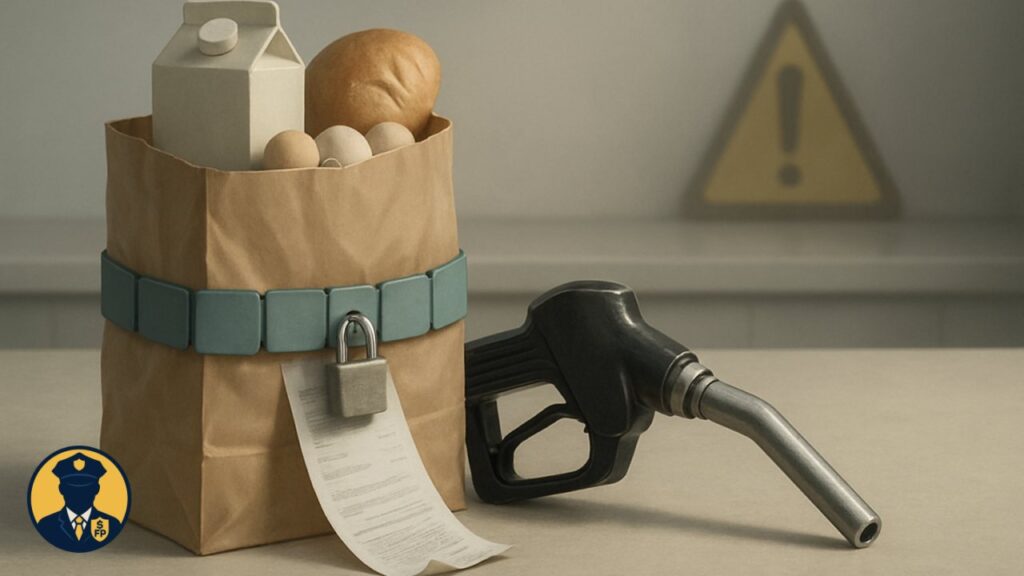
The option to split a $78 supermarket haul or a $52 gas fill-up into four payments now sits right next to the tap-to-pay icon. It’s frictionless—and tempting—when your next paycheck is days away.
But using buy now, pay later (BNPL) for essentials is more than a convenience. It can be a flashing dashboard light for your budget, especially as late payments and dependence on BNPL rise.
Recent government and industry data show BNPL is huge, growing fast, and increasingly used for routine purchases. That scale matters because missed payments and stacked plans can spill into bank fees, collections, and even your credit profile.
| Point | What It Means |
|---|---|
| BNPL is now mainstream short-term credit | In 2025, U.S. BNPL issuance reached $156.7B, with “pay in 4” at $78.3B and over 60% of issuance interest-free (Board of Governors of the Federal Reserve System (FEDS Notes)). |
| Late BNPL payments are rising | 47% of BNPL users reported at least one late payment in the past year—up sharply from 2024 (LendingTree). |
| BNPL is now used for essentials | 29% of users put groceries on BNPL, and 54% say they couldn’t make ends meet without it—clear stress signals (LendingTree). |
| Credit-score stakes are changing | FICO announced models to incorporate BNPL data; missed payments can more readily affect your credit profile (FICO press release). |
| Using BNPL for gas/groceries can be a warning sign | Financing perishables and fuel often indicates a budget gap and can lead to stacking, bank fees, and cycles of shortfalls. |
BNPL has moved from sneakers to supermarket runs
Editor’s note: I’m seeing more households lean on point-of-sale financing for repeat essentials, not just one-time buys. The 2026 data shows BNPL’s mainstream scale and a rise in late payments, which lines up with what readers report: small installments feel painless until the calendar fills up. With FICO moving to score BNPL, the stakes are higher. My advice when editing pieces like this is to focus on cash-flow calendars, plan limits, and a near-term exit from financing consumables—treat the warning sign before it turns into a cycle.
BNPL is no longer niche. A June 2026 Federal Reserve note estimates U.S. BNPL providers originated $156.7 billion in consumer credit products in 2025; “pay in 4” accounted for $78.3 billion, and more than 60% of total issuance carried a 0% APR. That’s real household credit at scale, not just a checkout perk (Board of Governors of the Federal Reserve System (FEDS Notes)).
The same note shows “pay in 4” volume rose nearly 80% beyond the CFPB’s most recent 2023 measurement—evidence of rapid adoption between 2023 and 2025 (Board of Governors of the Federal Reserve System (FEDS Notes)). As BNPL spread into grocery apps and fuel stations, it met consumers at their most frequent spend.
In 2026 surveys, 29% of BNPL users say they’ve used it to buy groceries, and 54% say they wouldn’t be able to make ends meet without BNPL (LendingTree). That dependence, combined with a reported 47% of users making at least one late BNPL payment in the past year, is the financial equivalent of a check-engine light (LendingTree).
Why using BNPL for groceries and gas is a warning sign
Financing a winter coat or a laptop you’ll use for years is one thing. Financing perishables and fuel—items you must rebuy in days—is different. It often points to a recurring gap between income and essential spending.
- Recurring need meets recurring payments: You will buy more groceries before you finish paying for the last batch, stacking obligations week after week.
- Budget blindness: Four equal installments feel small, but four plans at once can equal a full bill cycle’s worth of cash flow.
- Fee chain reactions: A missed installment can trigger late fees, multiple reattempts, and overdraft or NSF fees if your bank balance is low.
- Return/refund friction: You can’t “return” eaten groceries or burned gas, so there’s no easy out if your finances change before the final installment.
- Credit stakes: As BNPL data flows into scoring models, a stumble can follow you longer than the milk you bought lasts.
How pay-in-4 works on a $120 grocery run
Most short-term BNPL at checkout—especially “pay in 4”—splits your purchase into four equal payments over six weeks. The first 25% is due immediately; the remaining 75% is typically auto-debited every two weeks.
Example for $120 groceries:
- Today at checkout: $30 charged.
- In 2 weeks: $30 auto-debited.
- In 4 weeks: $30 auto-debited.
- In 6 weeks: $30 auto-debited.
Key mechanics to watch:
- Autopay by default: BNPL firms usually require a debit card or bank account for automatic payments. Ensure funds are available on each due date to avoid cascades of reattempts and possible bank fees.
- Late fees and failed-payment policies: Many pay-in-4 offers at major providers advertise no interest, but late fees may still apply. Policies vary by provider and state. Read the fee table before tapping “Agree.”
- Longer-term plans differ: Some BNPL options offer 6–24 month loans with interest. Those are closer to traditional installment loans and can cost more than you expect if you carry them for consumables.
- Partial authorizations at the pump: Fuel purchases can involve preauthorization holds. If a BNPL virtual card is used, hold amounts and timing may complicate your cash flow.
- Returns and disputes: For groceries and gas, returns are limited or impossible. If there’s a dispute or a fraud issue, you may still owe installments while it’s resolved—check the dispute process.
Credit and data stakes are changing
Historically, many BNPL providers didn’t furnish data to major credit bureaus, which meant on-time payments often didn’t help your credit, while severe delinquencies could still end up in collections.
That landscape is shifting. FICO announced in 2025 that it launched FICO Score 10 BNPL and FICO Score 10T BNPL—models designed to incorporate BNPL data, with availability expected beginning Fall 2025. As these models roll out, on-time BNPL payments may help, and missed payments can more readily hurt (FICO press release).
What that means for essentials spending:
- If you rely on BNPL for groceries or gas, you’re creating a steady stream of due dates. A single missed autopay could have credit implications as models and reporting evolve.
- Even when 0% interest applies, late fees and a negative mark can outweigh any short-term cash flow benefit.
- Data-sharing varies across providers and over time. Don’t assume “it doesn’t count.” Check each provider’s current credit reporting policy and your bureau files periodically.
Your options when cash is tight this week
No option is free. The right move depends on cost, predictability, and how quickly you can right the ship. Here’s a high-level comparison to frame the trade-offs for short gaps.
| Option | Potential Cost | Main Risks | When It Can Fit |
|---|---|---|---|
| BNPL pay-in-4 (often 0% APR) | Usually no interest; late fees possible | Stacking multiple plans; late fees; bank overdrafts; evolving credit reporting | Occasional, planned purchase with known future cash to cover all installments |
| Credit card within grace period | Potentially $0 if paid in full by due date | Interest if you revolve; easy to overspend | Short, predictable gap with plan to pay statement balance in full |
| Overdraft from your bank | Bank-specific fee or interest; can be high | Multiple fees from reattempts; account closure if unpaid | Emergency-only when you can repay quickly and avoid repeated hits |
| Paycheck advance/earned wage access | Flat fees or tips; varies by employer/app | Frequent use can trap cash flow; limited transparency | Rare, shortfalls tied to timing (e.g., bill due one day before payday) |
| Payment plan with service providers | Often $0–low; depends on provider | Service limits if you default; fewer at-grocery uses | Utilities, medical bills, or recurring services with hardship options |
For consumables like groceries and gas, the best “cost” is usually fewer future obligations. If you do use BNPL, tighten guardrails and aim to transition essentials back onto your regular budget as quickly as possible.

Practical guardrails if you still use BNPL
- Cap your open plans: Set a hard limit (e.g., no more than two active BNPL plans at once). If a new plan would exceed it, wait.
- Sync due dates to paydays: Start plans right after you’re paid so installments hit when cash is highest. If the first payment is today, ensure the next three align with pay cycles.
- Use a low-risk funding source: If you fund BNPL with a debit card tied to a low balance, you risk overdrafts. Keep a small buffer or switch to a funding method you monitor closely.
- Turn on reminders: Add all installment dates to your calendar the moment you check out. Many providers allow SMS/email alerts—use them.
- Avoid subscriptions on BNPL: Don’t pair “pay in 4” with subscriptions or auto-refills. The renewal timing rarely matches installment timing.
- Don’t roll essentials into long-term loans: Avoid stretching groceries or fuel into 6–24 month plans that charge interest.
- Plan a ramp-down: If you’ve drifted into using BNPL for essentials, map a two- or three-cycle plan to clear existing installments and shift groceries back to your cash budget.
Common mistakes to avoid at the store and pump
- Ignoring the total of all installments: You see $18 today, not the $72 still owed across three other plans.
- Forgetting about preauthorization holds (fuel): The hold can temporarily tie up funds and collide with upcoming installments.
- Assuming refunds will fix a bad plan: You can’t unwind a plan for consumed goods. Plan upfront, not after the cart is home.
- Letting due dates wander: Staggered due dates across multiple providers make tracking harder. Consolidate or standardize timing where possible.
- Setting-and-forgetting autopay: Autopay reduces missed payments, but still needs monitoring so a low balance doesn’t trigger bank fees.
What to check before acting
- Total cost and fees: Confirm whether the plan is truly 0% and what late or returned-payment fees apply.
- Payment schedule vs. payday: List each due date; make sure your income reliably covers them.
- Funding source health: Ensure the card/account on file is current and has a buffer to avoid overdrafts.
- Credit reporting: Check whether the BNPL provider reports to credit bureaus and how that could affect you—especially as BNPL-specific scores roll out (FICO press release).
- Return and dispute rules: Understand how refunds are applied and what happens if an item is ineligible for return (common for groceries and fuel).
- Existing obligations: Add up all active BNPL installments across providers before opening a new plan.
- Short-term plan to exit: Decide how you’ll clear BNPL obligations and return essentials to your normal budget.
The bigger picture: BNPL growth, dependence, and your budget
Because over 60% of issuance has been 0% APR, it’s easy to view BNPL as harmless. But scale and behavior matter. The Federal Reserve’s estimate of $156.7 billion in 2025 issuance—and an ~80% jump in “pay in 4” since 2023—shows how fast it’s embedded in daily life (Board of Governors of the Federal Reserve System (FEDS Notes)).
When essentials migrate onto installment plans, the signal is less about the product and more about the household balance sheet. The fact that 54% of users say they can’t make ends meet without BNPL and 47% report a late BNPL payment in the past year should prompt a review of fixed costs, debt payments, and income timing (LendingTree).
BNPL can be useful in narrow, controlled circumstances. But for groceries and gas, it often shifts pressure forward rather than relieving it. Treat the impulse to split everyday purchases as information—a nudge to reassess cash flow, not a long-term solution.
Frequently Asked Questions
Is it ever okay to use BNPL for groceries or gas?
It may bridge a brief, predictable timing mismatch—say, a one-off short week between paychecks—if you can cover all installments without stacking new plans. As a routine habit, it’s a red flag that your essentials budget is outpacing income.
Will BNPL affect my credit score?
It can. Historically, many providers didn’t report to credit bureaus. But FICO has announced BNPL-inclusive scores, and reporting practices are evolving. On-time payments may help, while missed payments can more readily hurt as models and reporting expand (FICO press release).
Are pay-in-4 plans really interest-free?
Often, yes. Over 60% of total BNPL issuance carried 0% APR in 2025, and pay-in-4 accounted for about half of issuance, according to the Federal Reserve (Board of Governors of the Federal Reserve System (FEDS Notes)). But late fees and other charges may apply, and longer-term BNPL loans can carry interest.
What happens if I can’t make a BNPL payment?
Providers can charge late fees, reattempt payments (risking overdrafts), suspend your account, or send the debt to collections. As credit reporting expands, missed payments can also affect your credit profile. Check your contract for specific policies and contact the provider early if you’re struggling.
Is using a credit card better than BNPL for essentials?
It depends on how you pay. If you can pay the card’s statement balance in full, the grace period can be cost-free. If you revolve, interest can be higher than you expect. BNPL may be 0% for pay-in-4, but stacking plans and late fees can still be costly. Compare total costs and your ability to pay on time.
Do returns cancel BNPL plans for groceries or fuel?
Usually not. Groceries and fuel are typically nonreturnable once used. If a store issues a partial refund, it may reduce remaining installments, but policy details vary. Always read the BNPL and merchant return rules before checkout.
0
0


 Manage all your crypto, NFT and DeFi from one place
Securely connect the portfolio you’re using to start.


0
0
