


0
0
BitcoinWorld
Meta Connect 2025: Unveiling the Future of Smart Glasses and AI Wearables
While the crypto world buzzes with the latest blockchain innovations, the underlying technology enabling a truly immersive digital future is rapidly evolving. At Meta Connect 2025, Mark Zuckerberg pulled back the curtain on a suite of groundbreaking AI wearables and next-generation smart glasses that promise to reshape how we interact with the digital realm – a realm increasingly intertwined with decentralized finance and metaverse economies. Could these new devices, like the advanced Ray-Ban Meta display, eventually become our primary interface for managing digital assets or exploring virtual worlds? Let’s dive into the monumental announcements from Meta’s flagship event.
Meta Connect 2025 was a pivotal moment for the company, showcasing its aggressive push into AI and hardware. Mark Zuckerberg unveiled three distinct smart glasses models, signaling Meta’s commitment to leading the charge in the wearable tech space. Beyond the hardware, the event also provided insights into Meta’s broader vision for AI integration and human-computer interaction, despite a memorable live demo mishap.
The core announcements included:
Meta claims to have sold two million of its first-generation Ray-Ban Meta smart glasses, indicating a growing appetite for such devices. The company is clearly betting big on AI-powered wearables as the next frontier in personal technology, aiming to regain its footing in the competitive AI race and boost hardware sales.
The second iteration of the Ray-Ban Meta glasses brings significant upgrades, building on the foundation laid by its 2023 predecessor. These improvements are designed to make the glasses more practical and powerful for everyday use, enhancing both user experience and capabilities.
Key enhancements for the second-generation Ray-Ban Meta include:
Priced at $379, these glasses aim to bridge the gap between stylish eyewear and advanced technology, making AI assistance more seamlessly integrated into daily life. The potential for these devices to become a primary interface for quick crypto price checks or NFT gallery browsing on the go is an exciting prospect for the digitally inclined.
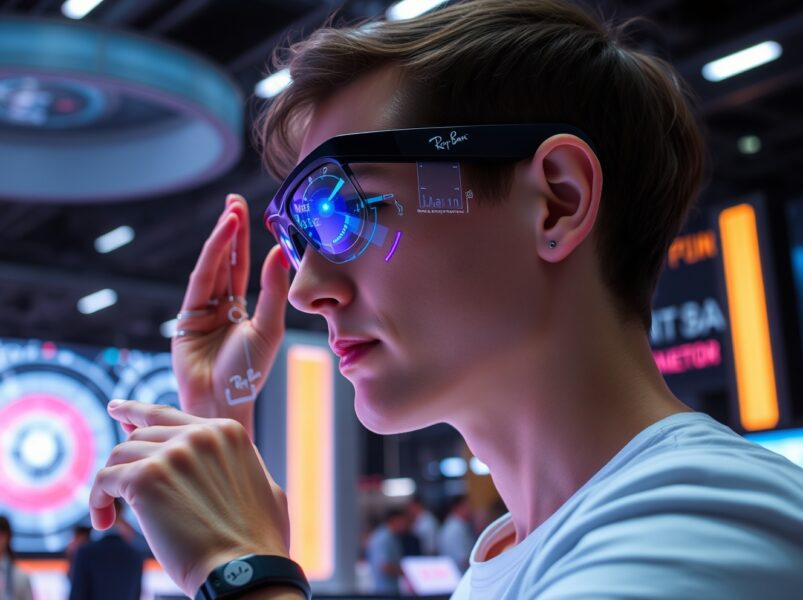
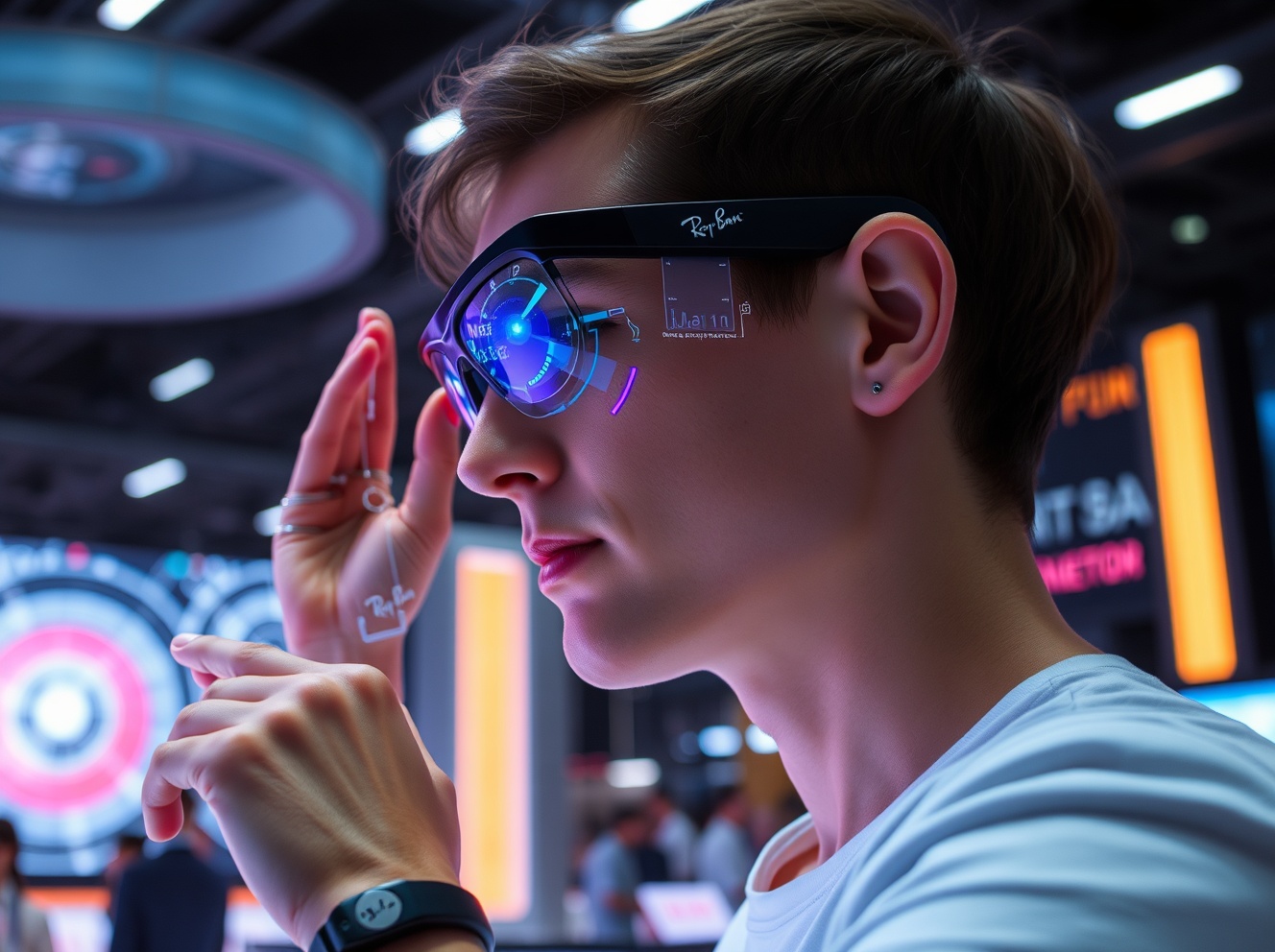
Perhaps the most impressive reveal at Meta Connect 2025 was the Meta Ray-Ban Display smartglasses, which represent a significant step forward in wearable technology. These glasses integrate a display directly into the right lens, offering a subtle yet powerful way to view apps, alerts, and directions without pulling out a phone. However, what truly sets this model apart is its accompanying wristband controller, the Meta Neural Band.
The Meta Neural Band is a testament to Meta’s substantial investment in its Reality Labs division. Looking like a screen-less Fitbit, this wristband utilizes surface electromyography (sEMG) to detect minute hand gestures and small muscle movements. This allows for highly sophisticated, intuitive control:
This level of precision and discreet interaction could revolutionize how we interact with digital information, potentially offering a secure and private way to confirm blockchain transactions or manage crypto wallets with unique hand movements. The Meta Ray-Ban Display, bundled with the Neural Band, will retail for $799 and launches on September 30. While initially supporting Meta apps, broader app compatibility will be crucial for its widespread adoption and for it to truly challenge the dominance of smartphones.
For those who find the idea of handwriting in the air a bit far-fetched, the Oakley Meta Vanguard smart glasses offer a highly practical and compelling use case for AI-powered wearables. Designed with athletes in mind, these glasses integrate seamlessly into active lifestyles, enhancing performance and capturing experiences.
The Oakley Meta Vanguard’s features cater specifically to outdoor and sports enthusiasts:
Retailing for $499 and going on sale on October 21, these glasses present a clear and immediate benefit for athletes, making them a strong contender in the niche market of sports wearables. Imagine tracking your fitness goals while simultaneously receiving real-time updates from a decentralized fitness application – the possibilities are immense.
Despite the company and the conference being named after the Metaverse, updates on the virtual reality front at Meta Connect 2025 were notably sparse. There were no new Quest headsets announced, and the VR segment received only a small number of updates, such as Hyperscape, which aims to enable developers to build more photorealistic spaces in virtual reality. This apparent de-emphasis raises questions about Meta’s immediate priorities.
While the focus has clearly shifted towards AI wearables and smart glasses, it’s important to remember that these devices are foundational to Meta’s long-term metaverse vision. The Neural Band, for instance, could be a critical interface for navigating complex virtual environments, and enhanced AI capabilities in smart glasses could provide contextual awareness within digital worlds. Meta is reportedly developing an ultralight VR headset for launch by the end of 2026, suggesting that the metaverse is not abandoned but perhaps being approached with a more integrated, hardware-first strategy. The success of these new AI-powered devices could very well pave the way for a more seamless and intuitive metaverse experience in the future, potentially integrating with emerging blockchain-based virtual economies and digital assets.
To help you understand the differences and unique propositions of each new offering, here’s a quick comparison:
| Feature | Ray-Ban Meta (Gen 2) | Meta Ray-Ban Display & Neural Band | Oakley Meta Vanguard |
|---|---|---|---|
| Price | $379 | $799 | $499 |
| Key Innovation | Enhanced AI, battery, camera | Built-in display, sEMG wristband controller | Athlete-focused, rugged design |
| Battery Life | Up to 8 hours (mixed use) | N/A (Neural Band focus) | 9 hours (6 hrs continuous music) |
| Video Recording | Ultra HD 3K | N/A (focus on display/interaction) | 3K, 12MP wide-angle |
| Special Features | Conversation focus, Live AI | Wristband for subtle gestures | IP67, Oakley PRIZM Lens, app sync |
| Release Date | Available | September 30 | October 21 |
Meta’s ambitious push into smart glasses and AI wearables is not without its challenges. The live demo failure, though quickly brushed off, highlighted the complexities of integrating cutting-edge AI with real-world connectivity. Beyond technical hurdles, Meta faces the immense task of driving a significant cultural shift – convincing consumers to adopt a new form factor that could eventually supplant the smartphone.
However, the opportunities are equally immense. If Meta succeeds, these devices could unlock entirely new ways of interacting with information, entertainment, and even digital economies. Imagine seamless, hands-free access to crypto market data, secure authentication for decentralized applications via neural interfaces, or immersive metaverse experiences driven by intuitive wearable controls. Meta’s long-term vision clearly aims to create a more integrated and less intrusive digital experience, and these new devices are critical steps on that path.
Meta Connect 2025 undeniably offered a fascinating glimpse into the future of personal computing. From the refined Ray-Ban Meta to the truly innovative Meta Ray-Ban Display with its Neural Band, and the practical Oakley Meta Vanguard, Meta is clearly committed to shaping the next generation of digital interaction. While the metaverse may have taken a backseat in this year’s announcements, the foundational technologies showcased – particularly in AI wearables and advanced smart glasses – are crucial building blocks for a more immersive and interconnected digital future. As these technologies mature, their integration with the crypto and blockchain space could unlock unprecedented opportunities for seamless interaction with digital assets and decentralized worlds, making the vision of a truly ubiquitous digital economy a tangible reality.
To learn more about the latest AI market trends, explore our article on key developments shaping AI features.
This post Meta Connect 2025: Unveiling the Future of Smart Glasses and AI Wearables first appeared on BitcoinWorld.
0
0
 Управляйте всей своей криптовалютой, NFT и DeFi из одного места
Безопасно подключите используемый вами портфель для начала.

0
0

0
0

0
0

0
0
