
Essential Insight: How Layer 1 Cryptocurrencies Hedge Against Bitcoin’s Biggest Risks

0
0

BitcoinWorld
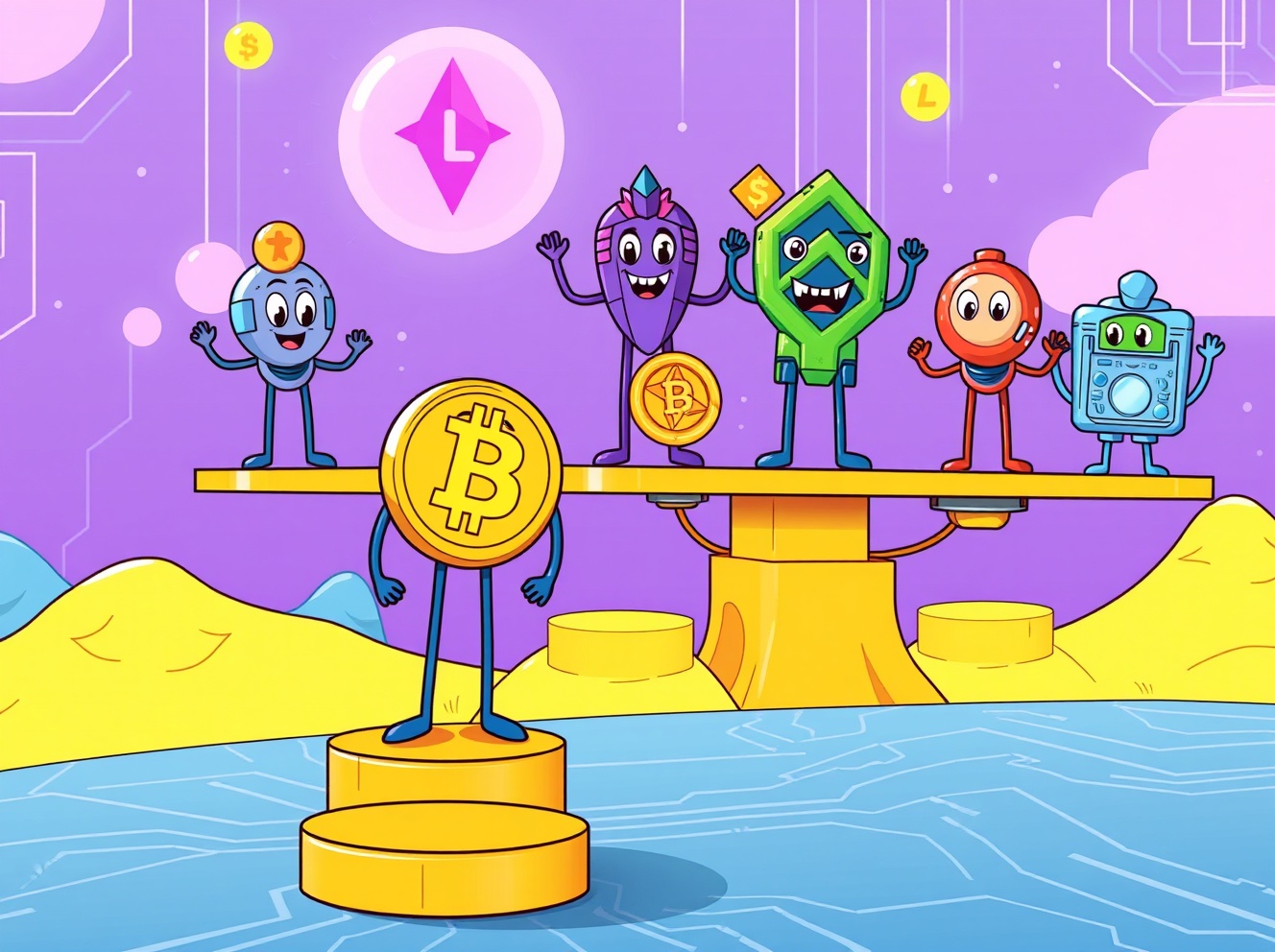
Essential Insight: How Layer 1 Cryptocurrencies Hedge Against Bitcoin’s Biggest Risks
Is your Bitcoin investment exposed to unseen long-term risks? According to Qiao Wang, founder of the prominent crypto accelerator AllianceDAO, a strategic allocation to Layer 1 cryptocurrencies like Ethereum (ETH) might be the intelligent hedge you need. While Bitcoin remains the digital gold standard, Wang highlights critical challenges that savvy investors cannot ignore.
Why Experts Believe Layer 1 Cryptocurrencies Are a Strategic Hedge
In a recent statement, Qiao Wang made a compelling case for diversifying beyond Bitcoin. He maintains that BTC is the prime candidate to replace gold as a store of value. However, he identifies two fundamental long-term risks where other blockchain platforms offer solutions. This perspective positions Layer 1 cryptocurrencies not as competitors, but as complementary assets that strengthen an overall crypto portfolio.
What Are Bitcoin’s Primary Long-Term Challenges?
Wang points to two specific issues that could impact Bitcoin decades from now. First is the security budget. Bitcoin’s network is secured by miner rewards. After all BTC is mined, security will rely solely on transaction fees. This creates an uncertain economic model.
The second challenge is quantum resistance. Future quantum computers could theoretically break Bitcoin’s cryptographic encryption. While this threat is not immediate, it requires forward-thinking solutions. Wang argues that next-generation Layer 1 cryptocurrencies are actively building architectures to address these very problems.
How Can Layer 1 Blockchains Provide Solutions?
Ethereum and other modern Layer 1s are not static. They are designed for evolution. Their active developer communities and more flexible governance allow them to adapt to new threats. Consider these key advantages:
- Adaptive Security Models: Many new Layer 1 cryptocurrencies use Proof-of-Stake or hybrid models, which are not tied to a finite mining reward schedule.
- Roadmap for Upgrades: Platforms like Ethereum have formal processes for implementing major upgrades, including post-quantum cryptography.
- Diverse Utility: Their functionality for DeFi, NFTs, and smart contracts creates inherent value and fee markets beyond simple transactions.
Are Layer 1 Cryptocurrencies Overvalued Today?
A common concern is that altcoins, especially major Layer 1 cryptocurrencies, are in a bubble. Wang counters this, suggesting they are not currently overvalued when viewed as a hedge. Their value is partially derived from their role as insurance against systemic risks in the broader crypto economy. Holding them is a bet on the continuous innovation and resilience of the blockchain space as a whole.
Actionable Insights for Your Crypto Portfolio
What does this mean for you? Think of your portfolio like a balanced financial ecosystem. Bitcoin can serve as your foundational, high-conviction store of value. Allocating a portion to leading Layer 1 cryptocurrencies acts as a strategic diversifier. This approach manages risk while maintaining exposure to the growth of blockchain technology. It’s a pragmatic strategy that acknowledges both Bitcoin’s dominance and its potential vulnerabilities.
Conclusion: Building a Future-Proof Crypto Strategy
The narrative is shifting from ‘Bitcoin versus everything else’ to ‘Bitcoin and everything else.’ Qiao Wang’s analysis provides a crucial framework: view top-tier Layer 1 cryptocurrencies as essential hedges in a long-term, thoughtful investment strategy. They address the existential risks that could challenge Bitcoin decades from now, making them a prudent part of a future-proof portfolio. Embracing this dual approach may be the key to navigating the next era of digital assets.
Frequently Asked Questions (FAQs)
What does ‘hedge’ mean in this context?
A hedge is an investment made to reduce the risk of adverse price movements in another asset. Here, holding Layer 1s is suggested to reduce the long-term systemic risks associated with Bitcoin’s design.
Is Ethereum the only Layer 1 hedge mentioned?
While Ethereum (ETH) was the primary example, the principle applies to other major Layer 1 blockchains with strong security, active development, and plans for quantum resistance.
Does this mean I should sell my Bitcoin?
No. The insight recommends diversification, not replacement. The view is that Bitcoin remains the core store of value, with Layer 1s acting as a complementary, risk-mitigating allocation.
What is the ‘security budget’ problem?
It refers to the concern that after all 21 million Bitcoin are mined, network security will rely only on transaction fees, which may or may not be sufficient to incentivize miners to protect the network.
When is quantum computing a threat to Bitcoin?
Experts believe practical, crypto-breaking quantum computers are likely decades away. However, the blockchain industry must prepare in advance, which is why it’s considered a long-term risk.
How much of my portfolio should be in Layer 1 cryptocurrencies?
There is no one-size-fits-all answer. It depends on your risk tolerance, investment horizon, and conviction. It’s always wise to conduct your own research or consult a financial advisor.
Did you find this perspective on hedging Bitcoin risks valuable? Share this article with fellow investors on X, Telegram, or LinkedIn to continue the conversation about building resilient crypto portfolios. Knowledge is the best asset in a volatile market.
To learn more about the latest Layer 1 cryptocurrencies trends, explore our article on key developments shaping Ethereum and other major blockchains and their role in institutional adoption.
This post Essential Insight: How Layer 1 Cryptocurrencies Hedge Against Bitcoin’s Biggest Risks first appeared on BitcoinWorld.
0
0


 Manage all your crypto, NFT and DeFi from one place
Securely connect the portfolio you’re using to start.

0
0


