
Trust Wallet CEO Felix Fan on Building a Crypto Wallet That Keeps Up With the Market

0
0
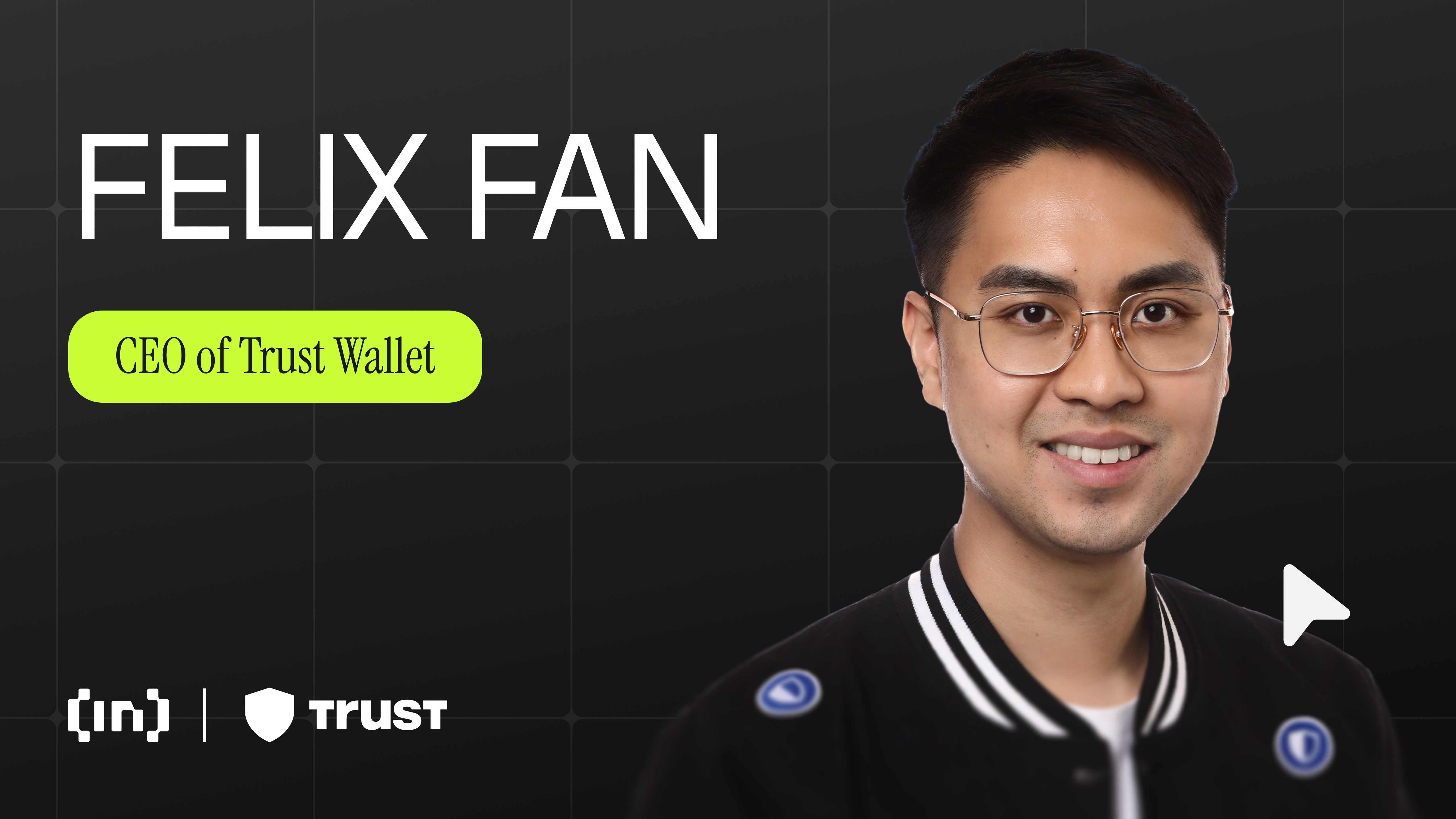
In February 2026, Felix Fan took over as CEO of Trust Wallet, succeeding Eowyn Chen. More often than not, a new CEO spends months getting to know the company, but Fan started by shipping new features to significantly improve the user experience for Trust Wallet’s 220 million users.
Trust Wallet shipped the Trade Menu shortly after he arrived. Within 48 hours, four more products followed, including swap price impact protection, an updated Trending Page, prediction markets through predict.fun, and 1-click swaps.
“I didn’t need months to audit Trust Wallet,” he told BeInCrypto. “I came in with a clear point of view, and the team had already been doing the hard work. My job was to accelerate innovation, not hesitate.”
What’s less obvious is why Fan sees this moment as urgent, and what he thinks Trust Wallet is actually becoming.
He Thinks the Category Has Missed a Few Things
Fan came to Trust Wallet from OKX, where he ran product. He’s seen the space from multiple angles, and when asked where self-custodial wallets have fallen short, he doesn’t hedge.
Speed is the first thing he names. “When you see a market move, you should be able to act in seconds. Most wallets still make that unnecessarily hard,” he said.
Then there’s the user nobody built for. People who’ve done a few trades and want to go deeper, not beginners, not power users, just somewhere in the middle with no clear trajectory.
“The industry obsesses over first-timers and power users,” Fan noted. “The people who’ve done a few trades and want to go deeper? They’re largely underserved. There’s no natural progression.” That’s less a design gap than a product philosophy gap. The middle tier got skipped.
And then trust signals, which Fan frames as a responsibility the wallet itself should carry. Users sign transactions they can’t fully parse, get exposed to scam contracts without any warning from the app. “The wallet should be a layer of protection,” he said. “That’s an area the whole industry has under-invested in, and it’s something we’re taking seriously — being the most secure wallet is a core part of our identity.”
Why the Trade Menu, Why Now
Something shifted in how people trade crypto. They don’t sit down and decide between swapping and perps. They see a market move and want in. The decision is intent-based, not product-based. Most wallets didn’t get that memo. Features are scattered. Execution is buried. The moment of action gets slowed down by the interface.
The Trade Menu is the fix for that, at least the beginning of one. Swap, perpetuals, predictions, trending plays are in one place and only require one tap.
“That friction has a real cost,” Fan said. “The Trade Menu removes it. One entry point for everything. That’s not a small UX tweak — that’s a statement about what kind of wallet we’re building. A command center for decentralized finance, not just a balance checker.”
Some of what’s coming on the roadmap isn’t new territory. Live charts, transparent fee structures — CEX traders have had these for years. Fan said as much. “Fair challenge. Yes, some of what’s coming are things CEX users expect as baseline. We should have had them. We’re fixing that. But that’s the foundation, not the destination.”
The destination is harder to categorize. Fan describes a wallet where users broadcast intent and the network handles execution — self-custodial by default, cross-chain natively, not routed through any centralized order book.
“That’s not a CEX or a DEX. That’s a new category,” he said. “The Trade Menu is the first step toward that.”
“Simple by Default” Might Be Harder Than It Sounds
The principle running through the product is “simple by default, advanced by choice.” Fan doesn’t dress it up.
What does the user see first? That’s the decision everything comes back to. Show too much and you overwhelm. Show too little and power users hit a wall immediately.
“The hardest part is entry points,” Fan explained. “Every extra option you surface adds cognitive load. Every option you hide risks frustrating a power user.”
With the Trade Menu, the call was to optimize for the moment of intent — clean default view, advanced controls there when you want them. The middle-tier user complicates that. The one who’s past basic swapping but not yet doing anything sophisticated.
“We have to earn their trust gradually and give them more as they’re ready,” Fan said. “That’s a sequencing challenge as much as a design one. We’re not perfect at it yet. But that’s exactly the kind of thing we’ll keep iterating on.”
On Independence
Fan’s target to enhance Trust Wallet comes when CEX-backed wallets have gotten serious. Several now offer real self-custody, deep liquidity behind them, user bases fed directly from their parent exchanges.
Yet, he doesn’t think that makes the case for self-custodial wallets any harder. If anything, it makes it more important.
“CEX-backed wallets have a structural ceiling. They will always be optimized — consciously or not — for their parent exchange’s liquidity, products, and interests. That’s just the reality,” he said. “Our only job is to give users the best available prices from decentralized markets, the best experience, and full control over their own assets. We can integrate the best liquidity sources, not just the ones we own. Independence is a feature. And 220 million people have already voted for it.”
The Number Trust Wallet Is Actually Building Toward
Under his leadership, Trust Wallet has flagged trading, UX, and AI as H1 priorities. On sequencing, Fan is clear that UX comes first because it affects every user right now.
“AI is only as good as the product it’s built on. If the swapping experience is clunky, the AI inherits that friction. So better UX isn’t just good for users today — it’s the foundation that makes AI actually work tomorrow,” Fan said.
Trust Wallet has begun building out developer-facing AI infrastructure. In late February, the team shipped an MCP server for instant access to its documentation, an open-source Claude Code skills marketplace. That was followed by the launch of the Developer Portal, giving AI agents read-only access to data across more than 100 chains.
Most recently, Trust Wallet launched the Agent Kit, a toolkit that lets AI agents execute real crypto transactions across more than 25 blockchains within permissions defined by the user.
Consumer-facing features come after.
And when asked about the early signals that they’re moving in the right direction, Fan watches engagement depth, trader retention, and qualitative signals on whether the app feels faster.
“We want to be the number one mobile wallet with over 40% active users. Not just downloads. Not just installs. People who open Trust Wallet because it’s genuinely the best place to act on crypto. That’s the bar we’re building toward,” he said.
0
0


 Verwalten Sie alle Ihre Kryptowährungen, NFTs und DeFi an einem Ort
Verbinden Sie sicher das Portfolio, das Sie zu Beginn verwenden möchten.

0
0

0
0

0
0

0
0