
Permissioned vs. Permissionless: $16 Billion in On-Chain Data Settles the Debate

0
0

Institutions had options. The permissioned vs permissionless blockchain debate framed every decision.
Private chains offered privacy, compliance, and controlled settlement. Public chains offered composability, liquidity, and open infrastructure. As of March 19, 2026, data suggests the answer is already here. Almost $16 billion in distributed real-world asset (RWA) value sits on Ethereum.
Permissioned vs Permissionless Blockchain Debate Gets Real Numbers
Two types of on-chain asset value exist. Understanding the difference is central to the permissioned vs permissionless blockchain debate.
Distributed assets use the blockchain as a distribution layer where investors subscribe, hold, and manage assets through their own wallets. These assets are transferable and composable with lending protocols and decentralized exchanges (DEXs). Represented assets use the blockchain as a record-keeping layer for transparency and reconciliation, without enabling investor transfer or distribution.
As of March 19, 2026, rwa.xyz shows Ethereum leads distributed value at almost $16 billion. BNB Chain follows at $3.2 billion and Solana at $1.8 billion. Tokenized funds, including treasury bills (T-bills), bonds, and money market funds (MMFs), drove most of that growth. But now comes the big part!
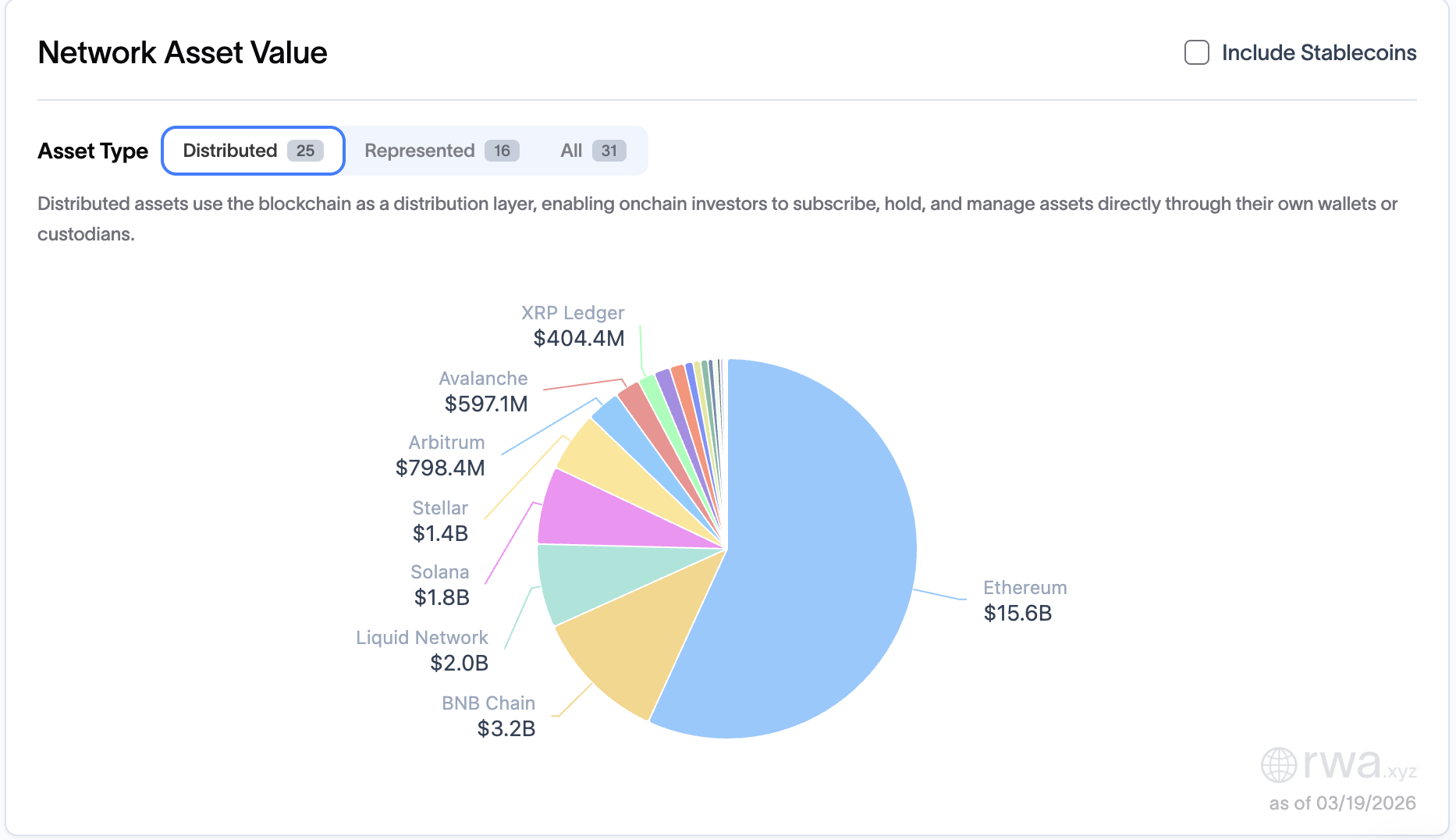 Distributed Assets Lead On Ethereum: RWA.XYZ
Canton dominates the represented side at $352 billion. And that number itself dwarfs Ethereum $16 billion. But that figure is not fund inflows or investor-held capital. It is institutional record-keeping on a closed network.
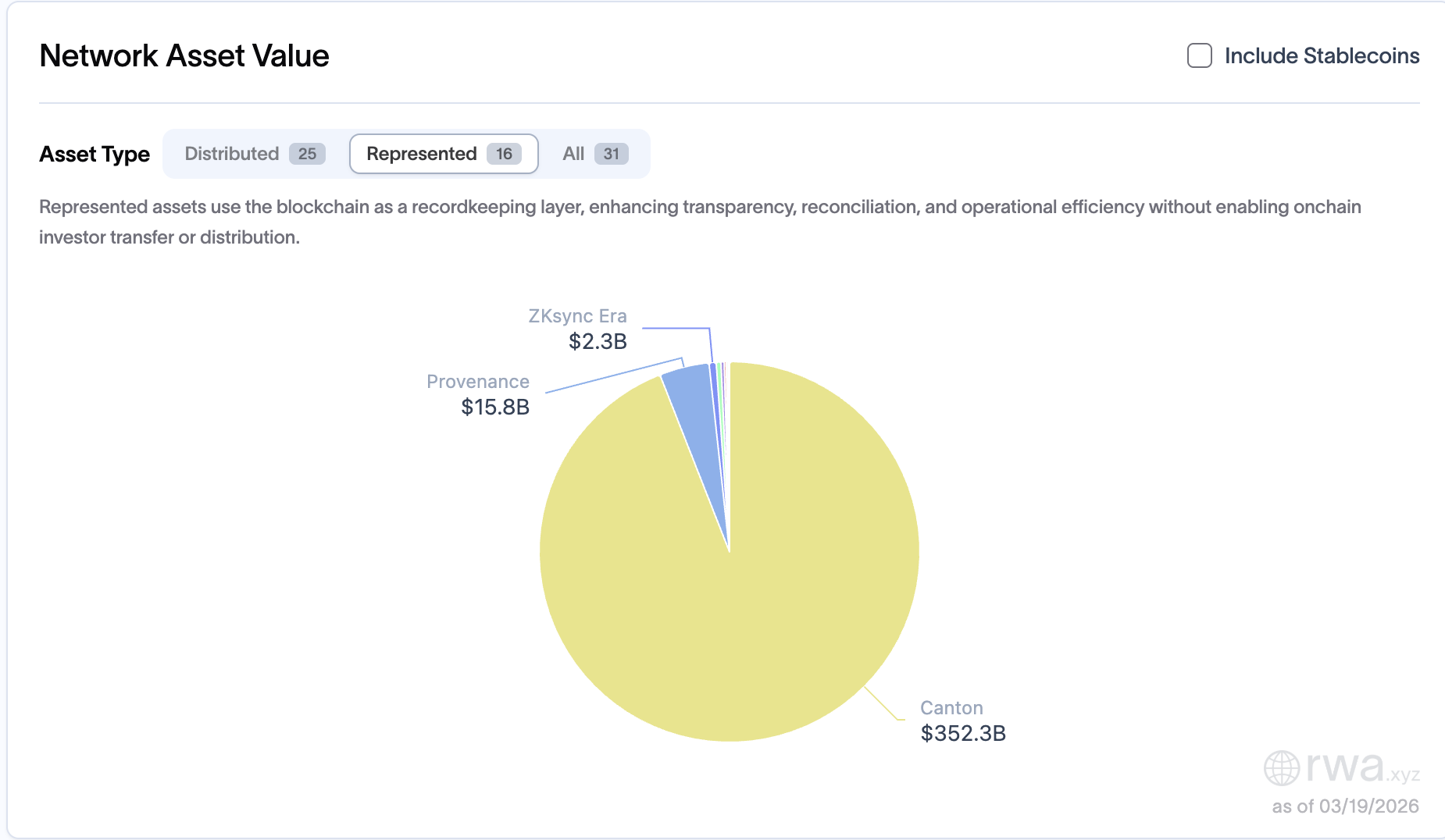 Canton Leads Represented Assets: RWA.XYZ
In an exclusive quote to BeInCrypto on this topic, Sandy Kaul, Head of Innovation at Franklin Templeton, said, without singling out any specific private blockchain.
“I believe very strongly that private blockchains will not be part of the future ecosystem. When you look at a private blockchain, it is typically built by a small team of 50 or 60 people. One entity runs it, and one entity is responsible for all transaction verification,” she said.
Her view cuts to the core of the permissioned vs permissionless blockchain question.
Canton runs 13 Super Validators. Ethereum runs over 10,000 nodes. The security and decentralization gap between private and public infrastructure is not incremental. It is orders of magnitude.
Every Major Tokenized Fund on Ethereum Is Permissioned, and That’s the Point
The Rwa.xyz asset table on Ethereum shows why distributed value is concentrating on public rails. BlackRock BUIDL holds $785 million in active market cap. WisdomTree Treasury Money Market holds $619 million. BlackRock USD Institutional (BUIDL-I) holds $481 million. Plus, the likes of Fidelity, Ondo, and Superstate have millions on Ethereum.
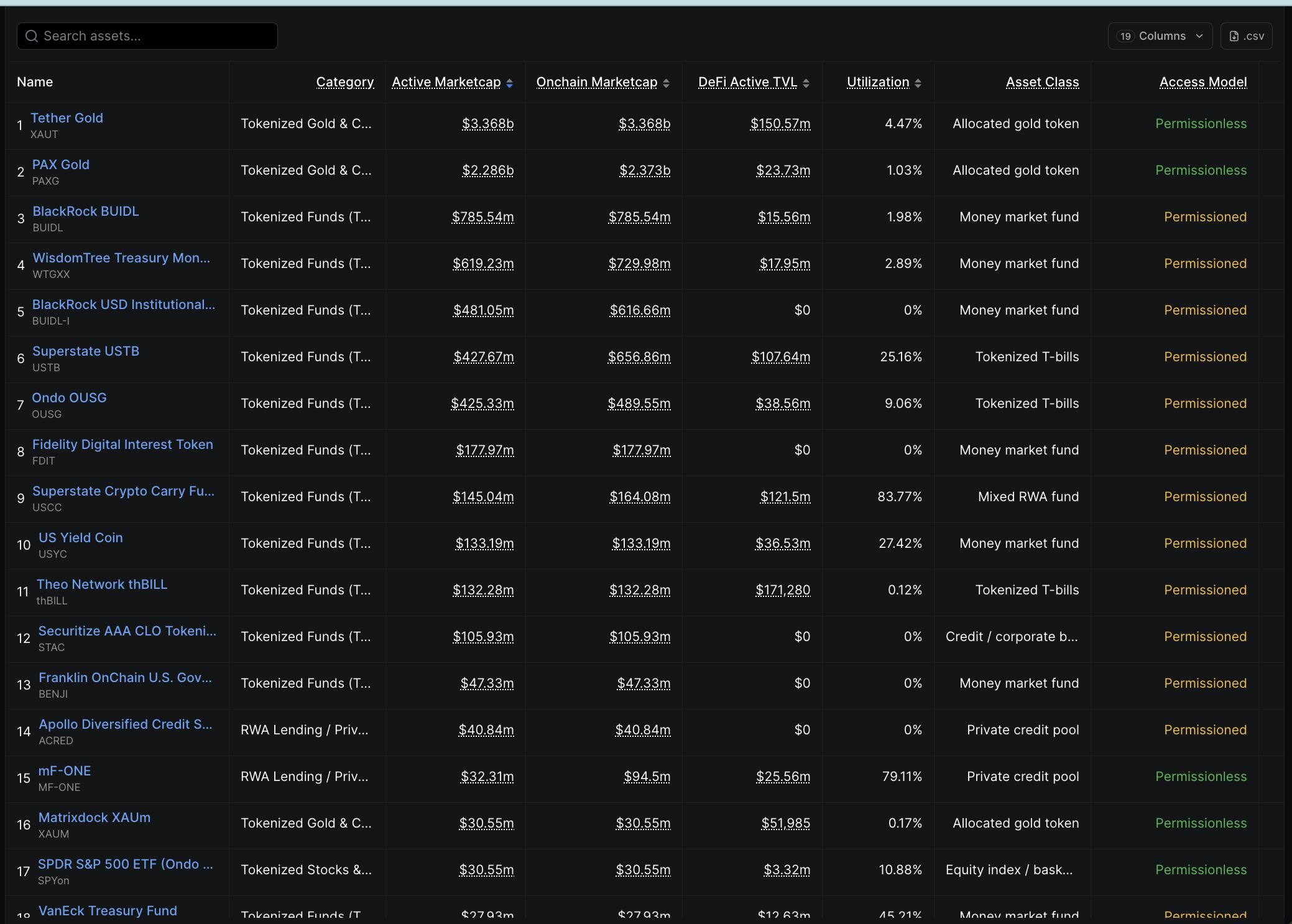 RWA On Ethereum: DeFillama
All are tagged as permissioned access, requiring wallet whitelisting and KYC (know your customer) verification. Regulated securities require KYC. That part is non-negotiable.
But institutions also need global liquidity, 24/7 settlement, and the ability for third-party protocols to build around their products without permission. Only a permissionless base layer delivers all three.
On the BeInCrypto Expert Council video panel, Matt Hougan, Chief Investment Officer at Bitwise Asset Management, highlighted the trigger that might change even the gated constraint:
“My ultimate view is that permissionless, open architecture of blockchains will win, particularly as we unlock AML KYC, maybe using zero-knowledge proofs. The world wants to be in an open ecosystem. That’s the way tech has generally played out over time.”
He further added:
“You are going to see these more permissioned experiments because institutions are just sort of putting their toes into the water. And it takes comfort to get to the far end. My base case, though, is permissionless.”
Geoff Kendrick, Global Head of Digital Asset Research at Standard Chartered, reinforced this on the same panel:
“I agree with Matt that in the long term, permissionless wins. And I think even more directly than that, I think Ethereum probably wins for the next little while on the back of TradFi getting involved.”
Even the builders of private chains recognize this shift.
R3 Corda, which holds over $10 billion in tokenized RWAs on permissioned networks used by HSBC and Bank of America, announced a partnership with Solana in 2025, possibly to access public liquidity.
Kaul’s exclusive to BeInCrypto reinforces what R3’s pivot confirms. She said:
“Contrast that with a public chain like Ethereum or Solana. Ethereum has over 4,000 developers and pays bug bounties to incentivize the discovery of security flaws. With over 10,000 different nodes verifying transactions, you need a 51% consensus to validate data. The odds of a fraudulent transaction are statistically lower because the decentralization required to manipulate the network is so vast.”
Issuance is growing. Migration is underway. But capital sitting in permissioned tokens on open rails is only half the equation. The other half is whether that capital gets put to work inside DeFi. Aave Horizon is the live experiment testing exactly that.
Horizon Shows the Hybrid Model Is Still Early
Aave Horizon tests whether hybrid models work at the protocol level. It allows permissioned institutional borrowing using RWA collateral alongside permissionless stablecoin lending, all on Ethereum. The concept is sound. The early numbers tell a more complex story.
Aave’s permissionless protocol holds roughly $42 billion in TVL (total value locked) as of March 2026, according to DefiLlama. Horizon, the permissioned RWA arm of the same protocol, peaked near $600 million in market size in December 2025 and has since declined toward $350 to $400 million. That puts Horizon at less than 1% of Aave’s total TVL despite being the product specifically designed for institutions.
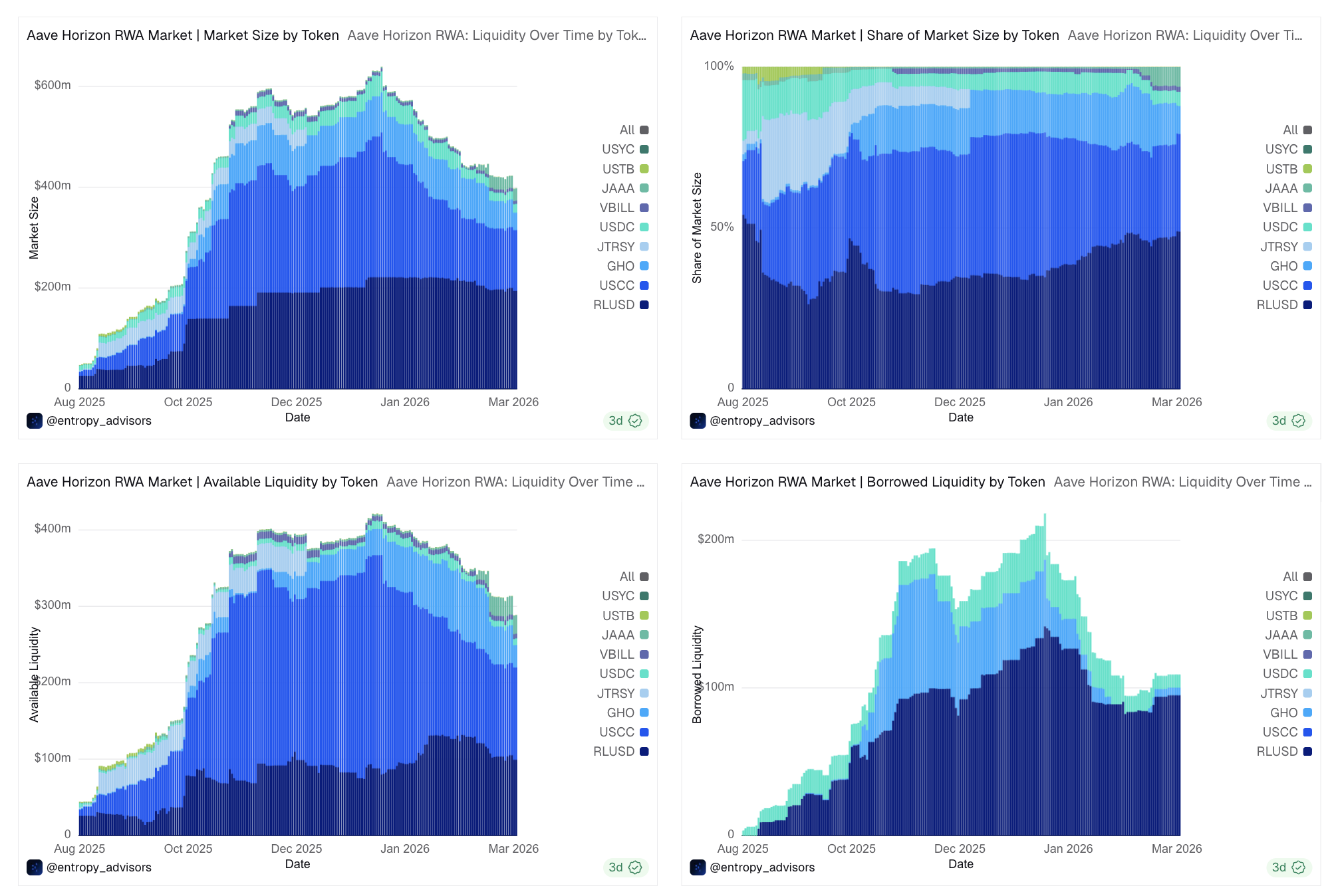 State Of AAVE Horizon: Dune
Dune Analytics data from @entropy_advisors and @mrvega14 shows collateral inflows dropped from roughly $300 million in late 2025 to $141 million by February 2026. Superstate Crypto Carry Fund (USCC) accounts for $123 million of that, meaning one product carries nearly 87% of all remaining collateral.
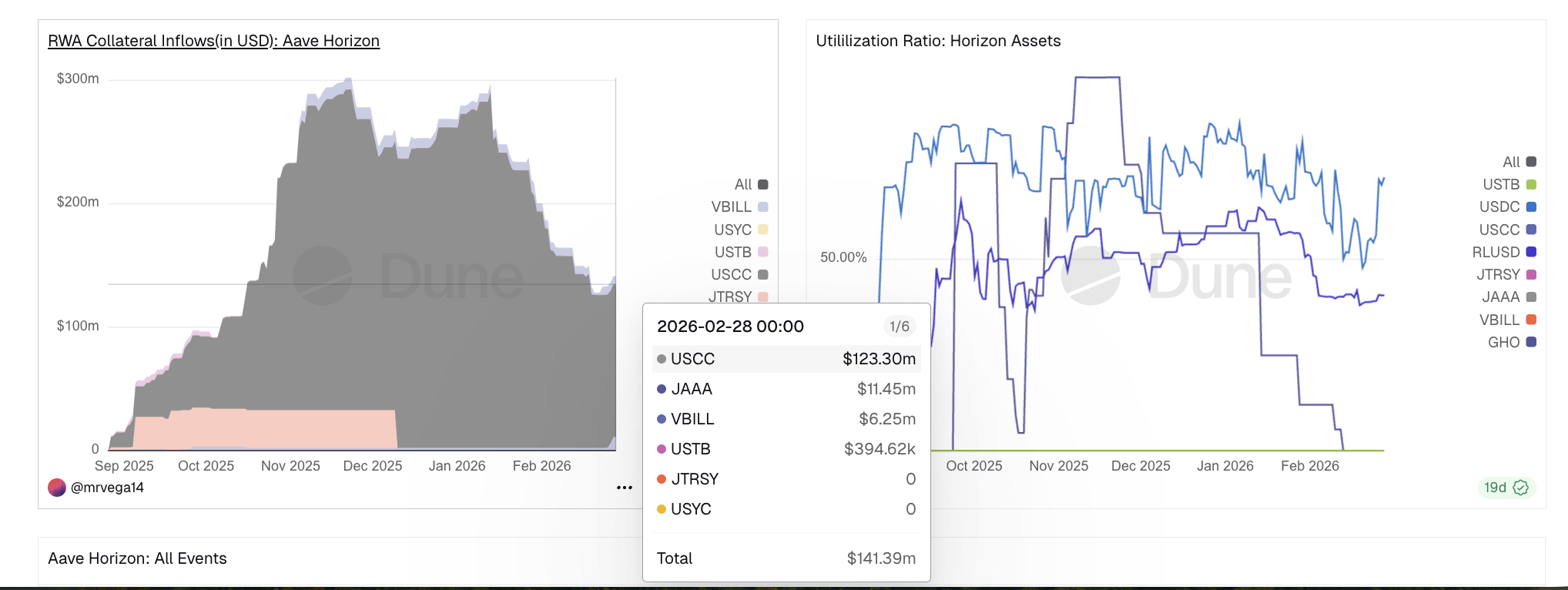 Collateral Inflows Weakening: Dune
Janus Henderson’s treasury product (JTRSY) and US Yield Coin (USYC) both went to zero. Active addresses peaked above 70 per day in October 2025 and now average 20 to 30. Borrowed liquidity peaked around $200 million in January 2026 and is falling.
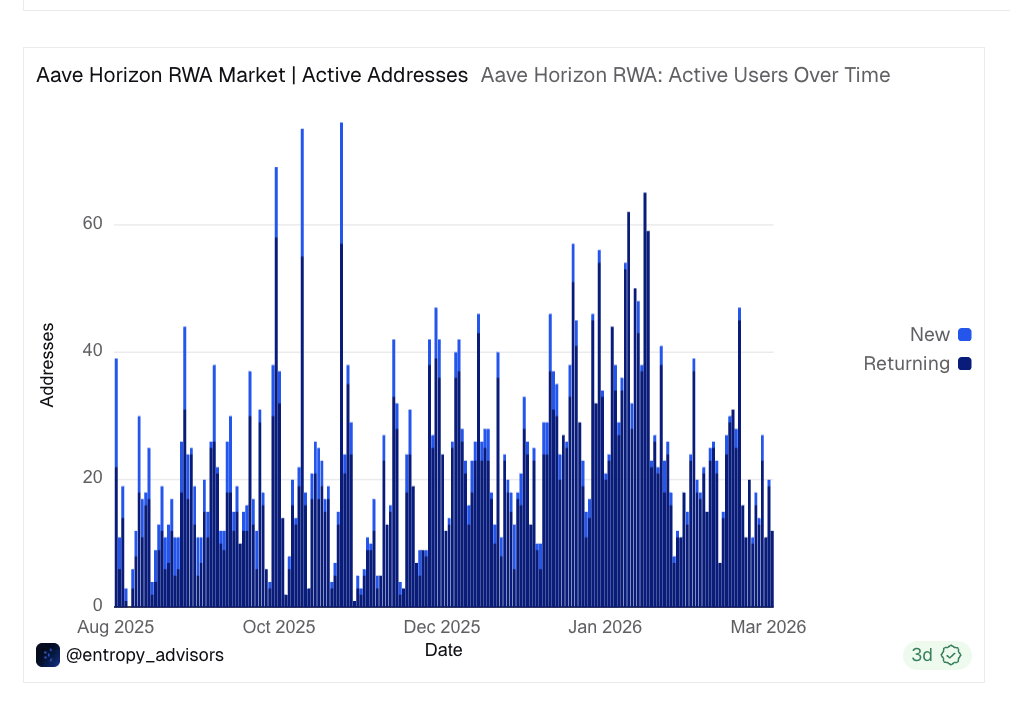 AAVE Horizon Addresses: Dune
Aave’s permissionless protocol processes trillions. Its permissioned RWA layer is still finding its footing. But the fact that institutional collateral is flowing into DeFi protocols on Ethereum, not into private ledgers, tells you where this is heading. The permissioned vs. permissionless blockchain debate has already produced a clear winner, in terms of numbers. It is where the capital is.
0
0


 Administra todas tus criptomonedas, NFT y DeFi desde un solo lugar
Para comenzar, conecta de forma segura el portafolio que estés utilizando.


0
0

0
0
