
UAE-Linked ADI Chain Adds Ledger Support Amid Stablecoin Expansion

0
0
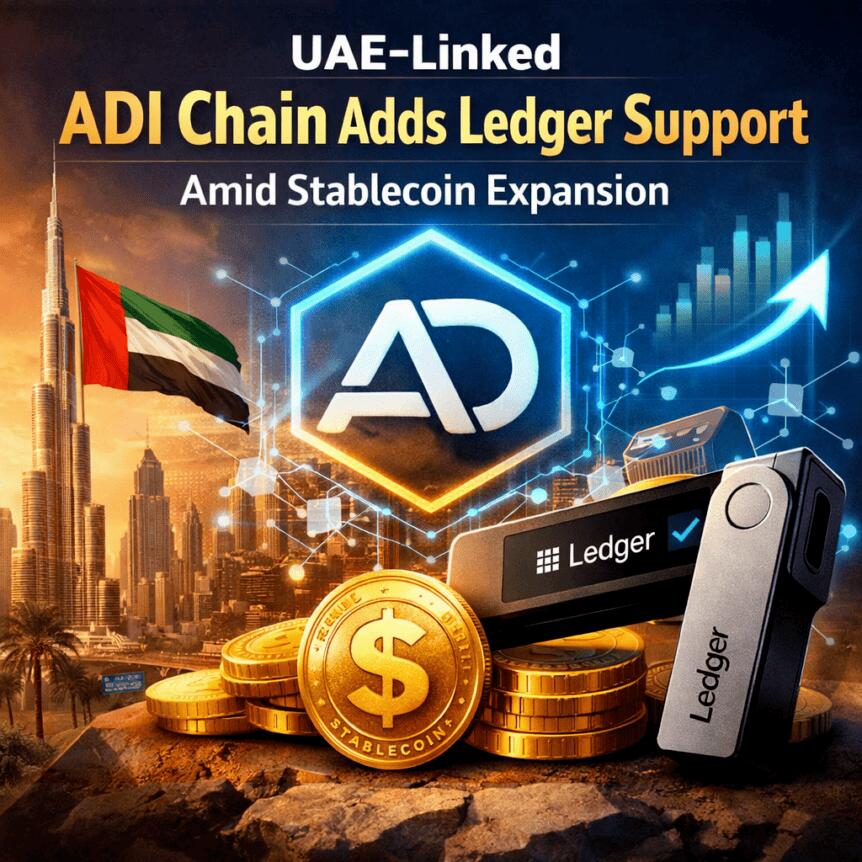
Ledger has added native support for the ADI token on the ADI Chain network, a UAE-linked, Layer-2 protocol focused on stablecoins and tokenized real-world assets. The ADI Chain project is backed by Sirius International Holding, a subsidiary of International Holding Company (IHC) based in Abu Dhabi, and underpins the DDSC stablecoin ecosystem launched with First Abu Dhabi Bank. Ledger’s integration enables users to store and manage ADI through Ledger Wallet and its hardware signing devices, a step that could bolster custody and security for institutions exploring regulated stablecoins and asset tokenization. The ADI Foundation describes ADI Chain as infrastructure for regulated stablecoins and tokenized assets, with ADI serving as the network’s native gas token. The development follows a notable DDSC transfer disclosed by IHC, amounting to 110 million dirhams (about $30 million), described by the company as one of the UAE’s largest publicly disclosed stablecoin transactions.
Related coverage from Cointelegraph notes ongoing regulatory and market dynamics in the UAE and broader region as authorities navigate cross-border payments and fintech infrastructure. UAE central bank coverage and regional tensions illustrate the broader backdrop against which these institutional-led initiatives are evolving.
Key takeaways
- Ledger now supports native storage and management of the ADI token on the ADI Chain network, enabling institutional-grade custody for a UAE-backed stablecoin ecosystem.
- ADI Chain is backed by Sirius International Holding, a subsidiary of IHC, and powers the DDSC ecosystem developed with First Abu Dhabi Bank, targeting cross-border payments, treasury operations, and trade settlement.
- The 110 million dirhams ($30 million) DDSC transfer marks a landmark on-ramp for large-scale, onshore stablecoin activity in the United Arab Emirates.
- Euro-denominated stablecoins remain a minority in the overall market but are concentrated in the non-dollar segment, with regulatory developments in Europe shaping adoption and utility.
- The European Commission’s MiCA framework is under review as regulators reassess stability, reserve requirements, and interest-bearing token products, even as the euro-stablecoin collateral and settlement infrastructure expands via initiatives like Qivalis.
Ledger’s ADI integration deepens custody for UAE-backed stablecoins
Ledger’s decision to add native ADI support to its hardware wallets and signing devices signals a concrete move toward enterprise-grade custody for regulated tokens tied to real-world assets. By enabling direct storage and secure signing of ADI, Ledger positions itself as a critical interface for institutions that require robust security and compliance for stablecoins backed by regulated frameworks. The ADI Foundation emphasizes that ADI Chain serves as infrastructure for regulated stablecoins and tokenized assets, with ADI acting as the network’s gas token. For enterprises evaluating cross-border settlements and treasury operations, this integration could reduce custody friction and bolster auditability when handling regulated digital assets.
In the broader stabilization-and-asset-tokenization push, the UAE’s private and public sectors have been advancing blockchain rails intended to support regulated assets, complementing existing fiat-to-stablecoin activity. The Ledger move aligns with a trend of traditional fintech firms increasingly embracing crypto-native custody solutions to service institutional clients seeking compliant, auditable, and secure digital asset handling.
AD I Chain and the DDSC ecosystem: institutional rails for cross-border finance
ADI Chain operates as a Layer-2 architecture designed to accommodate stablecoins and tokenized assets within a regulated environment. The network is heavily tied to the stablecoin ecosystem DDSC, which was launched with First Abu Dhabi Bank, one of the region’s leading financial institutions. Sirius International Holding’s backing underscores the project’s strategic alignment with large-scale corporate entities pursuing cross-border payments, treasury operations, and trade settlement—areas where tempo, cost, and compliance are critical. The ADI token functions as the network’s gas mechanism, enabling transaction settlement and network activity as part of an infrastructure aimed at institutional use cases rather than retail speculation.
Recent disclosures of a substantial DDSC transfer—110 million dirhams, or roughly $30 million—serve to illustrate the scale of real-world activity now being channeled through UAE-backed stablecoin rails. While such figures may not represent everyday use, they highlight growing institutional comfort with cross-border, tokenized fiat constructs that can interface with traditional banking rails while offering programmable settlement and asset tokenization features.
Europe’s euro-stablecoin landscape evolves under MiCA oversight
In the broader market, euro-denominated stablecoins have long lagged behind their dollar-backed counterparts in share and liquidity. A March report from Dune Analytics, commissioned by Visa, found that euro-stablecoins account for more than 80% of the non-US dollar stablecoin sector, even as the overall non-dollar stablecoin market remains relatively small—about $1.2 billion in supply compared with a total stablecoin market exceeding $300 billion. The same analysis noted that non-dollar stablecoins process roughly $10 billion in monthly transfer volume, with euro-backed tokens increasingly used for payments, remittances, payroll, and treasury operations. The rise in euro-stablecoin activity has occurred in the context of Europe’s broader regulatory embrace of crypto assets, particularly after the Markets in Crypto-Assets Regulation (MiCA) established a formal framework for crypto asset service providers across the European Union.
Nonetheless, there is debate about MiCA’s impact on competitiveness. A separate April report from Blockchain for Europe argued that MiCA’s reserve and interest-bearing rules have made euro-stablecoins safer but less commercially competitive relative to USD-backed options. DeFiLlama data cited in the report showed euro stablecoins accounting for less than 1% of global stablecoin volume, despite the euro’s prominence in international finance. The tension between safety and scale remains a central question for euro-stablecoin adoption as the bloc continues to refine its approach to reserve management and asset protections.
Meanwhile, regulatory attention to MiCA continues. The European Commission opened a review of MiCA rules governing stablecoins, reserve requirements, and interest-bearing token products as officials reassess how the framework functions in practice. This review comes as European institutions push forward with local-currency stablecoin infrastructure and governance models. In parallel, the euro-stablecoin ecosystem appears to be expanding through regional collaboration and sector-led initiatives.
On May 20, euro-stablecoin consortium Qivalis announced a significant expansion, bringing the group to 37 member institutions after adding 25 banks across 15 countries ahead of a planned launch later this year. The move is part of a broader effort to build a regulated, euro-denominated alternative to dollar-backed stablecoins, aiming to provide a compliant, intra-EU payments backbone for digital assets.
For traders, investors, and builders, the euro-stablecoin story illustrates a clear shift toward legally vetted infrastructure that can support cross-border commerce and payroll in a consent-based, regulated environment. While euro tokens may not yet rival the scale of USD-backed stablecoins, the regulatory glide path and bank participation suggest a higher likelihood of mainstream adoption for euro-denominated digital assets within Europe’s financial system.
What this means for markets and innovation
Taken together, the Ledger integration with ADI Chain and the EU’s evolving regulatory backdrop create a nuanced landscape for institutional players. On the one hand, UAE-backed stablecoins and tokenized real-world assets are gaining traction through partnerships with major financial institutions, supported by custody providers that meet enterprise security standards. On the other hand, Europe’s MiCA regime—while increasing safety and standardization—still faces questions about competitiveness and liquidity for euro-stablecoins, even as projects like Qivalis push to deliver regulated euro-denominated settlement rails.
Investors and builders should watch how these dynamics interact with wider market maturity. In the UAE, the ADI Chain ecosystem could serve as a testbed for banking-ready stablecoins linked to real-world asset flows, including cross-border settlements and institutional treasury management. In Europe, regulatory clarity and the expansion of euro-stablecoin infrastructure could unlock new payment rails and wholesale settlement mechanisms, potentially reshaping how corporates and financial institutions approach cross-border liquidity and payroll settlement in the euro zone.
As always, the pace and scope of adoption will hinge on regulatory clarity, interoperability with existing rails, and the willingness of banks and corporates to integrate these new digital instruments into their everyday processes. The coming months will be telling as MiCA’s review unfolds and euro-stablecoin initiatives scale in practice, while UAE-backed networks continue to pursue enterprise-grade custody and settlement capabilities on a global stage.
Readers should keep an eye on regulatory developments in both the EU and the Middle East, as well as real-world usage signals from institutional ecosystems like ADI Chain and DDSC. The next milestones—broader custody support, cross-border deployments, and the evolution of euro-stablecoin infrastructure—will help determine whether these nascent rails translate into durable, scalable digital-finance architecture.
For further context on related market developments, see: the DDSC transfer coverage from Cointelegraph linked earlier, and continuing EU regulatory updates as MiCA undergoes review, which could shape euro-stablecoin growth and cross-border payments in the months ahead. MiCA rule review updates and Qivalis expands to 37 banks.
What remains uncertain is the pace at which institutional custody solutions like Ledger’s ADI support will scale to real-world enterprise deployments, and how euro-stablecoin liquidity and liquidity-provision models will evolve under MiCA’s full framework. Yet the trajectory suggests a more regulated, institutionally friendly landscape for stablecoins and tokenized assets in both the Middle East and Europe.
This article was originally published as UAE-Linked ADI Chain Adds Ledger Support Amid Stablecoin Expansion on Crypto Breaking News – your trusted source for crypto news, Bitcoin news, and blockchain updates.
0
0

 Manage all your crypto, NFT and DeFi from one place
Securely connect the portfolio you’re using to start.