
Ex-contributor Warns Ethereum Core Funding Crisis as EF Cuts Spend

0
0
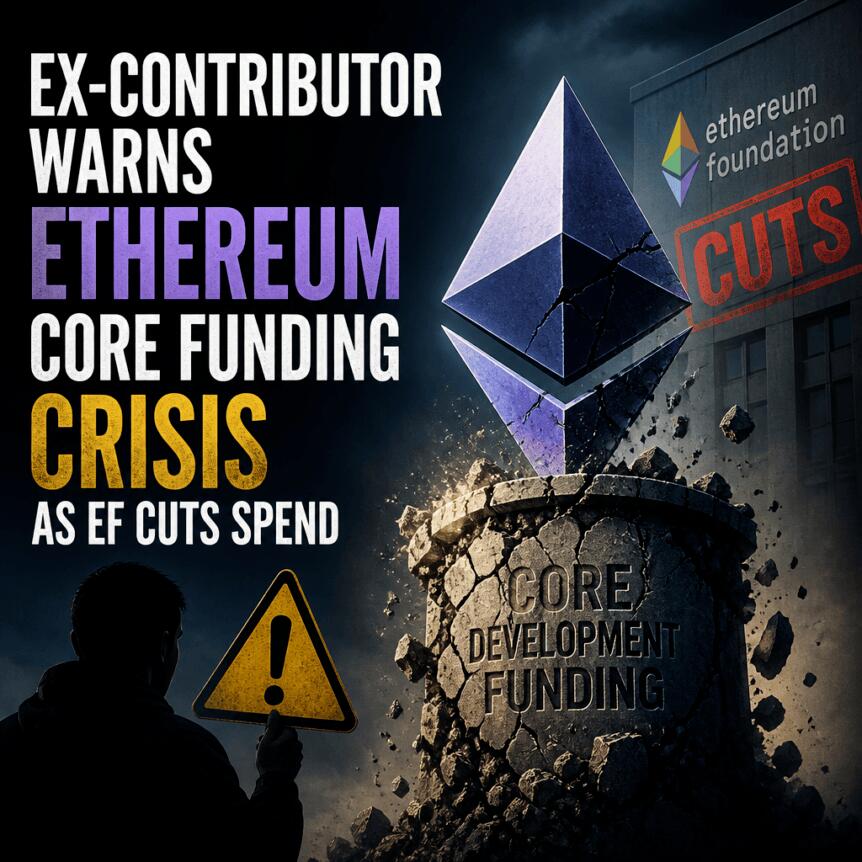
Ethereum is staring at a looming funding gap for its core development work, according to a warning from former Ethereum Foundation contributor Trenton Van Epps. In a blog post published Thursday, Van Epps argued that reductions in Ethereum Foundation spending and the April expiration of the Client Incentive Program leave the broader “core development ecosystem” needing roughly $30 million per year to sustain itself.
Van Epps characterized the situation as a potential “slow-burning funding crisis,” while pointing to ongoing organizational churn at the Ethereum Foundation that has accelerated departures among leadership and staff. The concern is already colliding with a separate policy debate: Ethereum co-founder Vitalik Buterin has said the foundation’s remaining resources are limited and that it has been prioritizing “longevity over breadth” with less ETH selling.
Key takeaways
- Van Epps estimates Ethereum’s core development funding need at about $30 million annually, citing spending cuts and the April end of the Client Incentive Program.
- He warned of a potential “slow-burning funding crisis” within the next three to nine months unless new funding sources emerge.
- Buterin has said the Ethereum Foundation holds only about 0.16% of Ether’s total supply, limiting its ability to cover a wide range of ecosystem costs.
- Recent treasury actions—including unstaking and selling ETH—suggest the foundation has been adjusting how it finances development needs.
Why Van Epps says Ethereum could run into a funding cliff
Van Epps’ central claim is that the Ethereum Foundation’s recent financial and program changes have removed support that previously helped keep core development functioning. He linked the risk directly to two developments: the Ethereum Foundation’s spending reduction and the expiration of the Client Incentive Program in April.
Based on conversations with core development contributors, Van Epps said the network’s core development ecosystem requires approximately $30 million in annual funding. He further warned that without additional funding streams, Ethereum may be headed toward a “slow-burning” shortfall—an issue that may not trigger an immediate shutdown, but could gradually worsen delivery timelines, contributor incentives, and the capacity of maintainers across critical client and infrastructure components.
Van Epps wrote that the crisis timeframe could land within three to nine months, making the next few quarters a crucial window for funding stability.
Leadership departures intensify the pressure on continuity
Van Epps’ funding concerns come as the Ethereum Foundation itself undergoes significant personnel changes. Earlier coverage from Cointelegraph noted a wave of departures from the organization, including the announcement from co-executive director Hsiao-Wei Wang that she would step down from her role.
According to that reporting, the estimated number of layoffs and departures at the Ethereum Foundation reached 19 so far this year. While staffing changes do not automatically translate into funding shortages, they can compound uncertainty for a system already dependent on predictable support for long-term engineering work.
Cointelegraph also reported it was unable to independently verify Van Epps’ estimated $30 million annual requirement and contacted the Ethereum Foundation for comment.
Buterin’s “longevity over breadth” and the limits of foundation resources
The funding debate is not occurring in a vacuum. On May 24, Ethereum co-founder Vitalik Buterin posted on X that the Ethereum Foundation’s available resources are limited—saying it holds only about 0.16% of Ether’s total supply. He contrasted that with foundations linked to other networks, which can hold a much larger share of their ecosystem’s supply.
Buterin said the Ethereum Foundation was originally designed for a narrower mission: developing Ethereum’s core software and helping the network move through major roadmap milestones, many of which he said were largely completed by 2022. With that in mind, he argued that the foundation now faces trade-offs about where to deploy remaining resources.
“And so today, the EF is choosing to use its remaining resources to pursue longevity over breadth (yes, this means we sell less ETH),” Buterin wrote.
That framing matters because it implies the foundation may increasingly prioritize sustained maintenance and long-horizon stability rather than broad, multi-program ecosystem support—an approach that can leave gaps if other funding sources do not fill the remainder.
Treasury adjustments: unstaking, sales, and a policy recalibration
The foundation’s funding position has been reflected in recent treasury activity. Cointelegraph reported that the Ethereum Foundation unstaked 17,000 ETH in late April, and then another 21,270 ETH in early May, at the time reported as worth $50 million. The foundation had nearly surpassed 70,000 ETH staked earlier in the year, according to the same reporting.
Cointelegraph also noted the foundation sold 10,000 ETH in an OTC deal on May 1 to Bitmine, described as the largest corporate ETH holder. Arkham, a blockchain analytics platform, suggested the unstaking may have been driven by the need for funds to continue developing the network.
These transactions represent another step in what Cointelegraph described as ongoing adjustments to the Ethereum Foundation’s treasury strategy. In a June 2025 policy update, the foundation said increasing its staking participation would help fund protocol development while limiting future ETH sales, following earlier community backlash over disposals.
Taken together, the funding warning from Van Epps and the foundation’s described treasury choices point to a structural tension: if the organization is trying to sell less ETH while also reducing operational spending and losing certain incentive programs, the ecosystem’s remaining funding capacity becomes harder to sustain—particularly during a period when maintenance needs continue regardless of roadmap milestones.
What to watch as the funding timeline tightens
For investors, builders, and client maintainers, the immediate question is whether Ethereum can secure stable, predictable support for core development within the next three to nine months—especially after the Client Incentive Program ended and as the foundation reshapes how it finances development through treasury policy. The next developments to monitor are any new funding commitments and how Ethereum’s core contributors adapt if annual support still fails to match the roughly $30 million level Van Epps described.
This article was originally published as Ex-contributor Warns Ethereum Core Funding Crisis as EF Cuts Spend on Crypto Breaking News – your trusted source for crypto news, Bitcoin news, and blockchain updates.
0
0

 Verwalten Sie alle Ihre Kryptowährungen, NFTs und DeFi an einem Ort
Verbinden Sie sicher das Portfolio, das Sie zu Beginn verwenden möchten.


0
0


0
0