
AAVE Collateral Swap Error Triggers $50M Loss in Ethereum DeFi Trade

0
0

The recent AAVE collateral swap loss that resulted in a DeFi $50M loss has sent shockwaves through crypto markets, illustrating how rapidly decentralized finance can turn costly. This story unfolded on Ethereum through a CoW Protocol trade error, where a huge swap sent $50 million into a poorly routed trade.
The incident has become a case study in Ethereum DeFi swap gone wrong, and experts are dissecting every angle, from slippage to automated market mechanics, to understand why such a massive mistake occurred.
Ethereum Market Context and Its Impact on the $50 Million Loss
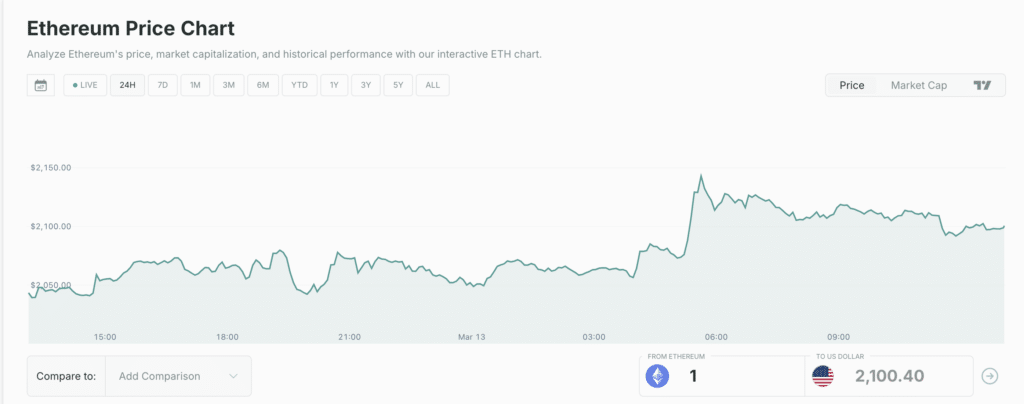
While this AAVE and it’s collateral swap loss of $50M flew into the headlines, Ethereum price showed resilience. Ethereum price live today is about $2,113.31 USD with 24 hours trading volume of $23.3 billion and market cap over crossing of $255 billion.
ETH has surged about 4.43% within the past 24 hours, a sign of solid appetite in DeFi sectors. Why are these metrics important, high volatility and liquidity conditions across Ethereum impact the sanity mechanics that enable AAVE collateral swaps to succeed or fail on CoW Protocol.
Understanding the Mechanism of Losses in AAVE Collateral Swap
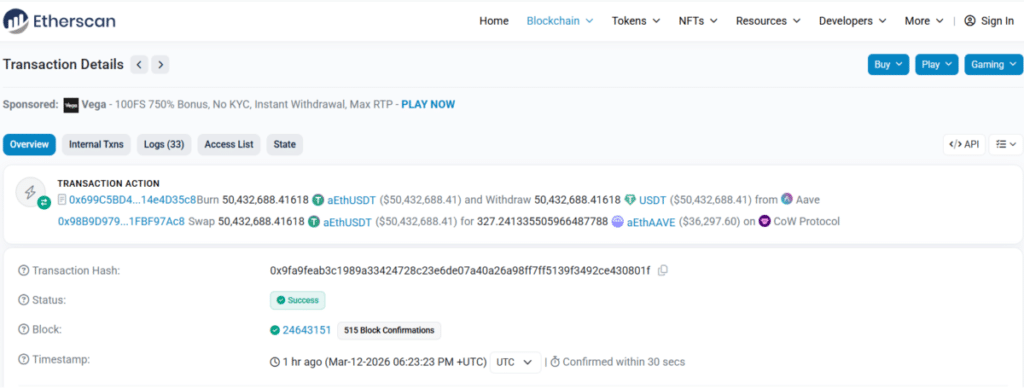
AAVE Collateral Swap Loss; an investor tried to make an attempt to route a $50M collateral swap through CoW Protocol and got lost. In decentralized systems, every trade happens through smart contracts without centralized oversight, making mistakes irreversible.
Shallow liquidity and poor routing are at the heart of what caused the high‑value trade failure on CoW Protocol, analysts say. Rather than matching large orders against deep liquidity, the protocol directed the swap into thin pools, resulting in massive slippage and effectively transferring value to liquidity providers and arbitrage bots, an egregious instance of DeFi slippage loss on Ethereum. This shows a major lesson in trade execution risk.
The Importance of Slippage and Bad Routing in DeFi
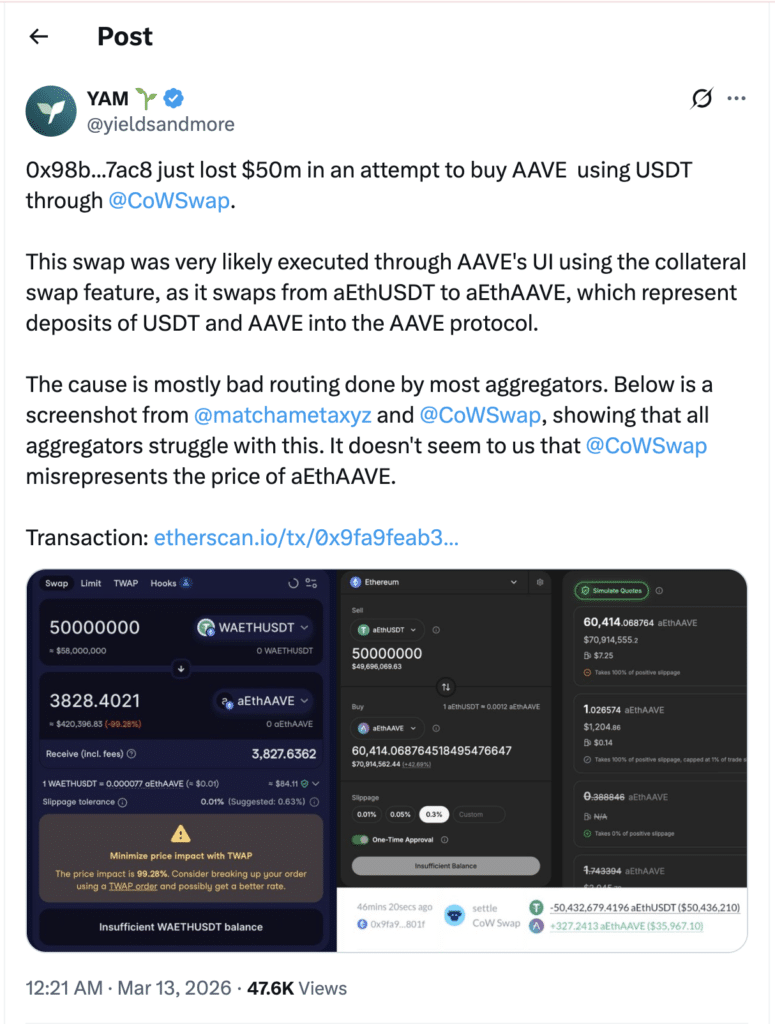
One of the core reasons the Ethereum AAVE swap disaster occurred is heavy slippage, a scenario where execution prices diverge sharply from expected prices due to insufficient liquidity. When big orders hit illiquid pools, prices can spike exponentially, leading to losses far beyond normal expectations. A standard AAVE collateral swap mistake explained shows that the $50M order walked the price curve aggressively, meaning later portions of the trade executed at wildly inflated prices, essentially burning value.
Automated market makers (AMMs) don’t have human traders to slow down execution; they simply follow smart contracts, reinforcing how AAVE collateral swap loss of $50M explained is essentially a lesson in market depth.
Comparative Look: Centralized vs. Decentralized Trade Execution
In traditional markets, large orders typically pass through execution desks, OTC channels or algorithmic tools like TWAP to mitigate market impact. In contrast, the Ethereum DeFi swap that went sideways proves decentralized systems perform every command literally.
There’s no backstop or specialist to redirect or hold orders for a better price. Megatrader loses $50M worth of Ethereum AAVE collateral swap due to shallow liquidity, not price slippage This disconnect exacerbates risk, particularly for AI-generated trading interfaces and bots that pursue inefficiencies rather than protect traders.
AAVE Loss Incident: Community Insights
Across crypto forums, conversations have unfolded in the community vanquishing CoW Protocol’s trade blunder into stark terms, many term it an avoidable mistake that stems from not heeding liquidity warnings. So, because swapping on Ethereum is decentralised in nature, large trades can inadvertently create extreme price movement.
Posts from community members explain how AMMs propelled the price to insane heights as the order walked up the book. Although the loss didn’t “disappear,” it was spread out among liquidity providers, arbitrage bots and protocol fees, proving that blockchain immutability means all transactions are executed as coded.
Risk Management Lessons from the $50M Loss
This AAVE DeFi swap disaster costing $50M on Ethereum underscores the need for better trade preparation and risk management. Traders must account for depth, slippage settings, and potential routing outcomes before executing large swaps. Tools that aggregate deep liquidity or segment trades into smaller chunks could help avoid similar losses.
The incident also opens debate on whether smart contract interfaces need built‑in safeguards for large orders. While decentralization empowers permissionless access, it also brings responsibility and risk that traders must actively manage.
Looking Forward: Impacts on AAVE and DeFi Confidence
In the aftermath of this AAVE collateral swap loss, the broader DeFi ecosystem is reflecting on guardrails and best practices. AAVE’s price and protocol fundamentals remain separate from this isolated event, but the narrative will likely push developers and users toward more robust tooling and execution safeguards. This episode serves as a stark reminder that DeFi’s promise comes with systemic risks that need constant education and tooling advances to mitigate similar costly mistakes.
Conclusion
The AAVE collateral swap loss that resulted in an unbelievable $50M hit through CoW Protocol is a pivotal moment for decentralized finance on Ethereum. It highlights how slippage, liquidity, and routing choices can make or break major trades, especially when dealing with large capital.
Traders and protocols alike should use this incident as a cautionary example, pushing for smarter execution strategies and better user safeguards to prevent similar outcomes. Even as Ethereum’s price shows resilience, and DeFi continues to grow, risk management remains paramount.
Frequently Asked Questions About AAVE Collateral Swap Loss
What caused the $50M loss in the AAVE collateral swap?
It was due to low liquidity and poor routing that triggered severe slippage on a massive order.
Is the loss reversible?
No. Decentralized trades execute irrevocably once confirmed on the blockchain.
Did this impact AAVE’s overall market price?
This isolated event didn’t fundamentally change AAVE’s broader price trends.
Appendix: Glossary of Key Terms
AAVE Collateral Swap Loss: The financial damage resulting from a poorly executed swap involving AAVE as collateral.
DeFi Slippage: The difference between expected and actual execution price due to market conditions.
CoW Protocol Trade Error: A routing or execution issue on the CoW Protocol that resulted in an unfavorable trade outcome.
AMM (Automated Market Maker): A protocol that provides liquidity using smart contracts without traditional order books.
Liquidity: The availability of assets to be bought or sold without causing significant price changes.
References:
Read More: AAVE Collateral Swap Error Triggers $50M Loss in Ethereum DeFi Trade">AAVE Collateral Swap Error Triggers $50M Loss in Ethereum DeFi Trade
0
0


 Gestisci cripto, NFT e DeFi in un unico luogo
Connetti in sicurezza il portafoglio che usi per iniziare.

0
0

0
0


0
0