
U.S. Government Bitcoin Seizure Reopens $25.5B Custody Debate

0
0
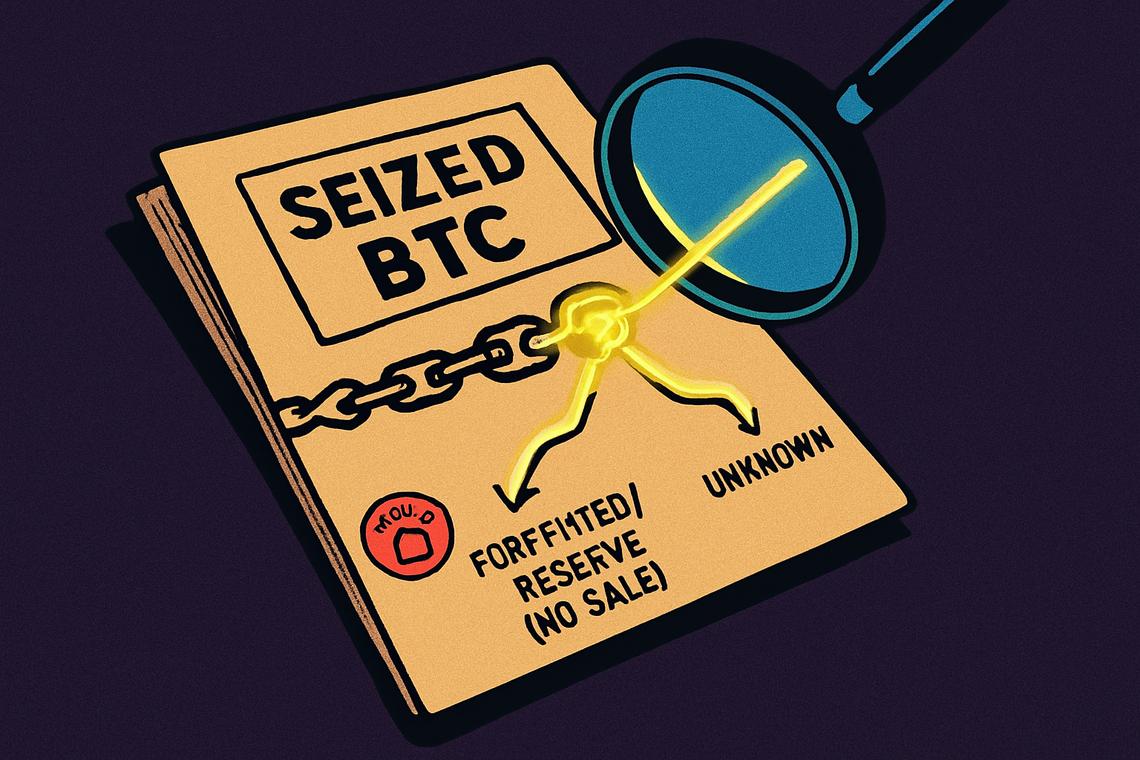
A tiny Bitcoin transaction just reopened a much bigger question about who actually controls the billions of dollars in crypto the U.S. government has seized over the years. On August 27, blockchain analytics firm Arkham Intelligence flagged a transfer of roughly 0.0048 BTC, worth about $377, moving out of a government-linked wallet tied to Alameda Research accounts held on Binance.US nearly three years ago. It’s a fraction of a coin, but the case highlights how murky the rules still are around what happens to Bitcoin once Washington gets its hands on it, a puzzle at the heart of every U.S. government Bitcoin seizure tied to the FTX collapse.
Key takeaways
- The U.S. government moved about 0.0048 BTC (roughly $377) seized from Alameda Research’s Binance.US accounts nearly three years earlier, according to Arkham Intelligence.
- Arkham did not identify the transfer as a sale, liquidation, or creditor distribution — the purpose remains unconfirmed by any federal agency.
- Earlier in 2024, government wallets moved a far larger sum, nearly $984,000 in seized Alameda funds, with most assets landing at Coinbase Prime for the FTX estate.
- The Strategic Bitcoin Reserve, created by executive order in March 2025, holds forfeited Bitcoin under a strict no-sale policy, separate from assets still tied up in legal proceedings.
- Federal agencies, including Treasury, are still sorting out who has legal authority over custody of government-held Bitcoin.
Recent Movement of Seized Alameda Bitcoin by U.S. Government
The August transfer is small in dollar terms but notable because it touches assets seized years ago and left largely untouched since. Arkham’s dashboard traced the coins leaving a wallet labeled as belonging to the U.S. government, part of a broader pool of government-linked addresses holding roughly 324,552 BTC at the time, an amount valued near $25.5 billion.
Details of the 0.0048 BTC Transfer
Arkham described the move plainly in an August 27 post on X: “The US Government just moved a small amount of Bitcoin that had been seized from Alameda accounts on Binance US, 3 years ago.” No exchange deposit tied to a sale was identified, and nothing in the post suggested the coins were headed toward liquidation.
Arkham Intelligence’s Reporting and Ambiguity
What makes the transaction interesting isn’t the dollar amount, it’s the silence around motive. Arkham raised the question of whether the government might start liquidating the rest of Alameda’s Bitcoin holdings, but framed it as an open question rather than a confirmed plan. No federal agency has stepped forward to say whether the 0.0048 BTC transfer relates to creditor repayments, the Strategic Bitcoin Reserve, or a separate forfeiture process. That ambiguity is the real story here, not the $377 figure itself.
Broader Government Seized Crypto Asset Movements in 2024
This isn’t the first time seized Alameda funds have moved through government-controlled wallets, and the earlier episode was far larger and better documented. Understanding that precedent helps explain why analysts are watching even small transactions so closely now.
Larger Transfers to Coinbase Prime Earlier in 2024
In June, crypto.news reported that the government moved seized Alameda funds worth nearly $984,000, with blockchain data from Arkham showing most of that value, around $768,000, landing at Coinbase Prime. Those transactions involved multiple digital assets recovered from wallets tied to both FTX and Alameda, not Bitcoin alone. Arkham said at the time that the funds were intended for the FTX estate, part of the ongoing effort to return recovered money to creditors.
Connection to FTX and Alameda Asset Recovery Efforts
Alameda Research was the trading arm tightly bound to FTX before the exchange collapsed into bankruptcy in November 2022. Federal prosecutors accused FTX founder Sam Bankman-Fried of funneling billions in customer money through Alameda. A New York jury convicted him in November 2023 on seven counts of fraud and conspiracy, and U.S. District Judge Lewis Kaplan sentenced him to 25 years in prison in March 2024. Separate bankruptcy proceedings continue to determine how recovered assets get distributed, and the government’s earlier transfers to Coinbase Prime were directly tied to that recovery pipeline.
Strategic Bitcoin Reserve and Regulatory Framework
Whether seized Bitcoin gets sold, held, or folded into a national reserve now depends on a legal framework that’s still being built. That framework is the backdrop against which every future Alameda Bitcoin transfer will be judged.
No-Sale Policy and the Forfeiture Distinction
President Donald Trump established the Strategic Bitcoin Reserve through an executive order in March 2025. Under that order, Bitcoin that has been finally forfeited to the government, meaning legal claims and court proceedings are fully resolved, can be transferred into the reserve and held under a strict no-sale policy. A June review found the reserve held an estimated 328,372 BTC at that point, though the figure spans assets scattered across multiple agencies with different legal statuses. That’s an important distinction: seized Bitcoin can still be subject to court proceedings, victim restitution claims, or other legal disputes, while finally forfeited Bitcoin becomes outright government property eligible for the reserve. The 0.0048 BTC moved in August has not been publicly placed in either category.
Custody Questions and Pending Legislation
Even a year and a half after the reserve’s creation, basic custody questions remain unsettled. Patrick Witt, who serves as White House digital asset adviser, indicated in May that progress had been achieved regarding legal frameworks and custody arrangements needed to manage government Bitcoin, calling it a “breakthrough” in getting the reserve properly safeguarded. Treasury Secretary Scott Bessent told senators in June that the administration remained committed to the reserve while working through rules for an asset class that raises novel legal questions. By July, officials were still examining whether the Treasury Department has sufficient legal authority to hold and manage seized Bitcoin, even though Trump’s executive order named Treasury as the lead agency. Commerce has also entered the conversation over how custody and audits should work.
Congress hasn’t settled the matter either. Sen. Cynthia Lummis has backed the BITCOIN Act, while Rep. Nick Begich supports the American Reserve Modernization Act, which would impose a 20-year holding requirement on reserve Bitcoin and direct officials to study budget-neutral ways to acquire more coins. Both proposals sit apart from Bitcoin still tangled in forfeiture proceedings or creditor claims, underscoring just how many moving parts still separate a seized coin from a coin the government can freely manage.
Why this matters goes beyond bookkeeping. Every dollar of seized crypto sitting in legal limbo represents a asset the government can neither confidently sell nor confidently bank into its reserve, and that uncertainty shapes how markets, creditors, and lawmakers all read the next transaction, however small it looks on a blockchain explorer.
FAQ
What Bitcoin transfer did the U.S. government recently make related to Alameda Research?
Approximately 0.0048 BTC that had been confiscated from Alameda accounts held on Binance.US around three years prior was relocated by the U.S. government, but the purpose of the transfer is unclear.
Has the U.S. government confirmed if the Bitcoin transfer relates to creditor repayments or asset liquidations?
No federal agency has confirmed if the recent transfer relates to creditor repayments, the Strategic Bitcoin Reserve, or other forfeiture processes.
What is the Strategic Bitcoin Reserve and what rules govern it?
Established by executive order in March 2025, the Strategic Bitcoin Reserve holds finally forfeited Bitcoin under a no-sale policy and distinguishes these assets from seized but not forfeited coins.
How are the Alameda and FTX assets connected to the recent government Bitcoin movements?
Larger movements of seized Alameda and FTX crypto assets happened earlier in 2024 as part of recovery efforts linked to FTX’s bankruptcy and the criminal case against Sam Bankman-Fried.
Article produced with the assistance of artificial intelligence and reviewed by the editorial team.
0
0


 Gestisci cripto, NFT e DeFi in un unico luogo
Connetti in sicurezza il portafoglio che usi per iniziare.


