
Stablecoin Legislation: A Strategic Boost for U.S. Government Bonds

0
0
BitcoinWorld
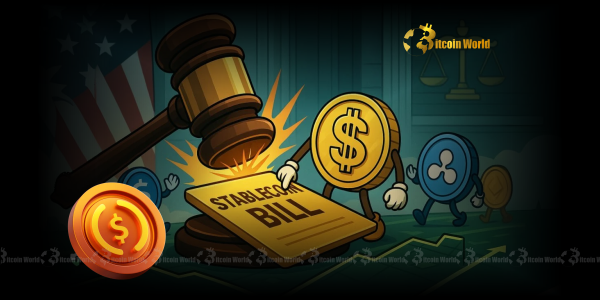
Stablecoin Legislation: A Strategic Boost for U.S. Government Bonds
The world of finance is constantly evolving, and at the intersection of traditional markets and the burgeoning crypto space lies a topic of immense importance: stablecoins. Recently, U.S. Treasury Secretary Scott Bessent made a significant statement, highlighting how forthcoming stablecoin legislation is poised to dramatically increase demand for U.S. government bonds. This isn’t just a technical detail; it’s a profound shift that could reshape global finance and solidify the dollar’s position in the digital age. But what exactly does this mean for investors, the crypto market, and the broader economy?
What is Stablecoin Legislation and Why Does it Matter?
Stablecoins are a unique class of cryptocurrencies designed to minimize price volatility, typically by pegging their value to a stable asset like the U.S. dollar. They serve as a crucial bridge between the volatile world of cryptocurrencies and the stability of traditional fiat currencies. However, without clear regulatory frameworks, their widespread adoption and integration into the mainstream financial system face significant hurdles.
The push for comprehensive stablecoin legislation aims to:
- Establish Consumer Protection: Ensure that stablecoin issuers maintain sufficient reserves to back their tokens, protecting users from potential losses.
- Mitigate Financial Risks: Prevent stablecoin runs or failures from destabilizing the broader financial system.
- Foster Innovation: Provide a clear legal and operational environment for businesses to build services using stablecoins, encouraging growth rather than stifling it.
- Enhance Illicit Finance Controls: Implement robust Anti-Money Laundering (AML) and Counter-Terrorist Financing (CTF) measures.
For the Treasury Secretary, robust legislation isn’t just about managing risk; it’s about leveraging stablecoins to strengthen the U.S. financial position.
How Will This Boost Demand for U.S. Government Bonds?
Secretary Bessent’s statement hinges on a fundamental aspect of stablecoin operation: their reserves. To maintain their peg, stablecoin issuers hold reserves in various assets, often including highly liquid, low-risk instruments. Under proposed legislation, there’s a strong likelihood that a significant portion of these reserves would be mandated or incentivized to be held in highly liquid, secure assets like short-term U.S. government bonds (e.g., Treasury bills).
Consider the mechanics:
- Increased Trust and Adoption: With clear regulation, more individuals and institutions will feel confident using stablecoins for payments, remittances, and trading.
- Growing Stablecoin Market Cap: As adoption grows, the total value of stablecoins in circulation (their market capitalization) will increase.
- Mandated Reserve Requirements: Legislation could require a larger percentage of stablecoin reserves to be held in U.S. Treasuries, ensuring stability and liquidity.
- Direct Demand for Bonds: A growing stablecoin market, coupled with these reserve requirements, would translate directly into billions, potentially trillions, of dollars flowing into the U.S. bond market.
This creates a symbiotic relationship: stablecoins gain legitimacy and stability from U.S. Treasury backing, while the U.S. Treasury gains a new, robust source of demand for its debt, helping to fund government operations and manage interest rates.
The Treasury Secretary’s Vision for Digital Assets
The perspective of the Treasury Secretary on digital assets is crucial for understanding the future trajectory of the U.S. financial system. Scott Bessent’s remarks signal a proactive approach, moving beyond mere risk mitigation to actively seeking opportunities within the digital asset space. This vision suggests a recognition that digital currencies, particularly stablecoins, are not a fleeting trend but a fundamental component of the future global financial infrastructure.
This strategic embrace of regulated stablecoins can be seen as a move to:
- Maintain U.S. Dollar Dominance: By ensuring that the most widely used stablecoins are dollar-pegged and robustly regulated, the U.S. can solidify the dollar’s role as the world’s reserve currency in the digital realm.
- Enhance Financial Efficiency: Regulated stablecoins could streamline cross-border payments, reduce transaction costs, and improve liquidity across various markets.
- Foster Responsible Innovation: By providing regulatory clarity, the U.S. aims to attract and retain digital asset businesses, encouraging innovation within a secure framework rather than pushing it offshore.
This proactive stance by the Treasury Secretary indicates a shift from a hesitant approach to one that seeks to harness the potential of digital assets while managing inherent risks.
Navigating the Landscape of Crypto Regulation
The path to comprehensive crypto regulation in the U.S. has been complex and fragmented, with various agencies asserting jurisdiction. However, the current momentum, fueled by statements from key figures like the Treasury Secretary, suggests that a unified framework for stablecoins might be on the horizon. This framework is essential not just for stablecoins, but for providing clarity to the entire digital asset ecosystem.
Key challenges in establishing effective crypto regulation include:
- Jurisdictional Disputes: Determining whether a digital asset falls under securities, commodities, or banking laws.
- Technological Complexity: Regulators needing to understand rapidly evolving blockchain technologies.
- Global Coordination: The inherently global nature of crypto requires international cooperation to prevent regulatory arbitrage.
Despite these challenges, the perceived benefits of clear regulation—from financial stability to economic growth—are driving legislative efforts. A well-crafted regulatory framework for stablecoins could serve as a blueprint for broader crypto regulation, fostering a more mature and integrated digital economy.
The Future of Stablecoins and Global Finance
The potential for stablecoin legislation to boost demand for U.S. government bonds is just one facet of a larger transformation. As stablecoins become more regulated and integrated, their role in global finance will expand significantly. We could see:
- Enhanced Payment Systems: Stablecoins offering faster, cheaper, and more transparent cross-border payments for businesses and individuals.
- New Financial Products: The development of innovative financial instruments built on regulated stablecoin rails, from lending to derivatives.
- Increased Institutional Adoption: More traditional financial institutions entering the digital asset space, leveraging stablecoins for various purposes.
- A More Robust Digital Dollar: A well-regulated stablecoin ecosystem effectively extends the reach and utility of the U.S. dollar into the digital realm, without the direct issuance of a central bank digital currency (CBDC).
This convergence of traditional finance and cutting-edge digital assets, driven by thoughtful regulation, promises a future where financial services are more accessible, efficient, and secure. The vision articulated by the Treasury Secretary underscores a future where digital assets are not just an alternative, but an integral part of the global financial architecture.
In conclusion, the statement from U.S. Treasury Secretary Scott Bessent regarding stablecoin legislation and its potential to boost demand for U.S. government bonds is a powerful indicator of the evolving relationship between traditional finance and the crypto world. It signals a move towards embracing digital assets within a regulated framework, promising greater stability, efficiency, and a strengthened position for the U.S. dollar globally. This strategic approach to crypto regulation could unlock unprecedented opportunities, making the financial landscape of tomorrow look very different from today.
To learn more about the latest crypto market trends, explore our article on key developments shaping digital assets institutional adoption.
This post Stablecoin Legislation: A Strategic Boost for U.S. Government Bonds first appeared on BitcoinWorld and is written by Editorial Team
0
0

 Управляйте всей своей криптовалютой, NFT и DeFi из одного места
Безопасно подключите используемый вами портфель для начала.


