
GBP/USD Plummets Below 1.3300 as Traders Brace for Critical Bank of England Verdict

0
0
BitcoinWorld
GBP/USD Plummets Below 1.3300 as Traders Brace for Critical Bank of England Verdict
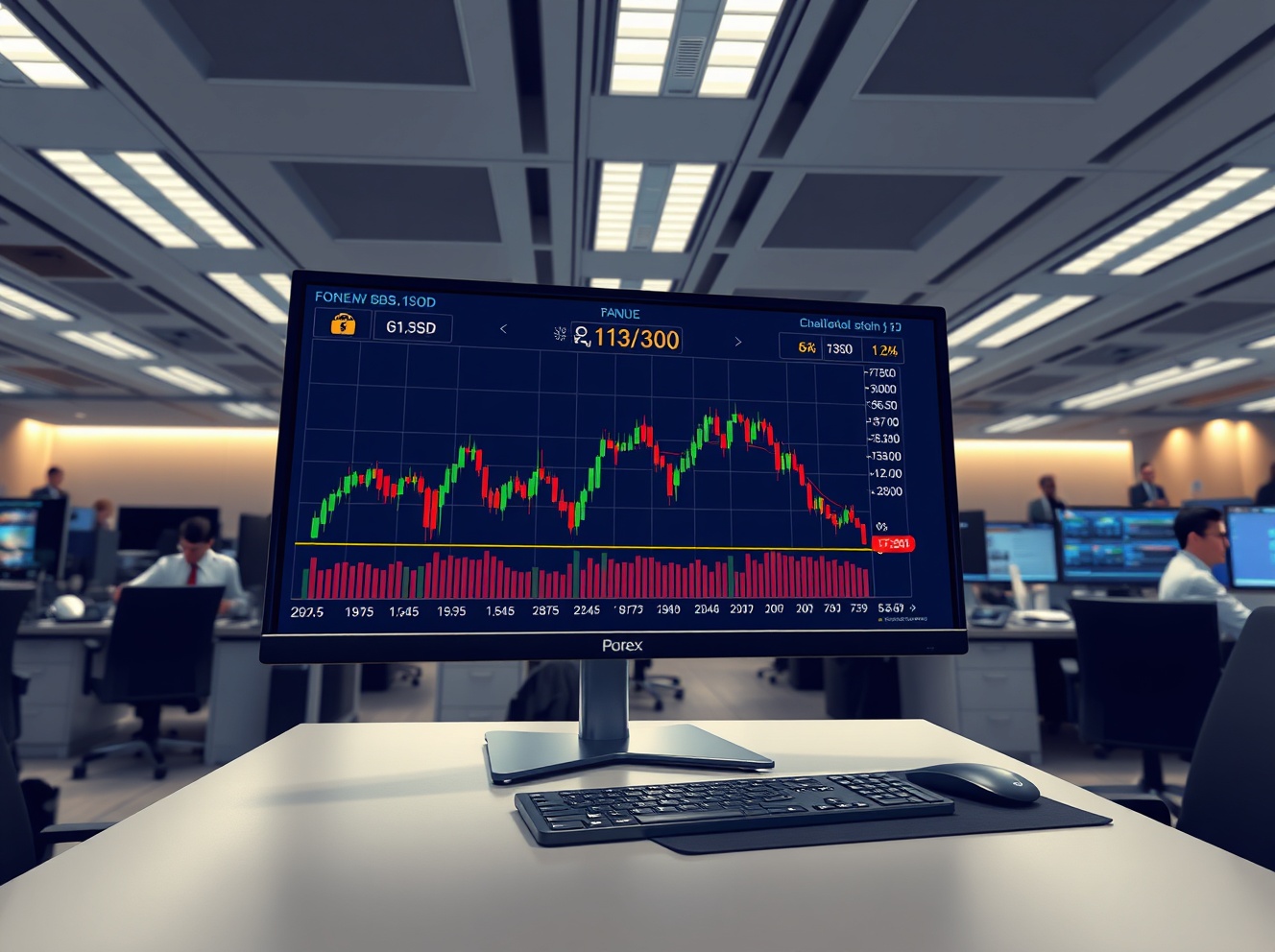
LONDON, UK – The British pound sterling has breached a critical psychological threshold against the US dollar, with the GBP/USD pair sliding decisively below the 1.3300 handle. This significant move arrives just hours before the Bank of England’s Monetary Policy Committee (MPC) announces its latest interest rate decision, a pivotal event that will shape currency trajectories for the coming quarter. Market sentiment currently reflects a cautious and defensive stance, as traders globally parse conflicting economic data and central bank signals.
GBP/USD Technical Breakdown and Market Sentiment
The descent below 1.3300 marks the pair’s weakest position in over three weeks. Consequently, this breach has triggered a cascade of stop-loss orders in the forex market. Furthermore, technical analysts highlight that the 1.3280 level now serves as immediate support. A failure to hold here could precipitate a rapid decline toward the 1.3200 zone. Conversely, the 1.3350 level has transformed from previous support into a formidable resistance barrier. Market positioning data from the Commodity Futures Trading Commission (CFTC) reveals that speculative net-long positions on the pound have contracted for two consecutive weeks. This data underscores a clear reduction in bullish conviction among institutional players.
Key Technical Levels to Monitor
- Immediate Resistance: 1.3350 (previous support, now resistance)
- Current Support: 1.3280 (recent swing low)
- Major Support: 1.3200 (psychological and technical level)
- 200-Day Moving Average: Currently near 1.3250, a critical long-term trend indicator
The Bank of England’s Monumental Dilemma
The MPC faces an exceptionally complex policy environment. On one hand, UK inflation readings, while moderating, persistently exceed the Bank’s 2% target. This situation necessitates a potentially hawkish stance to anchor inflation expectations. On the other hand, recent economic growth indicators have shown pronounced weakness. Preliminary GDP data for the last quarter signaled a contraction, raising legitimate concerns about tipping the economy into a recession. Therefore, the central bank must carefully balance its inflation-fighting mandate with its responsibility for economic stability. Market consensus, as derived from overnight index swaps, currently prices in a high probability of the Bank holding rates steady. However, the critical focus will be the accompanying statement and the quarterly Monetary Policy Report. These documents will provide vital clues about future policy direction, known as ‘forward guidance.’
Economic Data Influencing the Decision
| Indicator | Latest Figure | Trend | Implication for BoE |
|---|---|---|---|
| CPI Inflation (YoY) | 3.2% | Falling, but elevated | Hawkish pressure |
| Core Inflation (YoY) | 4.2% | Sticky | Hawkish pressure |
| Q4 GDP Growth | -0.1% | Contraction | Dovish pressure |
| Unemployment Rate | 4.2% | Rising slightly | Dovish pressure |
| Average Earnings Growth | 6.1% | Strong | Hawkish pressure |
Global Context and the US Dollar’s Strength
The pound’s weakness does not exist in a vacuum. Simultaneously, the US dollar index (DXY) has rallied to multi-month highs. This broad dollar strength stems from shifting expectations for the Federal Reserve’s policy path. Recent robust US employment and retail sales data have prompted markets to scale back projections for aggressive Fed rate cuts in 2025. Consequently, the widening interest rate differential between the US and other major economies, including the UK, provides fundamental support for the USD. This global dynamic acts as a significant headwind for GBP/USD, irrespective of domestic UK developments. Analysts note that the currency pair’s fate hinges on a relative policy story: whether the Bank of England can signal a more hawkish path than the Federal Reserve in the coming months.
Expert Analysis on Policy Divergence
Financial strategists emphasize the concept of ‘policy divergence.’ Historically, currency values are heavily influenced by the difference in interest rates between two nations. If the Bank of England signals a pause or a slower cutting cycle than the Fed, the pound could find a floor and recover. However, if the BoE adopts a decidedly dovish tone acknowledging economic fragility, the path of least resistance for GBP/USD remains downward. Market participants will scrutinize the voting split of the nine-member MPC. A divided committee often signals heightened uncertainty and can lead to increased currency volatility in the short term.
Market Impact and Trader Positioning
The pre-decision volatility presents both risk and opportunity. Option markets show a sharp rise in implied volatility for GBP/USD, reflecting the premium traders pay for protection against large price swings. This environment typically favors strategic, risk-managed positions over directional bets. Institutional asset managers have reportedly reduced their exposure to UK assets, a flow that directly pressures the pound. Meanwhile, corporate treasurers with upcoming USD obligations are actively hedging their currency risk, adding to selling pressure on GBP/USD in the spot market. The immediate aftermath of the decision will likely see a ‘whiplash’ effect as algorithms and traders react to the headline and dissect the statement’s language.
Conclusion
The GBP/USD breach below 1.3300 serves as a stark prelude to a defining moment for UK monetary policy. The Bank of England’s impending decision carries substantial weight for currency valuations, inflation trajectories, and economic stability. While technical factors and a robust US dollar contribute to the pound’s current weakness, the primary catalyst remains the delicate balancing act facing the MPC. Traders and investors globally now await clarity on whether the Bank prioritizes taming persistent inflation or supporting a faltering economy. The resulting guidance will ultimately determine if the 1.3300 level becomes a distant memory or a platform for a sterling recovery.
FAQs
Q1: Why is the GBP/USD exchange rate important?
The GBP/USD, or ‘Cable,’ is one of the world’s most traded currency pairs. It reflects the relative value of the British pound against the US dollar and is a key barometer for UK economic health, global risk sentiment, and interest rate differentials between the Bank of England and the Federal Reserve.
Q2: What does it mean when the Bank of England is ‘hawkish’ or ‘dovish’?
A ‘hawkish’ stance indicates a central bank’s primary focus is on combating inflation, often signaling a willingness to raise or maintain high interest rates. A ‘dovish’ stance prioritizes supporting economic growth and employment, often signaling potential interest rate cuts or a slower pace of hikes.
Q3: How does a strong US dollar affect GBP/USD?
Since GBP/USD quotes how many US dollars one British pound can buy, a stronger US dollar directly pushes the exchange rate lower. Broad USD strength, driven by factors like higher US interest rate expectations, creates a significant headwind for the pair.
Q4: What are the main factors the Bank of England considers in its decision?
The MPC’s primary mandate is to achieve the 2% inflation target. To do this, it analyzes a wide range of data including Consumer Price Index (CPI) inflation, wage growth, GDP growth, unemployment figures, business surveys, and global economic conditions.
Q5: What happens to GBP/USD immediately after the interest rate announcement?
The pair typically experiences extreme volatility in the minutes following the decision. The initial move reacts to the headline rate decision (hold, cut, or hike), but the more sustained trend is often dictated by the tone of the policy statement and the projections in the Monetary Policy Report, which provide forward guidance.
This post GBP/USD Plummets Below 1.3300 as Traders Brace for Critical Bank of England Verdict first appeared on BitcoinWorld.
0
0
 Gestisci cripto, NFT e DeFi in un unico luogo
Connetti in sicurezza il portafoglio che usi per iniziare.