
Senate Stablecoin Yield Deal May Not Be What the White House Wanted

0
0

US Senator Cynthia Lummis reportedly told reporters that “major light bulbs were switched on” during a closed-door Senate Republican meeting on crypto market structure legislation on Thursday, describing an unexpected path forward on the stalled stablecoin yield debate.
White House Crypto Council Executive Director Patrick Witt, who attended the same meeting, reportedly emerged looking frustrated and declined to comment. The contrasting reactions suggest the compromise may not align with the administration’s preferred position.
Crypto Bill’s Stablecoin Yield Compromise May Clash With the White House Position
The Digital Asset Market Clarity Act, commonly known as the CLARITY Act, has been stalled since January when the Senate Banking Committee postponed its first markup session.
The core dispute pits the crypto industry against the banking lobby over whether platforms can offer yield or rewards on stablecoin holdings.
Banks, led by the American Bankers Association, argue that stablecoin rewards function like deposit interest and threaten traditional banking’s core business model.
Crypto firms counter that the GENIUS Act, signed into law last summer, only barred stablecoin issuers from paying yield, not affiliated platforms or exchanges.
Senator Lummis, who chairs the Senate Banking Committee’s crypto subcommittee, reportedly told reporters that yield negotiations are making progress but remain in a “delicate state.”
Reportedly, she described the focus as shifting away from imminent legislative text toward identifying “who we need to be reaching out to.”
That language signals the breakthrough may involve new stakeholders or compromise partners that neither side had previously considered.
“I think some major light bulbs were switched on during this meeting. So, there’s a path forward that is not a path that I would have expected to encounter when I walked in the room,” wrote Eleanor Terrett, citing Sen. Cynthia Lummis.
Two Smiles, One Frown, and No Text
According to Terrett, host of the Crypto In America podcast, the body language of leaving the room told a split story.
- Lummis was openly optimistic.
- Senate Banking Committee Chairman Tim Scott emerged smiling but declined to comment, citing his policy of not speaking to reporters in hallways.
- Witt, the White House’s point person on crypto legislation, offered nothing.
Just one day earlier, Lummis had told reporters she believed the bill could advance from committee by late April and pass the Senate before year-end.
She indicated that the yield compromise would ban crypto platforms from using banking terminology such as “interest” or “deposit yield” and would prohibit tying rewards to the size of a user’s holdings.
Coinbase CEO Brian Armstrong has reportedly shown a willingness to concede on the yield language.
The company’s stablecoin-related revenue accounted for nearly 20% of its total revenue in Q3 2025, making the outcome of these negotiations material to its business.
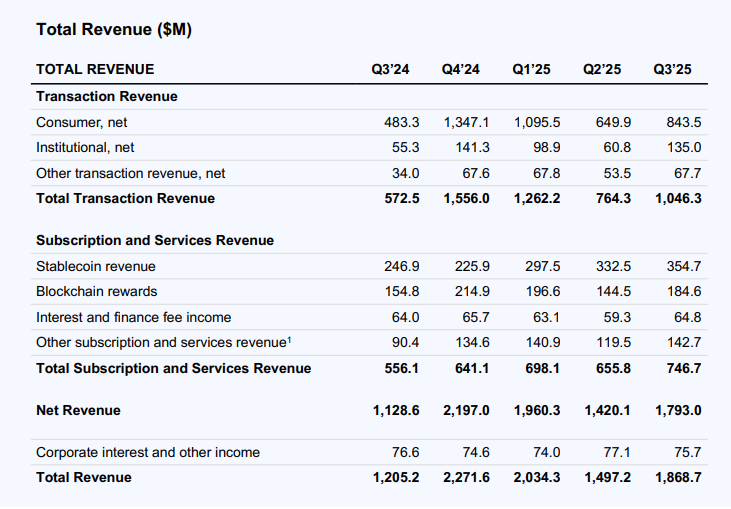 Coinbase Q3 2025 Earnings. Source: Coinbase Shareholder Letter
The Senate’s window is tightening. Midterm elections later this year will compress floor time, and the Iran war has already consumed significant legislative bandwidth.
Prediction markets currently price the odds of the CLARITY Act being signed into law in 2026 at 61%.
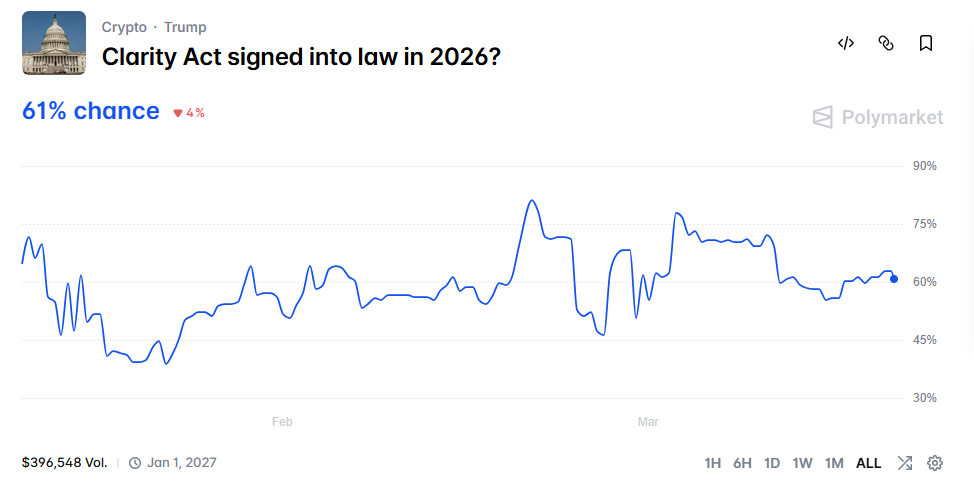 Odds of Clarity Act Passing in 2026. Source: Polymarket
Whatever switched on in that room still has to survive in daylight. No bill text has emerged, and the White House’s visible frustration suggests the “unexpected path” may require concessions the administration did not plan to make.
0
0


 Gestisci cripto, NFT e DeFi in un unico luogo
Connetti in sicurezza il portafoglio che usi per iniziare.