
Bitcoin Miners Prepare to Power Down as Ice Storm Threatens Southern US Grid

0
0

This article was first published on The Bit Journal.
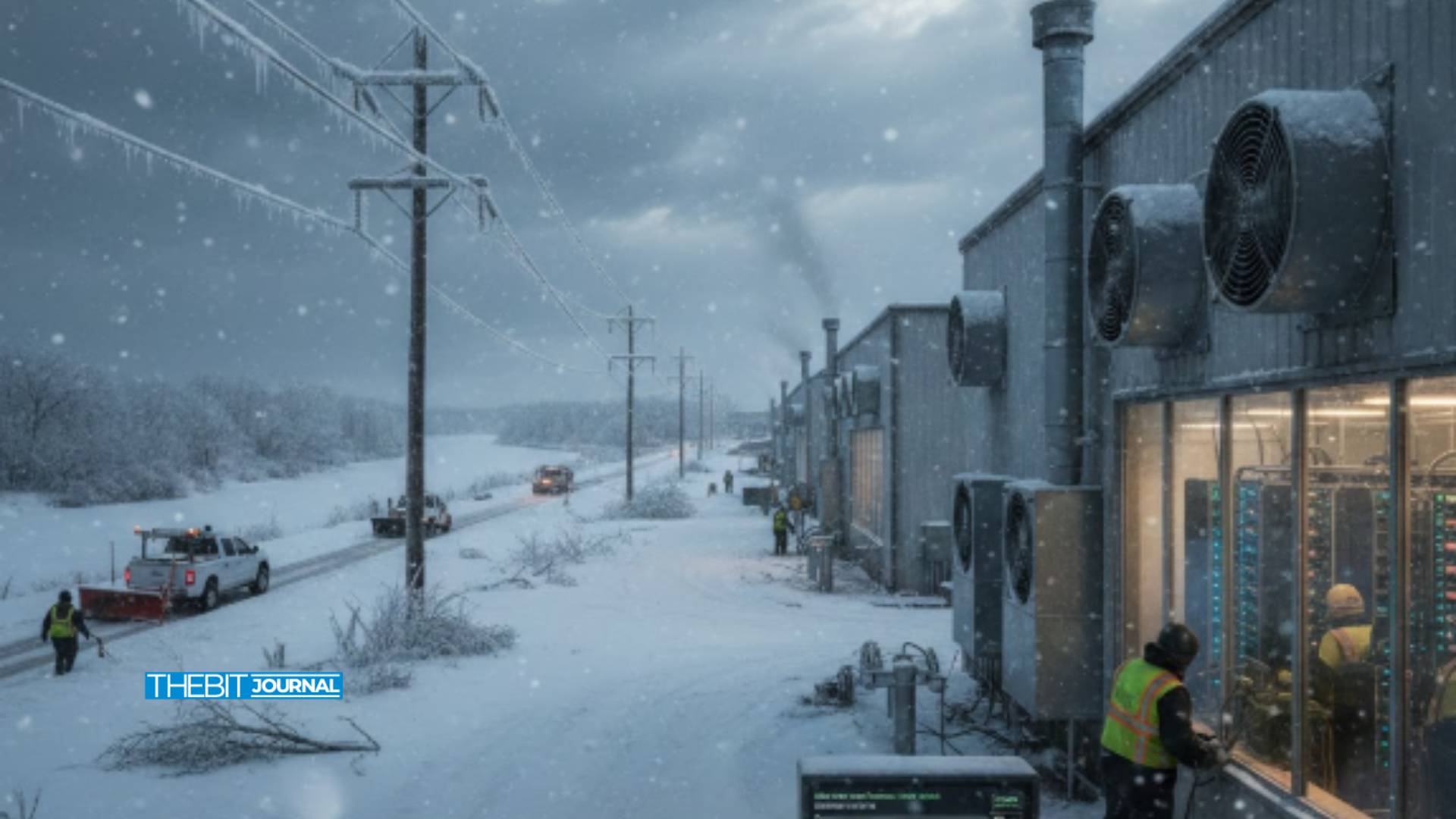
A wide winter system sliding across the southern United States is more than a travel nuisance. When freezing rain coats power lines and households crank up the heat, grid operators start watching demand closely. In that environment, large miners often do the sensible thing: scale back early, protect equipment, and avoid adding pressure when communities need stable electricity.
For many firms, this is no longer unusual as weather volatility is now part of the operating plan, and Bitcoin mining sites in Texas and nearby states treat winter preparation as routine. That means monitoring forecasts, insulating vulnerable components, and setting clear rules for when to curtail load.
Bitcoin mining during grid stress comes down to flexibility
The key difference between miners and most heavy industry is speed. A steel mill or chemical plant cannot pause without consequences. Bitcoin mining can throttle down in minutes because the work is digital and modular. That flexibility matters when the grid is tight, because reducing a large industrial load can buy time for operators to rebalance supply and prevent broader outages.
Ice storms raise the stakes because the problem is not only demand. Ice adds weight and strain to lines, and a single failure can ripple across neighborhoods. For Bitcoin mining operators, staying at full power while the grid is fragile can turn a manageable storm into an abrupt outage, followed by messy restarts and higher maintenance risk. A controlled pause is often the cheaper option.
Why Texas and the South matter for hashrate watchers
Texas remains one of the most-watched regions for Bitcoin mining in the United States. The state has strong generation capacity, a market shaped by real-time pricing, and industrial customers that can respond quickly when conditions change. In practice, miners in these areas are treated as flexible demand, meaning they can reduce usage fast if supply tightens.
That is why storms can show up in network data. If enough facilities curtail at once, total hashrate can dip and block timing can slow until the next difficulty adjustment nudges the system back toward normal.
What investors should actually take away
A weather-driven curtailment is rarely a direct price trigger. Bitcoin still trades on liquidity, macro sentiment, and risk appetite first. But storm events highlight something investors forget: crypto is built on physical constraints. Bitcoin mining is about chips, cooling, power contracts, and grid realities, not only charts.
The bigger story is maturity. Each time operators curtail smoothly, Bitcoin mining looks less like an uncontrollable drain and more like a controllable energy customer. That does not end the energy debate, but it shifts the conversation from ideology to engineering. When Bitcoin mining facilities behave responsibly during peak stress, it strengthens their case with utilities and local communities.
Conclusion
If the ice band intensifies, some sites across the southern US will likely power down temporarily to reduce strain and avoid equipment damage. If conditions ease, many will keep running with tighter monitoring. Either way, this storm is another reminder that Bitcoin mining is global in its economics, but local in its electricity, and weather still gets a vote. In a business built on uptime, restraint can be its own advantage.
FAQs
What is curtailment in mining?
It is a planned reduction in electricity use, usually done by slowing or shutting off rigs during grid stress.
Can a storm shut down Bitcoin completely?
No. The network is distributed worldwide, so regional outages may reduce hashrate but do not stop it.
Does a hashrate dip mean security is failing?
Not automatically. Difficulty adjusts over time and the network continues producing blocks.
Glossary
Hashrate: The total computing power securing the network.
Difficulty adjustment: The periodic recalibration that keeps block timing near the target pace.
Flexible load: A power user that can quickly reduce demand when the grid is under pressure.
References
Read More: Bitcoin Miners Prepare to Power Down as Ice Storm Threatens Southern US Grid">Bitcoin Miners Prepare to Power Down as Ice Storm Threatens Southern US Grid
0
0


 Gérez tous vos cryptos, NFT et DeFi à partir d'un seul endroit.
Connectez de manière sécurisée le portefeuille que vous utilisez pour commencer.


0
0