
AFX Trade Exploit Drains $24M as Validator Signing Keys Are Compromised

0
0

AFX Trade has become the latest decentralized finance protocol to suffer a major security incident after attackers drained approximately $24.15 million by compromising validator signing keys used by its bridge infrastructure. The incident immediately triggered concerns across the broader Arbitrum ecosystem, although blockchain security experts confirmed that Arbitrum’s native bridge remained fully secure.
Instead of exploiting a smart contract flaw, attackers gained enough validator signatures to authorize fraudulent withdrawals. The event highlights how operational security remains one of the biggest challenges facing decentralized finance despite continuous improvements in blockchain technology.

How the AFX Trade Exploit Happened
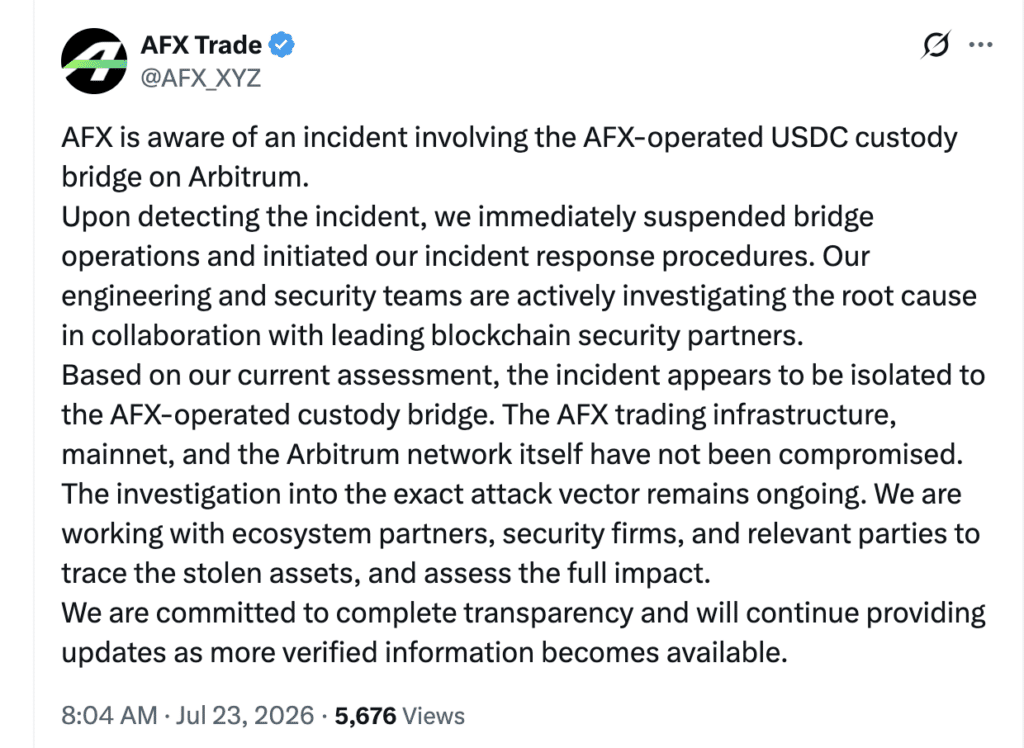
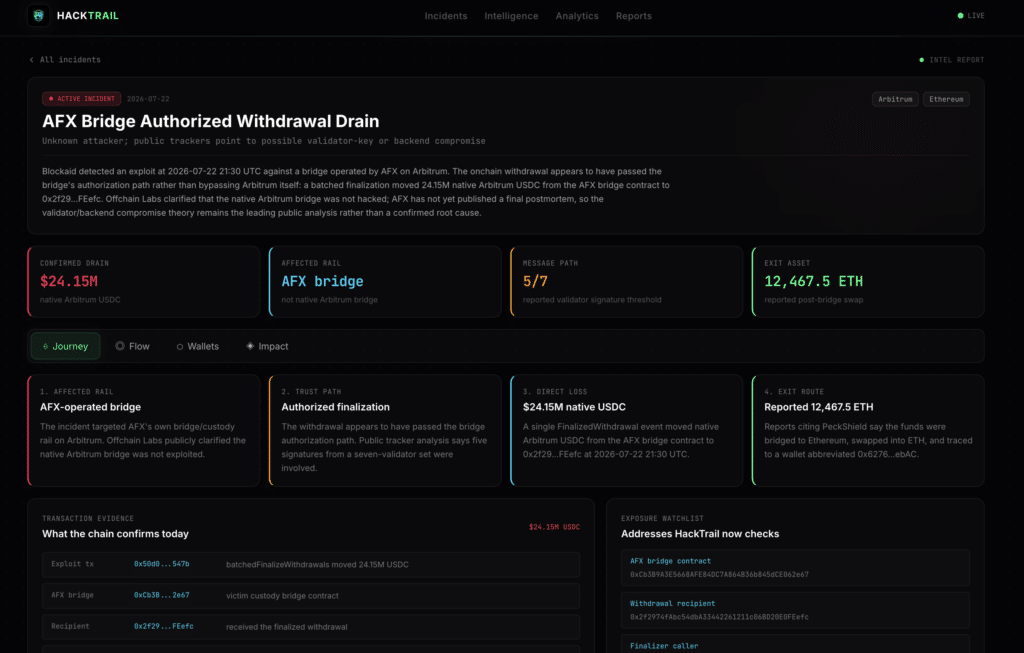
The AFX Trade exploit was not caused by a vulnerability in Arbitrum itself. According to blockchain security firm Blockaid, attackers compromised validator signing keys belonging to a bridge operated directly by AFX Trade. Because the bridge required five validator signatures to approve withdrawals, the compromised keys satisfied the required quorum, allowing unauthorized transactions to proceed exactly as the bridge was programmed.
This distinction matters because the underlying blockchain infrastructure continued operating normally. Instead, the incident demonstrated how compromised operational credentials can bypass otherwise secure smart contract logic.
Why the Arbitrum Bridge Was Not Breached
Following reports of the Arbitrum bridge hack, Offchain Labs quickly clarified that the native Arbitrum bridge was never compromised. Security researchers emphasized that the protocol’s bridge functioned exactly as intended, while the affected infrastructure belonged solely to AFX Trade.
This clarification prevented unnecessary panic across the Arbitrum ecosystem because users often associate third-party bridge incidents with the blockchain itself. The event reinforces an important lesson within decentralized finance: applications built on secure networks still depend heavily on their own security architecture, validator management, and operational controls.
What Happened to the Stolen Funds?
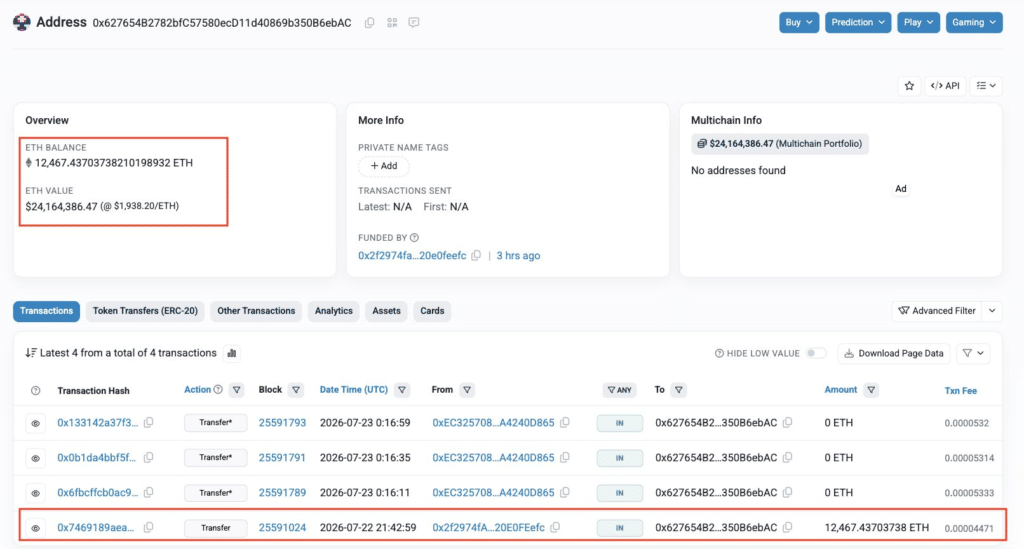
After completing the unauthorized withdrawal, attackers transferred nearly all stolen USDC from the compromised bridge onto Ethereum. Blockchain investigators tracked the movement before the assets were converted into roughly 12,467 ETH, significantly complicating potential recovery efforts.
The incident nearly wiped out AFX Trade’s total value locked, creating immediate liquidity concerns for remaining users. As investigators continue monitoring wallet activity, the exploit joins a growing list of sophisticated crypto bridge hacks where compromised validator infrastructure, rather than flawed smart contracts, became the primary attack vector.
What This Means for DeFi Security
The latest AFX Trade security breach highlights an uncomfortable reality across decentralized finance. Even highly audited smart contracts cannot fully protect protocols if operational infrastructure remains vulnerable. Validator management, private key protection, hardware security modules, and multi-party authentication have become equally important components of protocol security.
As institutional participation grows throughout DeFi, investors increasingly evaluate operational safeguards alongside smart contract audits. This evolving threat landscape continues pushing developers toward stronger validator protection, decentralized governance models, and more resilient bridge architectures capable of resisting credential compromise.
Market Impact and Industry Response
The news surrounding AFX Trade quickly spread throughout crypto markets, adding another headline to an already difficult year for decentralized finance security. Although the incident affected a single protocol rather than the broader Arbitrum network, market participants once again questioned the overall safety of cross-chain bridge infrastructure.
Security companies, blockchain analytics firms, and ecosystem developers immediately began examining transaction flows while encouraging protocols to strengthen validator management practices. The rapid response demonstrated how blockchain transparency allows investigators to monitor stolen assets almost immediately after major exploits occur.
Can Crypto Bridge Security Improve?
The question following every major Arbitrum bridge exploit remains the same: can bridge security become significantly stronger? Industry experts increasingly believe the answer is yes, but only through multiple overlapping safeguards. Decentralized validator networks, cold-storage signing procedures, continuous key rotation, real-time anomaly detection, and advanced monitoring systems all reduce attack opportunities.
The AFX Trade loses $24 million in bridge hack incident may accelerate adoption of these best practices as developers recognize that operational security deserves the same attention as smart contract development and protocol innovation.
Conclusion
The AFX Trade incident serves as another reminder that decentralized finance security extends well beyond smart contract code. While Arbitrum’s native infrastructure remained unaffected, compromised validator signing keys allowed attackers to drain approximately $24.15 million from a third-party bridge operated by the protocol.
As blockchain ecosystems continue expanding, stronger validator protection, improved bridge security, and comprehensive operational controls will become increasingly important. Investors should continue monitoring official protocol updates, prioritize platforms with transparent security practices, and always evaluate operational risk alongside technical innovation before committing capital.
Appendix: Glossary of Key Terms
AFX Trade: A decentralized perpetual futures exchange built on the Arbitrum blockchain that settles transactions in USDC.
Arbitrum: An Ethereum Layer 2 scaling network designed to improve transaction speed while reducing costs.
Bridge: Infrastructure that enables digital assets to move between different blockchain networks.
Validator Signing Keys: Cryptographic keys used by validators to authorize transactions and bridge withdrawals.
USDC: A U.S. dollar-backed stablecoin commonly used throughout decentralized finance.
ETH: The native cryptocurrency of the Ethereum blockchain.
Total Value Locked (TVL): The total value of assets deposited within a decentralized finance protocol.
Bridge Exploit: A security incident targeting blockchain bridge infrastructure rather than the underlying blockchain itself.
Frequently Asked Questions About AFX Trade
What happened to AFX Trade?
AFX Trade lost approximately $24.15 million after attackers compromised validator signing keys used by a bridge operated by the protocol.
Was Arbitrum hacked?
No. Security researchers and Offchain Labs confirmed that Arbitrum’s native bridge and network were not compromised.
How did attackers steal the funds?
Attackers obtained enough validator signatures to authorize fraudulent withdrawals from the protocol’s bridge infrastructure.
Where did the stolen funds go?
The stolen USDC was transferred to Ethereum and exchanged for roughly 12,467 ETH.
Can users still trust Arbitrum?
Current evidence indicates the exploit affected only AFX Trade’s bridge infrastructure, not Arbitrum’s underlying blockchain.
References
Disclaimer
This article is intended for informational and educational purposes only and should not be considered financial, investment, or legal advice. Cryptocurrency markets are highly volatile, and digital asset prices can change rapidly. Readers should conduct independent research and verify the latest market data, including current cryptocurrency prices, before making any investment decisions.
Read More: AFX Trade Exploit Drains $24M as Validator Signing Keys Are Compromised">AFX Trade Exploit Drains $24M as Validator Signing Keys Are Compromised
0
0

 Tüm kripto, NFT ve DeFi varlıklarınızı tek bir yerden yönetin
Kullanmaya başlamak için portföyünüzü güvenli bir şekilde bağlayın.

0
0

0
0

