
Tether AI Evolution: QVAC Enables Local AI Models on Consumer Devices

0
0
This article was first published on The Bit Journal.
Tether QVAC is no longer just an experimental extension of Tether AI. It is now part of a broader infrastructure story that connects stablecoin scale with edge computing ambition. Tether AI entered the spotlight after reports that Tether QVAC Fabric can fine-tune and run multi-billion parameter AI models on phones and consumer GPUs. At the same time, Tether remains a market giant, with USDT trading at $1.00, a 24-hour volume near $80.2 billion, and a market cap above $184.1 billion.
Tether QVAC Moves Tether AI Beyond Stablecoin Utility
Tether QVAC matters because it pushes Tether AI beyond its familiar role in digital dollar liquidity and into computing infrastructure. According to Tether and crypto.news, Tether QVAC Fabric introduces a cross-platform BitNet LoRA framework designed for Microsoft BitNet models.
That framework supports AMD and Intel GPUs, Apple’s Metal stack, and high-end mobile GPUs. This move places Tether artificial intelligence in direct conversation with a much larger theme: who controls the next layer of AI delivery when models no longer need constant cloud access.
Tether AI Models on Phones Create a Clear Contrast With Cloud AI
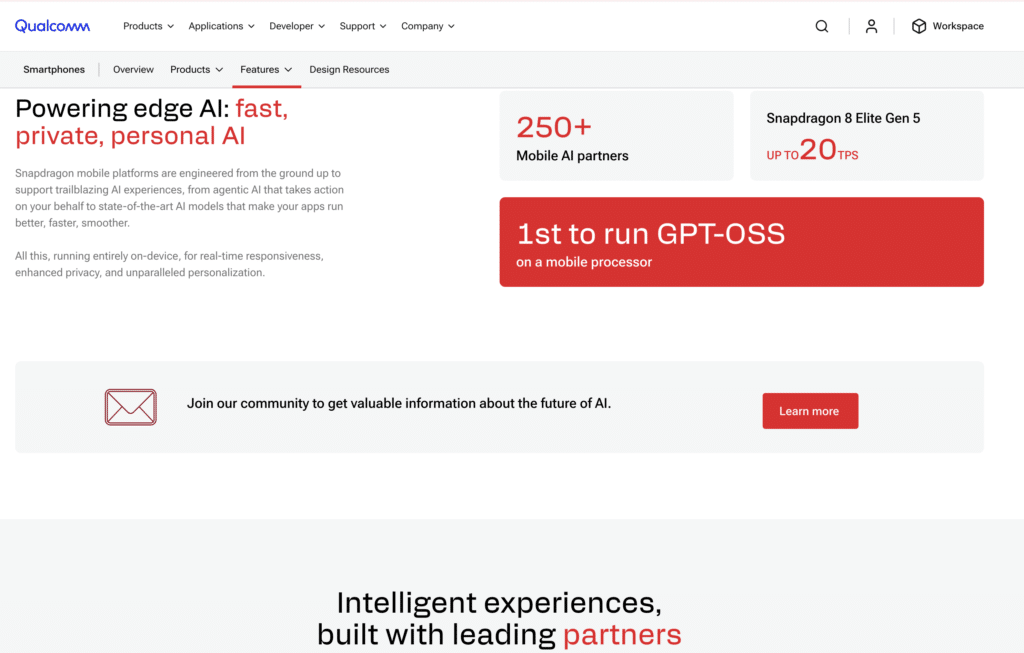
The clearest comparison is between on-device AI models and cloud AI systems. Traditional cloud AI depends on remote servers, external inference costs, and data transfer. Tether QVAC AI models on phones suggest a different path, where the device handles more of the work locally.
That matters for latency, privacy, and operating cost. Tether edge AI therefore enters a competitive lane that includes mobile chipmakers, local AI software developers, and cloud giants. In simple terms, Tether QVAC is betting that edge performance can become commercially meaningful, not just technically interesting.
Tether QVAC Fabric Explained Through Performance and Memory Claims
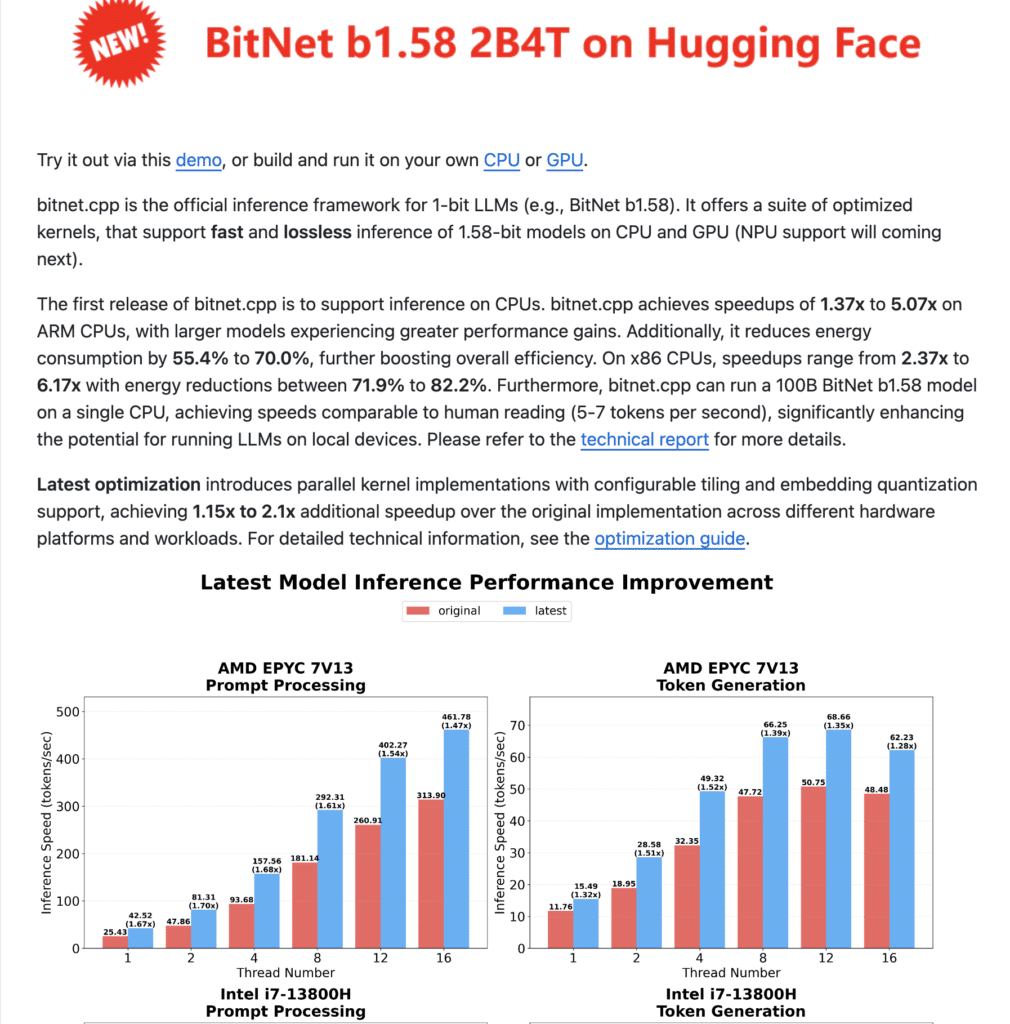
The boldest part of the Tether QVAC story is performance. Crypto.news reported that Tether QVAC Fabric claims GPU inference speedups of 2x to 11x over CPU baselines and memory savings of up to 90% compared with full-precision models.
Those are aggressive numbers, but they explain why the release gained attention so quickly. Tether consumer GPU AI is not being framed as a niche developer trick. It is being presented as a path toward running larger workloads on ordinary hardware envelopes, including laptops, flagship smartphones, and consumer-grade graphics cards.
Billion-Parameter Ambitions Make Tether AI a Serious Infrastructure Story
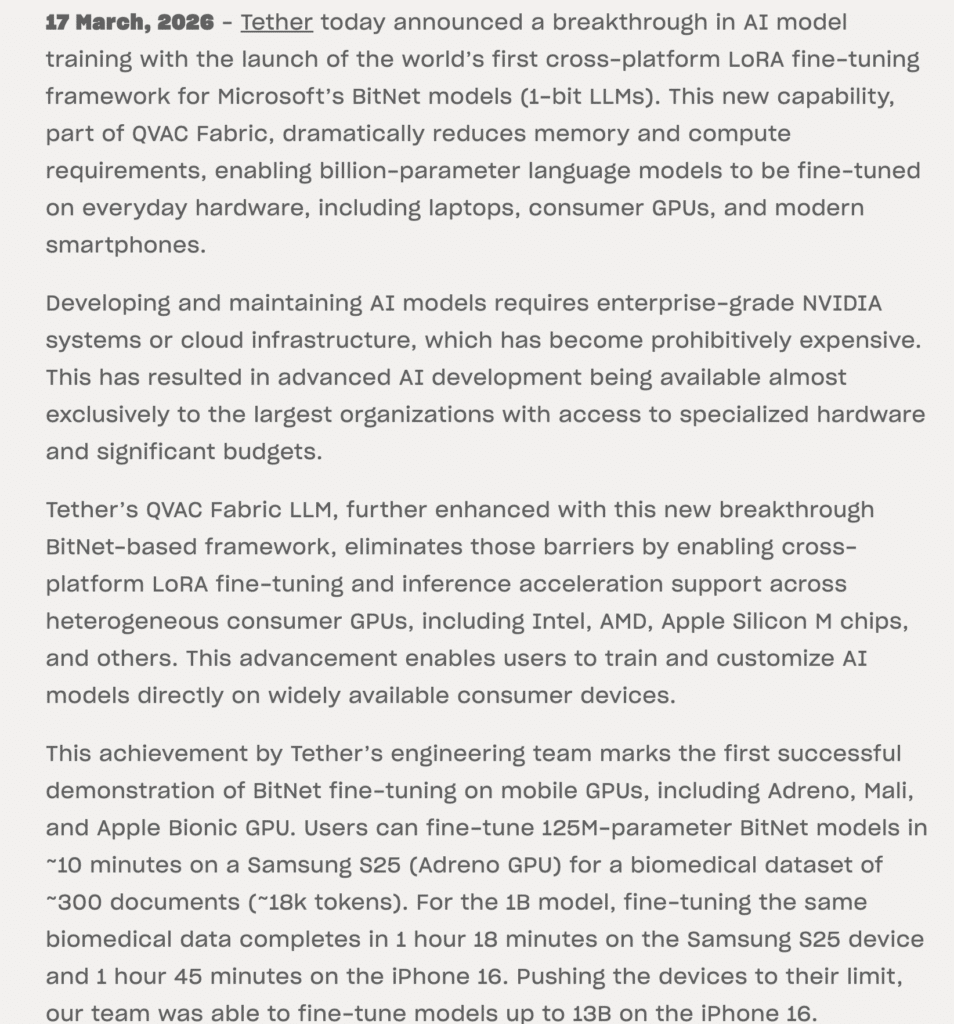
The bigger reason analysts are paying attention is scale. Tether says it has fine-tuned models up to 3.8 billion parameters on devices such as the Pixel 9, Galaxy S25, and iPhone 16, and up to 13 billion parameters on iPhone 16. If independent testing confirms that claim, Tether AI models would move beyond lightweight demos into serious edge deployment territory.
This is why the long-tail phrase “Tether QVAC pushes multi-billion parameter AI models onto phones and consumer GPUs” has strong relevance. It describes a shift in capability, not just a product launch.
Tether AI Infrastructure Expansion Looks Strategic, Not Accidental
This release also fits a broader pattern. Tether’s official news page described the March 17, 2026 launch as the world’s first cross-platform BitNet LoRA framework for billion-parameter AI training and inference on consumer GPUs and smartphones. Crypto.news framed the release as part of Tether’s pivot from pure stablecoin issuer to a wider infrastructure operator.
That distinction matters. Tether AI infrastructure expansion appears designed to give the company relevance in open-source tooling, edge computing, and developer ecosystems, areas that sit well outside the narrow stablecoin conversation.
Tether QVAC Versus Conventional AI Infrastructure Is the Real Comparison
The strongest comparative angle is not Tether versus another token. It is Tether QVAC versus conventional AI infrastructure logic. Most established AI systems assume bigger cloud clusters, more centralized compute, and higher recurring service costs. Tether QVAC Fabric explained another way is this: it tries to compress capability closer to the user.
That creates a different value case for apps, wallets, assistants, and local productivity tools. If AI models running locally on iPhone and other premium devices become more viable, the economics of deployment could shift faster than many expected.
Why Tether Edge AI Could Matter for Crypto Markets and Builders
From a market perspective, this does not immediately change the Tether price, which remains designed for stability rather than speculative upside. Still, the strategic implications matter for investor perception. Tether AI and Tether QVAC introduce a narrative that Tether is using financial scale to fund technical expansion.
For builders, the attraction is different. Questions such as how to run AI models on smartphones, how to reduce cloud dependence, and what on-device AI vs cloud AI benefits really look like now have a more practical case study. That is where this story gets real traction.
Conclusion
Tether QVAC now stands as one of the more important edge AI developments tied to a crypto-native company in 2026. Tether AI is no longer only about payments adjacency or headline diversification. Tether QVAC Fabric has introduced a serious argument for multi-billion AI models on consumer GPUs and AI models on phones. Whether every benchmark holds up or not, the strategic direction is clear.
Tether wants influence in the infrastructure layer. Readers tracking Tether AI, edge deployment, and open-source AI tooling should watch closely because this expansion could shape the next phase of digital infrastructure.
Frequently Asked Questions About Tether QVAC
What is Tether QVAC?
Tether QVAC is part of Tether AI’s edge computing stack. It is designed to support training and inference for billion-parameter AI models on phones and consumer GPUs.
What is Tether QVAC Fabric?
Tether QVAC Fabric is the framework layer that integrates BitNet LoRA and enables cross-platform support for AMD, Intel, Apple Metal, and mobile GPU environments.
Can Tether AI models run on smartphones?
Tether says yes. Reported tests include fine-tuning up to 3.8 billion parameter models on Pixel 9, Galaxy S25, and iPhone 16, with up to 13 billion parameters on iPhone 16.
Why is this important for crypto investors?
It broadens the Tether story from stablecoins into infrastructure. That may affect how the market values Tether’s long-term strategic position, even though USDT itself remains a price-stable asset.
Appendix: Glossary of Key Terms
Tether QVAC: A Tether AI framework focused on edge AI deployment, local inference, and efficient model fine-tuning across consumer hardware.
BitNet LoRA: A low-rank adaptation approach for Microsoft BitNet models that aims to reduce compute and memory requirements during fine-tuning and inference.
Edge AI: Artificial intelligence that runs closer to the end user on local hardware instead of relying fully on centralized cloud servers.
Consumer GPUs: Graphics processors found in mainstream desktops, laptops, and some premium mobile devices rather than specialized data center hardware.
On-device AI models: AI models that run locally on phones, tablets, or PCs, often improving privacy, responsiveness, and offline capability.
References
Crypto.news
Tether official news
CoinMarketCap
Disclaimer
This article is for informational purposes only and does not constitute financial, investment, or trading advice. Cryptocurrency markets and related infrastructure narratives can change rapidly, and readers should conduct independent research before making any financial decisions.
Read More: Tether AI Evolution: QVAC Enables Local AI Models on Consumer Devices">Tether AI Evolution: QVAC Enables Local AI Models on Consumer Devices
0
0


 Gestisci cripto, NFT e DeFi in un unico luogo
Connetti in sicurezza il portafoglio che usi per iniziare.

0
0

0
0

0
0

0
0