
Is NFT 2.0 a Myth or Reality?

3
0
NFT 2.0 embraces a wide variety of non-fungible tokens that can be classified as programmable assets: wrapped NFTs (wNFTs), dynamic NFTs (dNFTs), community NFTs (cNFTs), executable NFTs (xNFTs), etc.
You can read more about NFT2.0 in the article NFT 2.0: the Era of Programmable Assets.
How NFT2.0 aggregator emerged
After the NFT hype of 2021–2022, many people turned away from non-fungible tokens, believing that it is “another scam” or just a passing phenomenon at the crypto market.
In fact, the NFT market has undergone a huge number of changes that have affected both the technology stack (see ERC-3525, ERC-7496, and other standards), as well as the economic and organizational approach.
Looking at the Collab stats on Dune, one can clearly conclude that the SBT/NFT entry story hit even in the crypto winter, and it would be a shame not to bring up NFTs as keys to airdrops, Aptos and others were not left out. It has become a universal and, more importantly, publicly available practice.
So DAO Envelop decided in 2022 to create an NFT 2.0 aggregator that would bring together a wide variety of projects working on executable, financial, collateral, wrapped and other NFTs.
Today, the aggregator already has over 120 projects and continues to be added to regularly. You can add your project by filling out a simple form.
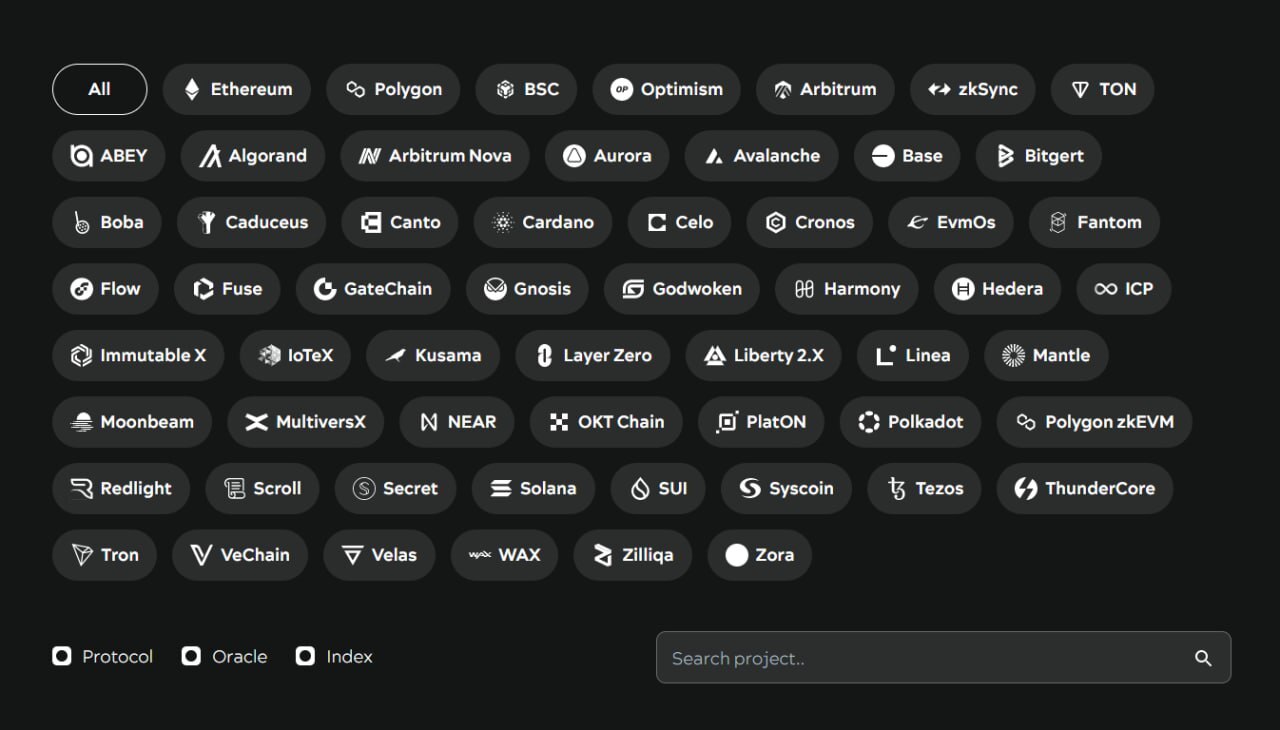
A quick look at the number of supported networks is enough to realize the scale of the phenomenon. Now NFT2.0 projects work on 58 blockchains, including Ethereum, BNB Chain, Polygon, Arbitrum, Optimism, Avalanche, Polkadot, Cardano and many others.
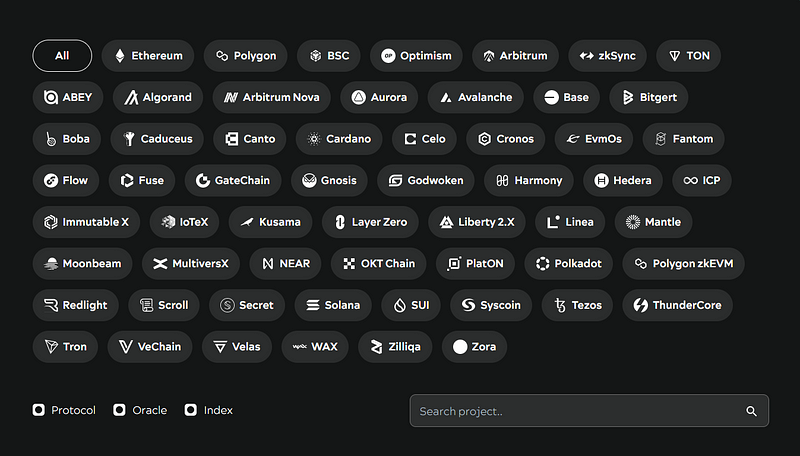 NFT2.0 projects work on 58 blockchains.
What’s Under The Hood?
All NFT2.0 projects are organized into three basic areas: Protocols, Oracles, Indexes.
Protocols work on-chain with NFTs and their derivatives.
Oracles can use both off-chain and on-chain data.
Here you can see how the NFT oracle Envelop reads the on-chain data in Ethereum, Polygon, Arbitrum, BNB Smartchain networks and gives off-chain information about it.
Indexes are synthetic products based on oracles and protocols. Typically, indexes are used in dynamic NFTs (dNFT), financial NFTs (fNFT/NFTfi), collateral NFTs (NFTx, etc.), and so on.
Therefore, each project in the aggregator has the following fields:
- Description
- Affiliation to protocol, oracle, index
- Links to site, docs, GitHub and socials
- Useful Tags
- And the stage of development of the project (MVP, beta, etc)
This approach allows you to compare projects, search by keywords, sort and make selections, which is certainly useful for aspiring Web 3.0 entrepreneurs, researchers, and developers.
What Else Is on the NFT2.0 Aggregator
- The first book on the topic of NFT 2.0, which contains a wealth of useful information about this rapidly growing, market segment (see more about the book)
- Monthly and annual digests for all fans of analytics and reviews. In them, you can trace where the NFT market started, where it is going and what its prospects are.
- Other materials are added: videos, articles, reviews, etc. that form an unbiased view of the industry.
How to Use the NFT2.0 Aggregator
- Analyze the projects you are interested in, quickly find and learn documentation, socials, sites or dApps.
- Big aggregators (CoinMarketCap, CoinGecko) provide a huge amount of quantitative information, while the specialized aggregator nft2.envelop.is provides more details and qualitative data
- The project is at the very beginning of its journey and is being built through DAO, so you can participate in its development.
- If you are an entrepreneur or businessman, you can build your own projects on the basis of existing protocols, oracles and indices, assembling your Web3 project from conventional “Lego” bricks.
What’s Next?
There will be more and more information on the site, and it will become even more detailed. There are already proposals for displaying quantitative parameters of projects and integrating protocols. If you decide to take part in the development of the project, write to the project in Telegram and tell them about your ideas and suggestions.
3
0


 Verwalten Sie alle Ihre Kryptowährungen, NFTs und DeFi an einem Ort
Verbinden Sie sicher das Portfolio, das Sie zu Beginn verwenden möchten.

0
0

0
0

0
0

0
0