
How to Use IronWallet for Cross-Border Stablecoin Payments

0
0
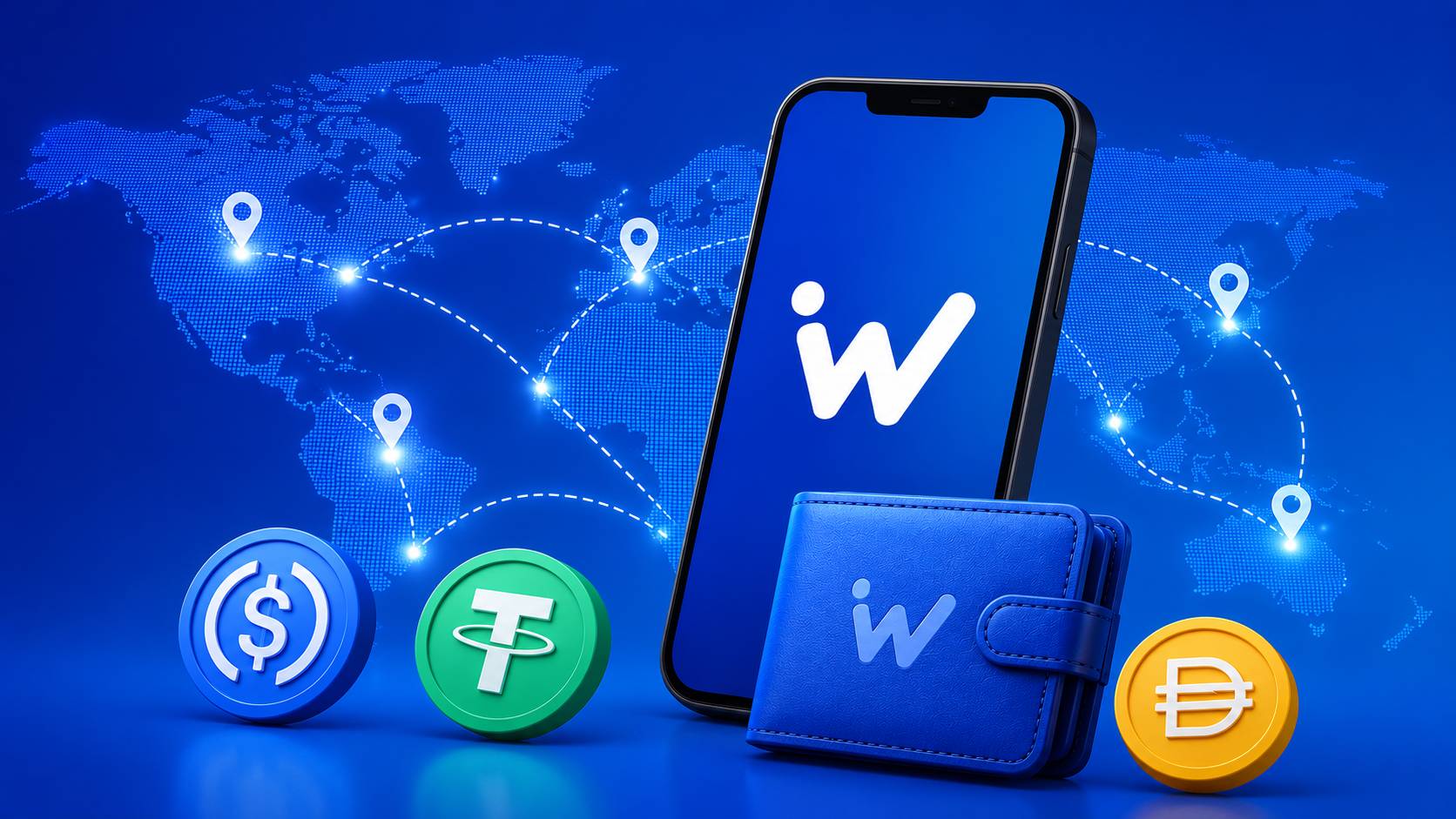
The global average cost to send a remittance sits at around 6.5%, well above the United Nations target of 3% and the G20's 1% benchmark.
Stablecoin transfers on chains like Tron or Polygon can settle the same value for less than 1% all-in, often closer to a fraction of a cent on the network fee itself.
McKinsey and Artemis Analytics identified $390 billion in genuine stablecoin payment activity in 2025, more than double 2024 levels, with crypto remittances and B2B cross-border use cases driving a substantial share of that growth.
IronWallet is a non-custodial mobile wallet with no-KYC signup, gasless USDT and USDC transfers, and multi-chain support across Tron, Ethereum, Polygon, Base, and other networks most used for cross-border stablecoin payments.
The wallet generates a 12-word seed phrase locally, stores private keys on the device with double key encryption, and works on iOS and Android.
Why Cross-Border Stablecoin Payments Are Growing in 2026
Three forces aligned through 2025 to push stablecoin payments past the pilot stage.
Regulatory clarity arrived. The GENIUS Act established the first federal framework for payment stablecoins, and MiCA took full effect in the EU.
Both frameworks gave institutional treasurers and payment service providers the regulatory ground they needed to commit to stablecoin rails.
Volume grew sharply. B2B stablecoin payment volume reached $83.1 billion in 2025, up 87% year over year.
Monthly B2B volume rose more than 60x between early 2023 and mid-2025. The growth pattern is not limited to enterprise: stablecoin transfers under $250 hit $5.84 billion in August 2025, a record indicating retail and remittance use is also accelerating.
Cost economics matter at every scale. Traditional correspondent banking settles in 3 to 5 days with a 2-7% all-in cost when fees, FX markups, and intermediary deductions are counted.
Crypto for remittances through stablecoin transfers on Tron or low-cost L2 networks complete in seconds for cents or less. The cost gap has consequences: 71% of Latin American firms now use stablecoins for cross-border payments, and Nigeria processed around $26 billion in stablecoin volume in 2024.
A non-custodial wallet for payments lets the sender keep custody of the funds across the full transfer, with no intermediary holding the assets at any point.
When Cross-Border Stablecoin Payments Make Sense
Not every international transfer fits the stablecoin use case. The scenarios where the model genuinely works in 2026:
-
Family remittances to regions with mature off-ramps: Corridors like US to Mexico (via Bitso), US to Philippines (via Coins.ph and GCash), and Kenya inbound (via M-Pesa P2P) work cleanly because the recipient has multiple local cash-out options. Sending a USDT remittance on Tron in these corridors typically settles in seconds for sub-cent fees
-
Freelancer and contractor payments: Paying an Argentine developer, a Vietnamese designer, or a Pakistani writer directly in USDT or USDC avoids the multi-day wire process and the platform fee that intermediaries charge on a Wise or PayPal route
-
Supplier and invoice settlement for small businesses: A Singapore importer paying a Hong Kong supplier, or a Dubai firm paying a Nigerian counterparty, can send USDT abroad in minutes instead of days, with full audit trail on-chain
-
Emergency transfers and time-sensitive payments: A 3 AM bank transfer that would clear in 3 to 5 days on traditional rails clears in seconds on a stablecoin chain, with both parties able to verify settlement on a block explorer
In each scenario, the value of the stablecoin path comes from speed, cost, or both. The recipient still needs a workable path to local fiat unless they hold the stablecoin as a savings asset, which has become a common pattern in inflation-affected markets.
Setting Up IronWallet for Cross-Border Payments
IronWallet handles the sender side of the cross-border flow without identity collection or account requirements. Setup takes minutes.
-
Download IronWallet from the App Store, or Google Play. The app runs on iOS and Android.
-
Create or import a wallet. The app generates a 12-word seed phrase locally on the device. No email, no phone number, no identity verification at any step. Private keys stay on the device with double key encryption.
-
Back up your seed phrase securely. Write it down offline and store it in a safe location. The seed phrase is the recovery method if the device is lost or replaced.
-
Fund the wallet with USDT or USDC. USDT on Tron carries the lowest network fees (a fraction of a cent per transfer) and works well for high-frequency or smaller-value remittances. USDC on Polygon or Base is a strong alternative for users sending to recipients on Ethereum-side networks. IronWallet supports gasless USDT and USDC, which means the network fee comes out of the stablecoin itself, with no need to hold TRX or ETH separately.
-
Open the send screen, enter the recipient's wallet address, confirm the token and network, and send. The transaction settles on-chain in seconds, with the recipient able to verify it on a block explorer like Tronscan, Etherscan, or Polygonscan as soon as it confirms.
Sending a Cross-Border Payment in IronWallet
The send flow is straightforward, but cross-border payments add one consideration that domestic transfers do not: the network and token must match what the recipient can receive.
The recipient's wallet address is the destination. Always confirm that the recipient gives the address on the correct network. A USDT address on Tron is not the same as a USDT address on Ethereum, and sending to the wrong network can result in lost funds. Most non-custodial wallets surface this clearly, but the responsibility to confirm sits with the sender.
The token and network choice depend on the corridor. For most developing-market corridors (Latin America, Africa, Southeast Asia), USDT on Tron is the practical default because of low fees and deep local liquidity. For developed-market or EU corridors, USDC on Polygon or Base is often preferred.
IronWallet supports both routes, with gasless stablecoin transfers on the supported networks, so the sender only pays the network fee abstracted into the stablecoin. This makes IronWallet cross-border payments straightforward, whether the recipient is in Buenos Aires, Lagos, or Manila.
Settlement typically completes in seconds. The recipient can see the inbound transaction in their wallet immediately and verify it on the relevant block explorer. No business-day delays, no correspondent bank confirmations.
What the Recipient Needs to Do
The cross-border flow ends at the recipient's wallet. From there, the recipient has three practical options.
Cash Out Through a Local Exchange
Regional crypto exchanges specialize in specific corridors: Bitso in Mexico and Brazil, Coins.ph in the Philippines, and Yellow Card across multiple African countries. The recipient deposits the stablecoin, sells it for local currency, and withdraws to a local bank account. Total cost typically lands under 1% with mature local exchanges.
Use P2P Platforms With Local Payment Integrations
Binance P2P, Bitget P2P, and similar marketplaces let the recipient sell USDT directly for local currency through bank transfer, M-Pesa in Kenya, GCash in the Philippines, or PIX in Brazil. P2P spreads typically run 1-2% under normal conditions, with platform fees usually under 1%.
Hold the Stablecoin As Savings
In markets with high inflation or currency instability, recipients often choose to hold the USDT or USDC as a dollar-denominated savings vehicle instead of converting immediately. Argentina and Venezuela are common examples, where stablecoins serve double duty as a remittance rail and a hedge against local currency depreciation.
Off-ramp availability varies by region. EU users face MiCA-specific restrictions on USDT, with EURC as a recommended alternative. Tax treatment varies by jurisdiction.
Conclusion
Cross-border stablecoin payments in 2026 are operational, regulated in major markets, and economically meaningful at every transaction size.
IronWallet combines the no-KYC architecture, gasless transfer mechanics, and multi-chain support that the stablecoin cross-border transfer use case needs on the sender side.
The recipient side still depends on local off-ramp infrastructure, but mature corridors now exist across Latin America, Africa, Southeast Asia, and the Middle East. The combination puts a non-custodial wallet within reach of the same use cases that traditional remittance providers have served at multiple times the cost and several days the speed.
Disclaimer: This article is provided for informational purposes only. It is not offered or intended to be used as legal, tax, investment, financial, or other advice.
0
0


 Gérez tous vos cryptos, NFT et DeFi à partir d'un seul endroit.
Connectez de manière sécurisée le portefeuille que vous utilisez pour commencer.

0
0

0
0

0
0

0
0