
Polygon Makes Embedded Wallets Free as Open Money Stack Pushes Into Crosschain Payments

0
0
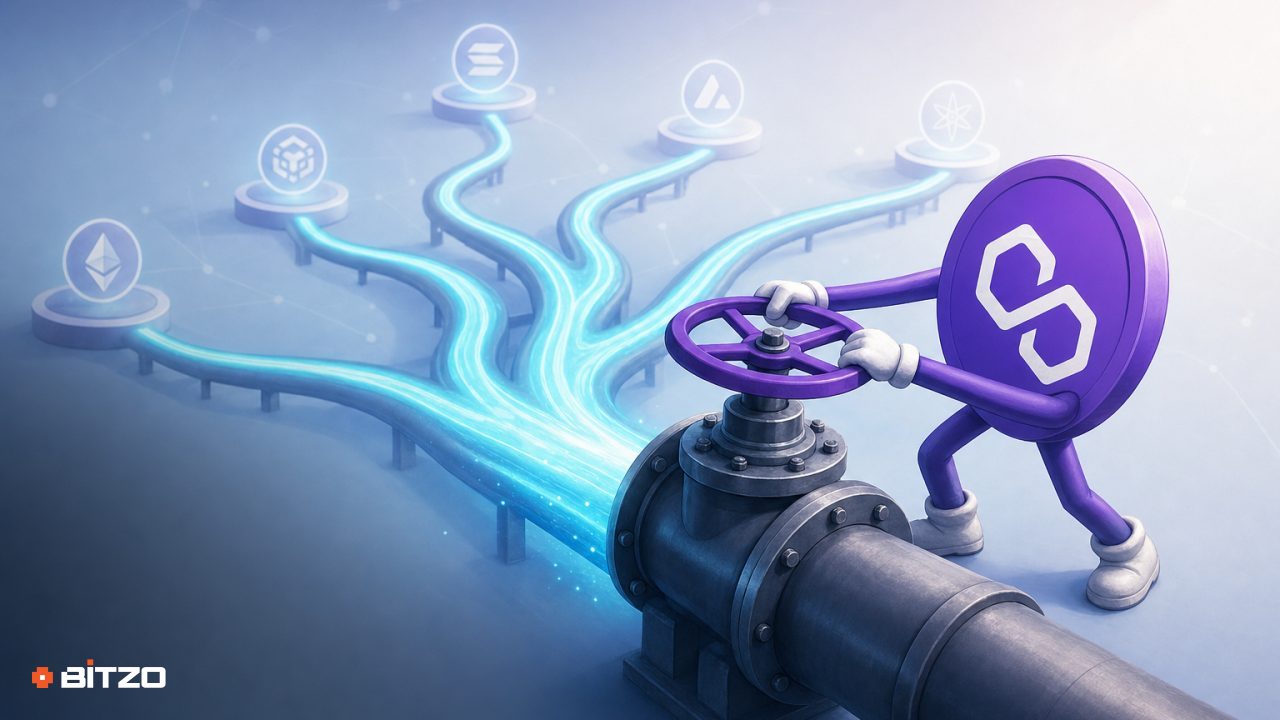
Picture a checkout that just works across chains. No modal maze, no bridge detour, no “switch network” nudge. You click pay, and the money lands where it should.
That is the promise Polygon just amped up. The team says embedded wallets are now free for eligible businesses, and crosschain routing is baked in. It sounds small on paper. In practice, this could change how crypto money moves through apps.
If you build payflows, subscriptions, or payouts, this one lands right in your lap.
Wallet UX has been the speed bump on the web3 highway. Every new chain adds another bump. Meanwhile, payments need to be boring. Predictable. Fast. Cheap. The move from Polygon is aimed at exactly that: remove wallet cost friction, hide the bridge hop, and steer funds between ecosystems where users actually hold balances.
The core bet: if you cut wallet overhead to zero and make routes chain-agnostic, more apps will choose crypto rails for everyday money movement.
Two announcements anchor this shift. First, Polygon Trails started routing SOL and major stablecoins between Solana and 20+ EVM chains. Second, embedded wallets through the Open Money Stack (OMS) went free for eligible businesses, with crosschain routing included. Combined, this is Polygon pitching a single money layer that stretches across ecosystems, not just inside one.
What changed: embedded wallets go free
On August 11, 2026, Polygon said eligible businesses can spin up unlimited embedded wallets at no cost, with crosschain routing included in the bundle. That update came straight from the team’s blog, and it leans into a simple narrative: remove a line item from a product manager’s budget and the experimentation floodgates usually open. You do not worry about wallet seat counts, tier limits, or surprise invoices while you are still finding product-market-fit. You just ship.
There is more under the hood: OMS claims support for 20+ blockchains, and the wallet layer is paired with Trails, a router that moves balances between those chains without forcing a separate “bridge page” in the flow. Both points were spelled out in Polygon’s post on the same day, and they matter because most users do not think in chains. They think in “does this button work.”
Why pricing matters right now
Wallet costs pile up when you try to onboard thousands of non-crypto users. Free removes a veto from finance and legal for pilots. It also puts pressure on other providers that monetize per-wallet or per-active-user. If the routing is good enough, the bundle could be sticky.
How Open Money Stack routes value without the bridge detour
The OMS pitch is to make chain selection an implementation detail. Trails sits in the background and figures out how to move a user’s existing asset to the target chain and token your app expects. As of early August, the router specifically supports stablecoins and SOL flows between Solana and more than 20 EVM networks, in either direction, and lists SOL, WSOL, USDC, USDT, and PYUSD as supported assets. That came from Polygon’s August 3 update and is live at app.trails.build.
The flow, boiled down
- User starts a payment in your app. They might have USDC on Solana, but your settlement lives on an EVM chain.
- OMS checks balances, selects a route, and swaps or wraps as needed through Trails.
- The router executes the move and lands funds on the destination chain and token, without a separate “go bridge now” step.
- Your app receives confirmation and can fulfill the order or unlock the service.
It is not magic, just orchestration. But orchestration has always been the thin place in crypto payments. Most apps punt to a bridge UI and hope the user makes it back. This tries to remove that escape hatch entirely.
Where payments land today: assets, chains, and a quick timeline
Here is what Polygon has put on the record so far for OMS and Trails. No projections, only what is already announced:
Date Announcement Notes Aug 3, 2026 Trails routes SOL and stables between Solana and 20+ EVM chains Supported assets listed as SOL, WSOL, USDC, USDT, PYUSD; live at app.trails.build (Polygon blog (Polygon Labs)) Aug 11, 2026 Unlimited embedded wallets free; crosschain routing included OMS supports 20+ blockchains; routing avoids separate bridge flow (Polygon blog (Polygon Labs)) H1 2026 OMS “sign-on-once” adoption Roughly 8,000 wallets ran the approval flow across yield, subscriptions, batch payouts, and scoped AI agent spend (Polygon blog (Polygon Labs))
Why the SOL and stablecoin mix matters
Stablecoins are the workhorse of crypto payments, and SOL is one of the most widely held non-EVM assets. Cover those two buckets and you unlock a lot of checkout scenarios. If a user has USDC on Solana and your app settles on an EVM chain, you probably want this to be invisible to them. Trails is built for that bridge.
Developer experience and costs, in plain terms
Beyond routing, speed and cost matter. Polygon claims that on Polygon Chain settlement takes about two seconds and costs roughly $0.002 per transaction. That is the illustrative price and latency the team put forward for payments. You still have onramp, off-ramp, and swap costs elsewhere in the flow, but it is a reasonable ballpark if you settle on their chain. The stat comes from the August 11 blog update.
Sign-on-once approvals
In the first half of 2026, roughly 8,000 wallets reportedly used OMS’s “sign-on-once” flow. The idea is to avoid asking a user to re-approve the same pattern of spend every single time, especially for things like recurring subscriptions or scoped AI agent budgets. If you have ever lost a user to confirmation fatigue, you know why this matters. That figure was shared in the August 11 post.
Integration thinking
You still have choices to make around custody, compliance, and key management. Embedded wallets are not a silver bullet. But if they are free and your payment routes are abstracted, you can prototype without locking into a giant vendor contract. If the product works, you can harden the stack later.
Who benefits first
Not every category flips overnight, but a few are primed:
Consumer apps with global users
Think games and social apps with users scattered across Solana and EVM wallets. If you can accept the user’s existing asset and settle where your treasury lives, you cut friction in half.
Fintechs handling payouts
Batch payouts, vendor payments, and affiliate programs often run into the “wrong chain, wrong token” problem. Trails routing can help programmatically land amounts where they are supposed to go.
AI agents with scoped budgets
Polygon called out scoped AI spend in their data. If an agent can operate with a pre-approved envelope and OMS hides the routing, you remove a lot of edge-case handling from the agent logic.
Hero image showing the embedded-wallet UI and the tagline “Wallet infrastructure on us” — illustrates the user-facing wallet UX Polygon is offering free to businesses, reinforcing the product announcement. — Source: Polygon blog (Polygon Labs)
Competitive angle and open questions
Free is a strong headline, but integration depth, reliability, and governance matter more over time. Here is a plain comparison of build paths, not vendors, to sanity-check your roadmap:
Build path Crosschain handling Wallet UX Cost posture Operational complexity OMS with embedded wallets Router hides bridge step for supported assets App-native, minimal pop-ups Wallets free; network fees still apply Lower to start; vendor dependency exists Bridge + separate wallet SDK User pushed to bridge UI Mixed; more user actions SDK or per-wallet fees likely Higher; more moving parts Custodial processor Abstracted by provider Web2-like Processing fees and spreads Low dev effort; higher compliance load
Gaps to watch
Coverage breadth beyond the currently listed assets. How slippage and route risk are handled under stress. What failure modes look like mid-transaction. And how refunds or chargebacks are modeled for consumer protection. None of these are showstoppers, but they are the questions real teams wrestle with before flipping a production switch.
Risks & What Could Go Wrong
- Routing failure or degraded liquidity. If a route thins out, costs or delays can spike right when a user clicks pay.
- Smart contract and integration risk. Bugs in the routing or wallet stack could freeze funds or break approvals.
- Regulatory posture. Crosschain movement plus embedded wallets may trigger stricter KYC/AML expectations in some jurisdictions.
- Key custody trade-offs. If you rely on a vendor-managed wallet layer, review recovery, export, and portability paths.
- Refund and dispute handling. Payments need clear reversal flows. Crosschain adds steps and potential reconciliation errors.
- Dependency concentration. Building too much on a single vendor stack can create migration friction later.
Plan for the boring edge cases first: partial fills, expired signatures, chain halts, and payment reversals. Those are the fires that burn real teams.
Frequently Asked Questions
Are embedded wallets from Polygon really free?
Polygon says eligible businesses can create unlimited embedded wallets at no cost, with crosschain routing included. That claim is from the August 11, 2026 blog update. Network fees and any unrelated service costs still apply. Check eligibility details with Polygon directly.
Which assets and chains does Trails support today?
Per Polygon’s August 3, 2026 post, Trails routes SOL and major stablecoins between Solana and 20+ EVM chains in both directions, with supported assets listed as SOL, WSOL, USDC, USDT, and PYUSD. The app is live at app.trails.build and details may update over time.
How fast and cheap is settlement?
Polygon cites roughly two seconds and about $0.002 per transaction on Polygon Chain as an example for payments. That is not a universal guarantee. Actual costs depend on the chain, route, and market conditions.
What is the OMS “sign-on-once” flow?
It is an approval model designed to reduce repetitive confirmations. Polygon reports about 8,000 wallets used it in H1 2026 across use cases like subscriptions, yield actions, batch payouts, and scoped AI spend. Always scope permissions narrowly and build clear revoke paths.
Do I still need a bridge if I use Trails?
For supported assets and routes, Trails is designed to avoid a separate bridge step in the user flow. Under the hood, it still has to move value between chains, but the idea is to handle that as part of the payment rather than a separate task the user must complete.
Is this a fit for regulated fintech products?
Maybe, but it depends on your jurisdiction and risk program. Crosschain payments and embedded wallets may require additional compliance checks. Map your flows, verify counterparty screening, and document reversal logic before going live.
What happens if a route fails mid-transaction?
Design for retries and graceful rollback. Monitor routing health, set sane slippage limits, and surface clear messages to users. Ask Polygon for their failure handling guarantees and recommended patterns before shipping to production.
Disclaimer: This article is provided for informational purposes only. It is not offered or intended to be used as legal, tax, investment, financial, or other advice.
0
0

 Gérez tous vos cryptos, NFT et DeFi à partir d'un seul endroit.
Connectez de manière sécurisée le portefeuille que vous utilisez pour commencer.

0
0


