
Base Layer 2 Adopts Unified Stack to Accelerate Network Upgrades

0
0

This article was first published on The Bit Journal.
The Base unified stack transition, which is one of the most important developments in the Ethereum Layer-2 ecosystem in recent time, has just been introduced.
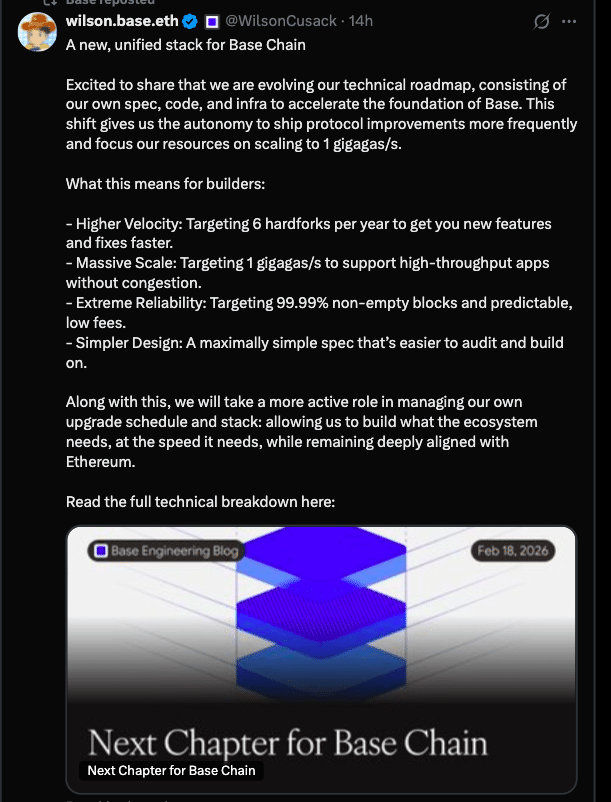
Base, the highly adopted blockchain incubated by Coinbase, has just officially announced that it is moving from the OP Stack to a single unified software stack called base/base.
The move is meant to speed up network upgrades, tighten security and amplify the platform’s development. The move also adjusts the governance model, as well as node operators and future protocol upgrades.
What the Change to the Unified Stack of Base Means
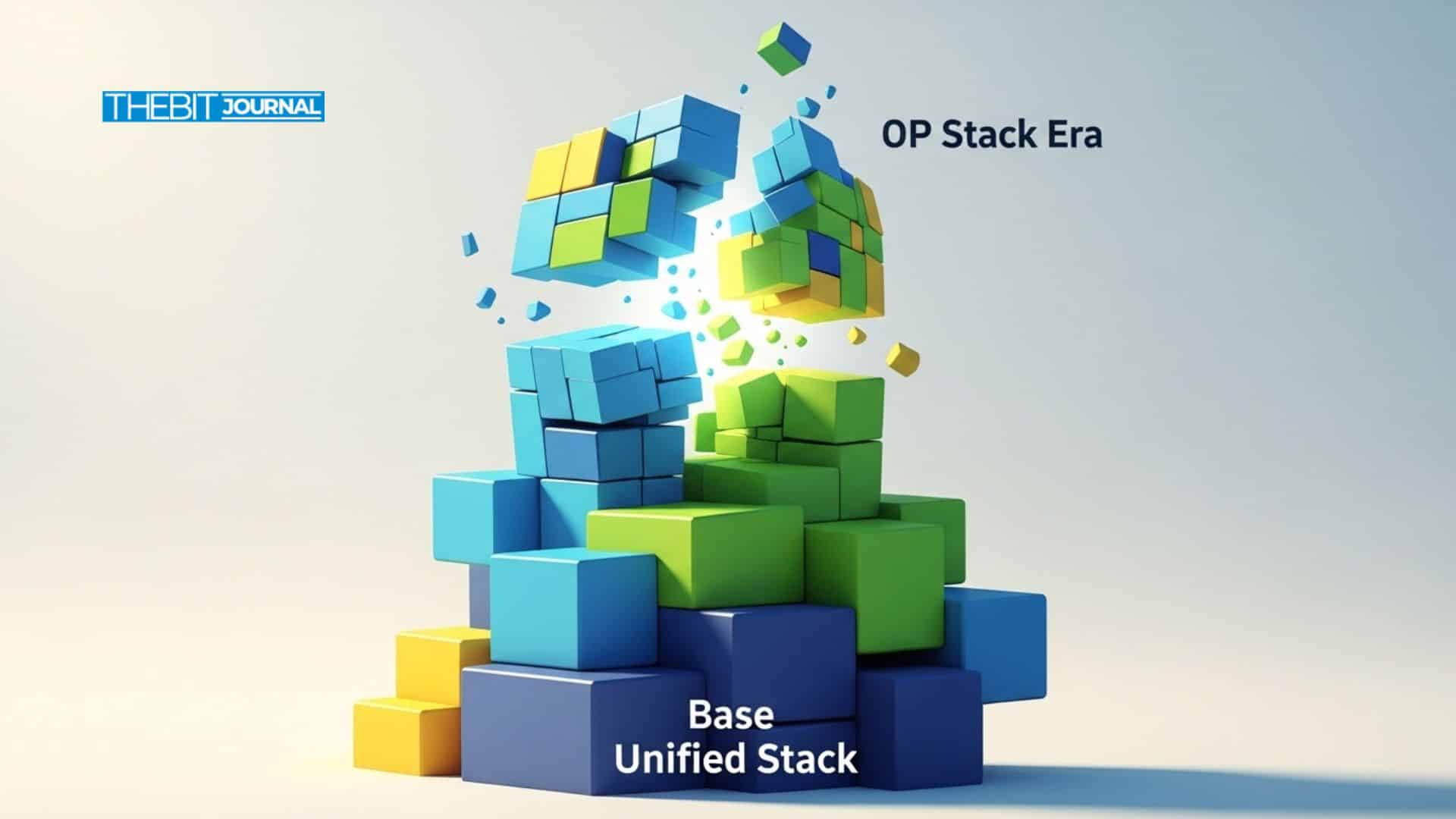
The Base unified stack is a total transition from relying on external tooling and frameworks like Optimism’s OP Stack, Flashbots, Paradigm etc. Rather than having its codebase scattered across a number of teams and repositories, Base is consolidating the foundational software at a single stack operated by Base which is called base/base.
The network wrote that they believe changing this structure will reduce coordination overhead and operational complexity, allowing Base developers to focus on upgrades that are unique to the needs of the network.
According to the team:
“This unification does not mean Base will be built in isolation. The protocol remains public and specified in the open, and alternative implementations are welcome and encouraged.”
This means Base will receive more operational freedom to improve the protocol, whilst cutting back reliance on other projects release schedules. Existing tools like Reth will be incorporated into this unified codebase.
Node Operators Impact and Compatibility
In line with the Base unified stack transition, node operators will retire from using Optimism’s releases and switch to the new Base client. This is essential for preparing the environment for upcoming network upgrades and hardforks. Upcoming changes include a V1 hard fork that will add support for Fusaka and transition from Optimistic proofs to Base-specific TEE and zero-knowledge proofs to achieve a better balance of security and performance.
While that sounds technical, Base’s team stressed that it isn’t an “all-out rewrite” of the protocol. Instead, users and developers won’t see immediate changes in how they interact with the network. Existing RPC endpoints, including those under the Optimism namespace, will continue to work during the transition period.
Governance Restructuring and Security Council Changes
The move to a Base unified stack is a change in code, it’s also a retooling of Base’s governance. Base intends to replace Optimism’s seat on the Security Council with another independent signer, in a move toward greater independence as an organization.
Despite these changes, Base will continue to be a Stage 1 decentralized rollup, using the same framework for L2 decentralization aligned with Ethereum co-founder Vitalik Buterin.
The network made it clear that these governance changes are not going to compromise security. Base said it’s still committed to the highest standards for rollup safety even as it scales more efficiently.
Roadmap: Many Hard Forks and Future Upgrades
The Base unified stack strategy also features a roadmap which consists of several hard forks all aimed at incrementally reducing the protocol’s dependence on Optimism. Base has at least two more upgrades lined up following the first V1 hard fork, with the V3 hard fork timed with Ethereum’s Glamsterdam upgrade.
These updates should result in improvements such as quicker transaction processing, and the integration of new types of transactions that are more closely related to Ethereum’s Layer-1 changes.
Base’s long-term goal is to utilize more rapid development cycles with smaller, more frequent updates that could potentially double its upgrade pace up from twice a year to about six major improvements annually.
Why the Unified Stack Is Important for Base’s Future
The Base unified stack transition is important because it provides Base with a more scalable and sustainable codebase, which is particularly critical as the network further matures. Base has become one of the leading Layer 2 solutions on Ethereum since it was created in 2023 and is now one of the most popular solutions for operating through Layer-2 on Ethereum, with a total value locked in billions and daily active users being hundreds of thousands.
“Today, the code operating various components of Base, such as the sequencer, is owned by multiple teams and spread across multiple repositories, which adds coordination and maintenance overhead. Our unified solution, base/base… allows us to dramatically simplify the number of components,” the Base team wrote in its announcement.
The consolidation of the software stack is Base’s way to get more rapid innovation, better security in updates and take control over its technology fate.
This also indicates Base’s desire to expand beyond the early support it received from OP Stack ecosystem while continuing to support interoperability and community.
Conclusion
The Base unified stack is a noteworthy change for Base and the Ethereum Layer-2 ecosystem as a whole. Base is changing and freeing itself from Optimism’s OP Stack and wrapping up the work on its codebase to further solidify a more flexible, secure, and self-managed platform for upcoming iterations.
Node operators, governance structures and the manner in which upgrades will be deployed will be impacted by this change. While in the short term Base will continue to be open and support integration, its future evolution is now more independent, more naturally able to progress rapidly, and with a better balance between openness and ownership through Base’s engineering teams.
The network retains a devotion to decentralization, more secure updates, and greater control over its technological destiny.
Glossary
Base unified stack: The combined codebase named base/base that Base will run independently, replacing the need for Optimism OP Stack.
OP Stack: Optimism P1 Stack, A modular rollup framework created by Optimism and previously being used as an architecture layer by Base.
Hard fork: Major protocol update that forces node operators to update their software.
TEE proofs: Trust-Execution-Environment proofs; made to improve the speed and security of transaction processing.
Stage 1 rollup: A category in Ethereum’s categorization of decentralization which provides for basic security and decentralization assurances.
Frequently Asked Questions About Base Unified Stack
What is the unified Base Stack?
The Base unified stack is its own bundled codebase, replacing its former reliance on Optimism’s OP Stack and an array of external tooling.
Does this change have a direct effect on users?
No imminent changes are anticipated for regular users, but node operators will have to transition to the new Base client in order not fall behind future hard forks.
Why is Base turning its back on OP Stack at Optimism?
Base explains a unified stack eases coordination overhead, as well as lets it receive faster, more frequent updates that are better suited to its needs.
Will Base remain open source?
Yes, the Base protocol will be open source and publicly specified in order to inspire alternative implementations and allow developers to contribute.
Is Base still a decentralized system as a result of this transition?
Yes, base shall remain as a Stage 1 decentralized rollup, consistent with Ethereum’s level of decentralization.
References
Read More: Base Layer 2 Adopts Unified Stack to Accelerate Network Upgrades">Base Layer 2 Adopts Unified Stack to Accelerate Network Upgrades
0
0


 Gestisci cripto, NFT e DeFi in un unico luogo
Connetti in sicurezza il portafoglio che usi per iniziare.

0
0

0
0

0
0

0
0