
Circle Wrapped Bitcoin’s 2026 Growth Strategy Targets Institutional DeFi

0
0

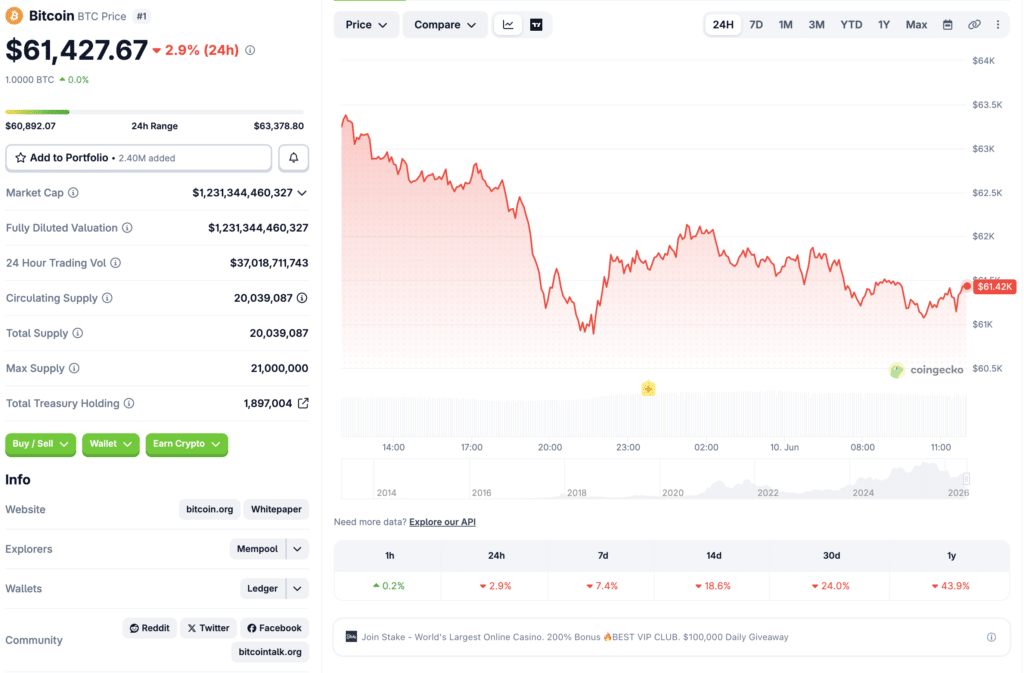
The advent of Circle Wrapped Bitcoin comes just in time to become an indispensable part of the upcoming world of Institutional DeFi where Bitcoin is not seen merely as a dormant digital currency but rather as productive infrastructure to be deployed through various crypto financial applications. cirBTC comes at the dawn of a new era when compliance, custody, and transparent reserve management determine the future development of the crypto world. Against the backdrop of Bitcoin exchange rates of approximately $61,346.07 and daily turnover of $36 billion, there will always be a need for efficient solutions for handling Bitcoin as a collateral resource.
The key idea of Circle Wrapped Bitcoin lies in direct competition with other Bitcoin-related assets such as WBTC and cbBTC. In contrast to consumer-oriented bridging technologies, cirBTC offers integration directly with the institutions whose risk committees insist on custody management and the redeemable nature of the tokenized coins. In the current competitive climate of the Wrapped Bitcoin market, which goes well beyond mere tokenization processes, the project is likely to succeed and become an Institutional Bitcoin collateral standard, if its liquidity and protocol management keep pace with increasing demand.
cirBTC and the Structural Revolution in the Collateral Architecture of Bitcoin
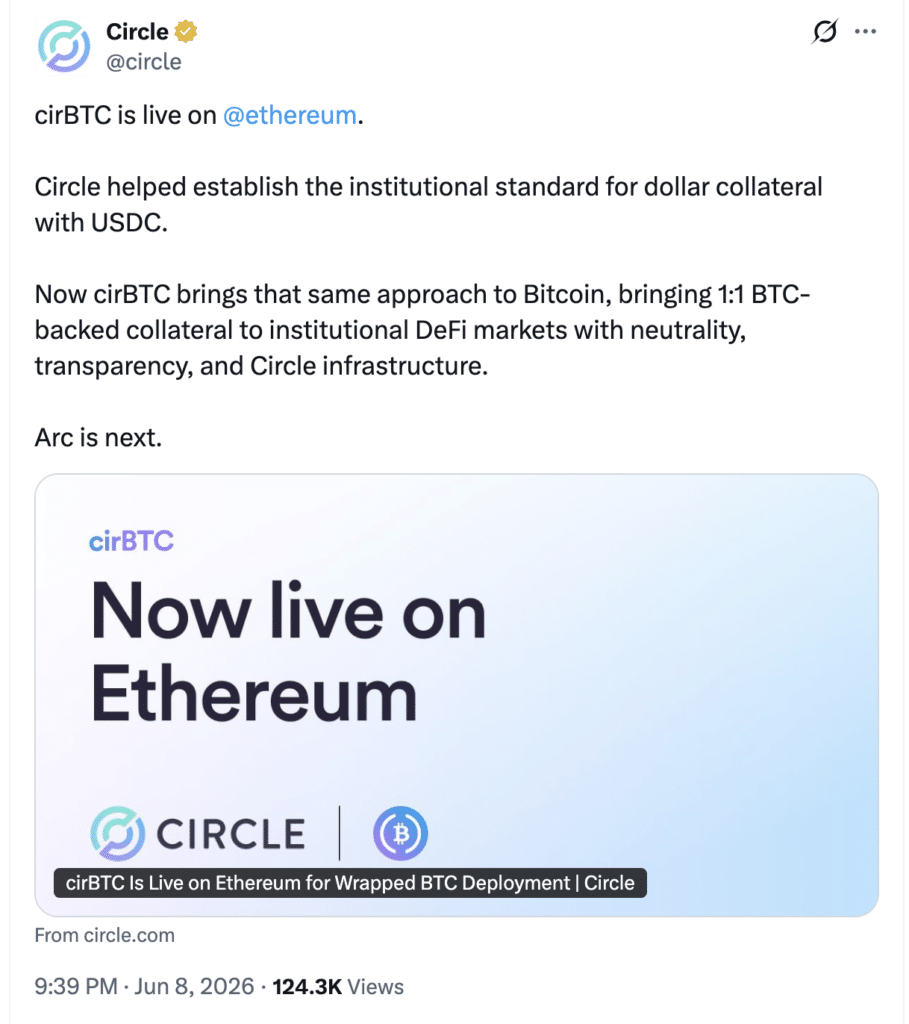
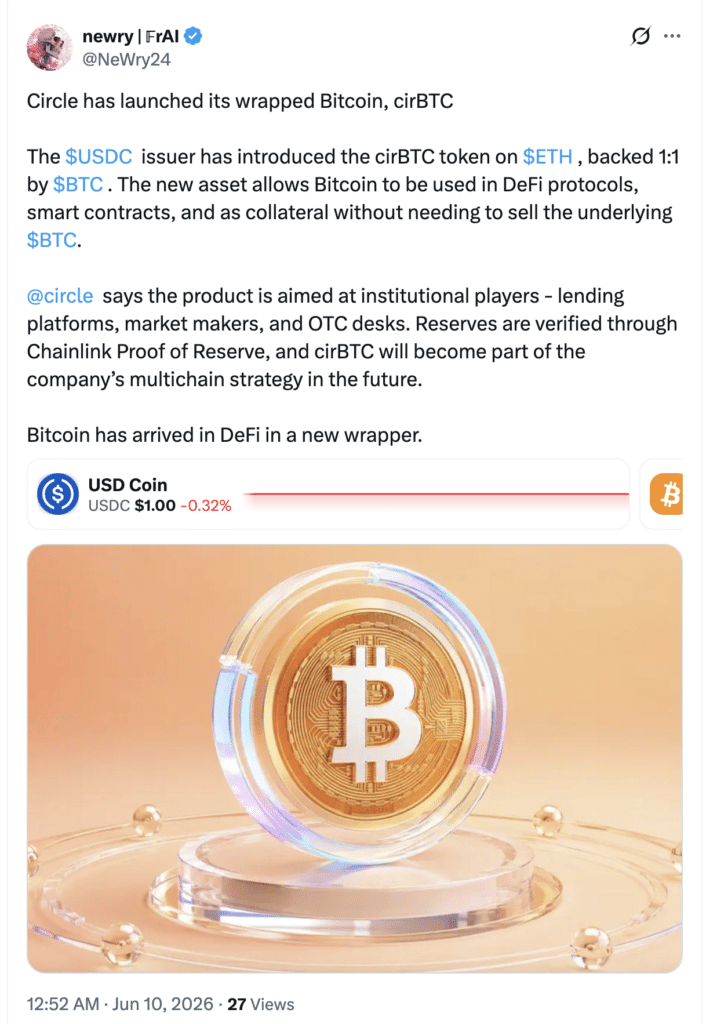
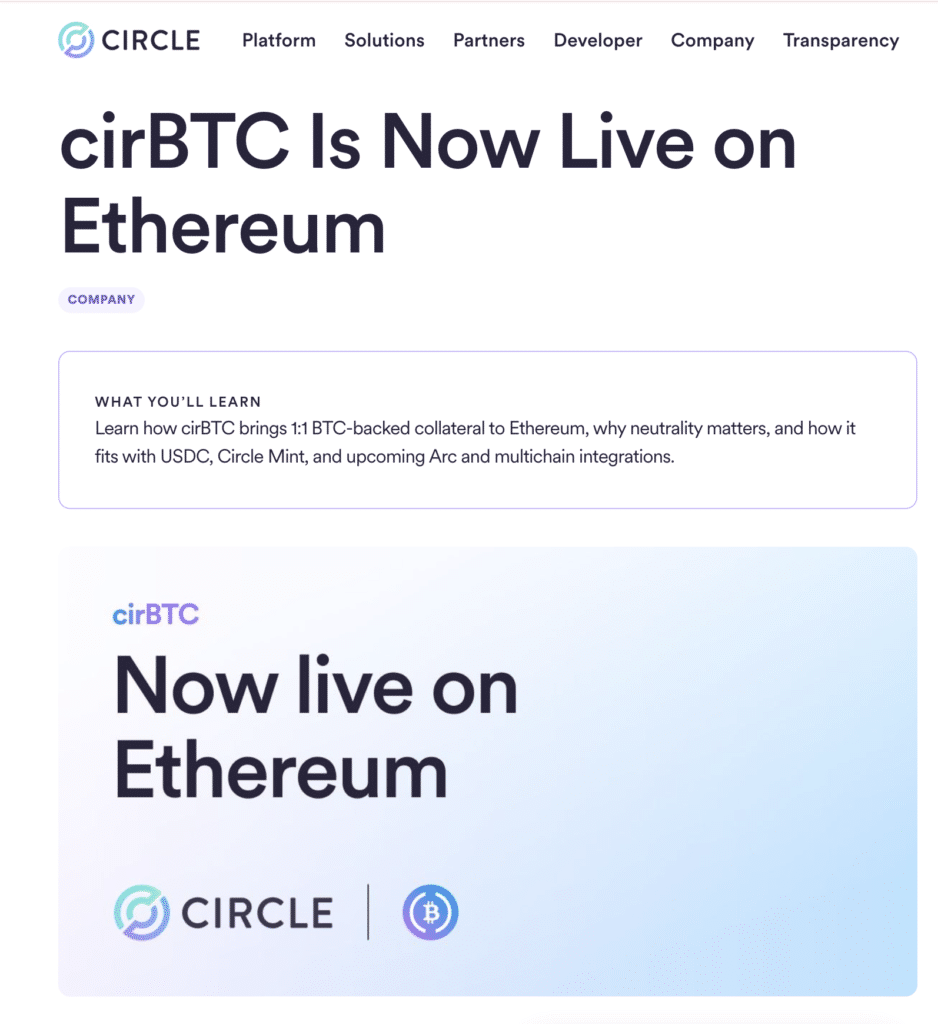
The introduction of Circle Wrapped Bitcoin gives rise to the issuance of cirBTC, which can be seen as an innovation in the sphere of creating a 1:1 Bitcoin-backed token on Ethereum. It aims to enable bridging the gap between native BTC and DeFi infrastructures without neglecting the compliance needs of institutions. What is the novelty of this development? Not in Bitcoin being wrapped, rather in the inclusion of transparency to custody, reserves, and redemption processes.
cirBTC comes out as one more collateral token of Bitcoin, which can be incorporated in the Circle’s infrastructure stack, encompassing Circle Mint and USDC settlement rails. The benefit of the system is reduced by the interconnectivity of this collateral network and other products available within the ecosystem that will facilitate easier involvement for institutions that are familiar with dollar liquidity offered by Circle. The thesis underlying Wrapped Bitcoin is clear and straightforward. Before institutions embrace Bitcoin collateral, it should comply with all criteria of regular collateral.
In terms of the further developments of Wrapped Bitcoin collateral networks, a structural revolution in digital asset markets may become inevitable.
cirBTC v.s WBTC and cbBTC in the Institutional Bitcoin Collateral Race
The current competition landscape in the Wrapped Bitcoin space revolves around three main contenders: Circle Wrapped Bitcoin (cirBTC), WBTC, and Coinbase cbBTC. All three offer their own philosophies and approaches in terms of trust and custody management as well as access to liquidity services. CirBTC provides a solution focused on institutional engagement and reserve visibility through Circle’s regulatory standards. CBTC offers Coinbase’s exchange-level liquidity and multichain interoperability features.
Circle Wrapped Bitcoin emerges in response to the challenge of institutional Bitcoin collateral usage. Although CBTC takes advantage of Coinbase’s liquidity services as well as the Base blockchain, and WBTC holds a solid position in the DeFi world, cirBTC seeks to offer custody, settlement, and reserve visibility all-in-one for institutional engagement purposes. The question that arises at this point is: Are institutional DeFi players willing to join new systems?
The contrast between Circle cirBTC versus WBTC points to an industry-wide discussion about which approach is better for creating trust, by sharing it among many custodians or consolidating it in the vertically integrated finance platforms. Similarly, the contrast between Circle cirBTC vs. Coinbase cbBTC showcases the battle between the two competing philosophies behind Bitcoin-based tokens.
Bitcoin Collateral Adoption by Institutions and Transparency in the Reserve System
The adoption of Wrapped Bitcoin collateral in institutions revolves around transparency, especially in verifying and ensuring the custodial safety of reserve funds. Circle Wrapped Bitcoin highlights transparency and segregation in the custody system aimed at mitigating ambiguity about counterparty risks. The strategy is a direct answer to one of the key challenges involved in Institutional DeFi – that is, verification of backing assets in near real-time.
cirBTC offers a framework in which Bitcoin collateral for decentralized finance lending is more than just tokenized; rather, it constitutes an auditable financial product. When assessing Bitcoin collateral backed by institutions with Bank-grade wrapping services, questions will be asked whether the reserve feeds, custody systems, and guarantee of redemption comply with institutional requirements. For Circle Wrapped Bitcoin, the company tries to standardize all these parameters within its financial ecosystem, thus making bitcoin collateral a regulated category.
As a result, transparency in wrapped bitcoin reserves will give companies competitive advantage in the market. In case there are no guarantees of transparency regarding reserve verification, then the token may be barred from institutional lending desks.
Bitcoin Collateral Token Competition Across DeFi Lending Markets
The evolution of Bitcoin-backed collateral systems reflects broader shifts in DeFi lending architecture. Circle Wrapped Bitcoin enters a market already shaped by established protocols and liquidity networks, yet the demand for standardized Crypto collateral continues to grow. Institutions require assets that can move seamlessly across lending platforms, OTC desks, and settlement systems without introducing operational uncertainty.
Within this context, cirBTC aims to function as a Bitcoin collateral token that integrates directly into Institutional DeFi workflows. The key challenge is not technical deployment but market acceptance. Lending protocols must assign collateral parameters, market makers must provide liquidity, and treasury systems must accept redemption flows without friction. Circle Wrapped Bitcoin’s success depends on whether these participants view cirBTC as a superior alternative or merely another wrapped asset in an already crowded ecosystem.
The broader Wrapped Bitcoin collateral landscape is becoming increasingly segmented. Some solutions prioritize exchange liquidity, others prioritize DeFi composability, and Circle Wrapped Bitcoin prioritizes institutional compliance alignment. This divergence reflects the maturation of Bitcoin-backed token infrastructure into a multi-layered financial system.

Conclusion: Circle Wrapped Bitcoin and the Future of Institutional DeFi Infrastructure
Circle Wrapped Bitcoin represents a strategic attempt to redefine how Bitcoin functions within Institutional DeFi systems. By launching cirBTC as a bank-grade Bitcoin collateral token, Circle is positioning itself at the intersection of custody innovation, reserve transparency, and institutional liquidity infrastructure. The competition with WBTC and cbBTC highlights a shifting market where wrapped Bitcoin products are no longer judged solely by adoption but by trust architecture and regulatory alignment.
The future of Institutional Bitcoin collateral will depend on which model best satisfies institutional risk frameworks while maintaining deep liquidity across DeFi markets. Circle Wrapped Bitcoin’s success will hinge on whether cirBTC becomes a preferred settlement layer or remains an emerging alternative in a fragmented landscape.
For market participants, the next phase of Bitcoin-backed collateral adoption will not be defined by token issuance alone but by the strength of the infrastructure surrounding it. The evolution of cirBTC may ultimately determine how Bitcoin integrates into global financial systems at scale.
Appendix: Glossary of Key Terms
Circle Wrapped Bitcoin refers to Circle’s institutional Bitcoin wrapper designed to provide 1:1 BTC-backed exposure on Ethereum.
cirBTC is the tokenized representation of Bitcoin within Circle’s ecosystem.
Wrapped Bitcoin collateral refers to tokenized BTC used as security in lending and trading systems.
Institutional Bitcoin collateral describes Bitcoin assets structured for use in regulated financial environments.
Bitcoin-backed token refers to any digital asset backed by native BTC reserves.
Institutional DeFi is decentralized finance tailored for institutional participants.
Crypto collateral refers to digital assets used as security in financial transactions.
Frequently Asked Questions About Circle Wrapped Bitcoin
What is Circle Wrapped Bitcoin?
Circle Wrapped Bitcoin is a 1:1 BTC-backed token designed for institutional DeFi and collateral use cases.
How does cirBTC differ from WBTC?
cirBTC emphasizes institutional-grade custody, reserve transparency, and integration with Circle’s financial infrastructure.
Why is Circle Wrapped Bitcoin important in 2026?
It aims to expand Bitcoin’s role as institutional collateral within regulated DeFi systems.
References
Read More: Circle Wrapped Bitcoin’s 2026 Growth Strategy Targets Institutional DeFi">Circle Wrapped Bitcoin’s 2026 Growth Strategy Targets Institutional DeFi
0
0


 从同一位置管理所有加密资产、NFT 和 DeFi 资产
安全地关联您正在使用的投资组合,以开始交易。


