
Coinbase Returns to the Super Bowl with a Quirky Lo-Fi Karaoke Ad

0
0
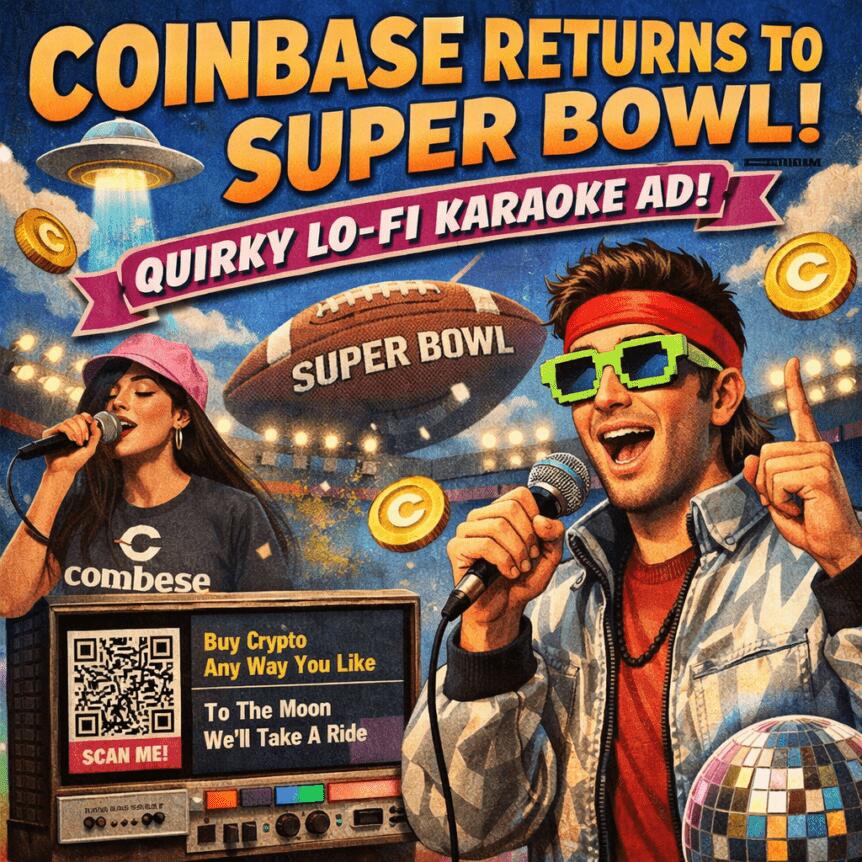
Coinbase has returned to the Super Bowl with a bold, nostalgia-forward spot that eschews hard sells in favor of a shared cultural moment. Four years after its viral QR-code stunt, the exchange leaned into a Backstreet Boys karaoke-inspired concept, letting the lyrics of “Everybody (Backstreet’s Back)” flash across the screen in a one-minute montage. Marketing chief Catherine Ferdon described the creative as a deliberate attempt to spark a communal experience and to illustrate how the crypto community has evolved beyond a niche interest. The move comes as Coinbase seeks to sustain mainstream visibility at a time when crypto brands are navigating a dense regulatory backdrop and mixed public sentiment, rather than relying solely on direct product demonstrations.
The execution centers on text animation and a simple premise: a catchy, universally recognizable tune that listeners can sing along to, with the goal of memory and sharing rather than a traditional call to action. In that sense, the ad mirrors a broader approach in crypto marketing that prioritizes cultural resonance and broad memorability to drive top-of-munnel awareness, rather than relying on flashy product showcases alone. The spot’s design choices—minimal on-screen branding, a familiar chorus, and a single point of reference—signal Coinbase’s intent to let the moment carry the conversation rather than to funnel viewers immediately into signing up or downloading an app.
Coinbase’s 2026 appearance follows a notable high-water mark in 2022, when the company staged a color-shifting QR-code commercial that bounced across the screen and directed viewers to a sign-up link. The campaign, which offered BTC to new users, reportedly crashed Coinbase’s site and drew millions of visits in a matter of minutes, underscoring the game-changing reach of the Super Bowl for crypto marketing. The 2022 effort featured a simple hook and a sense of immediacy—an approach that Coinbase appears to be reinterpreting this year, albeit through a different cultural lens that hinges on shared experience rather than a direct promotional offer.
Key takeaways
- Coinbase returns to the Super Bowl with a one-minute, lyric-driven ad that emphasizes communal experience over a direct product pitch.
- The creative choice leans on nostalgia and a universally known song to foster memorability and discussion among a broad audience.
- The company’s earlier QR-code stunt in 2022, which steered viewers to a Bitcoin (CRYPTO: BTC) signup link, demonstrated the explosive potential of Super Bowl exposure for crypto brands, even as it overwhelmed the site.
- Public reactions online were mixed—some praised the simplicity and recall value, while others criticized the tone or timing amid market volatility and regulatory scrutiny.
- Coinbase executives defended the campaign as a breakthrough moment designed to “break through” in a crowded media landscape and to celebrate the crypto community’s growth.
Tickers mentioned: $BTC, $ETH
Sentiment: Neutral
Market context: The ad lands in a period of heightened attention to crypto brands in mainstream media, where reach and resonance compete with heightened regulatory scrutiny and evolving consumer attitudes toward digital assets. It underscores a trend of brands using high-visibility events to shape narrative and familiarity around crypto, even as market conditions and policy debates continue to influence user acquisition and brand trust.
Why it matters
The Super Bowl spotlight is a rare opportunity for a crypto brand to move beyond technical jargon and reach a broad audience in a single, high-impact moment. By leaning into a communal, sing-along moment, Coinbase aims to embed itself in cultural memory, potentially boosting long-term recognition even among viewers who may not immediately engage in on-chain activity. The choice to foreground lyrics over a product feature suggests a shift toward brand-building as a gateway to eventual product adoption, especially as consumer perception of crypto oscillates between curiosity and caution.
From an investor and builder perspective, the campaign signals that Coinbase is prioritizing media presence and narrative control as part of a diversified strategy to attract new participants to the ecosystem. The reference to past performance—most notably the 2022 QR-code stunt that prompted a flood of sign-ups and traffic—highlights the outsized impact that large-scale media events can have on user interest and platform exposure. In a market where liquidity and risk sentiment swing with macro headlines, such brand visibility can provide a unique form of non-price-driven traction, potentially widening the funnel beyond the usual crypto-native audience.
The ad also intersects with the evolving conversation around crypto advertising itself. As regulators scrutinize marketing claims and risk disclosures, the ability to generate positive topical chatter without triggering regulatory pushback becomes a delicate balancing act. Coinbase’s approach—opening a conversation through a shared cultural moment rather than a direct sign-up prompt—may influence how other players craft campaigns that are memorable yet compliant, especially when targeting mass audiences in the United States and abroad.
Within the content, the emphasis on community and accessibility is reinforced by public commentary from industry figures. An engineer from the Ethereum Foundation noted that many attendees enjoyed singing along and found the moment approachable, illustrating how a crypto-brand moment can resonate with developers and enthusiasts alike. At the same time, critics argued that such campaigns can feel performative or disconnected from the underlying realities of asset risk and regulatory risk, reminding readers that mass-media stunts do not obviate the need for transparent disclosure and responsible messaging.
Coinbase’s leadership echoed that dual message. CEO Brian Armstrong defended the ad on social media, arguing that most people engage with ads in fleeting, buzzed settings and that a distinctive moment is often required to break through. The company’s marketing chief emphasized that the objective was to create a memorable, shareable experience that mirrors the crypto community’s growth. Taken together, these statements reflect a strategic bet: that a well-timed pop-cultural moment can bolster brand familiarity and open doors for deeper engagement as crypto markets and products mature.
Looking ahead, the broader context for Coinbase and similar brands remains nuanced. Mainstream media moments can catalyze new user interest, but they also invite scrutiny about risk disclosure and the real-world implications of crypto ownership. In parallel, the industry will likely watch for how such campaigns influence long-run adoption, whether subsequent campaigns lean into similar cultural cues, and how regulators respond to creative advertising that touches on financial products without overtly directing purchases.
What to watch next
- Monitor Coinbase’s post-campaign metrics: social engagement, traffic spikes, and any uptick in new sign-ups or app activity following the ad.
- Watch for further brand campaigns from Coinbase or rival exchanges that blend pop culture with crypto messaging, testing the balance between reach and regulatory compliance.
- Assess regulatory and policy developments that could influence future advertising strategies for crypto services, including disclosures and consumer protections.
- Track sentiment shifts across social platforms as viewers reflect on the impact of the ad and potential influence on purchasing behavior or sign-up decisions.
- Follow public comments from Coinbase leadership for signals about how the company plans to sustain broad awareness while navigating market cycles and evolving consumer expectations.
Sources & verification
- Official statements from Coinbase marketing chief Catherine Ferdon describing the ad’s intent and experience-driven approach.
- Post by Coinbase CEO Brian Armstrong on X defending the campaign’s approach to break through with audiences.
- Historical reference to Coinbase’s 2022 QR-code Super Bowl spot and its reported traffic impact, including the sign-up link associated with Bitcoin (CRYPTO: BTC).
- Public comments from Ethereum Foundation engineer Chase Wright on reactions to the ad in social conversations.
- Media coverage and analysis of online reception, including diverse opinions on the ad’s simplicity, memorability, and timing amid market conditions.
Key figures and next steps
Coinbase’s campaign demonstrates a continued appetite for mass-media engagement as a path to broader crypto familiarity. While the short-term impact on sign-ups or asset prices remains debatable, the larger takeaway is clear: brands are experimenting with entertainment-led formats to connect with diverse audiences, and the crypto sector is not shying away from mainstream stages.
For readers and market participants, the episode underscores the importance of separating hype from fundamentals. A single advertising moment can raise awareness, but sustained growth hinges on clear disclosures, measured risk communication, and a product-and-ecosystem narrative that withstands scrutiny and evolves with user needs.
This article was originally published as Coinbase Returns to the Super Bowl with a Quirky Lo-Fi Karaoke Ad on Crypto Breaking News – your trusted source for crypto news, Bitcoin news, and blockchain updates.
0
0

 Manage all your crypto, NFT and DeFi from one place
Securely connect the portfolio you’re using to start.


