
Visa Adds Five Blockchains to Its Stablecoin Layer Amid $7 Billion Milestone

0
0

Visa expanded its stablecoin settlement pilot to nine blockchains on April 29, signaling that institutional adoption of blockchain-based payment rails is accelerating faster than traditional finance expected.
The move adds Arc, Base, Canton, Polygon, and Tempo to existing support for Avalanche, Ethereum, Solana, and Stellar. The $7 billion annualized settlement run rate, up 50% from the previous quarter, suggests the market is moving past the experimental phase into operational deployment.
Note: Visa is also nominated for Best Stablecoin Infrastructure at the BeInCrypto Institutional 100 Awards 2026.
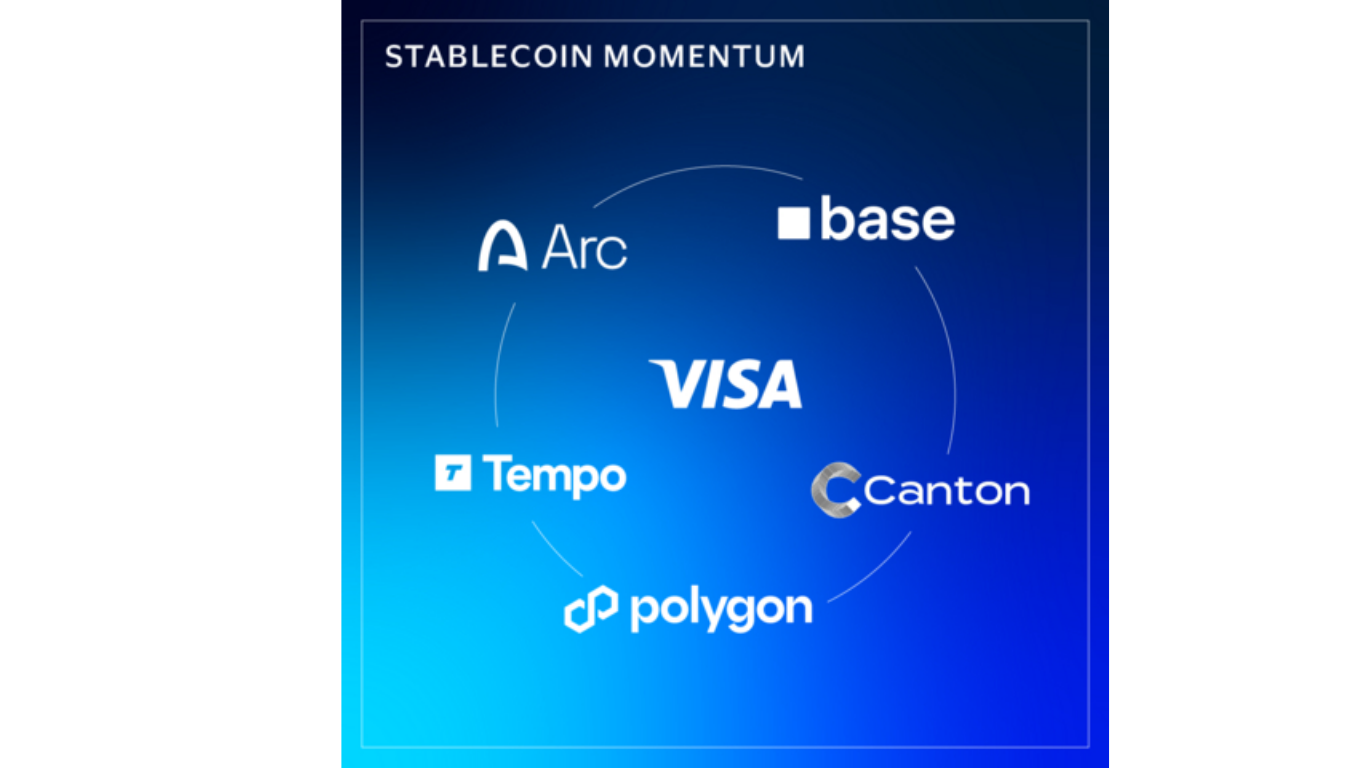 Stablecoin Momentum, Source: Visa
Multi-Chain Settlement Becomes Competitive Necessity
Visa’s expansion reflects a fundamental shift in how financial institutions approach payment infrastructure. Rather than choosing a single blockchain, partners now demand flexibility across multiple networks with different strengths.
“Our partners are building in a multi chain world, and they expect their options to reflect that reality,” said Rubail Birwadker, Visa’s global head of growth products and strategic partnerships.
Each blockchain serves a specific use case. Arc, developed by Circle, targets programmable money and onchain innovation. Base, incubated by Coinbase, targets high-volume retail flows.
Canton serves regulated capital markets with configurable privacy. Polygon delivers low-cost throughput for mass adoption. Tempo focuses on private, real-time stablecoin settlement.
This specialization mirrors a broader trend in blockchain infrastructure where no single network attempts to solve every problem.
From Proof of Concept to Live DeploymentsThe pilot has moved beyond experimental territory. Visa has deployed stablecoin settlement across Europe, Latin America, Asia Pacific, and the CEMEA region.
The company recently extended USDC settlement to U.S. banks and now supports 130+ stablecoin-linked card programs across 50 countries.
The 50% quarterly growth in settlement volume indicates institutional confidence is genuine, not speculative. Banks are integrating stablecoin rails into actual payment flows, not just testing them in sandboxes.
What This Means for Crypto Infrastructure“Visa adding Polygon signals that stablecoins are moving into real world payments at scale,” said Marc Boiron, CEO of Polygon Labs. “By combining Visa’s global reach with Polygon’s fast, low cost infrastructure, we are making stablecoin settlement more practical, reliable, and accessible for partners around the world.”
The Visa announcement reflects a maturing market where blockchain payments compete directly with traditional rails on speed, cost, and reliability rather than ideology.
Institutions are no longer asking if blockchain settlement works; they are asking which blockchain works best for their specific flows. This shift from experimental to operational deployment represents genuine progress toward blockchain integration into mainstream finance.
Visa’s recognition as an institutional innovator in crypto infrastructure reflects this evolution. The company has moved from skeptic to active participant in shaping how blockchains become practical tools for settlement.
The next phase will test whether multi chain fragmentation actually reduces friction or creates new operational burdens that offset the benefits of choice.
0
0

 从同一位置管理所有加密资产、NFT 和 DeFi 资产
安全地关联您正在使用的投资组合,以开始交易。
