
Chainlink Launches Project Pangea With Bank Consortia To Target T+0 FX Settlement

0
0
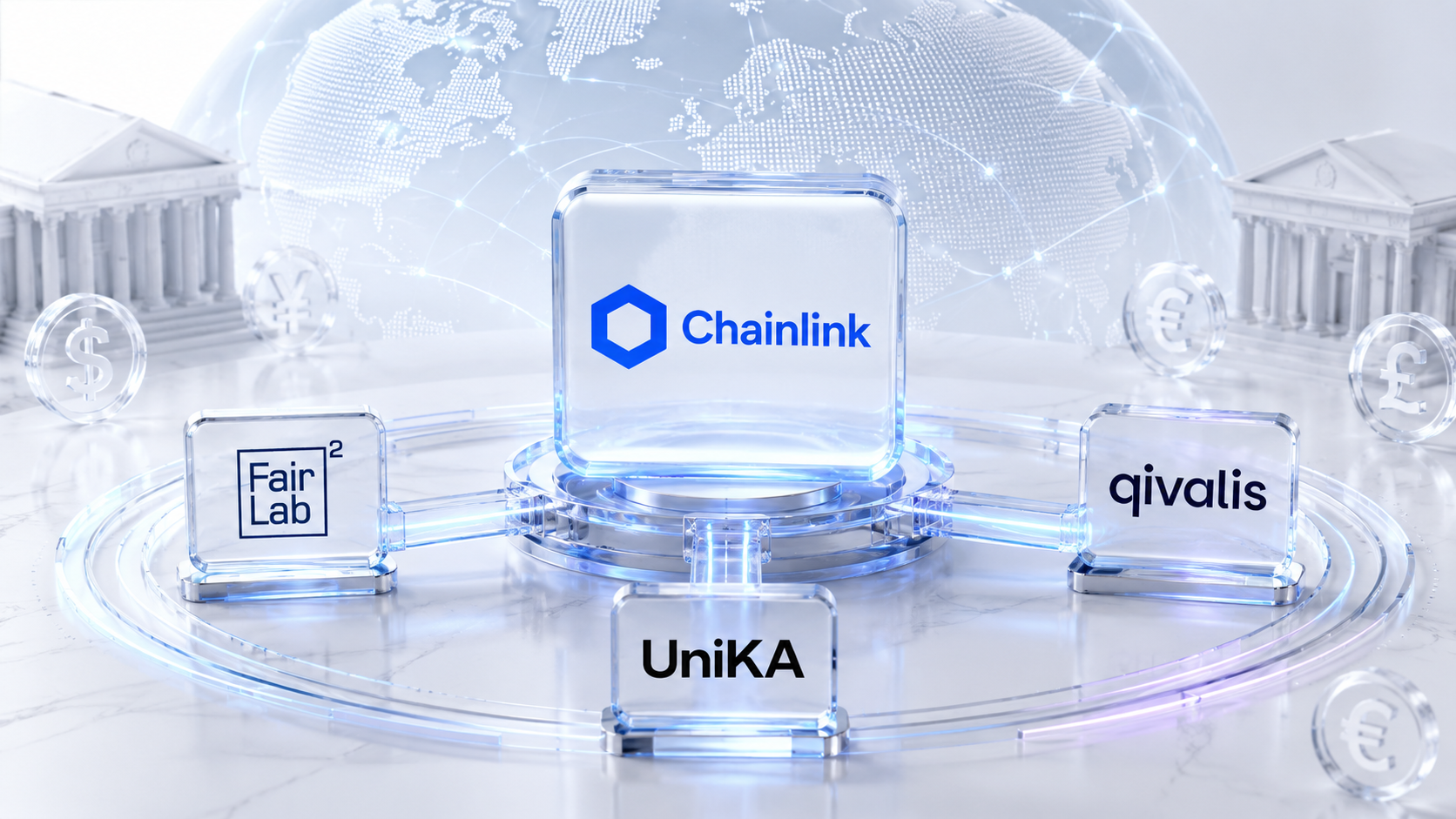
Chainlink has launched Project Pangea with FairSquareLab, UniKA and Qivalis, bringing European and South Korean banking groups into a new task force focused on real-time foreign-exchange settlement.
The initiative brings together financial groups representing more than $10 trillion in assets under management. UniKA represents the Korean side of Project Pangea, with a steering committee made up of Shinhan Bank, JB Bank, Kbank, FairSquareLab and OBDIA, alongside more than 10 participating Korean commercial banks. Qivalis brings the European side through a euro stablecoin consortium backed by 37 banks.
Project Pangea is built around direct swaps between regulated, fiat-referenced digital assets, including euro and Korean won stablecoins. The target is a move away from traditional T+2 FX settlement toward T+0 settlement, where both legs of a currency transaction complete at the same time through payment-versus-payment execution.
That makes the project more than a normal stablecoin payment pilot. It is aimed at the wholesale FX market, where settlement delay creates counterparty exposure, intraday liquidity demands and trapped capital between banks. The global FX market processes more than $9.6 trillion in daily trading volume, giving even small settlement-efficiency gains a large institutional target.
ISO 20022 And Swift Stay In The Stack
Project Pangea is designed to work with the banking systems institutions already use. Banks would continue sending instructions through Swift and ISO 20022 messaging, while Chainlink infrastructure translates those instructions into onchain settlement actions.
The architecture has three layers. The banking layer uses Swift and ISO 20022. The connectivity layer uses Chainlink CCIP, Data Streams and the Chainlink Runtime Environment. The settlement layer uses Pangea AMM smart contracts on chains such as Ethereum, Polygon and the Pangea L1 network.
Chainlink CCIP is meant to move euro stablecoins from their native networks to the Korean won settlement chain, reducing fragmentation across blockchain environments. Chainlink Data Streams would provide real-time FX market data for the pricing engine, while the Chainlink Runtime Environment acts as the orchestration layer between banking messages and blockchain execution.
FairSquareLab’s role is the onchain FX settlement engine. Its design uses trusted FX oracle quotes rather than a bonding curve, with depletion barriers meant to protect pool liquidity from being exhausted during large interbank conversions. The Pangea L1 network is positioned as neutral settlement infrastructure for the FX contract, independent of a single bank or country.
Stablecoins Move Deeper Into Bank Infrastructure
The project adds another institutional use case to Chainlink’s expanding capital-markets stack. Chainlink has already pushed deeper into tokenized assets and enterprise data, including SBI Group’s cross-chain RWA partnership and the Chainlink Data Standard launch on AWS Marketplace.
The difference with Project Pangea is the focus on FX settlement rather than asset issuance or data delivery alone. Regulated euro and won stablecoins could act as the cash legs for institutional currency swaps, while Chainlink provides interoperability, real-time data and orchestration between existing banking rails and blockchain settlement layers.
The project also lands as banks test stablecoins for settlement rather than consumer payments. South Korea has been moving quickly across digital-asset payments and tokenized finance, while European banks are trying to build euro-denominated stablecoin infrastructure under MiCA. Recent payment experiments, including KG Inicis’ Solana stablecoin payment MOU, show how Korean payment and banking groups are testing blockchain settlement from retail checkout to wholesale currency movement.
Project Pangea is now active as a task force, not a disclosed production FX network. The named infrastructure is Chainlink CCIP, Data Streams and CRE, FairSquareLab’s onchain FX settlement engine, and Pangea L1. The named banking blocs are UniKA on the Korean side and Qivalis on the European side, with the first hard milestone centered on proving regulated EUR and KRW stablecoin swaps can settle atomically through Swift and ISO 20022-connected banking workflows.
The post Chainlink Launches Project Pangea With Bank Consortia To Target T+0 FX Settlement appeared first on Crypto Adventure.
0
0

 Verwalten Sie alle Ihre Kryptowährungen, NFTs und DeFi an einem Ort
Verbinden Sie sicher das Portfolio, das Sie zu Beginn verwenden möchten.

0
0


