
Celsius Co-Founders Leon and Goldstein to Pay $6M+ to FTC

0
0
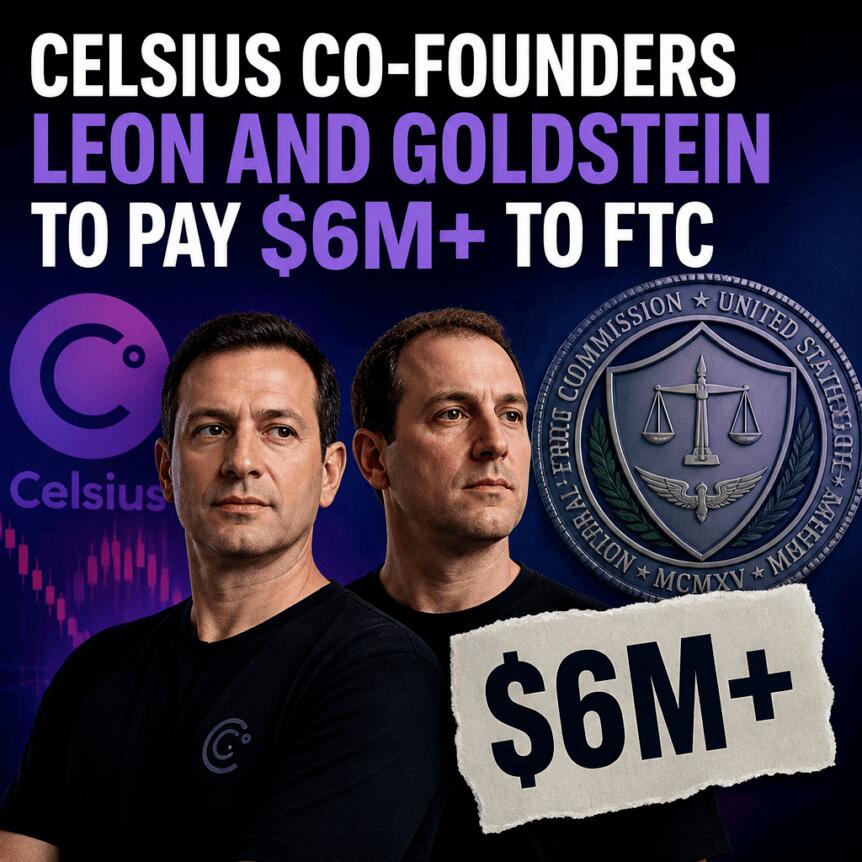
Celsius’ former co-founders are now facing additional financial consequences tied to the U.S. Federal Trade Commission’s case over what the regulator said were misleading assurances about the safety of customer assets before the crypto lender’s 2022 collapse.
The FTC has secured settlements in which Shlomi Daniel Leon and Hanoch “Nuke” Goldstein were ordered to pay a combined over $6 million to resolve FTC allegations that they misrepresented the security of the Celsius platform ahead of its bankruptcy filing. The latest orders follow the broader ripple effects of Celsius’ failure, which left users seeking recovery of funds after the firm, once valued on the promise of managed custody and lending, unraveled during a market downturn.
Key takeaways
- Goldstein, Celsius’ former chief technology officer, was ordered to pay $2.014 million under a court order signed Monday by U.S. District Judge Denise Cote.
- Leon, the former chief strategy officer, was ordered to pay $4.1 million under a separate stipulated order entered on June 29.
- The settlements extend FTC enforcement beyond CEO Alex Mashinsky, targeting additional executives’ alleged role in customer-facing representations.
- Both orders include restrictions barring the co-founders from marketing or selling products or services that could be used to deposit, exchange, invest, or withdraw crypto assets.
- The FTC previously alleged that Celsius misled customers about reserves, insurance coverage, and the nature of loans, and these settlements are credited toward related judgments.
Court-ordered payments and the scope of the bans
According to the FTC, the settlements with Goldstein and Leon are designed to address alleged consumer harm tied to the way Celsius presented its platform to retail customers. Judge Denise Cote’s order signed Monday requires Goldstein to pay $2.014 million. Leon’s stipulated order—entered on June 29—requires a larger payment of $4.1 million.
Beyond the monetary terms, the FTC’s statement notes that both co-founders agreed to restrictions aimed at reducing their ability to operate in ways connected to crypto custody and trading. In particular, the FTC said Leon is barred from marketing or selling products or services that could be used to deposit, exchange, invest, or withdraw assets. For Goldstein, the FTC describes a similar restriction covering retail products or services that could be used to buy, sell, deposit, withdraw, distribute, or trade cryptocurrency.
“Similarly, Goldstein has agreed to a ban on marketing or selling retail products or services that can be used to buy, sell, deposit, withdraw, distribute or trade cryptocurrency.”
FTC allegations: reserves, insurance, and loan practices
At the center of the FTC’s complaint was the claim that Celsius presented a picture of safety that, according to the regulator, did not match its actual conditions. The FTC alleged Celsius falsely told customers it maintained sufficient reserves to satisfy withdrawal demands.
The regulator also alleged Celsius promoted a $750 million insurance policy covering customer deposits, and represented that it did not issue unsecured loans.
The FTC further argued that these claims were made while Celsius’ executives continued to assure customers that deposits were safe in the final period before the platform collapsed. In the regulator’s framing, the alleged misrepresentations were not merely marketing mistakes; they were repeated assurances made during a period when the company’s financial situation was deteriorating.
How the settlements connect to the Mashinsky case
The settlements with Leon and Goldstein are part of an enforcement arc that began with the FTC’s action against Celsius founder and former CEO Alex Mashinsky, and then expanded to other executives. Earlier coverage of the Celsius fallout, including the trading restrictions placed on Mashinsky, underscored that regulatory scrutiny extended well beyond one individual once the company failed.
In April, Mashinsky agreed to an FTC settlement that included a permanent bar from promoting asset-related products and a $10 million payment. That settlement also involved a larger judgment framework described as $4.72 billion in a partially suspended structure, reflecting consumer harm allegations. Earlier reporting noted the settlement terms, including the $10 million payment and the partially suspended judgment.
The newly ordered payments from Goldstein and Leon—$2.014 million and $4.1 million, respectively—are stated to be credited against the $4.72 billion judgment. That matters because it shows how the FTC is coordinating multiple executive settlements into a single remedial accounting process, rather than treating each settlement as an isolated event.
Separately from the FTC track, the broader criminal fallout has also progressed. The U.S. Department of Justice previously reported that Mashinsky was sentenced to 12 years in prison in May 2025 after pleading guilty to commodities and securities fraud charges. Prosecutors said Mashinsky misled Celsius customers about the company’s profitability, investment risks, and the safety of customer funds.
Why these enforcement steps matter for Celsius customers and the industry
For Celsius users, the immediate takeaway is that the FTC’s case continues to identify and penalize senior figures beyond the most visible CEO at the time of collapse. The settlements do not reverse the bankruptcy outcome, but they do reinforce that the regulator intends to pursue accountability tied to marketing claims directed at retail customers.
For the broader crypto lending sector, these orders are another signal that “custody-and-lending” narratives—particularly those that reassure customers about reserves, insurance, and withdrawal readiness—are likely to remain under intense regulatory scrutiny. The bans also go beyond fines: they target future conduct by restricting marketing and sales roles connected to crypto deposit and trading functions.
What remains to be watched is how these settlements fit into the continued legal and enforcement landscape around Celsius and related claims. The crediting of co-founders’ payments against the $4.72 billion judgment suggests that additional financial outcomes may still surface as the FTC tallies and resolves separate executive-level actions tied to the same alleged consumer harm.
Going forward, investors and customers should pay attention to two things: whether additional Celsius executives face similar settlement-driven restrictions, and how courts continue to reconcile multiple payments under the same FTC judgment framework—especially as regulators seek to close gaps between public assurances and the actual condition of crypto lending platforms before collapses.
This article was originally published as Celsius Co-Founders Leon and Goldstein to Pay $6M+ to FTC on Crypto Breaking News – your trusted source for crypto news, Bitcoin news, and blockchain updates.
0
0
 Կառավարեք ձեր բոլոր կրիպտարժույթները, NFT-ն և DeFi-ն՝ մեկ տեղից
Ապահովաբար կցեք ձեր օգտագործած պորտֆոլիոն՝ սկսելու համար: