
How to start ETF for beginners? A practical primer

0
0
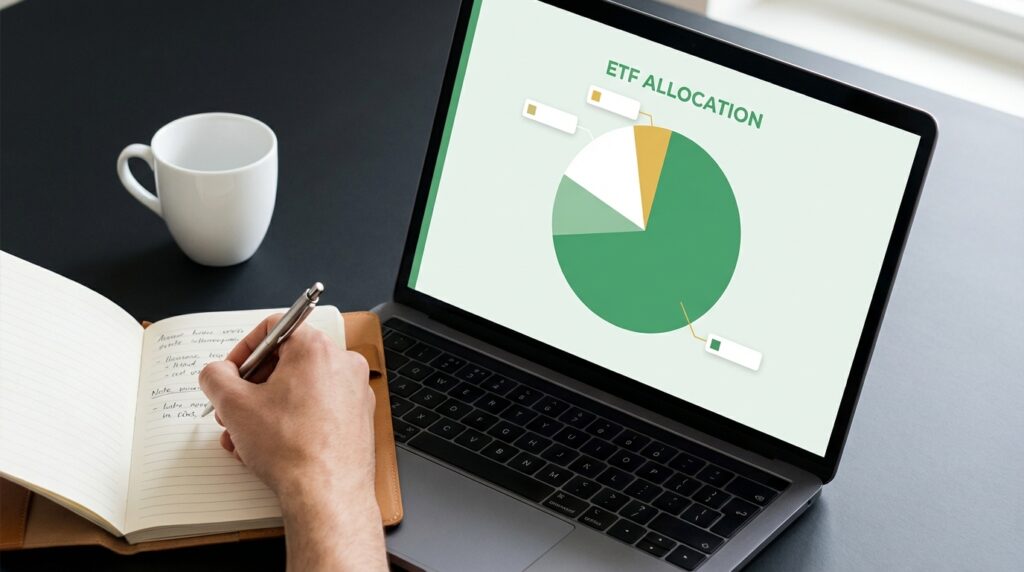
Use this article as a starting point to build confidence. It explains core ETF types and mechanics, shows a simple three-ETF starter portfolio, and provides checklists to reduce common mistakes. Verify tax rules and account specifics with primary sources before making large decisions.
Quick start: what to decide before you buy an ETF
Short checklist of decisions
Before you make a first purchase, resolve a few practical items so your first trade fits your goals. Decide which account you will use, the target allocation between stocks and bonds, your time horizon, and how much you will invest initially and on a recurring basis.
ETFs are pooled investment vehicles that trade like stocks and can serve as building blocks for beginner portfolios, so treat your choice of account and allocation as the primary decisions that shape tax treatment and risk exposure, not secondary details SEC investor bulletin.
Quick two-column decision vs where to check template
Use as a printed checklist
Use a short written checklist to avoid rushing. Common items are account type, whether you will use fractional shares, whether you prefer recurring purchases, and whether you need retirement account tax advantages.
How this guide will help
This article gives step-by-step choices and checklists so you can move from reading to placing a trade with less uncertainty. It focuses on practical checks rather than promoting any specific product.
Keep in mind this guide is educational and not personal financial advice; outcomes depend on your income, timeline, and risk tolerance.
What is an ETF? Definition and basic types
ETF as a pooled investment that trades on exchanges
An ETF, or exchange-traded fund, is a pooled investment vehicle that issues shares and trades on exchanges like a stock, while the fund itself holds a basket of securities that represent an index or a strategy SEC investor bulletin.
For a beginner that means a single ETF share can give exposure to many securities, which helps with diversification without buying each holding individually.
For a beginner that means a single ETF share can give exposure to many securities, which helps with diversification without buying each holding individually.
Main types: index vs active, physical vs synthetic
ETFs come in main structural categories: index-tracking versus active, and physical replication versus synthetic. Index-tracking ETFs aim to match a benchmark and usually have lower expenses, while actively managed ETFs seek to outperform an index but often come with higher fees and different risk profiles ETF Considerations for Individual Investors.
Physical replication typically means the fund holds the underlying securities, while synthetic structures use swaps or derivatives to replicate returns; structure can affect tracking and counterparty considerations, so note this when you read a fund prospectus.

How ETFs work: mechanics beginners should understand
Creation and redemption process in simple terms
ETFs have a creation and redemption mechanism that helps keep market prices close to net asset value by allowing authorized participants to exchange large blocks of underlying securities for ETF shares and vice versa What is an ETF? (ETF basics, costs, and choosing ETFs). See also SEC alert.
This step keeps ETF prices anchored to the value of their holdings and is a key difference from open-end mutual funds, which price only once per day.
How intraday trading and liquidity affect pricing
Because ETFs trade intraday, their market price can deviate slightly from net asset value; bid/ask spreads and average daily volume affect the cost you pay to enter or exit a position, so check these metrics before trading ETF Basics: How ETFs Work and What Beginners Should Know.

The expense ratio and tracking error together influence long-term performance relative to a benchmark, so consider both when comparing funds rather than looking at fees alone.
Choosing a broker and opening the right account
Broker features that matter to beginners
Pick a broker that reduces friction: look for low or commission-free trades, fractional shares, clear order types, and educational tools to guide your first trades; broker education pages list these as helpful features for new investors What is an ETF? (ETF basics, costs, and choosing ETFs).
These features make it easier to place small initial trades, set limit orders, or schedule recurring investments without unnecessary complexity.
Account types and where ETFs belong
Decide whether to use a taxable brokerage account or a retirement account. Account choice affects tax treatment and reporting, so make that decision before buying and check primary tax guidance and investing resources for how ETFs are treated in your jurisdiction Topic No. 409 Mutual Fund and ETF Taxation Overview.
Practical steps to open an account usually include identity verification, linking a bank account for funding, and setting up two-factor authentication for security.
Practical account-opening checklist
Before your first trade confirm these items: identity documents ready, linked funding source with cleared funds, account type selected, and any beneficiary or tax forms completed. This short preparation reduces delays and surprises when you execute your first buy.
Picking ETFs: the decision checklist for beginners
Costs and efficiency: expense ratio and tracking
Compare expense ratios because lower ongoing fees compound into meaningful differences over time; industry educators highlight fees as a primary selection criterion for long-term investors ETF Basics: How ETFs Work and What Beginners Should Know.
Also inspect historical tracking error in a fund factsheet, which shows how closely the ETF has matched its benchmark; consistent tracking supports predictable exposure for your allocation.
Liquidity and trading costs
Check liquidity by looking at average daily volume and the bid/ask spread; wide spreads increase execution cost even if a fund has a low expense ratio, so weigh both trading costs and fees when comparing options Understanding ETFs: Costs, Liquidity, and Trading.
If you plan to make small or infrequent purchases, fractional shares and scheduled buys can reduce the impact of spreads for small-dollar investors.
Strategy fit and diversification
Decide whether an ETF fits your intended strategy: index-tracking funds tend to be simpler cost-wise, while active ETFs can fill niche roles; consider fund size, prospectus details, and how the ETF complements your other holdings What is an ETF? (ETF basics, costs, and choosing ETFs).
Partner with FinancePolice for audience-focused advertising
Use this checklist to compare two or three ETFs side by side, then move to the 'Next steps' section to prepare your first small trade and monitoring plan.
A simple starter portfolio and how to set allocations
Three-ETF minimalist example and allocation ideas
A commonly recommended starting framework is a three-ETF portfolio: a broad domestic equity ETF, a broad international equity ETF, and an aggregate bond ETF; this approach gives basic diversification across major asset classes and is used as a conceptual starting point by many educator materials ETF Considerations for Individual Investors.
Exact allocations depend on your risk tolerance and time horizon; for example, a conservative split would have a larger bond allocation, while a growth orientation favors higher equity exposure.
How to tailor allocation to risk tolerance and time horizon
Choose an allocation that reflects how you would respond to short-term declines. If you cannot tolerate large swings, reduce equity weight and increase bonds. If your horizon is decades, equity exposure can often be higher.
Use fractional shares or recurring investments to build the target allocation over time rather than trying to time a single perfect entry.
How to place your first trade: step-by-step
Order types and practical tips to reduce costs
Common order types are market and limit orders. A market order executes immediately at the best available price, while a limit order sets a maximum purchase price and can prevent execution at an unexpectedly wide spread; using a limit order is often prudent for new ETF trades What is an ETF? (ETF basics, costs, and choosing ETFs).
Before you send an order, verify the ticker and share class, check the current bid/ask, and confirm recent volume to estimate likely execution cost.
Start by choosing the right account, pick a simple allocation and two or three broad ETFs that match it, open a brokerage account with features you need like fractional shares, place a controlled first trade such as a limit order, and set a low-effort monitoring and rebalancing plan.
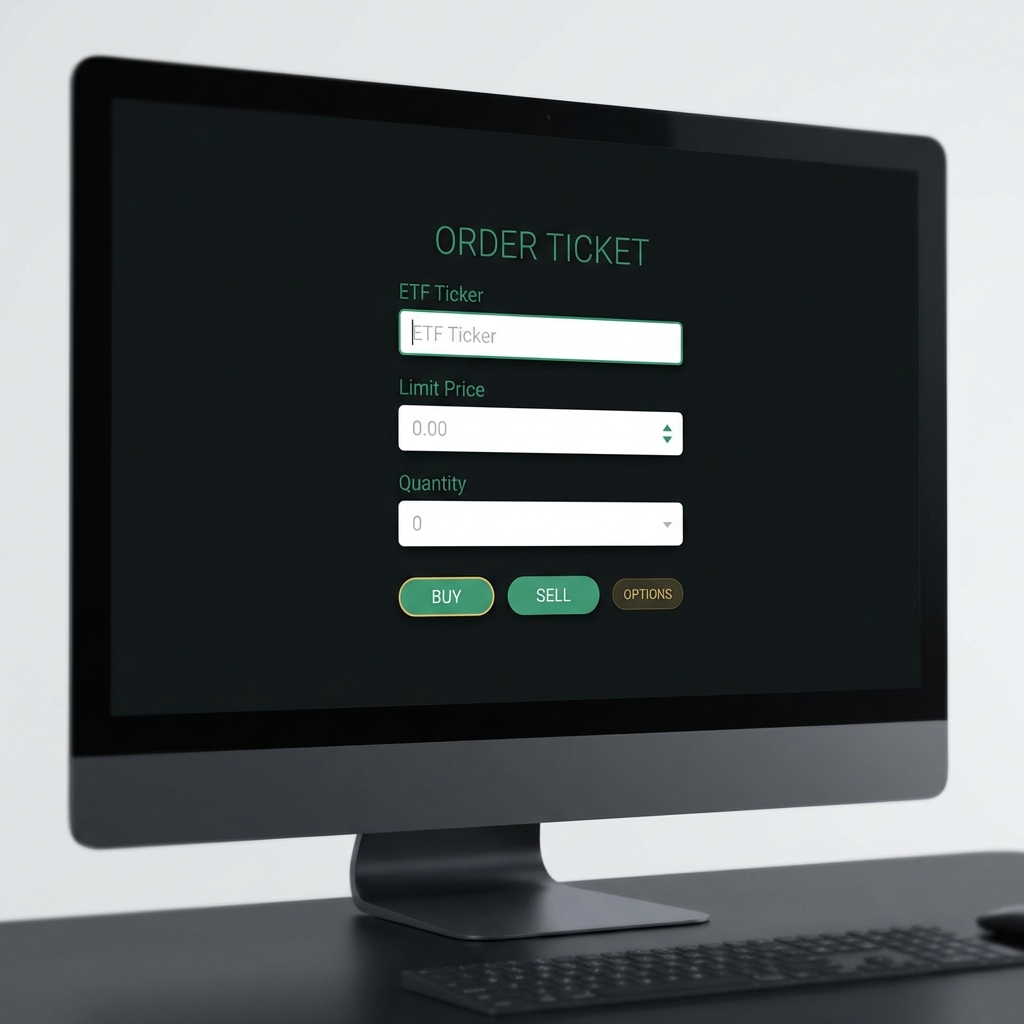
When you are ready to place the trade, enter the ticker, choose the number of shares or dollar amount if fractional trading is supported, set a limit price if you want control, and review total estimated cost including any fees.
Example trade flow from search to execution
Search the broker’s fund screener by ticker or strategy, open the fund factsheet to confirm expense ratio and holdings, compare liquidity metrics, and then use the order ticket to execute a controlled first buy.
Consider setting up a small recurring investment to dollar-cost average and reduce the pressure of timing a single purchase.
Taxes, reporting, and how to monitor holdings
Key tax concepts for ETF investors
Tax treatment for ETFs depends on account type and country; in the United States, investor documentation explains how ETFs and mutual funds generate and report capital gains and distributions, and primary tax guidance is the proper place to confirm rules for your situation Topic No. 409 Mutual Fund and ETF Taxation Overview. See also investor bulletins for educational materials.
Monitor year-end statements and tax forms from your broker so you can account for taxable events and estimate potential liabilities when investing in taxable accounts.
Ongoing monitoring: costs, rebalancing, and tax events
Focus monitoring on expense ratios and trading costs, and keep an eye on any unusual tax events or large distributions noted in the fund factsheet; investor education resources recommend attention to these items rather than frequent trading Understanding ETFs: Costs, Liquidity, and Trading.
A simple rebalancing cadence for many beginners is once or twice a year, or when allocations drift by a set percentage, which can reduce trading costs and taxes compared with active rebalancing.
Common mistakes, pitfalls, and a short checklist before buying
Typical beginner errors
Common mistakes include buying without checking liquidity and spreads, confusing tickers or share classes, overlooking tax consequences for the chosen account, and chasing past performance rather than assessing fit for your allocation ETF Basics: How ETFs Work and What Beginners Should Know.
Avoid making decisions based solely on recent returns; check the prospectus and fund factsheet for objective metrics like expense ratio and tracking history.
Final pre-purchase checklist
Before you click buy, do this quick checklist: verify the ticker and share class, confirm the expense ratio and tracking error, check average daily volume and bid/ask spread, know tax treatment in your account, and ensure funding is available.
Keeping this list handy reduces the chance of simple errors that can increase costs or cause unexpected tax reporting.
Next steps and a concise checklist to get started
Research checklist
Use a short research checklist: pick an account, shortlist two or three ETFs that match your allocation, compare expense ratios and liquidity, read the prospectus, and verify tax treatment for your jurisdiction SEC investor bulletin.
Save copies of fund prospectuses and broker statements for your records and to help with year-end tax preparation.
How to set up recurring investments
If your broker supports recurring investments, set a manageable dollar amount and frequency to automate building your allocation and reduce the impact of timing decisions.
Start small, keep trades infrequent while you learn, and focus on monitoring costs and tax documents rather than trying to trade frequently.
Open a brokerage account that supports fractional shares, choose a simple portfolio of broad-market ETFs, and use limit orders or recurring purchases to start small while you learn.
Tax rules can differ by product and country; consult primary tax guidance for your jurisdiction and review broker year-end statements for reporting specifics.
Many beginners rebalance once or twice a year or when allocations drift by a set percentage, balancing simplicity with cost and tax considerations.
If in doubt about tax or complex account choices, consult primary tax guidance or a tax professional for your situation.
References
- https://www.sec.gov/oiea/investor-alerts-and-bulletins/ib_etfs.htm
- https://www.cfainstitute.org/en/research/foundation/2024/etf-structure
- https://investor.vanguard.com/investing/etf
- https://www.morningstar.com/articles/what-is-an-etf
- https://www.blackrock.com/us/individual/education/what-is-an-etf
- https://www.irs.gov/taxtopics/tc409
- https://www.sec.gov/investor/alerts/etfs.pdf
- https://www.investopedia.com/terms/e/etf.asp
- https://www.investor.gov/introduction-investing/general-resources/news-alerts/alerts-bulletins/investor-bulletins-24
- https://financepolice.com/best-micro-investment-apps/
- https://financepolice.com/category/investing/
- https://financepolice.com/advanced-etf-trading-strategies/
- https://financepolice.com/advertise/
0
0

 Beheer al jouw cryptovaluta, NFT en DeFi vanaf één plek
Verbind de portfolio die je gebruikt veilig om te beginnen.


0
0

0
0