
Beyond TVL: Which Restaking Protocols Are Building Real Revenue in 2026?

0
0
Billions of dollars continue flowing into restaking protocols in 2026 as DeFi projects expand blockchain security services beyond traditional staking models. The sector has also begun to see stronger fee activity as protocols compete for liquidity and network participation.
For context, restaking is a mechanism in which crypto assets already staked to secure a blockchain can be reused to help secure additional services or networks. This allows the same assets to support multiple protocols at once, extending their utility across decentralized systems.
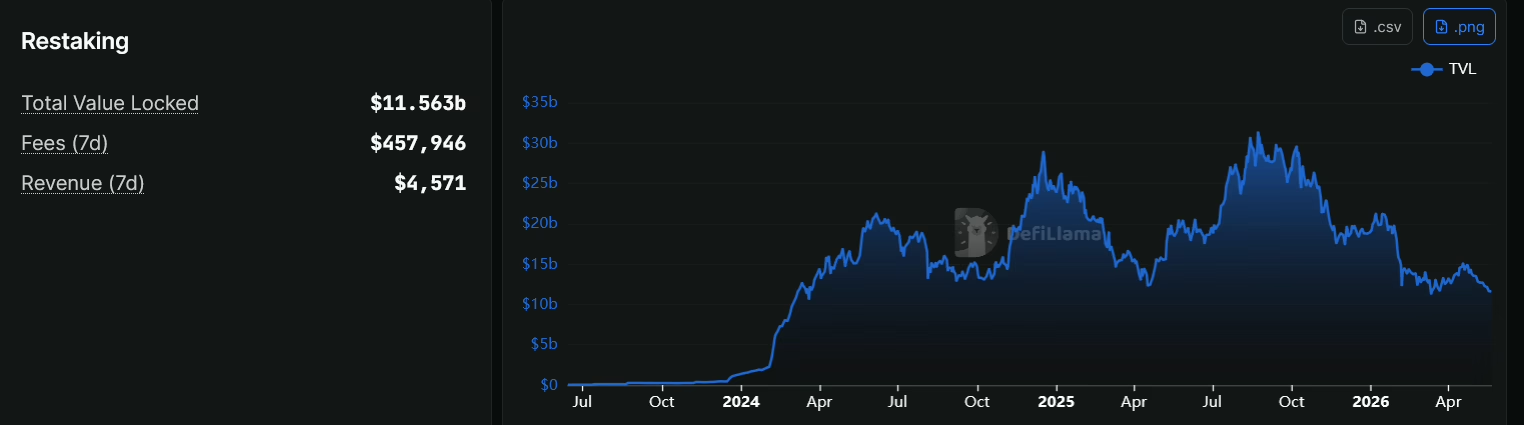
Across the sector, total value locked as of May 20 stands at $11.56 billion. Protocols generated $457,946 in seven-day fees and $4,571 in protocol revenue. This report examines the protocols building measurable revenue today.
Liquid Restaking Leaders and Sector Revenue Breakdown
EigenCloud remains the largest network with $6.75 billion in total value locked and $420,552 in seven-day fees, reflecting strong operator engagement across its infrastructure.
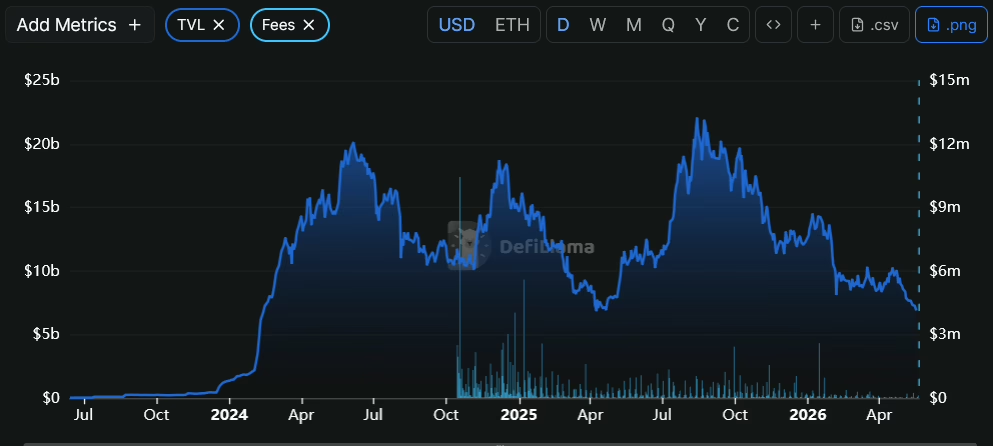
Babylon Protocol follows next with $4 billion in TVL, expanding Bitcoin-based restaking and extending shared security into non-Ethereum environments.
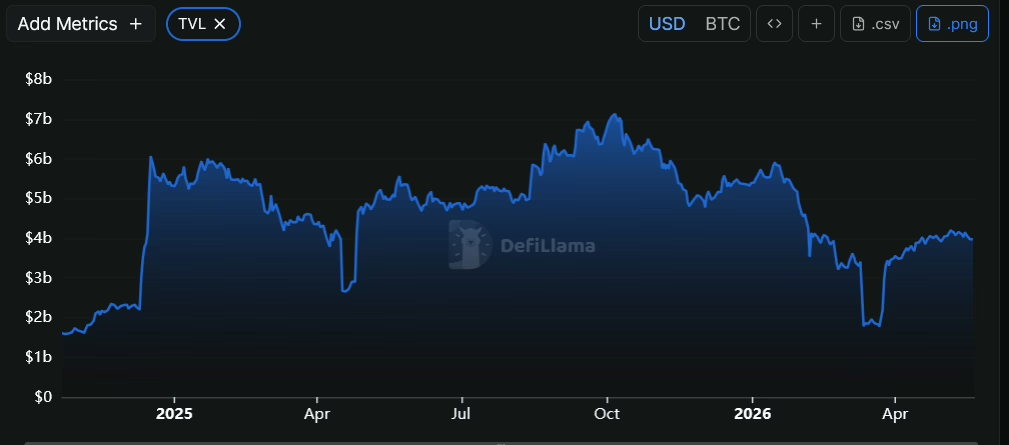
Ether.fi Stake (ETHFI) leads liquid restaking with $4.63 billion in total value locked. Kelp follows with $1.39 billion in TVL, supported by multi-chain liquidity and participation in staking derivatives. Its fee profile records $3.81 million in 7-day and 30-day fees. This is accompanied by $165,000 in weekly protocol revenue, indicating consistent monetization relative to activity.
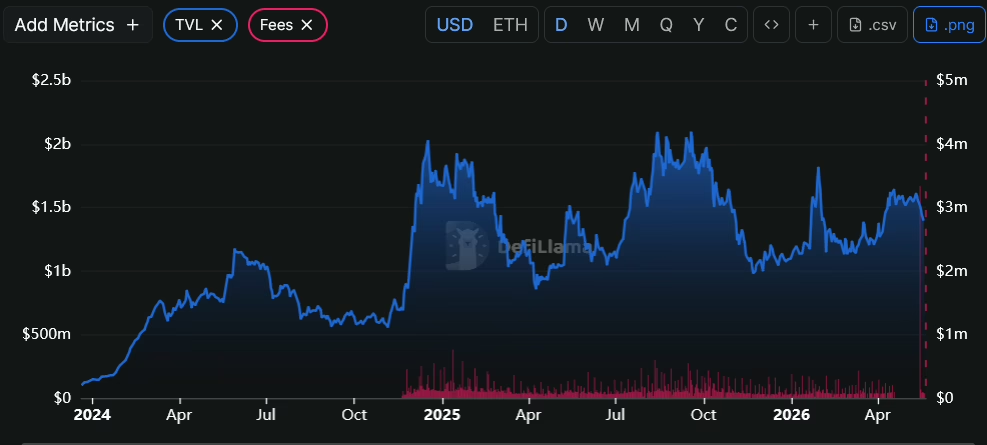
At the segment level, liquid restaking protocols collectively hold $6.47 billion in total value locked and generated $4 million in seven-day fees alongside $186,000 in protocol revenue. The segment shows stronger fee retention than Base restaking models, driven by layered liquidity mechanisms and more active capital cycling.
Shifts in Restaking Market Structure
Market structure in restaking is shifting toward more stable usage patterns rather than the rapid expansion cycles seen in earlier phases, as protocols prioritize efficiency, predictable participation, and improved coordination between operators and restakers.
Most Base restaking systems distribute staking yields and AVS payments directly to participants instead of retaining them at the protocol level. This design reflects the broader shift toward efficiency and alignment, strengthening coordination between validators, operators, and restakers. It also improves network security and capital efficiency across ecosystems.
However, it limits protocol-side revenue even when participation remains high across major networks.
The post Beyond TVL: Which Restaking Protocols Are Building Real Revenue in 2026? appeared first on CoinTab News.
0
0
 Gérez tous vos cryptos, NFT et DeFi à partir d'un seul endroit.
Connectez de manière sécurisée le portefeuille que vous utilisez pour commencer.