

According to the source, the Drift Protocol hack drained over $270 million in under an hour, making it the largest DeFi hack 2026 has recorded. That contrast sets the tone for the entire market. Innovation is moving forward, but trust is struggling to keep pace.
Drift Protocol Hack Reveals How Human Trust Became the Weakest Layer
The Drift Protocol hack was not a sudden exploit. It was a slow, calculated operation. Attackers spent six months embedding themselves inside the ecosystem. They acted as a trading firm, attended conferences, and built relationships. This trust allowed access. Later, they used durable nonces to pre-sign transactions and bypass multisig safeguards.
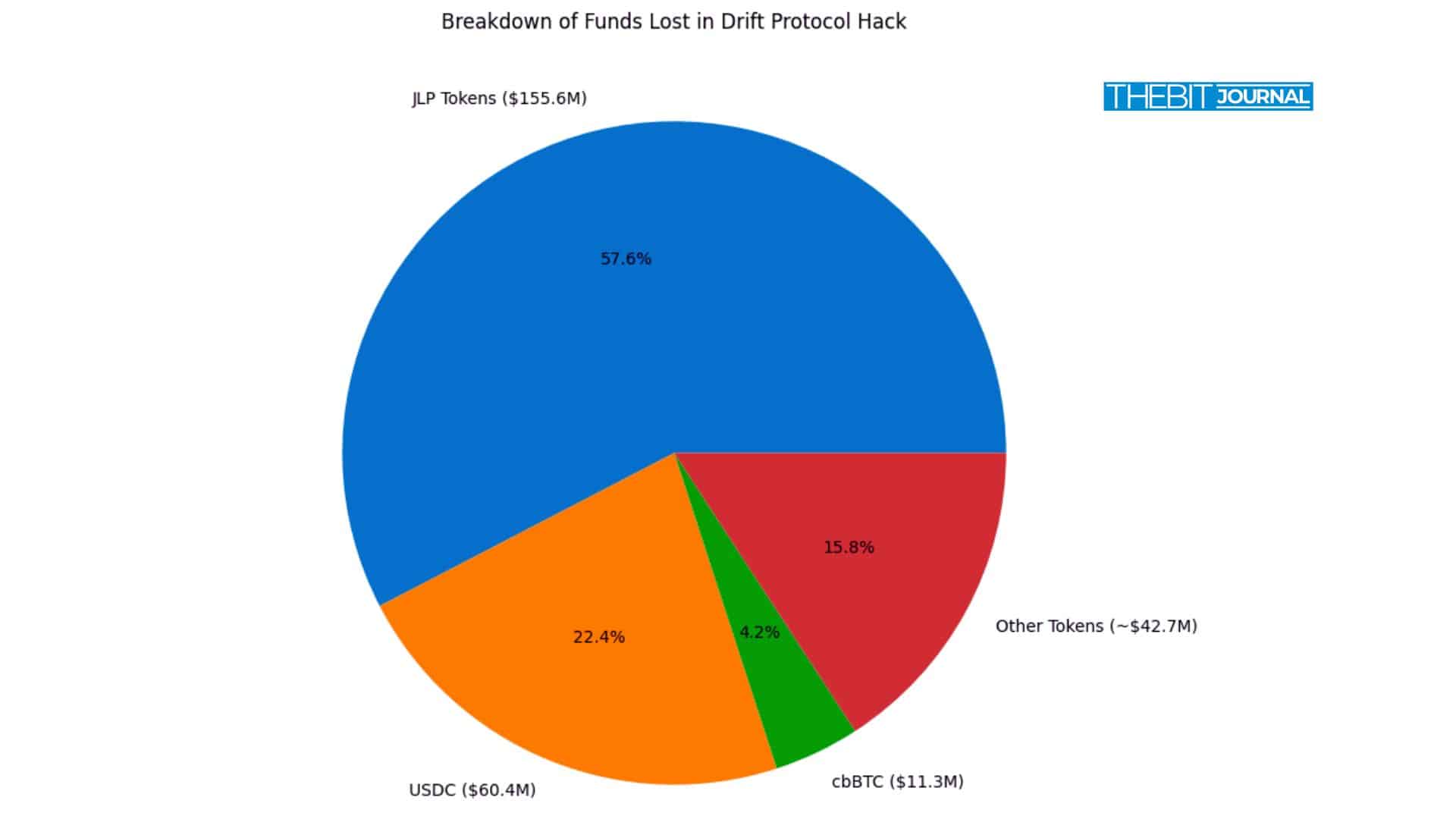
A recent report noted that “attackers now target people as much as code,” a shift clearly seen in the Drift Protocol hack and the broader DeFi hack 2026 trend. The stolen funds included $155.6 million in JLP, $60.4 million in USDC, and $11.3 million in cbBTC. These assets were quickly swapped into Ethereum and moved across chains, making recovery difficult.
This marks the third DeFi hack 2026 incident without a code flaw. The Drift Protocol hack proves that security is no longer just technical. It is deeply human.
Bitcoin’s Recovery Highlights Confidence, But Not Strength
While the Drift Protocol hack exposed risks, Bitcoin showed signs of recovery. It closed March at $68,215, ending a five-month decline. However, the journey told a different story. Prices climbed to $76,000 before falling below $65,000 again. This volatility revealed fragile sentiment.
The market had already lost $1.57 trillion in value. Even with a green monthly close, confidence remained weak. The Fear and Greed Index stayed in extreme fear.
Data from on-chain insights showed transaction fees at a 13-year low. The NVT ratio near 43 suggested price still outpaced usage. Even after the Drift Protocol hack, demand signals did not fully recover, reinforcing the DeFi hack 2026 concern.
Regulation and Institutions Move Forward Despite DeFi Hack 2026
The Drift Protocol hack has accelerated regulatory urgency. Lawmakers are pushing forward the CLARITY Act, led by Senators Thom Tillis and Angela Alsobrooks. The debate centers on stablecoin yields. Banks seek limits to protect deposits, while crypto firms argue for innovation. This tension reflects the broader market divide.
Meanwhile, the Commodity Futures Trading Commission expanded oversight. It increased scrutiny on derivatives and prediction markets. Globally, Malta challenged EU authority, while India delayed policy again under central bank pressure.
Yet institutional momentum remains strong. Stablecoin markets now exceed $317 billion, with over $28 trillion in annual volume. Bitcoin ETFs alone attracted $1.32 billion in March. The Drift Protocol hack and every DeFi hack 2026 event now sit against this backdrop. Growth continues, but risk grows alongside it.
France Leads Innovation While Smaller Signals Tell a Bigger Story
France is preparing the world’s first fully on-chain IPO through ST Group on the Lise platform. This move shows how quickly traditional finance is embracing blockchain. Approved under the EU DLT Pilot Regime, the model combines trading and settlement into one system. It places France ahead of Nasdaq, SIX, and Securitize.
At the same time, smaller developments reveal deeper trends. The Ethereum Foundation staked $46 million in ETH, signaling long-term confidence. Bitmine added over 71,000 ETH, while Lido proposed a buyback to stabilize its token.
In a Convera partnership, Ripple’s defiance of odds in the broadening pay Safes brought. On the flip side, India’s policy holdup is a sign of continuing uncertainty in important markets. Even smaller stories carry weight. Opening retirement accounts to crypto is a potential game changer for massive capital inflows. Launch of Midnight Network demonstrates increasing demand for privacy.
A supply chain attack using Axios shows that developer tools remain vulnerable. Hyperliquid’s mobile app reflects user expansion, while tokens like SIREN and StakeStone highlight how quickly hype can turn into sharp losses. Each of these signals adds context. Together, they show a market moving forward, but not always safely.

Conclusion
The Drift Protocol hack is not just a headline. It represents the central tension shaping crypto today. On one side, adoption is accelerating. Institutions are entering, infrastructure is improving, and capital is flowing in. On the other, the DeFi hack 2026 trend exposes growing vulnerabilities.
This has become a big contradiction. It is the signature challenge of the industry. Should security not keep up, trust may decline. Emerging with this trajectory, crypto could become the prospectus of its most transformative phase. The result will now be determined by the management of this balance.
Glossary of Key Terms
Drift Protocol: A decentralized exchange for perpetual futures trading on Solana.
DeFi: Financial systems built on blockchain without intermediaries.
Durable Nonce: A feature enabling delayed execution of transactions.
NVT Ratio: A metric comparing network value to transaction activity.
On-chain IPO: A public offering conducted fully on blockchain.
FAQs About Drift Protocol Hack
What caused the Drift Protocol hack?
It resulted from long-term infiltration and misuse of transaction systems.
Why is this DeFi hack 2026 important?
It shows a shift toward social engineering attacks in crypto.
Did Bitcoin recover after the hack?
Bitcoin showed a slight recovery but underlying demand remains weak.
What does this mean for regulation?
It increases pressure for stricter crypto laws and oversight.


