
Private Credit Gates Hit Crypto Liquidity Days Before the Fed’s March FOMC Decision

0
0

Five of the largest private credit fund managers have capped or gated investor withdrawals since late February. The results is a liquidity squeeze that could force trapped investors to dump liquid assets, including Bitcoin (BTC) and Ethereum (ETH).
The timing compounds the pressure. The Federal Open Market Committee (FOMC) meets March 17-18, and BTC fell after seven of eight FOMC meetings in 2025. With the Fear and Greed Index indicating extreme fear, crypto markets are already at their most fragile since 2022, ahead of the rate decision week.
How Gated Credit Funds Drain Crypto Liquidity
The private credit withdrawal wave started with Blue Owl Capital and has since spread to BlackRock, HPS, Cliffwater, and Morgan Stanley.
Each gate triggers a cascade. When one fund locks capital, investors rush to redeem from others before those funds gate too.
Cliffwater’s $33 billion flagship vehicle limited redemptions to 7% after investors reportedly tried to pull a record 14% in a single quarter.
The fund honored half. Morgan Stanley’s North Haven Private Income Fund returned just $169 million, roughly 45.8% of what investors requested, after capping redemptions at 5% of shares.
“Five private credit firms have blocked, scrambled, or gated investor withdrawals in three weeks,” observed Bitcoin proponent Justin Bechler.
Investors who cannot access their capital in these vehicles need to raise cash elsewhere. BTC and ETH, as the most liquid risk assets many of these allocators hold, become the obvious source.
Business Development Companies (BDCs), which finance small and mid-sized firms, now trade at roughly 0.73x net asset value.
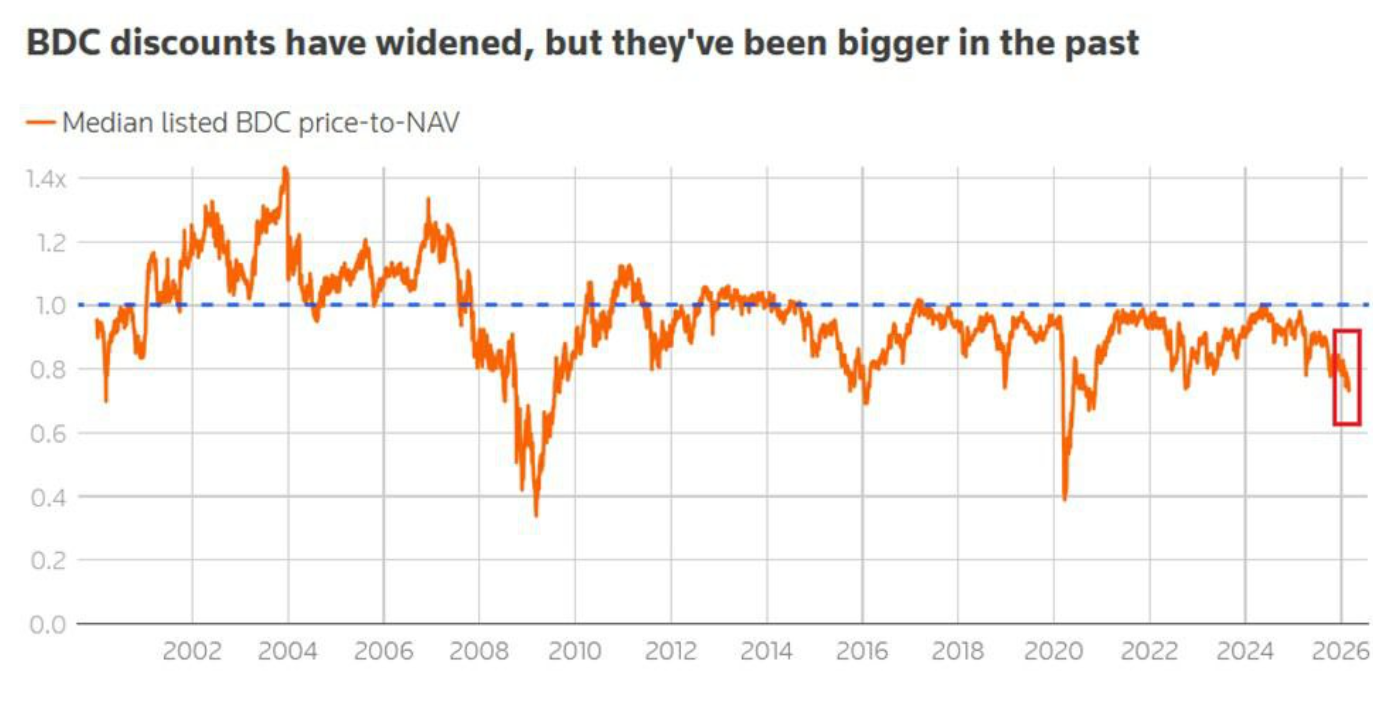 BDCs are trading around ~0.73x NAV, the biggest discount since 2020.Source: MorningStar J Guilford
That is the deepest discount since 2020 and signals that credit investors are already de-risking.
The FOMC Wildcard and AI Lending Collision
Meanwhile, the CME FedWatch Tool shows a 99%-plus probability that the Fed will hold rates at 3.50% to 3.75% next week. The decision itself is priced in.
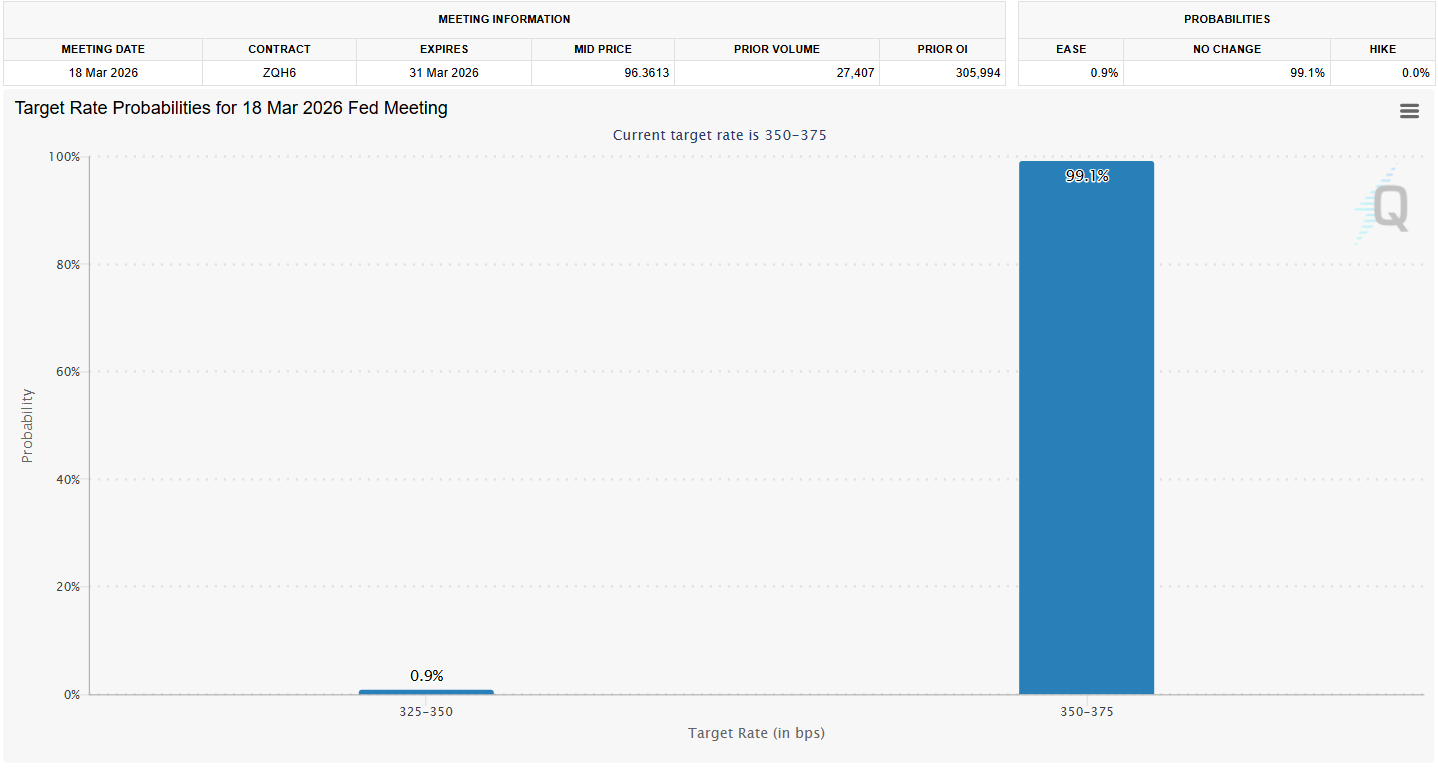 Fed Interest Rate Probabilities. Source: CME FedWatch Tool
What matters for crypto is the tone. Any hawkish language from Chair Jerome Powell could accelerate the de-risking already underway in credit markets and push BTC lower.
Bitcoin dropped from $90,400 to $83,383 in 48 hours after the January FOMC hold. A repeat pattern with the private credit squeeze running in the background would put the $62,300 support level under serious pressure.
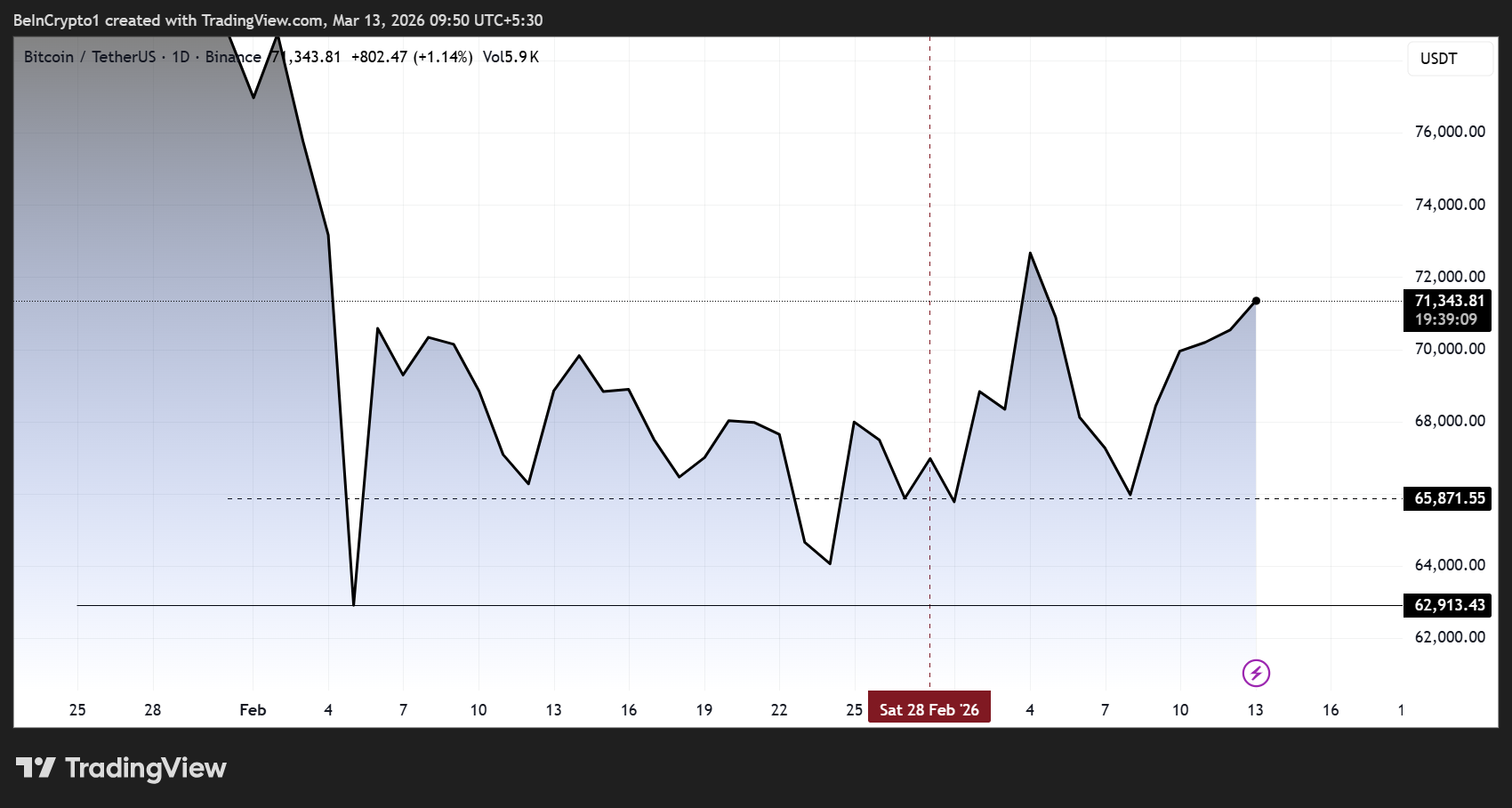 Bitcoin Price Performance. Source: TradingView
Meanwhile, the stress is not limited to redemptions. Deutsche Bank disclosed this week that its private credit portfolio grew to €25.9 billion ($30 billion), a 6% increase from 2024.
Its technology lending surged by more than a third to €15.8 billion ($18.3 billion), heavily concentrated in software companies now threatened by AI disruption.
The German lender also extended billions in data center debt, with a senior executive describing the bank’s investment arm as having bet heavily on AI infrastructure financing.
That creates a two-sided risk for crypto-adjacent markets. Legacy software loans face markdown risk from AI competition, while new AI lending may be forming a separate bubble.
Put option open interest on major U.S. credit ETFs like HYG, JNK, and LQD hit a record 11.5 million contracts, doubling over the past year and surpassing 2022 levels.
Tech high-yield credit spreads widened to 556 basis points, a 195-point premium over broader high-yield benchmarks.
These are not abstract signals!
They measure how aggressively institutional investors are hedging against a credit breakdown.
The question for crypto heading into next week is whether the FOMC decision triggers a contained “sell the news” dip or catalyzes forced selling from credit-trapped investors.
If the Fed signals patience while private credit gates keep spreading, BTC may face a liquidity pinch from both directions at once.
0
0


 Tüm kripto, NFT ve DeFi varlıklarınızı tek bir yerden yönetin
Kullanmaya başlamak için portföyünüzü güvenli bir şekilde bağlayın.


