
Polymarket Bet Could Pay Losing Side After $150M Market Dispute

0
0

Polymarket bet controversy has been making waves within the crypto community following a prediction market of almost $150 million descending into chaos over an allegedly questionable settlement result. While the seemingly straightforward bet placed on the known Strategy Bitcoin sale now looks set to become one of the biggest controversies in the prediction market world this year, the truth remains that traders who accurately predicted the event may not get paid regardless.
The controversy is not only shedding light on some of the problems surrounding decentralized governance but also on the process of settlements through oracles in crypto markets. In its efforts to integrate prediction markets into conventional finance, the Polymarket platform finds itself at the center of a significant controversy.
Origin of the Polymarket Bet Controversy
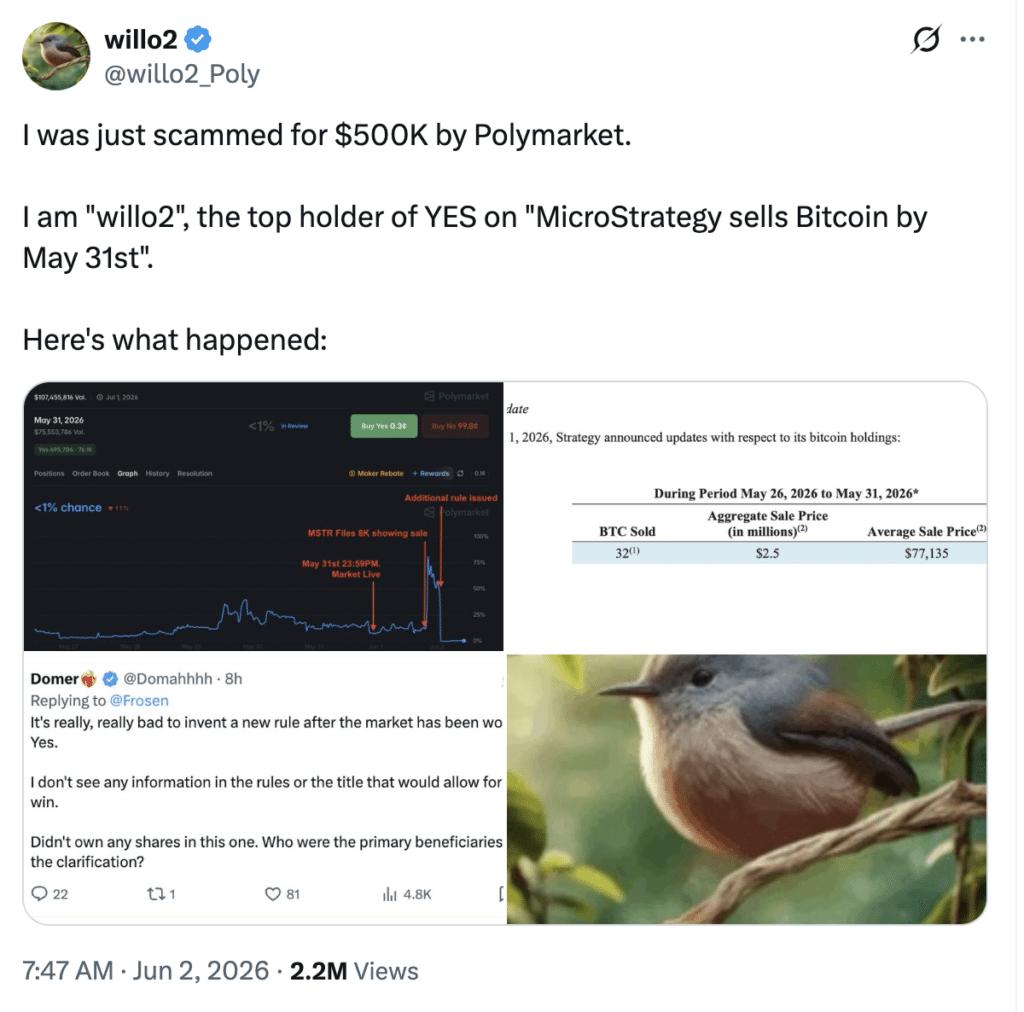
Today’s Polymarket Bet Controversy began when Strategy, now previously called MicroStrategy, revealed its sale of 32 BTC from May 26 to May 31. For most of the traders involved in the Bitcoin prediction market, it was immediately conclusive evidence that the event took place.
The question that the contract asked is if Strategy will sell any Bitcoin before May 31. When the disclosure was made to the general public on June 1, the traders assumed that the event did happen. The matter was complicated further, however, when Polymarket administrators released a disclaimer about the timing of the disclosure, which resulted in what may very well be the biggest Polymarket controversy of the year 2026.
The Reasons for Which Traders Feel That They Have Won the Market
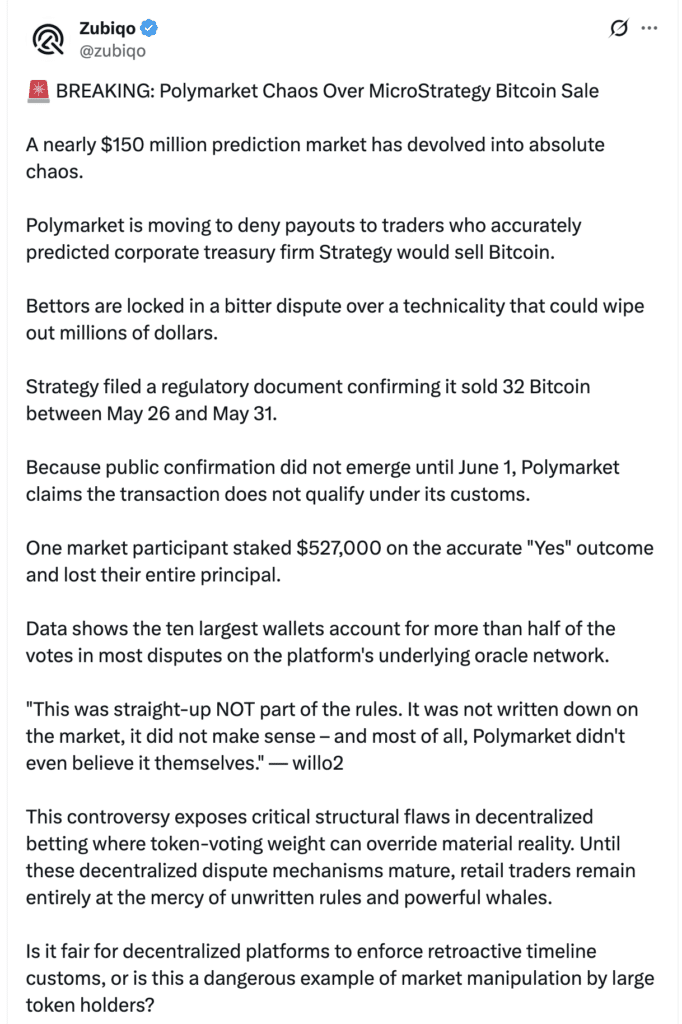
One of the reasons for which the Polymarket Bet Controversy has become such a big topic is because there is an agreement amongst many players that things are very simple to understand. Strategy proved that the Bitcoin was sold before the deadline. According to the traditional finance perspective, things had happened, therefore, it seemed very clear-cut.
There were traders who thought the market was mispriced after the filing. In fact, one participant had made an investment worth over $500,000, which he hoped would be successful. The investment, however, became almost worthless. Such circumstances have led to questions about the long-tail issue: why traders lost money while winning on the Polymarket bet?
The Disputed Interpretation of Polymarket Resolution Rules
The core issue behind the Polymarket Bet Controversy involves the platform’s interpretation of Polymarket resolution rules. While the contract stated that Strategy had to sell Bitcoin before May 31, Polymarket later emphasized that public confirmation also needed to occur within the specified timeframe.
Critics argue that this requirement was never clearly communicated. If disclosure timing was essential, they contend the contract language should have explicitly stated so. The resulting disagreement has become a major example of a broader prediction market settlement controversy in crypto, where technical interpretations can outweigh economic reality.
Strategy Bitcoin Sale Raises Questions About Market Design
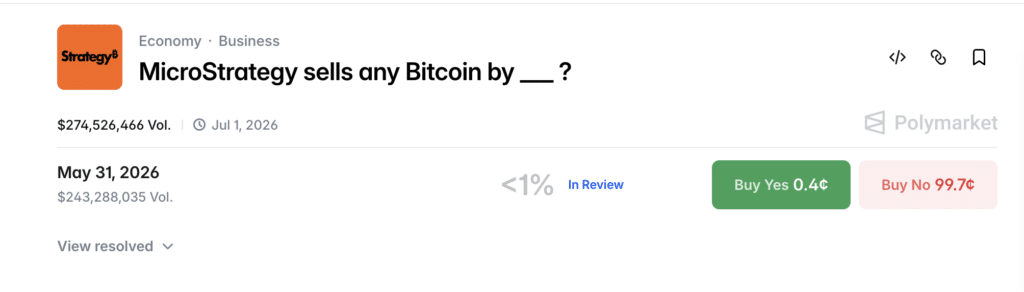
The confirmed Strategy BTC sale may have involved only 32 Bitcoin worth approximately $2.5 million, but its implications extend far beyond the transaction itself. The event exposed how decentralized platforms handle information that becomes publicly available after a market deadline.
This aspect of the Polymarket Bet Controversy highlights an important challenge facing crypto betting platforms. Financial events frequently occur before disclosures reach the public. If contracts fail to address this distinction clearly, traders may find themselves exposed to unexpected risks even when their predictions are factually correct.
The UMA Oracle System Faces Fresh Scrutiny
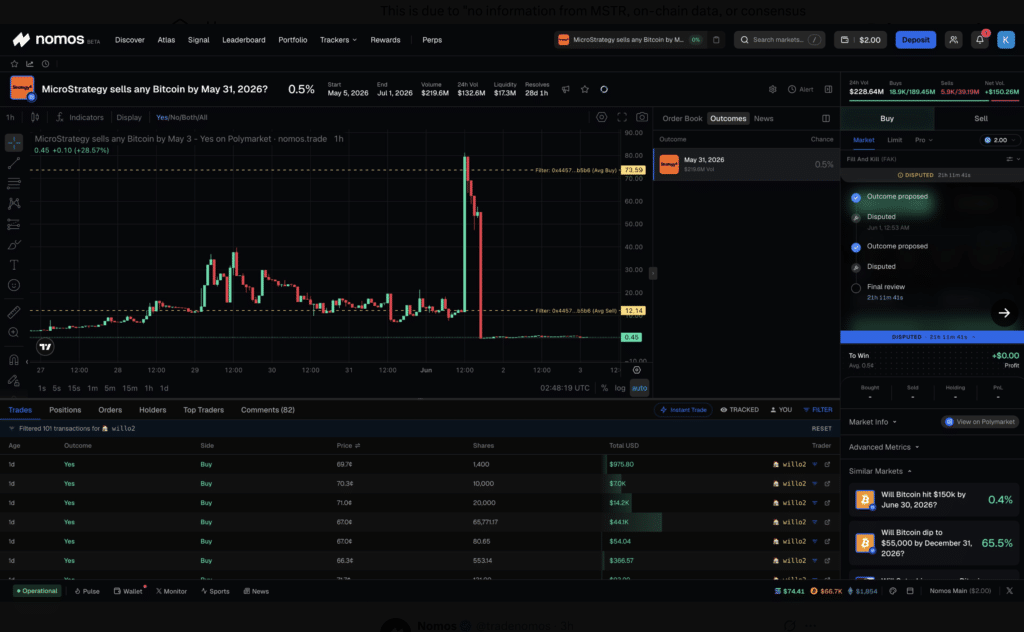
Another major component of the Polymarket Bet Controversy involves Universal Market Access, commonly known as UMA. Rather than relying on centralized decision-making, Polymarket uses UMA’s optimistic oracle framework to resolve disputed outcomes.
Under this structure, token holders ultimately determine the final result through voting mechanisms. Supporters argue that decentralized governance improves transparency. Critics counter that large token holders can influence outcomes when significant financial incentives are involved. As a result, many analysts are now asking whether How Polymarket resolves prediction markets remains suitable for contracts involving tens or even hundreds of millions of dollars.
Growing Concerns Over Prediction Market Governance
The ongoing Polymarket Bet Controversy has amplified concerns about governance concentration. Reports indicate that a relatively small number of wallets often control a substantial percentage of voting power in contested settlements.
This has led to fears that sophisticated participants may enjoy advantages unavailable to retail traders. For many observers, the controversy is not merely about one contract. Instead, it represents a broader examination of whether decentralized governance structures can effectively manage disputes as crypto prediction markets continue expanding into mainstream financial ecosystems.
Mainstream Adoption Meets Structural Challenges
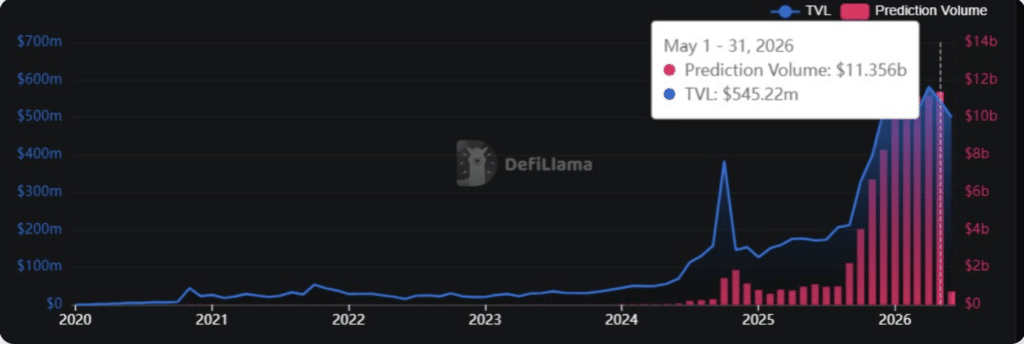
The timing of the Polymarket Bet Controversy is particularly significant because prediction markets are experiencing explosive growth. Industry data indicates that platforms such as Polymarket and Kalshi collectively processed more than $10 billion in monthly trading volume during May 2026.
At the same time, these firms have secured partnerships with major financial and media organizations. Yet incidents like the Polymarket controversy over Strategy Bitcoin sale demonstrate that institutional credibility requires more than trading volume. Transparent settlement mechanisms remain essential if these platforms hope to attract broader participation from professional investors and traditional financial institutions.
Why This Dispute Matters Beyond One Market
Many market participants view this event as a test case for the future of decentralized finance. The Polymarket Bet Controversy illustrates how disagreements over wording, timing, and governance can create uncertainty even when objective facts appear undisputed.
Questions such as Can you lose a correct prediction on Polymarket and What happened in the $150 million Polymarket market are now being discussed across the crypto industry. The answers may influence how future contracts are structured and how regulators evaluate emerging prediction market platforms.
Bitcoin Market Context
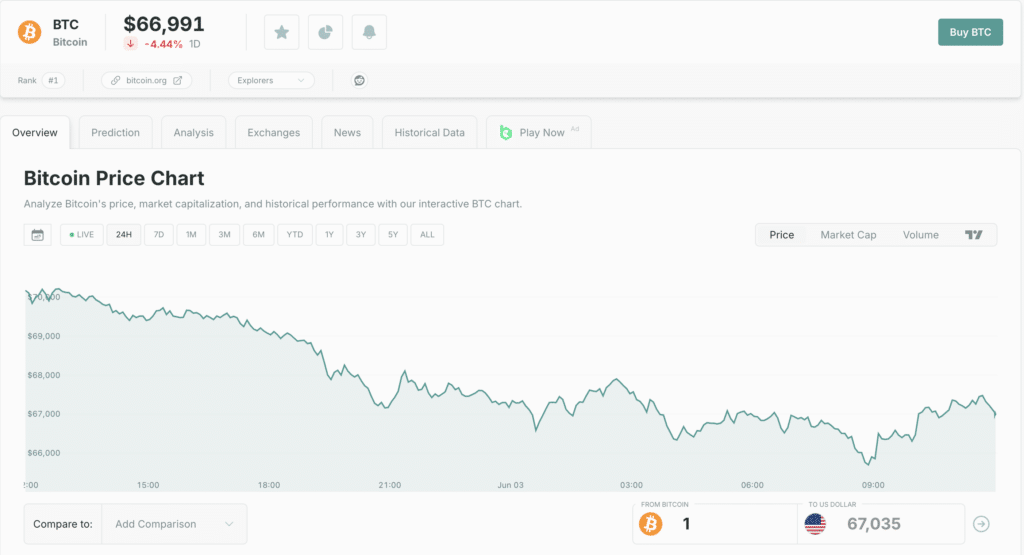
The dispute unfolded against a volatile backdrop for Bitcoin. At the time of writing, Bitcoin trades at $67,361.97, with a 24-hour trading volume of $59.45 billion. The asset is down approximately 4.04% over the past 24 hours, while maintaining a market capitalization of roughly $1.35 trillion.
Although the controversy centers on market settlement procedures rather than Bitcoin’s price action, the event demonstrates how closely linked crypto market news, governance systems, and investor confidence have become in today’s digital asset landscape.
Conclusion
The Polymarket Bet Controversy has become one of the most closely watched disputes in the history of decentralized prediction markets. What initially appeared to be a straightforward contract involving a confirmed Strategy Bitcoin sale has evolved into a complex debate over disclosure timing, governance structures, and settlement integrity.
As Polymarket traders challenge market resolution procedures, the outcome could shape the future of decentralized wagering platforms. Greater transparency, clearer contract language, and stronger governance safeguards may become essential if prediction markets hope to maintain credibility while scaling toward mainstream adoption. Investors and traders should monitor developments closely, as the resolution of this dispute may establish important precedents for the entire industry.
Appendix: Glossary of Key Terms
Polymarket: A decentralized prediction market platform where users trade on future events.
Strategy: The company formerly known as MicroStrategy, one of the largest corporate holders of Bitcoin.
UMA Oracle: A decentralized oracle system used to resolve disputed outcomes on prediction markets.
Prediction Market: A marketplace where participants trade contracts based on future events.
Arbitrage: A strategy involving the purchase and sale of assets to profit from pricing discrepancies.
Bitcoin Treasury Strategy: The practice of holding Bitcoin as a corporate reserve asset.
Frequently Asked Questions About Polymarket Bet Controversy
What is the Polymarket Bet Controversy?
The controversy involves a disputed $150 million market regarding whether Strategy sold Bitcoin before May 31, 2026.
Why is the Strategy Bitcoin sale controversial?
Although Strategy confirmed it sold Bitcoin before the deadline, public disclosure occurred after the deadline, creating disagreement over settlement rules.
How does Polymarket resolve disputes?
Polymarket relies on UMA’s decentralized oracle system, where token holders vote on contested outcomes.
Can traders lose even if their prediction was correct?
Yes. Under certain interpretations of contract rules, a technically correct prediction may still lose if settlement criteria are not satisfied.
Why is this important for crypto prediction markets?
The dispute highlights challenges involving governance, transparency, and settlement standards as decentralized markets continue to grow.
References
Read More: Polymarket Bet Could Pay Losing Side After $150M Market Dispute">Polymarket Bet Could Pay Losing Side After $150M Market Dispute
0
0


 Կառավարեք ձեր բոլոր կրիպտարժույթները, NFT-ն և DeFi-ն՝ մեկ տեղից
Ապահովաբար կցեք ձեր օգտագործած պորտֆոլիոն՝ սկսելու համար:

0
0


0
0

0
0