
Introducing the Unified Bitcoin Router: A Simpler Way to Move BTC Across DeFi
0
0
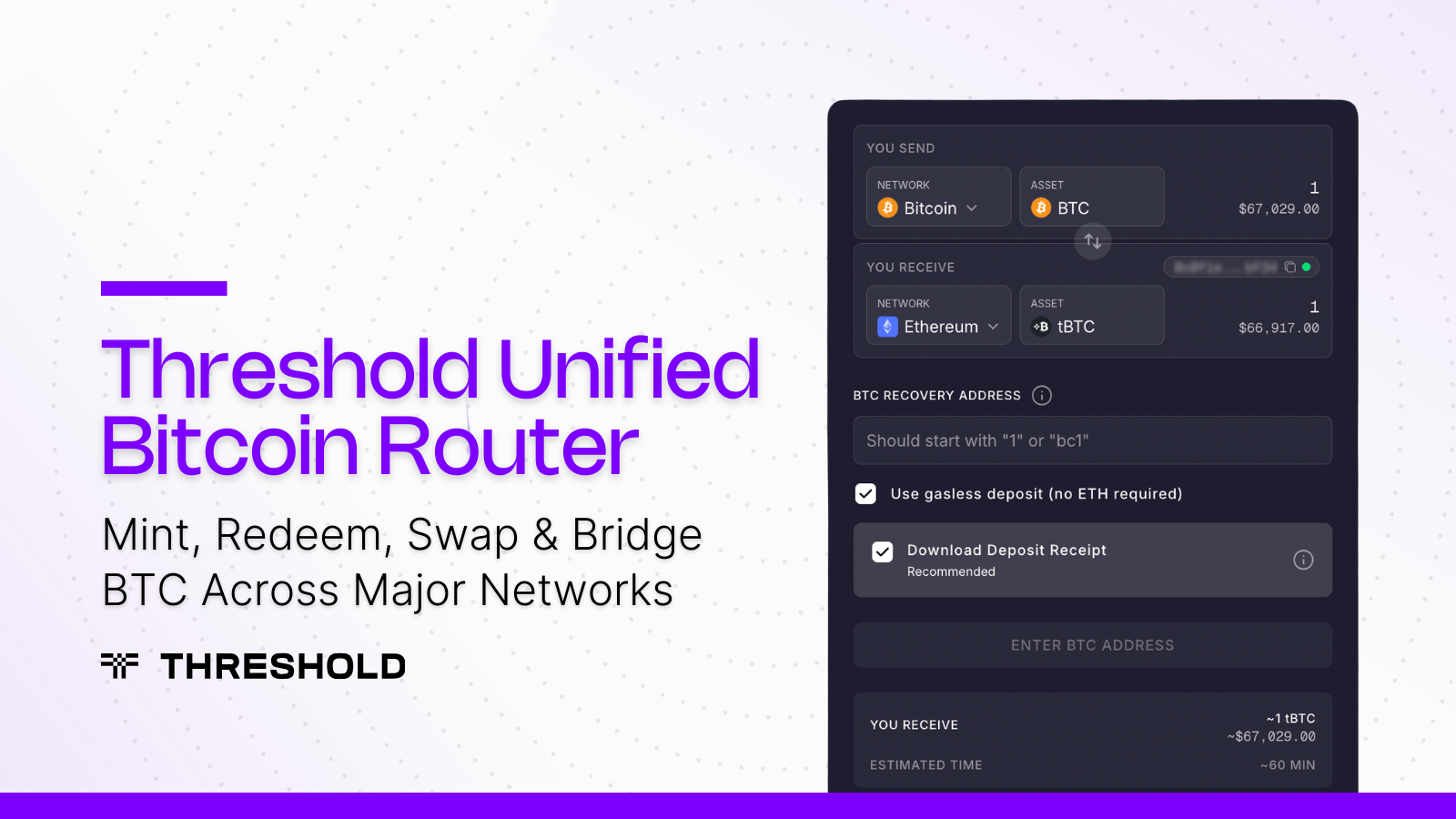
Bitcoin liquidity is increasingly distributed across multiple networks. However, moving BTC between chains and deploying it into DeFi has historically required fragmented workflows, manual coordination, and exposure to execution inefficiencies.
Threshold Network has introduced the Unified Bitcoin Router, an upgrade to the Threshold App that consolidates minting, redeeming, bridging, swapping, and transaction tracking into a single execution layer.
The objective is straightforward: reduce operational complexity while improving capital efficiency for Bitcoin deployed across chains.
Threshold App's Unified Bitcoin Router | Threshold Network
A Single Access Point for BitcoinFi
Deploying BTC into DeFi traditionally required users to execute a series of transactions across multiple protocols. Minting tBTC, bridging assets, sourcing liquidity for swaps, and validating settlement often occurred across separate interfaces. Each step introduced pricing dispersion, slippage exposure, latency, and operational risk.
The Unified Bitcoin Router replaces this multi-interface process with coordinated route construction inside the Threshold App.
Users specify origin and destination parameters. The routing engine programmatically evaluates available paths across supported chains and liquidity venues. Routes are ranked based on cost, execution reliability, liquidity depth, and settlement efficiency. The system then presents optimized options, such as the lowest cost or fastest execution, within a single workflow.
This reduces transaction fragmentation while improving the predictability of outcomes.
Native BTC Execution and Liquidity Aggregation
Native BTC swaps are integrated directly into the routing engine, leveraging deep liquidity on Ethereum to improve execution quality relative to isolated cross-chain pools.
Rather than forcing users to source liquidity manually, the router aggregates established venues and incorporates them into the route construction process. This structure improves pricing consistency and reduces inefficiencies that arise from fragmented liquidity across ecosystems.
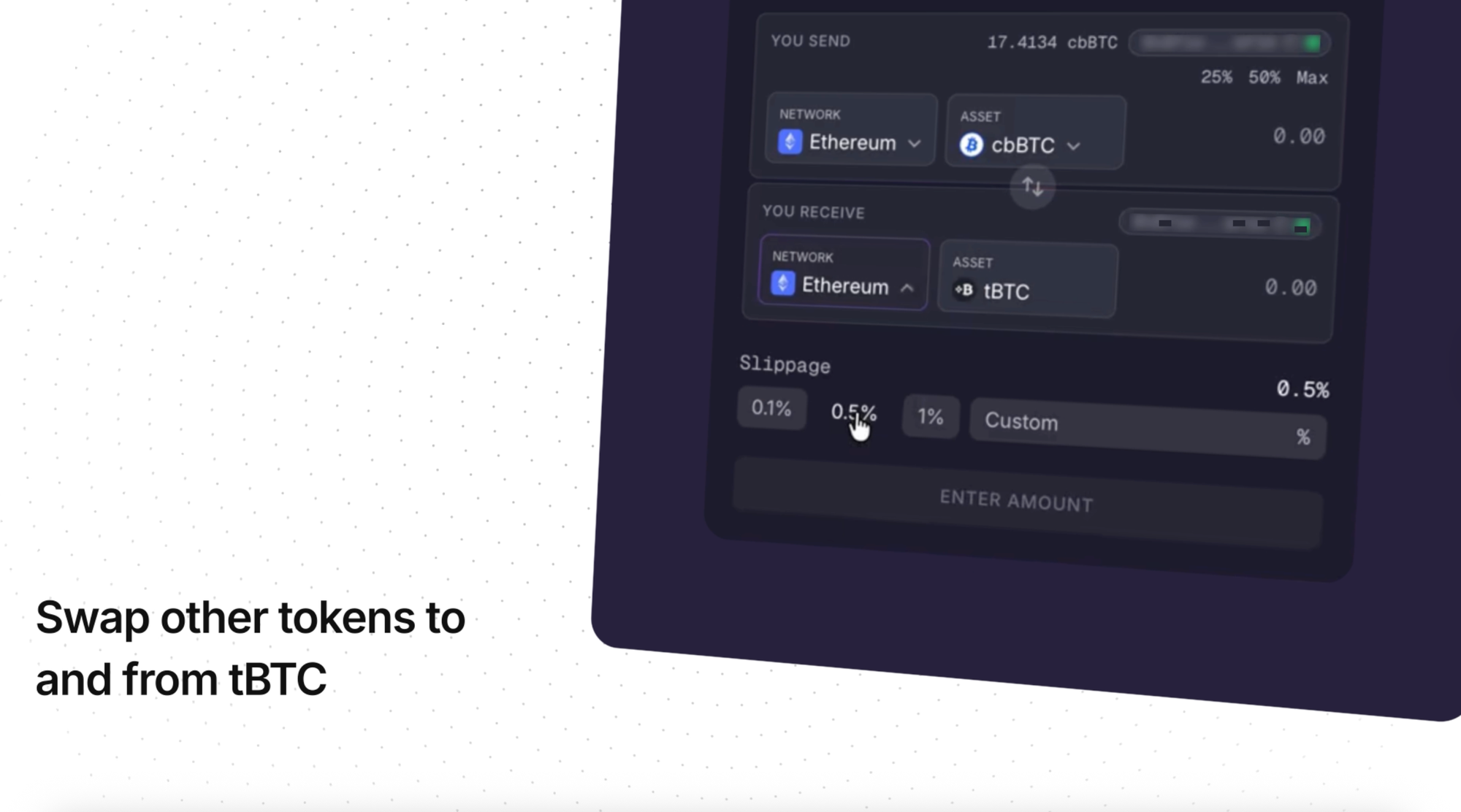
The system also enables direct conversion pathways from major wrapped Bitcoin assets, including WBTC and cbBTC, into tBTC on a selected destination chain. These conversions occur within the coordinated routing flow, eliminating the need to access external applications or to compare offers independently.
“Capital should move efficiently across chains without requiring users to manage infrastructure decisions,” said MacLane Wilkison, Co-Founder of Threshold Network. “The Threshold Unified Bitcoin Router coordinates liquidity sourcing and settlement behind the interface, enabling more efficient Bitcoin deployment across ecosystems.”
Staking-Aware Fee Logic and Capital Efficiency
The update strengthens the economic alignment of the Threshold protocol by directly connecting network participation with transaction utility.
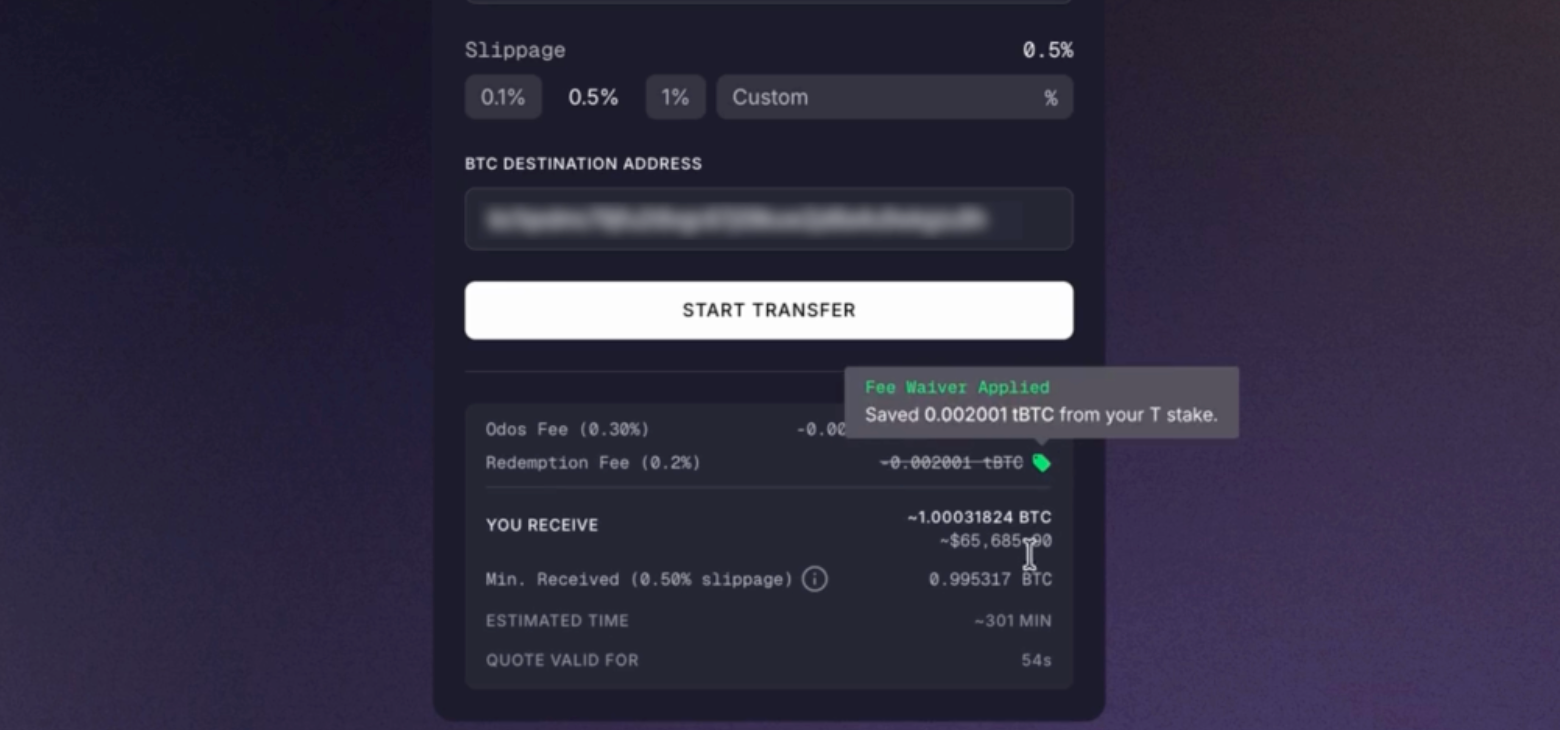
The application automatically recognizes staked T from a connected wallet and applies eligible minting and redemption fee waivers directly in the interface. No separate claims, manual calculations, or additional steps are required. Fee logic is embedded in the router itself, so users see accurate, staking-adjusted pricing before confirming a transaction. What is displayed is what is executed.
This integration removes uncertainty around costs and ensures that staking benefits are realized in real time rather than retroactively. For active participants, it creates a clear, measurable link between contributing to network security and reducing operational expenses.
Gasless minting remains available as an opt-in feature, further lowering the transactional threshold for onboarding or rebalancing positions. For users managing larger allocations or executing repeated flows across chains, these incremental efficiencies compound over time.
The result is a system in which staking is neither abstract nor passive. It is directly tied to transaction economics, capital deployment, and the protocol's day-to-day usage. For long-term participants, this creates a more coherent relationship between holding, staking, and actively deploying Bitcoin liquidity across ecosystems.
Multi-Chain Infrastructure Integration
The Unified Bitcoin Router currently connects: Bitcoin, Ethereum, Arbitrum, Base, Sui, and Starknet. The framework integrates native tBTC mint and redeem flows, established bridging infrastructure, and DEX aggregation into a single coordinated execution layer.
Transactions are monitored in real time and are fully resumable. If a session is interrupted, in-flight operations persist and can be completed without restarting the process. This materially reduces failure rates in multi-step cross-chain activity.
Strategic Implications for Threshold
This release expands tBTC utility across six ecosystems and increases throughput across minting, bridging, and swap flows. By embedding routing intelligence directly within the protocol interface, Threshold internalizes more transaction coordination while reinforcing staking incentives tied to usage.
The Unified Bitcoin Router positions Threshold as infrastructure for cross-chain Bitcoin mobility. The protocol’s role extends beyond asset issuance to the coordinated movement of capital across execution environments.
As Bitcoin participation in DeFi grows, infrastructure that reduces friction and improves execution quality becomes foundational.
The Threshold Unified Bitcoin Router is now live.
0
0


 从同一位置管理所有加密资产、NFT 和 DeFi 资产
安全地关联您正在使用的投资组合,以开始交易。


0
0
