
Critical Warning: UK PM Starmer Signals Economic Peril as Conflict Duration Escalates

0
0

BitcoinWorld
Critical Warning: UK PM Starmer Signals Economic Peril as Conflict Duration Escalates
LONDON, January 2025 – Prime Minister Keir Starmer has issued a stark economic warning, emphasizing that the duration of ongoing geopolitical conflict directly correlates with escalating financial risks for the United Kingdom. His statement follows concerning market movements and economic indicators that analysts now scrutinize for potential long-term implications.
Starmer’s Economic Warning and Market Implications
Prime Minister Starmer addressed the nation yesterday from Downing Street. He specifically highlighted the relationship between conflict duration and economic vulnerability. Consequently, financial markets reacted immediately to his statements. The FTSE 100 experienced notable volatility during the announcement. Furthermore, bond yields showed unusual movement patterns. Economic analysts quickly parsed his words for policy implications.
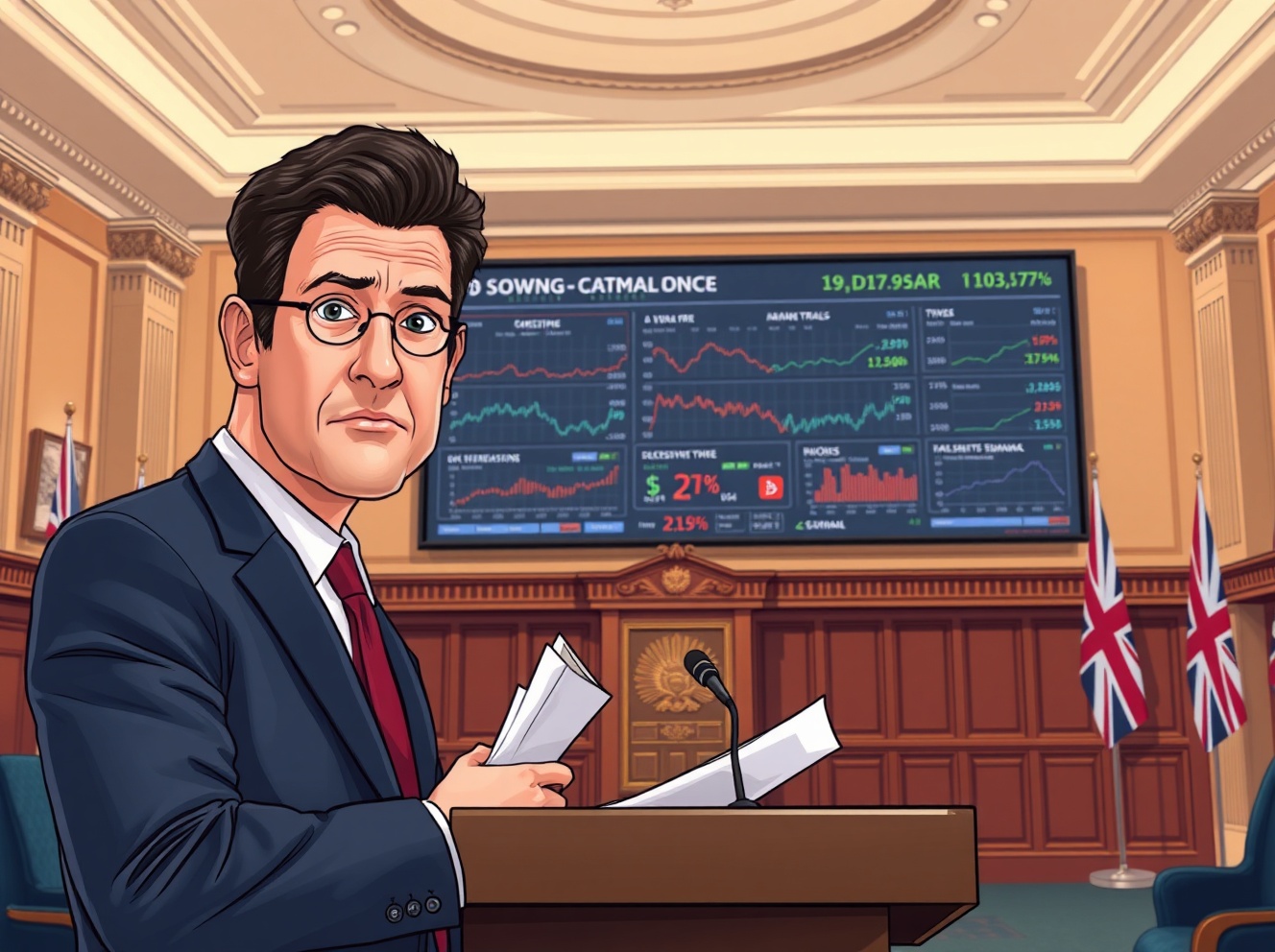
Starmer’s warning represents a significant shift in governmental communication. Previously, administrations often softened economic projections during crises. However, the current government adopts a transparent approach. This transparency aims to prepare businesses and citizens for potential challenges. The Prime Minister referenced specific economic charts during his briefing. These charts illustrated concerning trends in multiple sectors.
Analyzing the Economic Charts and Data
The government released several key economic indicators alongside Starmer’s statement. These charts reveal troubling patterns that concern policymakers. First, energy price projections show steep increases over the next quarters. Second, supply chain disruption indices remain elevated above historical averages. Third, consumer confidence metrics demonstrate concerning declines.
Several specific data points emerged from the analysis:
- Energy Costs: Projected to increase 18-22% if conflict persists six more months
- Inflation Expectations: Bank of England models show 0.5% additional inflation per conflict month
- Trade Disruption: 34% of UK exporters report significant logistical challenges
- Investment Delay: £14 billion in planned investments currently postponed
These indicators collectively paint a concerning economic picture. Moreover, they validate Starmer’s emphasis on conflict duration as a critical variable.
Expert Analysis of the Economic Projections
Dr. Eleanor Vance, Chief Economist at the London Institute of Economic Affairs, provided context for these charts. “The Prime Minister’s warning reflects established economic principles,” she explained. “Prolonged conflicts create compounding effects across multiple sectors simultaneously.” Vance emphasized that short-term disruptions often receive more attention than long-term structural damage.
Historical data supports this analysis. Previous geopolitical crises show clear patterns. For instance, the 2014-2015 conflict period created specific economic pressures. However, current circumstances present unique challenges. Global supply chains now face unprecedented strain. Additionally, digital infrastructure vulnerabilities add new dimensions to economic risk assessment.
Sector-Specific Impacts and Vulnerabilities
Different economic sectors face distinct challenges during prolonged conflicts. The manufacturing sector experiences immediate supply chain disruptions. Meanwhile, the services sector faces slower but equally significant impacts. Financial services particularly worry analysts due to market volatility.
The following table illustrates projected impacts across key sectors:
| Sector | Immediate Impact | 6-Month Projection |
|---|---|---|
| Manufacturing | Supply delays (15-20%) | Cost increases (22-28%) |
| Financial Services | Market volatility | Investment reduction |
| Retail | Inventory shortages | Consumer spending decline |
| Energy | Price spikes | Infrastructure strain |
These projections assume continued conflict at current intensity levels. Escalation would naturally worsen all projections. Consequently, policymakers monitor developments closely.
Government Response and Policy Considerations
The Starmer administration reportedly considers multiple policy responses. These measures aim to mitigate the economic impacts Starmer warned about. First, strategic reserves might see increased utilization. Second, trade diversification initiatives could accelerate. Third, domestic production incentives may expand significantly.
Chancellor Rachel Reeves commented on these considerations yesterday. “We must prepare for multiple scenarios,” she stated. “Our economic resilience depends on proactive measures.” The Treasury Department now models various duration scenarios. Each scenario includes specific policy recommendations. These recommendations focus on protecting vulnerable populations and critical industries.
International coordination also forms part of the strategy. The UK government consults with European and North American partners. Collective approaches to energy security and trade continuity receive particular attention. These consultations aim to create multilateral stability mechanisms.
Historical Context and Comparative Analysis
Current circumstances invite comparison with previous economic challenges. The 1970s oil crises provide relevant parallels. However, important differences exist today. Global economic interdependence has increased dramatically. Digital infrastructure now plays crucial roles. Climate considerations add additional complexity.
Professor Michael Chen of Oxford University studies conflict economics. “Duration represents the critical variable in most models,” he notes. “Short conflicts create temporary disruptions. Prolonged conflicts trigger structural changes.” Chen’s research identifies specific duration thresholds. These thresholds mark transitions between different economic phases. Starmer’s warning suggests policymakers believe thresholds approach.
Market Reactions and Investor Sentiment
Financial markets responded immediately to the Prime Minister’s statements. The pound sterling experienced moderate pressure against major currencies. Government bond yields showed mixed movements. Equity markets displayed sector-specific reactions. Energy companies saw share price increases. Conversely, consumer-focused companies experienced declines.
Investment analysts published numerous reports yesterday. Most emphasize duration sensitivity in their recommendations. “Duration exposure now represents a key portfolio consideration,” noted Goldman Sachs analysts. They advise clients to evaluate holdings through this lens. Similar guidance emerged from other major institutions.
Long-term investment patterns may shift significantly. Infrastructure and domestic production could attract increased attention. International exposure might undergo careful reassessment. These shifts could reshape UK economic landscapes for years.
Conclusion
Prime Minister Keir Starmer’s economic warning highlights critical vulnerabilities in the UK economy. The duration of ongoing conflict directly influences potential impacts across all sectors. Government charts and data reveal concerning trends that require proactive responses. Expert analysis confirms the relationship between conflict duration and economic consequences. Market reactions demonstrate investor recognition of these risks. Ultimately, economic stability depends on multiple factors. However, conflict duration emerges as particularly significant. The Starmer administration now faces complex policy decisions. These decisions will shape UK economic resilience for the foreseeable future.
FAQs
Q1: What specific economic indicators did Prime Minister Starmer reference?
The Prime Minister referenced energy price projections, supply chain disruption indices, inflation expectations, trade data, and investment delay statistics. Government charts showed concerning trends across these metrics.
Q2: How does conflict duration specifically affect economic outcomes?
Prolonged conflicts create compounding effects across sectors. Short-term disruptions evolve into structural challenges. Supply chain issues become embedded. Investment patterns shift permanently. Inflationary pressures intensify over time.
Q3: Which UK economic sectors face the greatest risks?
Manufacturing faces immediate supply chain challenges. Energy confronts price volatility and infrastructure strain. Financial services experience market uncertainty. Retail deals with inventory and consumer confidence issues.
Q4: What policy responses is the government considering?
Potential measures include strategic reserve utilization, trade diversification acceleration, domestic production incentives, international coordination efforts, and targeted support for vulnerable populations and industries.
Q5: How have financial markets reacted to this warning?
Markets showed immediate sensitivity. The pound experienced pressure. Bond yields displayed mixed movements. Equity markets revealed sector-specific reactions. Energy companies gained while consumer-focused firms declined. Investment analysts now emphasize duration exposure in recommendations.
This post Critical Warning: UK PM Starmer Signals Economic Peril as Conflict Duration Escalates first appeared on BitcoinWorld.
0
0


 Gestisci cripto, NFT e DeFi in un unico luogo
Connetti in sicurezza il portafoglio che usi per iniziare.

0
0

0
0

0
0

0
0