
Bitget Vs Coinbase: Which Crypto Exchange Is Better in 2025?

0
0

Bitget and Coinbase are among the most widely used crypto exchanges, both serving over 100 million investors globally. When comparing Bitget vs Coinbase, you will see that both platforms support hundreds of cryptocurrencies and offer products and services that enable crypto traders to easily manage crypto assets, but they cater to different user groups.
Bitget provides comprehensive trading tools for advanced traders, allowing them to trade over 700 assets across spot and futures markets. On the other hand, Coinbase caters to beginners with its simple, intuitive interface, while providing an advanced interface for users who need access to exchange services.
To give you more insight into their similarities and differences, this Coinbase vs Bitget comparison will cover their best features, trading fees, security measures, affiliate programs, customer support, and user experience.


Bitget vs Coinbase: Overview Comparison
| Feature | Bitget | Coinbase |
| Best For | Copy trading and derivatives products. | Beginners and robust security credentials. |
| Founded | 2018 | 2012 |
| Key Features | Copy trading, bot trading, Bitget Wallet, Launchhub, Bitget Earn, and institutional services. | Coinbase One, Advanced Trade, Base App, Coinbase Prime, Earn, and Commerce. |
| Trading Options | Spot, margin, futures, bot, and copy trading. | Spot, margin, and futures. |
| Supported Coins | 700+ | 250+ |
| Trading Fees | 0.1% maker/taker (spot) | 0.40% maker, 1.20% taker. |
| Security Measures | $760 million Protection Fund, cold storage, two-factor authentication (2FA), and withdrawal address whitelisting. | Cold storage, 2FA, strong compliance and many jurisdictions, and AES-256 encryption. |
| Crypto Wallet | Yes, Bitget Wallet | Yes, Base App |
| Native Token | BGB token | Nil |
| Accepted Payment Methods | Crypto, credit/debit cards, bank transfers, and third-party payment processors. | Crypto, credit/debit cards, wire transfer, and third-party payment providers. |
What is Bitget?
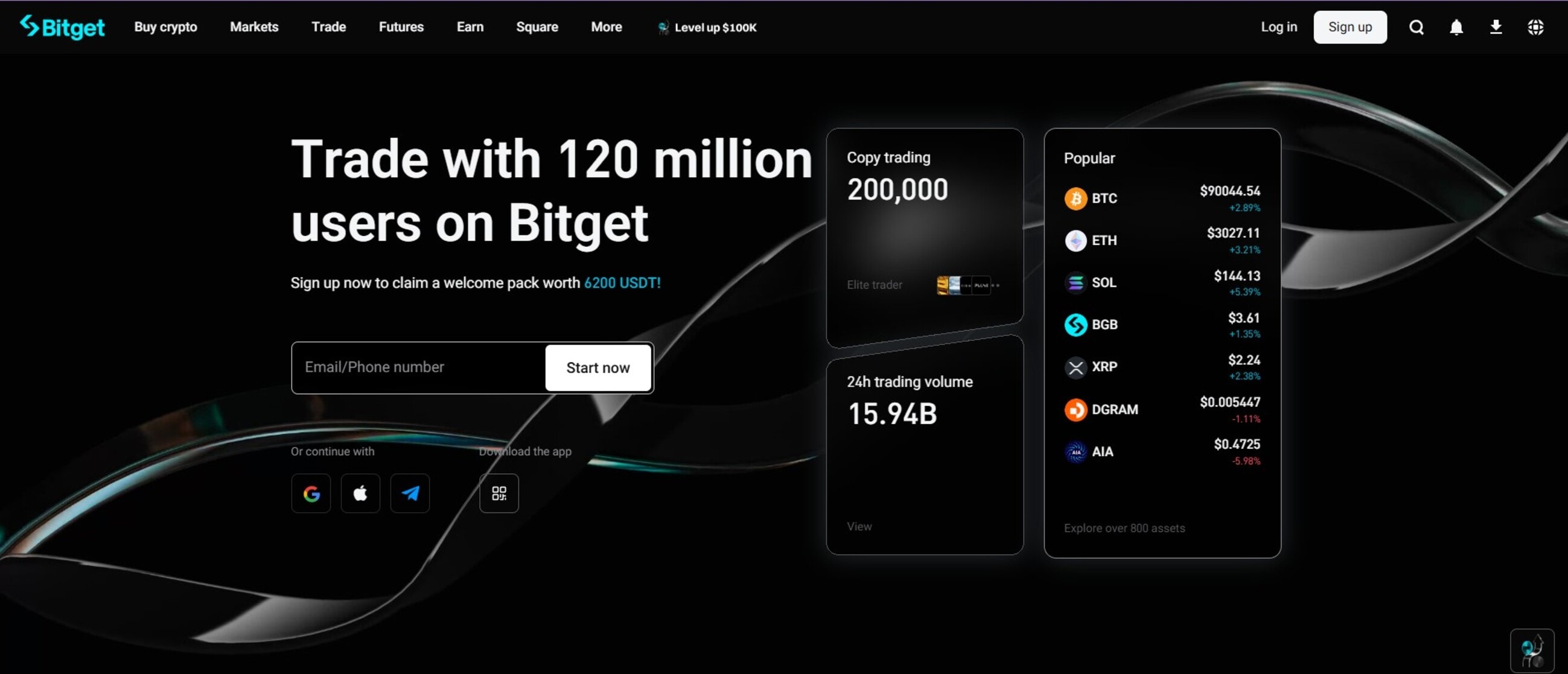
Bitget is a leading crypto trading platform that offers traders a variety of trading markets and features, including spot, futures, and copy trading. The cryptocurrency exchange was founded in 2018, and by the following year, it had established itself as a leading copy-trading and derivatives exchange.
Its copy trading marketplace has become the largest in the crypto space, supporting over 200,000 elite traders and more than half a million followers. In addition to its comprehensive exchange features, the platform offers a standalone web3 wallet, the Bitget Wallet.
This product gives users access to the decentralized ecosystem, allowing them to explore decentralized finance (DeFi) protocols, non-fungible tokens (NFTs), and other decentralized applications (dApps).
Pros & Cons of Bitget
| Pros | Cons |
| Robust copy trading marketplace for beginners who want to replicate trades and pros who want to earn passive income. | Bitget is not available in some major markets, including the United States, Canada, and Singapore. |
| Low fees with discounts for BGB token holders. | Advanced features/interface may be overwhelming for beginners |
| User-friendly interface, making it suitable for both beginners and experienced traders. | Customer support response times can be slow during peak periods. |
| Advanced trading options | |
| High leverage options for futures trading, up to 125x for some assets. |
Bitget is Best for:
- Advanced Crypto Traders: Bitget offers a comprehensive suite of trading products across spot and futures markets, making it an ideal platform for more experienced crypto traders.
- Comprehensive Crypto Investment Products: As discussed earlier, the crypto exchange not only offers exchange services but also a crypto wallet that gives users access to the web3 ecosystem and provides institutional-grade services.
- Copy Trading: Bitget offers one of the most robust copy-trading marketplaces in the crypto market. The cryptocurrency exchange offers manual copy trades featuring over 200,000 3lite traders, as well as bot copy trading, so followers can choose the strategies they want to replicate.
What is Coinbase?

Coinbase is the largest public crypto trading platform. The exchange allows individuals and businesses to buy, hold, sell, trade, and receive crypto payments easily. Coinbase is highly compliant with crypto regulations in many jurisdictions, including the United States, making it one of the top choices for US residents who can’t access other global exchanges.
Coinbase was founded in 2012 and has since maintained a strong position in the crypto world, especially for beginners and security-conscious traders. It offers many products, including Coinbase One, Coinbase Advanced Trade, Coinbase Earn, staking, Base App (formerly Coinbase Wallet), Coinbase Prime for institutions, and more.
The standard Coinbase platform allows traders to buy and sell crypto easily. However, if you want to trade crypto pairs, you can use the Advanced Trade, which was previously called Coinbase Pro. This exchange interface provides advanced charting tools that allow users to place market, limit, and trailing stop orders on 200+ cryptocurrencies.
Pros & Cons of Coinbase
| Pros | Cons |
| Beginner-friendly interface, making it an ideal option for newbies | Customer support can be slow |
| Provides products for individual and institutional traders | High trading fees compared to other major crypto exchanges |
| Reduced trading fees and priority customer support for Coinbase One users | Experienced traders looking for comprehensive trading tools might be limited, as Coinbase does not offer as many exchange services as other top exchanges. |
| Advanced trading features and staking options | |
| Strong regulatory presence and robust security measures. |
Coinbase is Best for:
- Beginners: The standard Coinbase platform features a simple, intuitive interface for completing basic buy and sell transactions. Aside from this interface, the Advanced Trade option offers just enough crypto assets and customization tools, making it easier for novice traders to get acquainted with the platform.
- US Traders: US residents face many limitations when accessing crypto platforms due to regulatory challenges. Fortunately, Coinbase is one of the top exchanges that offer unlimited access to traders in these jurisdictions.
- Security: Coinbase implements robust security measures to protect user funds. In fact, unlike other popular exchanges, Coinbase has never been hacked. If you are looking for a crypto exchange with robust security features for storing and trading crypto, consider Coinbase.
Bitget vs Coinbase: Trading Features
| Feature | Bitget | Coinbase |
| Spot Trading | Yes | Yes |
| Futures Trading | Yes | Yes |
| Options Trading | N/A | Not available (N/A) |
| Leverage | 125x | 50x on Advanced Trade |
| Staking | Yes | Yes |
| Copy Trading | Yes | N/A |
| Trading Bots | Yes | N/A |
| DeFi Integration | Yes, via Bitget Wallet | Yes, via Base App |
| P2P Marketplace | Yes | N/A |
| Institutional Services | Yes | Yes, via Coinbase Prime |
Bitget vs Coinbase: Platform Products and Services
Here’s a detailed rundown of the products and services Bitget and Coinbase offer to beginners, experienced traders, institutions, and businesses.
What Bitget Offers:
- Basic and Advanced Trading Options: Bitget supports spot, futures, on-chain trading, and convert and block trades. Beginners and casual traders can complete simple buy and sell orders on the spot market or leverage the platform’s quick buy or P2P marketplace. Meanwhile, advanced trading includes leverage, margin trading, and stock futures, along with custom management tools designed for experienced users.
- Copy Trading and Automated Bots: Bitget allows users to copy professional traders’ strategies automatically. Traders can choose whom to copy based on various parameters, including past performance, wins and losses, and the number of followers. Aside from copying elite traders, users can set auto-copy parameters and switch between manual and AI bot trading modes.
- Institutional: Bitget provides custom solutions for institutional clients, including better liquidity, API access, and specialized support to meet the needs of professional traders and funds.
- Launchhub: Bitget’s Launchhub is essentially an incubator or launchpad for new token projects, allowing users to participate in early-stage token sales and benefit from curated crypto projects vetted by Bitget.
- Bitget Earn: This feature enables users to earn passive income through staking, savings, yield farming, or crypto loans. It offers flexible and fixed-term options to grow crypto holdings, structured earn products, and VIP and wealth management options for smarter investments.
- Bitget Wallet: Bitget provides a secure crypto wallet that supports easy token sending and receiving. Unlike the Bitget Exchange, Bitget Wallet users have full control over their private keys and funds. Although the wallet is separate, you can easily connect to it via your exchange app.
What Coinbase Offers:
- Advanced Trade: Coinbase offers an advanced trading platform (formerly Coinbase Pro) with a comprehensive set of tools, including advanced charting, various order types, deeper market data, and higher liquidity for professional traders who need more control over their trades and customization.
- Coinbase Earn: This educational feature allows users to learn about different cryptocurrencies through short modules and quizzes while earning rewards in those tokens. Coinbase Earn also offers staking opportunities, allowing users to lock assets to earn rewards on supported protocols.
- Coinbase One: This is a subscription service offering benefits like zero trading fees on spot trades, priority customer support, and other perks designed to enhance the trading experience for active users.
- Debit Card: The Coinbase Card lets users spend their cryptocurrency holdings anywhere Visa is accepted. In exchange, users receive crypto rewards for purchases while enjoying seamless conversion between crypto and fiat money.
- Businesses: Coinbase offers tailored solutions, including crypto payment processing, custodial services, and APIs to integrate cryptocurrency operations into business models. The service provides a business payment solution for startups and SMEs, as well as Coinbase Commerce, designed to help businesses easily accept digital currency payments globally.
- Coinbase Prime: Coinbase offers institutional clients dedicated services, including insured cold-storage custody solutions, robust trading APIs, compliance support, and tailored market access for hedge funds, asset managers, and other professional entities.
Bitget vs Coinbase: Fee Structures
| Fee | Bitget | Coinbase |
| Spot Trading (maker/taker) | 0.01% | 0.40% / 0.60% on Advanced Trade |
| Futures Trading (maker/taker) | 0.02% / 0.06% | N/A |
| Deposit Fee | Free for crypto deposits. | Depends on the payment method you use. ACH bank transfers are usually free, while card transactions incur a 3.99% fee. |
| Withdrawal Fee | Varies, depending on crypto and network. | Varies, depending on the payment method and transaction amount. |
| Subscriptions (Monthly) | No | Yes, Coinbase One.
|
| Card Fees | Not available | No fees, except for spreads to lock in trades. |
| Fee Discounts | Up to 30% for BGB holders | Up to 10% if you sign up with a valid referral code. |
| Zero Fees | Yes, on some spot pairs | Zero trading fees for Coinbase One users. |
Bitget vs Coinbase: Coins Supported, Liquidity, & Volume
| Criteria | Bitget | Coinbase |
| Supported Coins | 700+ | 250+ |
| Trading Volume | Avg. $2.5 billion | Avg. $1.5 billion |
| Liquidity | High | High |
| User Base | 120 million | 100+ million |
Bitget vs Coinbase: Security Comparison
Bitget Security Measures
- $760 Million Protection Fund: Bitget maintains a Protection Fund valued at about $760 million to protect users in the event of unforeseen security breaches.
- Multi-layered security, including fund passwords, mobile phone OTPs, email OTPs, and mandatory two-factor authentication (2FA) for logins and withdrawals.
- Cold Storage of Funds: The trading platform stores the majority of user funds in offline cold wallets with multi-signature security.
- Account Level Security Features: In addition to exchange security measures such as SSL encryption, real-time risk monitoring, and anomaly alerts, Bitget encourages users to activate additional security protocols, such as anti-phishing codes and wallet address whitelisting, to provide an additional layer of safety.
Coinbase Security Measures
- Public Company: Coinbase became a public company on April 14, 2021, when it was directly listed on the Nasdaq Global Select Market under the ticker symbol “COIN.” In terms of security, their public status means they operate more transparently and are required by law to undergo an annual audit by an independent third party.
- Account-level Protection: Coinbase requires two-factor authentication (2FA) with support for authenticator apps and SMS, and encourages users to whitelist trusted withdrawal addresses.
- Coinbase’s Crime Insurance: Coinbase’s crime insurance policy covers theft or loss of assets resulting from company breaches, such as cybersecurity incidents or employee theft. The insurance does not cover losses from compromised personal accounts due to phishing, lost login credentials, or mistakenly authorizing transfers.
Coinbase vs Bitget: Affiliate & Referral Programs
| Criteria | Coinbase | Bitget |
| Affiliate Commission | 50% of your referrees’ trading fees for the first 3 months | 50% commission on your invited users’ trading fees |
| Additional Bonus (Affiliates) | Promotional assets, impact tracking software, and priority support. | Up to 1,530 USDT |
| New User Bonus | Up to $200 in BTC (Bitcoin) | Up to $6,200 USDT |
| Other Referral Rewards | Access to promotional campaigns | Mystery box with up to 500 USDT worth of gifts and exclusive access to promotional campaigns. |
| Trading Fee Discounts | 10% discount | 20% fee discount |
| Current Referral ID | Referral link | NFTPlazas1 |
| KYC Requirement | Mandatory | Mandatory |
We reviewed Coinbase and Bitget referral offers and summarized them in this Coinbase referral code and Bitget referral code review. Read them to learn more about the available bonuses for new traders, the current referral ID that can help you secure these rewards, and how to redeem your bonuses.
Coinbase vs Bitget: User Experience
Coinbase onboarding is simple and beginner-friendly, with easy account creation and a mostly smooth KYC verification process, though occasional delays occur, especially if the documents you submit aren’t captured properly.
The product suite includes spot trading, staking, and a professional-grade Advanced Trade interface, which has enough assets for traders who aren’t interested in trading newer or lesser-known cryptos.
It also includes a built-in wallet and provides educational resources to help traders become familiar with the platform. From our experience, using the Coinbase mobile app and the web version has a clean UI with smooth transitions between beginner and advanced modes.
Bitget’s onboarding is also straightforward. The cryptocurrency exchange offers a robust product lineup, including spot and derivatives trading, copy trading, leveraged contracts, and promotional trading rewards.
Bitget is feature-rich, making it perfect for active traders interested in copy trading and margin products. The UI is functional but occasionally cluttered with promotions and announcements.
Coinbase vs Bitget: Customer Support
Coinbase offers 24/7 support via email and phone for suspicious activities, as well as a comprehensive help centre. The help centre consists of articles that answer commonly asked questions. In addition, Coinbase allows users to streamline their search by selecting the specific Coinbase product they need help with.
Even with this extensive support system, Coinbase’s customer support is frequently criticized for slow response times, unhelpful, scripted replies, and difficulties in effectively escalating issues. Users often report receiving repeated explanations of problems without resolution, and poor language or training effectiveness from support staff on overseas help desks.
On the other hand, Bitget also provides 24/7 support via email, support bots, and a comprehensive help centre with self-service options and frequently asked questions. Bitget’s customer support is more responsive and friendly, with multiple communication channels. However, some users also complain about delays, repeated automated or AI bot replies without human interaction, and unresolved issues despite assurances.
Conclusion
Based on our review, both Coinbase and Bitget offer products suitable for beginners and experienced traders, as well as strong security credentials. Bitget is best for active and advanced traders because it has high daily trading volume and offers low fees.
Meanwhile, Coinbase is best for investors just starting, advanced traders, and businesses that want to integrate crypto payments. But before choosing a trading platform, ensure it aligns with your trading goals and requirements.
FAQs
When comparing fees between Bitget and Coinbase, Bitget generally offers lower trading fees. Bitget charges maker and taker fees of around 0.10% on spot trading pairs. Meanwhile, Coinbase’s standard trading fees are higher, with a base fee of 0.5% plus a variable additional fee depending on the pricing tier and trade size.
Coinbase is more beginner-friendly compared to Bitget. Coinbase has a simple, intuitive interface and an easy account setup process, and it prioritizes ease of use, making it suitable for individuals just starting with cryptocurrency trading. In contrast, Bitget targets more experienced traders by offering advanced tools such as futures trading, copy trading, and leverage options up to 125x, which can be complex for beginners.
Both Coinbase and Bitget employ strong security measures. Coinbase is known for its long-standing, robust security infrastructure, while Bitget also has excellent security protocols. In terms of security history, both exchanges have never faced significant security breaches, but Coinbase has a longer track record.
The post Bitget Vs Coinbase: Which Crypto Exchange Is Better in 2025? appeared first on NFT Plazas.
0
0

 Կառավարեք ձեր բոլոր կրիպտարժույթները, NFT-ն և DeFi-ն՝ մեկ տեղից
Ապահովաբար կցեք ձեր օգտագործած պորտֆոլիոն՝ սկսելու համար:

0
0

0
0

0
0

0
0