
Japan’s Crypto Rules Just Took a Sharp Turn on Stablecoins

0
0


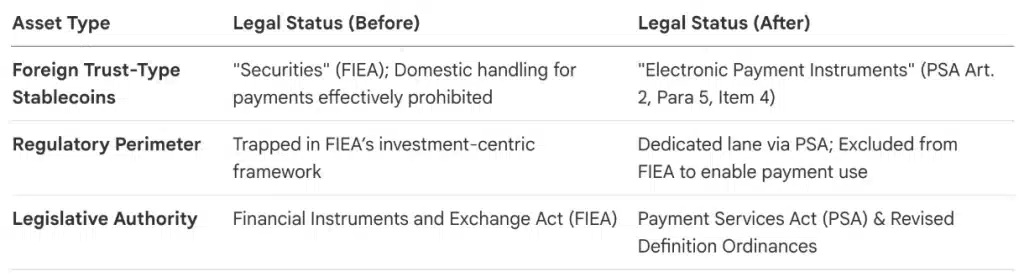
Japan’s Financial Services Agency (FSA) finalized a major stablecoin regulatory overhaul that opens the country’s payment ecosystem to certain foreign-issued stablecoins for the first time. The updated framework reclassifies trust-type stablecoins from “securities” under Japan’s Financial Instruments and Exchange Act into “Electronic Payment Instruments” under the Payment Services Act. The shift creates a regulated path for assets like USDC-style stablecoins to operate inside Japan’s formal financial system instead of remaining trapped in legal gray zones.
Japan Creates a New Stablecoin Framework
The amendment directly targets foreign trust-type stablecoins issued by overseas trust companies and banks, according to a May 19 report.
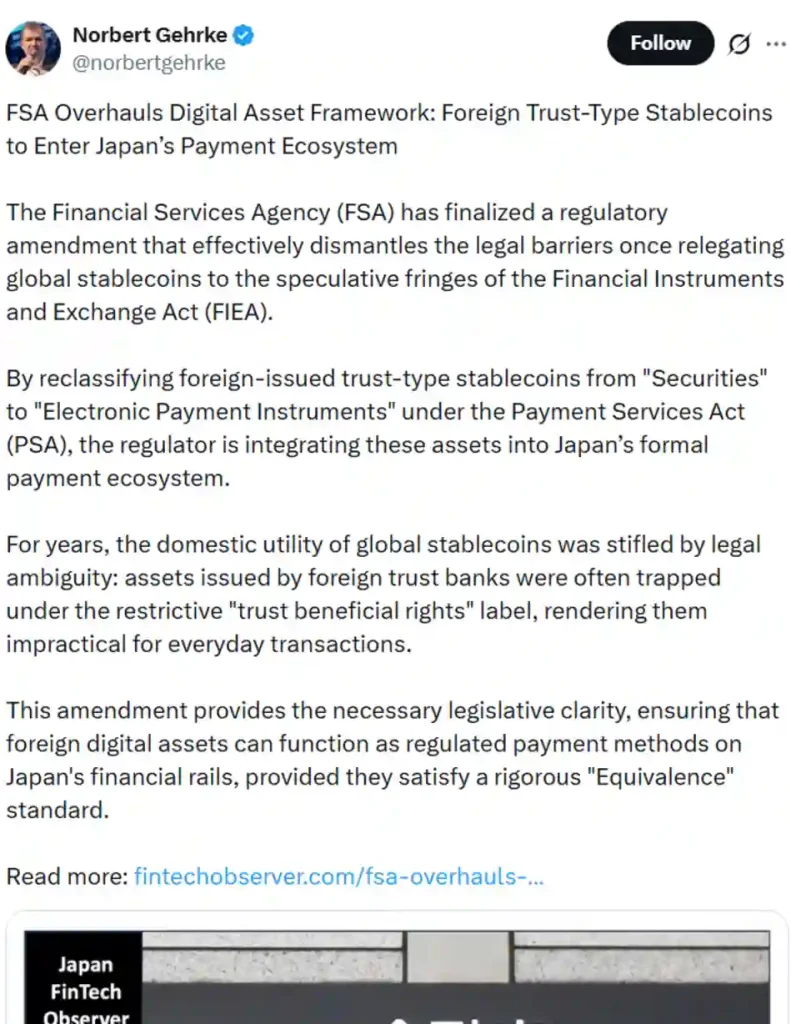
Previously, many of those assets fell under restrictive “trust beneficial rights” treatment, which made them impractical for domestic payments and commercial use.
Under the new structure, the FSA carved out a separate regulatory lane specifically for payment-focused foreign stablecoins and excluded investment-oriented trust products from the framework.
The regulator says these assets can now qualify as “Electronic Payment Instruments” if issuers satisfy strict equivalence standards tied to licensing, reserve management, auditing, and anti-crime controls.
This includes proof that the issuer operates under rules generally equivalent to Japanese banking or payment laws. Foreign issuers must also demonstrate that reserve assets are properly audited and that they can freeze or suspend transactions tied to criminal activities like fraud or money laundering.
Another important requirement involves reserve composition. The FSA says backing assets must match the same currency denomination as the stablecoin itself to reduce foreign exchange risks during redemption events.
Japan Signals Stablecoins are Moving Into Mainstream Finance
The framework takes effect on June 1, 2026, following a public consultation period earlier this year.
The timing is notable because regulators globally are still debating how stablecoins should function inside traditional payment systems. Japan, meanwhile, appears to be moving toward integration and away from isolation.
The amendment also gives domestic exchanges and payment providers a clearer process for listing and supporting foreign stablecoins legally. Japanese intermediaries will initially carry much of the compliance burden by proving that overseas issuers meet the FSA’s equivalence standards.
All things considered, it appears that Japan wants regulated stablecoins operating inside its financial rails, but only under heavy supervision and strict redemption standards.
That approach could give global issuers a template for entering one of Asia’s largest financial markets and offer Japanese users access to more liquid dollar-backed digital assets for payments and settlements.
The post Japan’s Crypto Rules Just Took a Sharp Turn on Stablecoins appeared first on TechGaged.com.
0
0
 Կառավարեք ձեր բոլոր կրիպտարժույթները, NFT-ն և DeFi-ն՝ մեկ տեղից
Ապահովաբար կցեք ձեր օգտագործած պորտֆոլիոն՝ սկսելու համար: