
What Makes tBTC the Most Reliable BTC in DeFi
0
0
How Trust-Minimized Architecture Positions tBTC for Institutional Adoption
When evaluating Bitcoin DeFi products for institutional deployment, two architectural questions are paramount: Who controls the keys? What happens when things go wrong? After processing $3.6 billion in volume with zero security incidents, tBTC demonstrates an architecture that aligns with institutional risk frameworks.
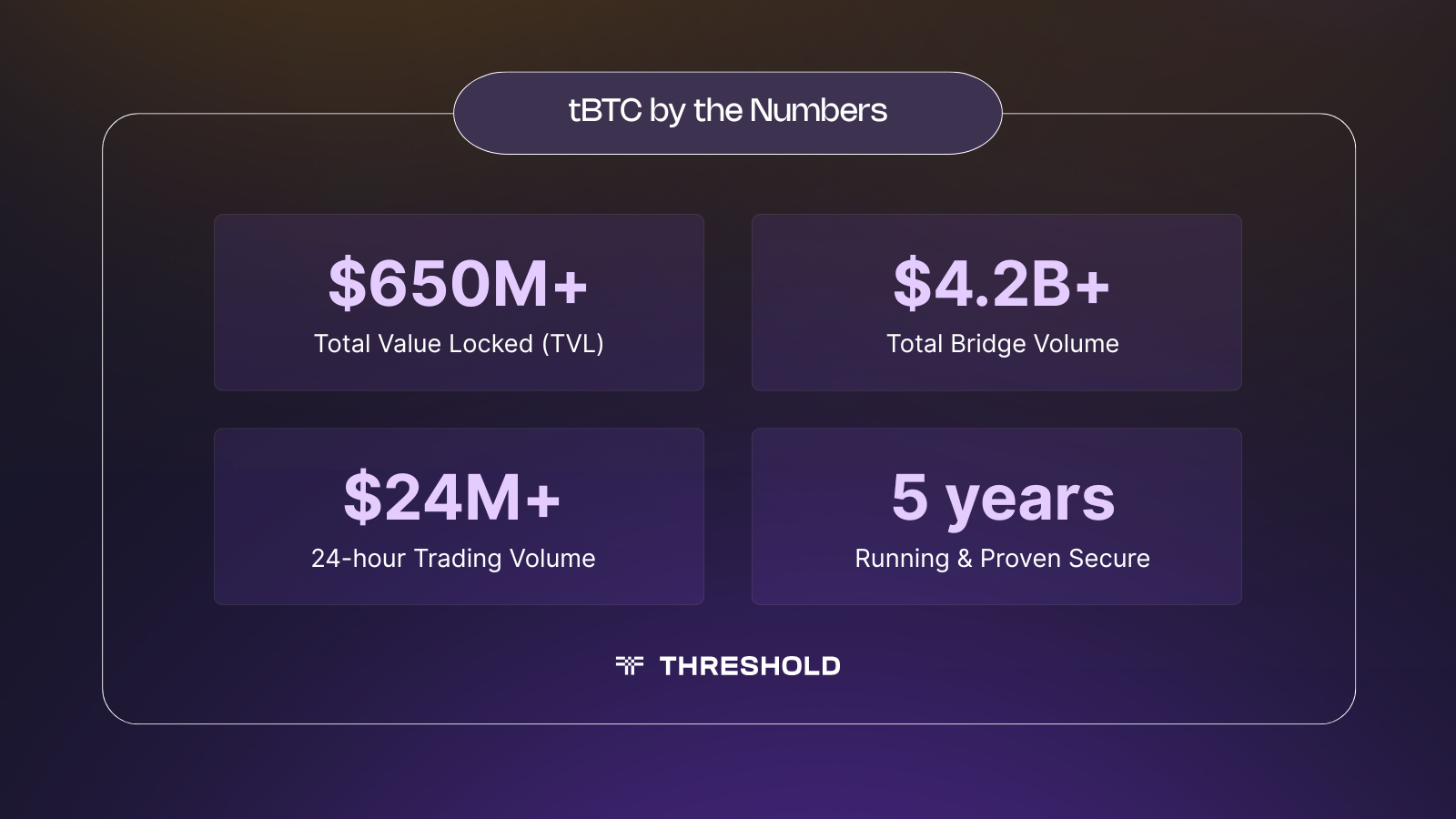
The Trust Equation: Why Architecture Matters
Tokenized Bitcoin onchain faces a core challenge: preserving Bitcoin’s trustless properties while enabling cross-chain functionality. Most solutions reintroduce intermediaries that Bitcoin was designed to eliminate, such as custodians holding keys, closed validator groups vulnerable to collusion, or federated systems with concentrated control.
For institutions assessing bridge infrastructure, these are not theoretical concerns. They define the difference between counterparty risk that must be reported in quarterly assessments and the mathematical certainty that requires none.
Defining Reliability: Beyond Uptime Metrics
Institutional reliability extends beyond operational uptime. It encompasses three critical dimensions:
- Predictable Settlement: Every redemption follows the same process, with consistent timing and without manual intervention. There are no weekend delays, holiday closures, or geographic restrictions.
- Failure Prevention Architecture: Systems must be designed to make failures mathematically improbable. This requires eliminating single points of failure across technical, operational, and governance layers.
- Verifiable Security: Institutions require proof, not assurances. This means on-chain verification of reserves, public audit trails, and transparent operations that risk committees can independently validate.
tBTC addresses each of these dimensions through distributed architecture. This has supported 86% year-over-year TVL growth to $693 million, positioning it third on Wormhole by 30-day volume. This trajectory contrasts with stagnation across the broader wrapped Bitcoin market and signals institutional recognition of architectural strength.
True Decentralization: The Threshold Cryptography Advantage
Traditional custody relies on a single key. Multi-signature improves on this by introducing multiple keys, but still concentrates control in small groups.
tBTC employs threshold cryptography. The private keys that control Bitcoin never exist in complete form. Instead, they are generated as distributed shares and remain separate even during signing operations. This creates several institutional advantages:
- No Custodian Risk: No single entity or small group controls funds.
- No Collusion Vectors: With more than 100 globally distributed operators, coordinated attacks are logistically unfeasible compared with federations of 15–20 validators.
- No Administrative Overrides: The protocol cannot freeze funds, blacklist addresses, or alter rules, eliminating risks associated with external intervention.
This distributed key generation model represents a clear advancement over both custodial and federated approaches.
Institutional Risk Assessment: Addressing Core Concerns
Risk committees assessing Bitcoin bridges typically focus on four primary concerns. tBTC’s architecture addresses each directly:
- Security Vulnerabilities: With 78% of institutional investors now employing formal crypto risk frameworks, security is paramount. tBTC’s five-year operational history without incidents, combined with independent audits and an active bug bounty program, establishes credibility. Compromising the system would require simultaneous majority control across globally distributed operators, an increasingly impractical attack vector.
- Compliance and Transparency: Post-FTX, 44% of firms demand complete operational transparency. tBTC provides on-chain verification of Bitcoin reserves and public transaction histories. The permissionless design supports compliance by eliminating opacity, aligning with regulatory emphasis on transparent DeFi infrastructure.
- Counterparty Risk: Traditional bridges reintroduce counterparty risk that Bitcoin itself eliminates. tBTC’s threshold model ensures no entity exists that can fail, flee, or freeze assets.
- Operational Reliability: Beyond 99.9% uptime, institutions require predictable redemption processes. tBTC guarantees consistent settlement paths without manual approvals or delays, regardless of transaction size.
Market Readiness: From Architecture to Adoption
The transition from experimental to institutional infrastructure is evident in recent integrations. Starknet’s June 2025 deployment unlocked $450 million in potential TVL. Sui’s July integration introduced $500 million in Bitcoin liquidity to its ecosystem. OKX’s August adoption generated $5 million TVL in its first week.
These are operational deployments processing real volume. Curve pools alone handle $2.9 million daily, providing liquidity depth institutions require. This adoption reflects recognition that trust-minimized architecture is the sustainable model for institutional Bitcoin deployment.
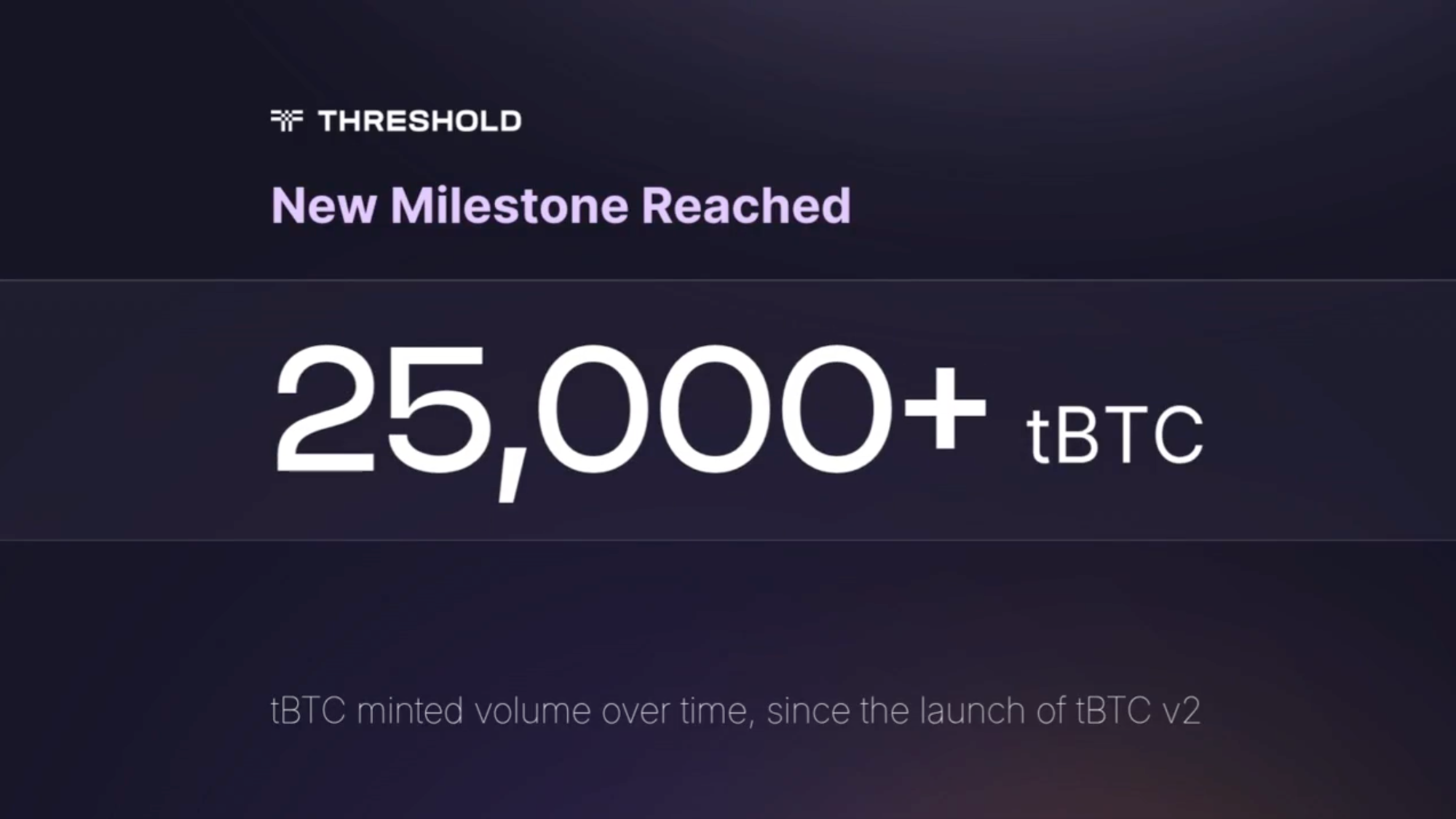
The Institutional Standard for Bitcoin in DeFi
As Bitcoin bridges evolve into institutional utilities, evaluation criteria have matured. Risk committees assess architecture, not just functionality. Compliance teams evaluate transparency, not just regulatory commitments. Treasury managers demand predictable operations, not just high yields.
tBTC’s trust-minimized architecture eliminates intermediaries through mathematics. This positions it to meet institutional requirements for both security and reliability. Its growing adoption validates Threshold’s design, demonstrating that Bitcoin can preserve its trustless properties while participating in DeFi markets.
For institutions evaluating Bitcoin bridge infrastructure, the question is no longer which bridge works, but which bridge eliminates counterparty risk while maintaining operational excellence. The evidence increasingly points toward trust-minimized solutions such as tBTC.
Further Information
For technical architecture details, see Threshold's Documentation.
Disclaimer: The information provided is for educational purposes only and does not constitute financial, investment, or legal advice. Investing in cryptocurrency and digital assets involves significant risk. Conduct your own research and consult a licensed financial advisor before making investment decisions.
0
0


 Управляйте всей своей криптовалютой, NFT и DeFi из одного места
Безопасно подключите используемый вами портфель для начала.

0
0

0
0


0
0