
What is the next big thing for crypto?

0
0
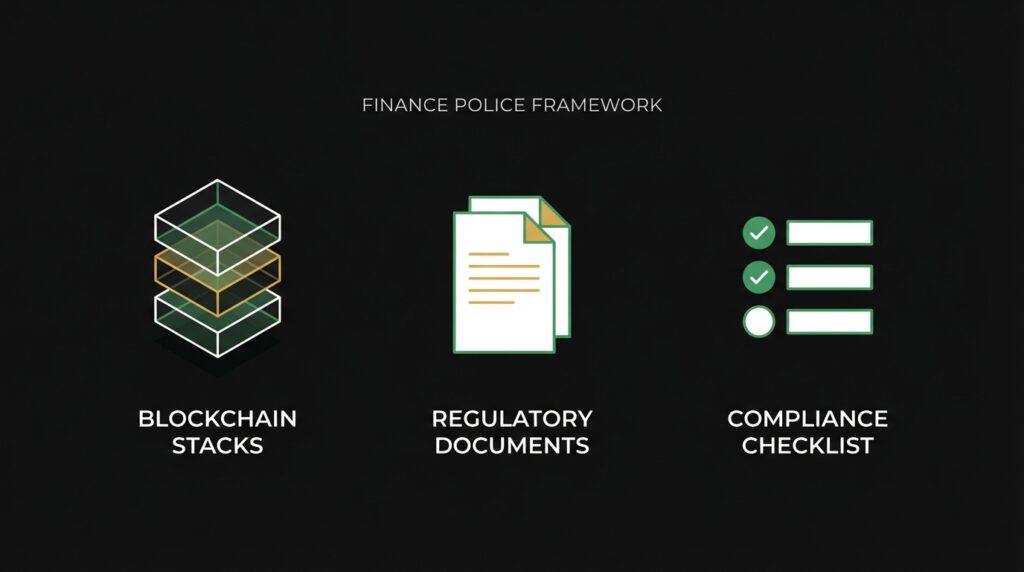
Use this guide to learn which signals to monitor, how to score developments, and where to find primary sources. It is designed for everyday readers who want clear steps to stay informed without rushing into speculative bets.
Quick summary: Which trends are most likely to drive the next big crypto wave
Five technical and policy vectors now stand out as the most likely sources of the next major crypto wave: Layer 2 scaling and cross-rollup infrastructure, tokenization of real-world assets, regulated stablecoins and settlement rails, privacy primitives built on zero-knowledge proofs, and early-stage AI-token integrations. These are the factors most often cited in recent industry and policy work and we will map what to watch for each.
For readers following new cryptocurrency news, the key early signals will come from regulatory milestones, Layer 2 activity metrics, institutional tokenization pilots, privacy protocol audits, and early AI-data marketplace tests. Use these signals to prioritize reading and decide when a headline deserves deeper review.
Stay informed on the key signals
Sign up for a short weekly monitoring note that highlights policy milestones, L2 activity, and major pilot announcements to help you stay informed without hype.
Evidence strength varies. Regulation is a central adoption determinant because global policy bodies focused on stablecoin frameworks and tokenisation in 2024 and 2025, which can enable or slow institutional participation depending on how rules converge Financial Stability Board report.
This article maps practical signals to follow, offers a simple scoring framework to evaluate vectors, and lists concrete monitoring sources so you can track developments like a steady reader rather than chasing headlines.
At-a-glance list of leading vectors
Leading vectors to watch: Layer 2 scaling and cross-rollup messaging, tokenization of real-world assets, regulated stablecoins and settlement rails, privacy using zero-knowledge proofs, and early AI-token concepts. Each has different evidence strength and risk profiles.
How to read this article
Read with a signal-first mindset. For each vector we give plain definitions, the most relevant metrics, and a short list of red flags. Use the practical monitoring checklist near the end to convert news items into follow-up actions.

Why regulation and international policy now shape adoption more than pure speculation
Global policy bodies sharpened their focus on stablecoins, tokenisation and cross-border risks in 2024-2025, which means regulatory milestones are now a primary adoption signal for broader market participation Financial Stability Board report.
The Bank for International Settlements also elevated tokenisation frameworks and market infrastructure questions, showing that legal and operational clarity is a prerequisite for many institutional pilots to scale BIS report on tokenisation.
The International Monetary Fund framed regulated stablecoins as central to improving settlement rails and on-ramp quality, implying that clearer rules could materially change how institutions enter crypto markets IMF analysis on stablecoins.
Practical implication: watch regulator consultations and cross-jurisdiction coordination. When multiple major authorities align on licensing or custody rules, the path to institutional participation becomes clearer and friction falls.
A simple framework to evaluate emerging crypto vectors
Use a five-factor checklist to score any vector you read about. The factors are: adoption traction, regulatory clarity, technical maturity, liquidity and market infrastructure, and security and custody risk. Score each factor 1 to 5 to get a quick, repeatable view of how ready a vector seems.
Example: score Layer 2 for adoption traction using TVL and user growth metrics, regulatory clarity as low for purely permissionless rollups, technical maturity as medium-high if audited, liquidity as medium, and security risk as medium because of bridges. That quick score helps decide whether to watch, learn, or consider a small exposure.
How to use the framework: apply it to reading news, pilot announcements, and analytics reports. Re-score monthly and increase the weight of regulatory clarity for institutional vectors.
Quick scoring sheet to rate a vector on five decision factors
Score each factor 1 to 5 and revisit monthly
Layer-2 scaling and cross-rollup infrastructure: why it matters and what to watch
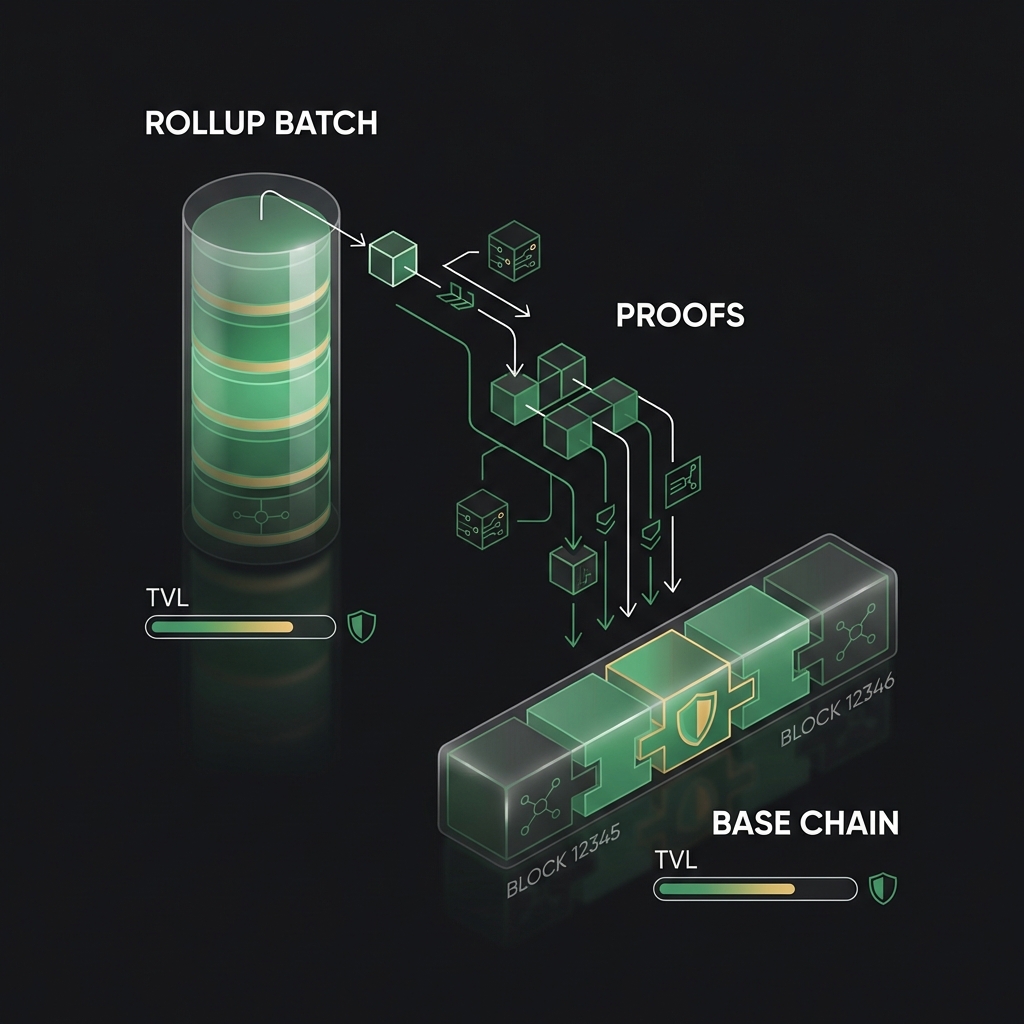
Layer 2 solutions, commonly called Layer 2 or L2, move transactions off the main chain to increase throughput and lower fees while relying on the base chain for final settlement. Rollups batch transactions and post proofs to the mainnet, and cross-rollup messaging lets different rollups exchange data or assets in a more structured way.
Analytics reports showed rapid user and transaction growth for L2s in 2024 and 2025, making them a primary scaling vector to watch for broader usage and new product types Chainalysis Layer-2 activity report.
Key metrics to monitor are TVL, user growth, transaction volume, and bridge activity. Rapid TVL increases can indicate adoption but also raise security and custody exposure when cross-rollup bridges are used.
Brief analogy: think of Layer 2 as a regional shuttle that moves people quickly between hubs, then the main chain is the international airport. If shuttle connections are insecure or poorly supervised, luggage and passengers can go missing in transit, which is why bridge security matters.
Security caveat: cross-rollup bridges and interoperability tools increase attack surface. Recent analyses highlighted that while L2s scale transactions, bridges remain security-sensitive and need careful auditing and custodial clarity Chainalysis Layer-2 activity report.
Tokenization of real-world assets: pilots, promise and open questions
Tokenization means representing ownership or claims on real-world assets, like securities, invoices or property, as digital tokens that can move on blockchains. In practice, tokenization aims to make settlement faster, enable fractional ownership, and lower reconciliation costs in some workflows.
Institutional pilots and policy work through 2024-2025 showed growing interest from banks and market infrastructure groups, which suggests tokenization is moving from concept to regulated experimentation BIS report on tokenisation. See related coverage on tokenized real-world assets.
The next major wave is likely to come from a mix of technical scaling, regulated settlement rails and institutional infrastructure advances, such as Layer 2 scaling, tokenization of real assets, and regulated stablecoins, with privacy and AI-token ideas as supportive or experimental pillars.
Open questions remain around legal reconcilability, custody rules, and liquidity. Tokenizing a security requires legal clarity that a token truly represents enforceable rights under local law, and that process is still uneven across jurisdictions.
Practical takeaway: tokenization has meaningful institutional interest but is still often a medium-term story for broad retail exposure because legal frameworks, liquidity, and reconciliation processes need alignment before large-scale retail use is realistic.
Regulated stablecoins and settlement rails: the on-ramp that could change adoption
Regulated stablecoins are fiat-linked instruments that operate under clearer legal and oversight frameworks. If regulators converge on licensing and operational rules, stablecoins can offer a more compliant on-ramp for institutions and reduce settlement friction for cross-border activity.
The IMF and FSB emphasized stablecoin policy as central to improving settlement rails in their 2024 workstreams, which makes regulatory milestones a high-priority signal for broader adoption IMF analysis on stablecoins. For practical context see our piece on how stablecoin issuers generate revenue.
What to watch: regulator consultation papers, proposed licensing regimes, and official settlement pilot announcements. Convergence across major jurisdictions often leads to clearer custody and operational standards that institutions require to participate.
Privacy-preserving primitives: zero-knowledge proofs and their limits
Zero-knowledge proofs let one party prove a statement is true without revealing the underlying data. In blockchains, zk-SNARKs and zk-STARKs are common approaches that can hide transaction details while preserving verifiability.
Academic progress and selective deployments through 2024-2025 show maturation in privacy tech, yet regulatory acceptance remains uneven across jurisdictions and may limit mainstream integration depending on local rules arXiv survey of zero-knowledge proofs.

How to evaluate privacy projects: check for third-party audits, compliance statements that address jurisdictional restrictions, and clear governance about data disclosure on legal request. Where audits are missing or vague, treat privacy claims cautiously.
AI-token integrations: early concepts, use cases and why liquidity is limited
AI-token concepts link tokens to data, model access, or compute resources so that marketplaces can price and trade access to AI inputs. Proofs of concept emerged in 2024 and 2025 but lacked standard tokenomics and broad liquidity as of 2026 CoinDesk research brief.
Example use cases include tokens that pay for model inference, tokens that grant access to curated datasets, or reputation-linked tokens for data providers. These concepts are promising but still experimental.
Why liquidity is limited: without standardized tokenomics, fungibility and market depth remain shallow. That makes it harder for exchanges and institutions to quote reliable prices and adds execution risk for traders or platforms.
Security and interoperability risks to watch: bridges, custody and audits
Cross-chain activity increases the number of moving parts and potential failure points. Bridges, custodial contracts, and cross-rollup messaging often rely on multi-step processes that attackers can exploit if designs are weak or keys are mismanaged.
Analyses of L2 and cross-rollup growth show that while scaling improves transaction throughput, it also raises custody and bridge-related exposure that readers should monitor carefully Chainalysis Layer-2 activity report.
Red flags checklist: no recent third-party audit, unclear custody arrangements, frequent contract upgrades without clear governance, and obscure incident histories. If one or more of these flags appear, treat announcements as early-stage and higher risk.
Practical monitoring checklist: what to follow and where to find reliable signals
Primary signals to follow, mapped to vectors: regulatory releases from the FSB, BIS and IMF for policy direction; L2 TVL and user growth reports for adoption traction; tokenization pilot announcements from regulated institutions for market readiness; privacy protocol audits for compliance posture; and AI data marketplace pilots for early token-economy signals Financial Stability Board report.
Suggested analytics and primary documents: Chainalysis and similar chain analytics for L2 metrics, BIS and central bank papers for tokenization frameworks, IMF blog posts and consults for stablecoin guidance, and academic preprints for privacy tech updates Chainalysis Layer-2 activity report.
Concrete metrics and alert thresholds: sustained TVL growth over 3 months, multiple audited bridge fixes after a security incident, regulator consultation papers moving to draft rules, and formal pilot confirmations by regulated banks. Use these thresholds to decide when to move from passive reading to a deeper review.
Common mistakes and red flags when chasing the “next big thing”
Behavioral traps include FOMO, overreacting to single pilot announcements, and confusing proofs of concept with production-ready services. Pausing to verify governance, audits, and legal clarity prevents common mistakes.
Information pitfalls: relying solely on promotional blog posts, ignoring audit dates, and not checking whether a pilot is limited to a sandbox jurisdiction. Treat early announcements as signals to verify rather than reasons to act immediately.
Typical red flags: missing audits, opaque tokenomics, unclear legal frameworks, and teams that avoid answering questions about custody or regulatory risk. When these appear, reduce exposure and prioritize learning instead.
Short scenarios: conservative learning path and an experimental tracker
Conservative learning path: follow the monitoring checklist, keep a paper track of developments, and re-score vectors monthly. Focus on primary sources and regulatory milestones rather than price headlines.
Experimental tracker: pick one vector to follow with a small simulated model portfolio or watchlist, set strict position-size rules, and document why you would increase exposure if multiple signals align such as draft regulations plus audited pilots.
Conclusion: how to stay informed without falling for hype
Top takeaways: Layer 2 scaling, tokenization, regulated stablecoins, privacy primitives, and AI-token concepts are the strongest evidence-backed vectors for the next wave, but each carries different timing and risk profiles. Regulation and interoperability will shape which vectors scale first BIS report on tokenisation.
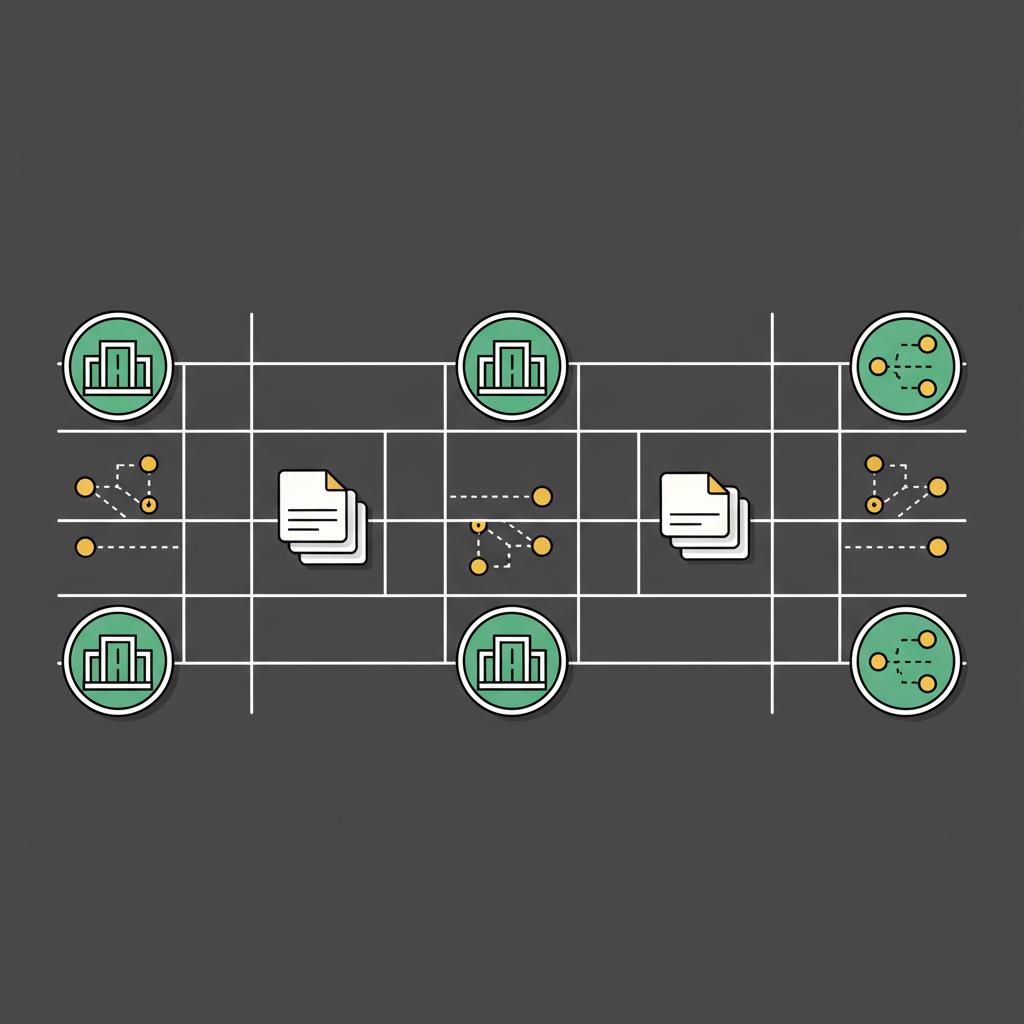
Three practical next steps this week: subscribe to an authoritative policy newsletter, add an L2 TVL tracker to your watchlist, and save official consultation papers from the FSB or IMF for direct review when they appear. Treat any exposure as speculative and verify claims with primary sources.
Follow primary sources such as reports and consultation papers from bodies like the FSB, BIS and IMF. Bookmark their publications pages and sign up for official newsletters or summaries from reputable analytics groups for timely alerts.
Not yet for most retail investors. Tokenization has seen institutional pilots and policy work, but legal clarity, custody rules and liquidity remain open questions that often limit broad retail access.
Layer 2 solutions address scalability and have strong adoption signals, but they introduce bridge and custody risks. Assess technical audits and bridge security before considering exposure.
If you prefer a steady learning approach, focus first on regulatory milestones and audited reports before considering small, well-documented exposure.
0
0

 Gestisci cripto, NFT e DeFi in un unico luogo
Connetti in sicurezza il portafoglio che usi per iniziare.

0
0

0
0

0
0

0
0