
Memories.ai Pioneers the Crucial Visual Memory Layer for Next-Gen Wearables and Robotics

0
0

BitcoinWorld
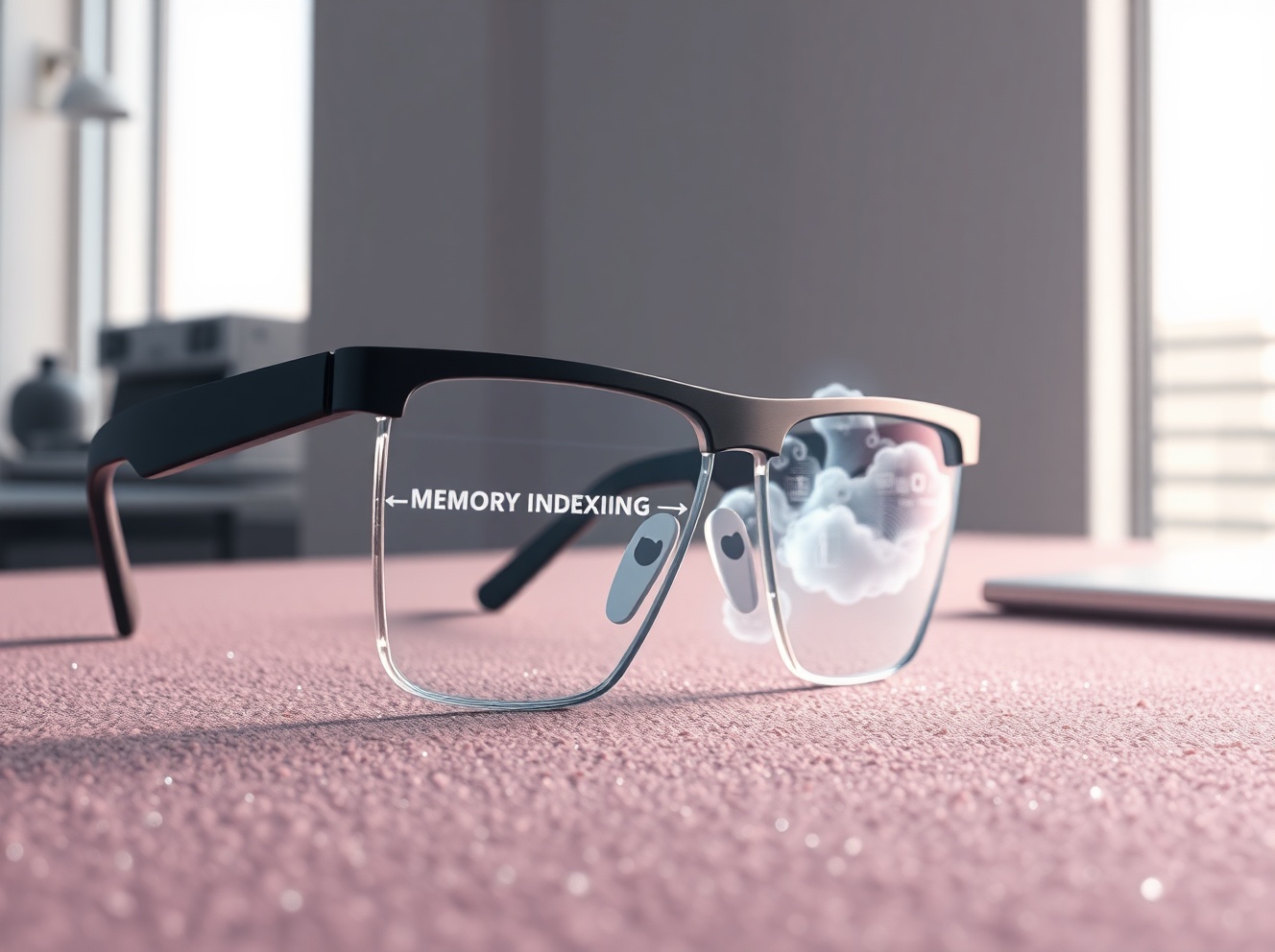
Memories.ai Pioneers the Crucial Visual Memory Layer for Next-Gen Wearables and Robotics
In a significant leap for embodied AI, the startup Memories.ai is constructing the foundational visual memory layer that could allow wearables and robots to navigate and understand the physical world with human-like recall. Announced at Nvidia’s GTC conference in San Francisco on Monday, June 9, this collaboration leverages cutting-edge AI models to solve a core challenge: enabling artificial intelligence to remember what it sees.
Memories.ai Builds the Visual Memory Infrastructure
Shawn Shen, co-founder and CEO of Memories.ai, argues that for AI to succeed beyond the digital screen, it must possess visual memory. Consequently, his company is developing the critical infrastructure that allows devices to embed, index, store, and recall visual data. This technology is essential for applications where interaction is primarily visual, such as autonomous robotics and AI-powered smart glasses.
Through its partnership with Nvidia, Memories.ai utilizes two key platforms. First, it employs Cosmos Reason 2, a reasoning vision-language model. Second, it integrates Nvidia Metropolis, an application framework for video search and summarization. Together, these tools provide the computational backbone for processing continuous visual streams into searchable memories.
The Genesis from Meta’s Ray-Ban Glasses
The concept for Memories.ai originated from a practical problem Shen and his co-founder, CTO Ben Zhou, encountered while working on the AI system for Meta’s Ray-Ban smart glasses. They realized a critical gap existed. While the glasses could record video, the AI lacked a structured way to remember and reference that footage meaningfully for the user.
“We looked around to see if anyone was building this type of visual memory solution,” Shen explained. “When we couldn’t find it, we decided to spin out of Meta and build it ourselves.” This experience-driven insight highlights the real-world necessity their technology addresses, moving AI from passive recording to active, contextual recall.
Why Visual Memory Differs from Text Memory
The recent AI memory race has largely focused on text. For instance, OpenAI enhanced ChatGPT with memory features in 2024, and both xAI and Google Gemini launched similar tools. However, Shen points out a fundamental distinction. Text-based memory is inherently structured and easier to index. Conversely, visual memory deals with unstructured, high-dimensional data like video frames.
This complexity makes visual memory both a harder technical challenge and a more necessary one for physical AI. A robot in a warehouse or glasses on a user’s face interacts with a fluid, visual world. Therefore, its intelligence depends on recalling scenes, objects, and spatial relationships, not just words.
Technical Architecture: The LVMM and Data Collection
Successfully building this layer required a dual approach. First, Memories.ai needed the infrastructure to process video. Second, it required specific training data. The company launched its Large Visual Memory Model (LVMM) in July 2025. Shen compares its function to a more specialized version of Google’s multimodal Gemini Embedding 2 model, designed specifically for indexing and retrieving visual sequences.
For data, the company built a custom hardware device named LUCI. Worn by dedicated data collectors, LUCI records the first-person video used to train the LVMM. Significantly, the company built LUCI not to become a hardware vendor but because consumer recorders were unsuitable. “Off-the-shelf video recorders focus on high-definition, battery-intensive formats,” Shen noted. “We needed efficient, purpose-built data capture.”
Funding, Partnerships, and Commercial Strategy
Since its 2024 launch, Memories.ai has secured $16 million in funding. This includes an $8 million seed round and an $8 million extension led by Susa Ventures, with participation from Seedcamp and Fusion Fund. This capital supports its ambitious infrastructure build-out.
The company’s partnership strategy is expanding. After releasing its second-generation LVMM, Memories.ai signed a deal with Qualcomm to run its models on Qualcomm’s processors. This move is crucial for deploying efficient AI directly on wearable and robotic devices. Furthermore, Shen confirmed collaborations with major wearable companies, though their identities remain confidential.
A Focused Path to Market
Despite engaging with current wearable makers, Shen maintains a long-term perspective on commercialization. “We are more focused on the model and the infrastructure,” he stated. “Ultimately, we think the wearables and robotics market will come, but it’s probably just not now.” This strategic patience indicates a focus on solving the core technological problem before chasing immediate, possibly limited, applications.
The potential market is vast. As robotics advance in logistics, healthcare, and home assistance, and as wearables evolve beyond fitness tracking, a reliable visual memory layer becomes indispensable. It could enable a warehouse robot to remember where it last saw a specific tool or allow smart glasses to instantly find a document a user viewed days earlier.
Conclusion
Memories.ai is tackling one of the most significant hurdles for embodied AI: granting machines the power of visual recall. By building the essential memory layer with partners like Nvidia and Qualcomm, the company is laying groundwork that could define how future wearables and robotics perceive and interact with our world. While the full commercial wave may be ahead, the foundational work happening now is critical for enabling AI to move successfully from the digital realm into the complex, visual tapestry of physical reality.
FAQs
Q1: What is the visual memory layer that Memories.ai is building?
The visual memory layer is an AI infrastructure that allows devices like wearables and robots to process, index, store, and recall video data contextually, enabling them to “remember” what they have seen.
Q2: How does Memories.ai’s technology differ from AI text memory?
Text memory works with structured language data, while visual memory handles unstructured, high-dimensional video. This makes visual memory more complex but essential for AI that interacts with the physical world through sight.
Q3: What role does Nvidia play in Memories.ai’s development?
Memories.ai uses Nvidia’s Cosmos Reason 2 vision-language model and the Nvidia Metropolis application framework to power the reasoning, search, and summarization capabilities of its visual memory system.
Q4: Why did Memories.ai build its own data collection hardware (LUCI)?
The company built the LUCI device because consumer video recorders were optimized for high-definition playback, not for the efficient, continuous data capture needed to train a visual memory AI model.
Q5: When can we expect this technology in consumer products?
While Memories.ai is already working with wearable companies, CEO Shawn Shen believes the large-scale market for advanced AI wearables and robotics is still developing. The company is currently focused on perfecting the core model and infrastructure for future deployment.
This post Memories.ai Pioneers the Crucial Visual Memory Layer for Next-Gen Wearables and Robotics first appeared on BitcoinWorld.
0
0


 Verwalten Sie alle Ihre Kryptowährungen, NFTs und DeFi an einem Ort
Verbinden Sie sicher das Portfolio, das Sie zu Beginn verwenden möchten.

0
0

0
0

