
Crypto Fear and Greed Index Slips to 80, Still Deep in Extreme Greed

0
0
BitcoinWorld
Crypto Fear and Greed Index Slips to 80, Still Deep in Extreme Greed
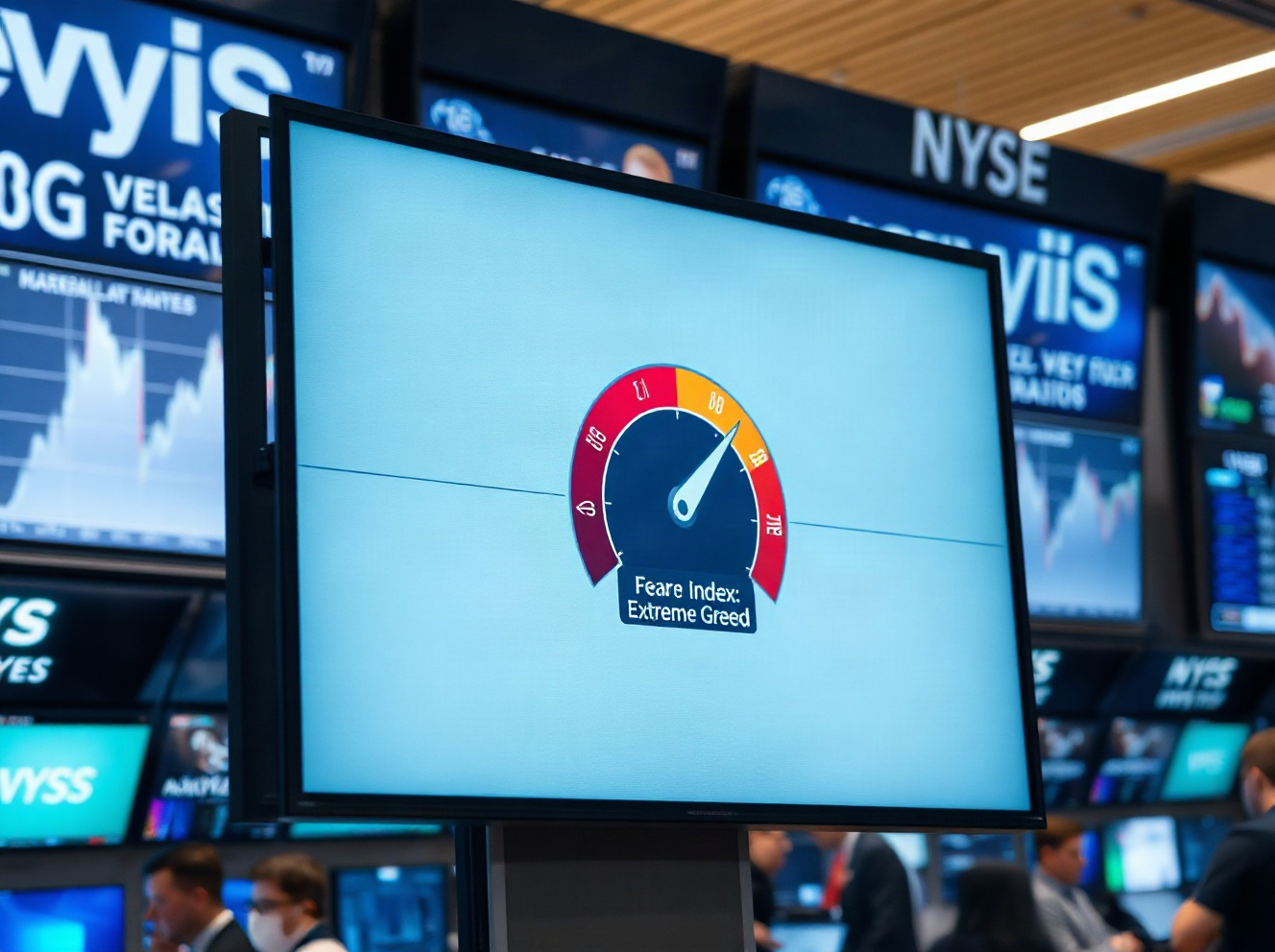
The cryptocurrency market’s fear and greed index, as calculated by CoinMarketCap, has dipped one point to 80, remaining firmly in the ‘extreme greed’ zone. This marginal decline follows a period of heightened optimism, yet the reading still signals that market participants are overwhelmingly bullish, a sentiment that historically has preceded short-term pullbacks.
Understanding the Index and Its Components
CoinMarketCap’s proprietary index aggregates multiple data points to gauge market emotion. It considers price movements of the top 10 cryptocurrencies by market capitalization, market volatility, derivatives indicators like the put-to-call ratio, the stablecoin supply ratio (SSR), and the platform’s own search data. When the index approaches 100, it indicates extreme optimism, while readings near zero reflect extreme fear.
The current reading of 80, although down slightly, suggests that investors are still highly confident, potentially driven by recent price rallies and increased institutional interest. However, such elevated levels often warrant caution, as they can indicate that the market is overbought and vulnerable to corrections.
Market Context and Implications
Historically, extreme greed readings have coincided with local market tops. For instance, similar levels were observed in late 2021 before a significant downturn. While the index is not a precise timing tool, it provides valuable insight into crowd psychology. The slight decrease from 81 to 80 could be interpreted as a minor cooling off, but the market remains in a state of high optimism.
Investors should also consider other indicators, such as trading volumes and on-chain metrics, to form a comprehensive view. The derivatives market, for example, shows whether futures traders are heavily leveraged, which could amplify volatility.
Why This Matters to Investors
For both short-term traders and long-term holders, understanding sentiment is crucial. Extreme greed can lead to FOMO (fear of missing out) buying, which may inflate prices beyond fundamental values. Conversely, it can also signal that the market is poised for a ‘sell the news’ event if positive catalysts fail to materialize.
As always, it’s essential to do your own research and consider risk tolerance. The index is a single tool, not a definitive forecast.
Conclusion
The crypto fear and greed index’s slight drop to 80 does not change the overall picture: the market remains in a state of extreme greed. While this can be a sign of strong momentum, it also carries inherent risks. Monitoring the index alongside other market data can help investors make more informed decisions, but no single metric should be used in isolation.
FAQs
Q1: What does a fear and greed index of 80 mean?
A reading of 80 indicates ‘extreme greed,’ meaning investors are highly optimistic and willing to take on more risk. Historically, such levels can precede market corrections.
Q2: How is the crypto fear and greed index calculated?
CoinMarketCap’s index uses a weighted average of price momentum, volatility, derivatives data (like put-to-call ratio), stablecoin supply ratio, and search trends to quantify market sentiment.
Q3: Should I sell my crypto because the index is in extreme greed?
Not necessarily. The index is a sentiment gauge, not a trading signal. It’s important to consider your investment strategy, risk tolerance, and other market indicators before making decisions.
This post Crypto Fear and Greed Index Slips to 80, Still Deep in Extreme Greed first appeared on BitcoinWorld.
0
0

 从同一位置管理所有加密资产、NFT 和 DeFi 资产
安全地关联您正在使用的投资组合,以开始交易。


