
Elevating Traditional DEXes and AI in DeFi: An Exclusive Interview with ORO Co-Founder Katerina Vdovichenko

0
0
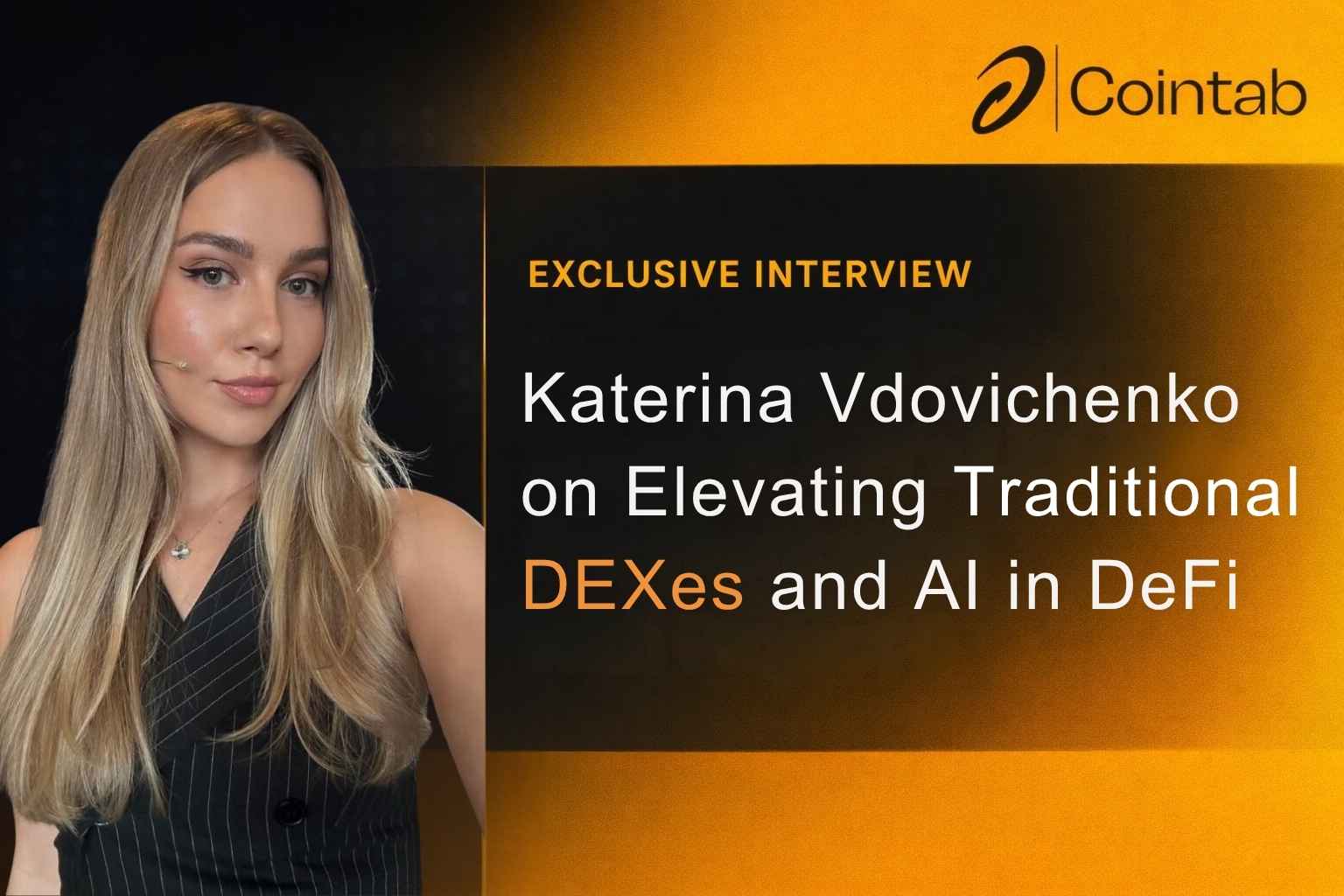
For years, decentralized exchanges have been the backbone of on-chain trading, powering liquidity, enabling swaps, and anchoring the broader DeFi ecosystem. Yet despite billions in volume and rapid innovation, one issue continues to quietly hold the space back: complexity.
According to Katerina Vdovichenko, Co-Founder of ORO, the real challenge isn’t infrastructure, it’s usability.
“DeFi has powerful infrastructure, but most users are still forced to behave like engineers just to make a swap, understand liquidity, or manage positions,” she explains.
We recently sat down with Katerina to explore how that realization shaped her journey from her early exposure to Web3, to her experience in business development at Mintable, and ultimately to building OroSwap, now evolving into ORO.
She shared insights into the product’s evolution, the role of AI in simplifying DeFi, and what it will take to bring the next wave of users on-chain. First, she walked us through how her journey into crypto began and what made her stay.
From Web2 to Web3 — The Shift in Perspective
Katerina’s transition into crypto wasn’t driven by hype, but by a fundamental shift in how she saw markets.
“The turning point was realizing that crypto was not just another financial vertical, it was a new coordination layer, she explained.”
Coming from a Web2 background, where distribution and access often define success, Web3 introduced a more open dynamic one where users, builders, liquidity providers, and communities could all participate more directly.
But that early exposure also revealed a gap.
“On one side, you had incredible innovation and community energy. On the other hand, you had products that were still too complex for normal people to use confidently.”
That tension between potential and usability became the foundation for what she would go on to build. Let’s dive into how her shift impacted her career.
Lessons from Her Days at Mintable
Her time at Mintable, particularly through its B2B arm Mintology, played a critical role in shaping her approach to product and growth.
“It is one thing to talk about decentralization and innovation. It is another to sit with partners, creators, and communities and understand where they get confused, where they drop off, and what actually builds trust.”
That experience shifted her focus away from surface-level growth metrics toward something deeper, ‘the full user journey.’
“I am not interested in vanity traction,” she adds.
At ORO, growth is not defined by campaigns or announcements, but by the experience of how users discover the product, how quickly they understand it, and whether they return because it genuinely made their lives easier.
The Problem with Traditional DEXes
While platforms like Uniswap and PancakeSwap have defined DeFi trading, Katerina believes they still carry a fundamental limitation: they assume too much from the user.
“The biggest problem is cognitive load. These interfaces assume users already understand routing, pools, slippage, and mechanics.”
Notably, for crypto-native users, that may be manageable. For everyone else, it’s a barrier. This is where ORO takes a different approach, not by rebuilding liquidity infrastructure, but by rethinking the interaction layer entirely.
At the core of ORO is a simple but powerful idea: users shouldn’t have to translate intention into technical steps.
Instead of navigating complex dashboards, users can interact with the interface in natural language.
“A user should be able to say what they want to do, swap, explore liquidity, compare opportunities, and the system should guide them clearly.”
Furthermore, this conversational layer transforms the user experience from a static interface into a more dynamic and responsive one, closer to that of a financial assistant than to that of a traditional exchange.
“The real unlock is abstraction. DeFi does not need to become less powerful to become mainstream. It needs to become less exhausting,” Katerina stated.
Building AI in DeFi: Precision Over Hype
Integrating AI into a financial protocol comes with its own challenges, especially in an industry where execution precision is critical.
“The biggest challenge is making AI useful without making it vague.”
Rather than layering AI on top as a feature, ORO focuses on where it genuinely improves the user experience: helping users understand, navigate, and execute with confidence.
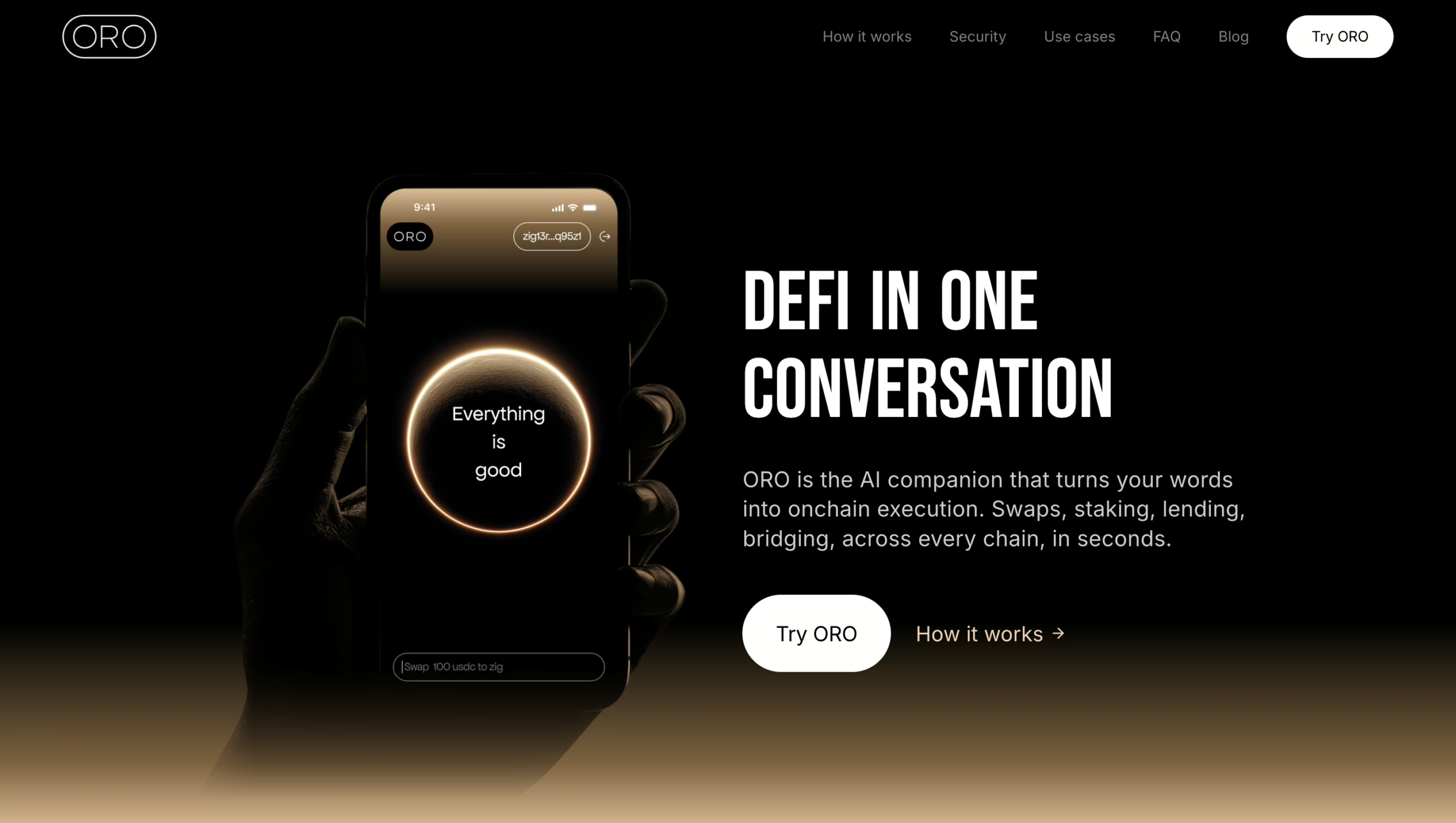
Behind the simplicity of the interface lies a more rigorous foundation.
“The interface should feel easy, but the infrastructure underneath has to be serious. Liquidity is going to become more intelligent, more dynamic, and more connected to user intent.”
Looking ahead, Katerina sees liquidity evolving beyond static pools and short-term incentives.
Moreover, the traditional model of launching pools and heavily incentivizing them is no longer sustainable on its own. Instead, liquidity will increasingly respond to real usage patterns, trading behavior, and ecosystem demand.
For ORO, this shift is critical. “Liquidity is not just infrastructure. It directly affects user experience execution quality, friction, and trust.”
Rethinking Sustainable Liquidity
One of the biggest challenges in DeFi remains maintaining stable liquidity over time.
“If liquidity comes only for rewards and leaves when rewards slow down, you have not built a market, you have rented attention.”
ORO’s approach focuses on deeper ecosystem alignment, starting with its launch on ZigChain. Rather than competing for short-term capital, the goal is to embed itself as a core liquidity layer tied to real activity and user demand.
The AI layer also plays a role here, lowering the barrier to participation so that more users can confidently engage with liquidity opportunities.
“Long-term, sustainable liquidity comes from real usage.”
Notably, while regulation often dominates the conversation, Katerina sees a different primary obstacle.
“The biggest barrier is not regulation. It is cognitive load.”
Most users are not looking for a “DEX”; they are looking to achieve outcomes: move money, earn yield, trade assets, or access new opportunities. But current interfaces require them to understand too much before they can take action.
“The next wave of adoption will not come from making people study DeFi harder. It will come from making interfaces more intuitive.”
What Success Looks Like for ORO
Looking ahead, Katerina envisions ORO as more than just a product but as a foundational interface for on-chain finance.
“Success means ORO becomes a main interaction layer for on-chain finance.”
But beyond scale, the real measure of success is usability. “Real-world usage means people come back because the product saves them time, reduces confusion, and gives them confidence.”
Ultimately, her vision is simple but ambitious: a world where the complexity of DeFi fades into the background, while its full potential remains accessible.
“That’s when DeFi stops being a playground for experts, and starts becoming a product for millions.”
The post Elevating Traditional DEXes and AI in DeFi: An Exclusive Interview with ORO Co-Founder Katerina Vdovichenko appeared first on CoinTab News.
0
0

 Manage all your crypto, NFT and DeFi from one place
Securely connect the portfolio you’re using to start.


