
Robinhood Chain Outage? Arbitrum Reveals What Really Happened

0
0
Robinhood Chain Outage Rumors Fade After Arbitrum’s Update
A wave of concern spread quickly today after chatter about a possible Robinhood Chain outage started circulating online, sending people searching for answers about whether the Ethereum Layer 2 network had actually gone down.
Arbitrum, the team behind the technology powering this network, moved fast to clarify the situation directly from its own account, confirming things stayed up throughout the incident even though something did go temporarily wrong behind the scenes.
What Arbitrum Actually Said Happened
According to Arbitrum's official statement, there was no outage today.
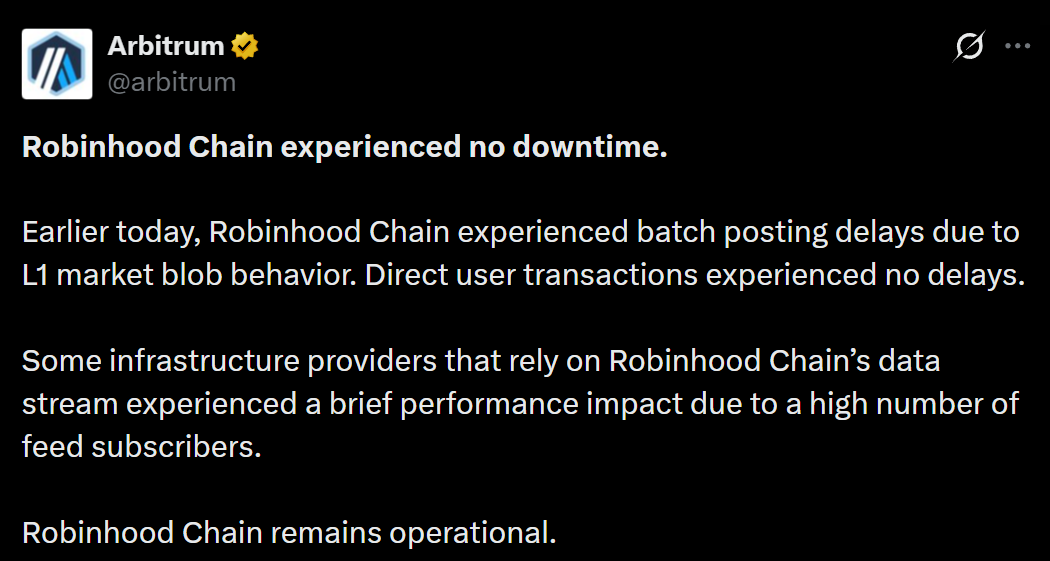
The network experienced delays in posting transaction batches, caused by behavior in Ethereum's Layer 1 blob market, but the chain itself remained fully operational throughout.
Here's the key breakdown from that statement:
| What Happened | Status |
| Network downtime | None reported |
| Batch posting | Delayed, due to L1 blob market behavior |
| Direct user transactions | No delays experienced |
| Infrastructure data feeds | Brief performance impact for some providers |
| Overall network status | Remained operational throughout |
This distinction matters a lot. A batch posting delay and a full network shutdown are two very different things, and Arbitrum was clear that this was the former, not the latter.
Why This Looked Like a Bigger Problem Than It Was
The confusion is understandable given how these systems work under the hood.
This network is built as an Ethereum Layer 2, meaning it processes transactions quickly on its own while still periodically posting batches of that transaction data back to Ethereum's base layer for security and finality.
When that specific posting step gets delayed because of congestion in Ethereum's blob market, it can look from the outside like something bigger is wrong, especially to anyone monitoring data feeds rather than actual transaction processing.
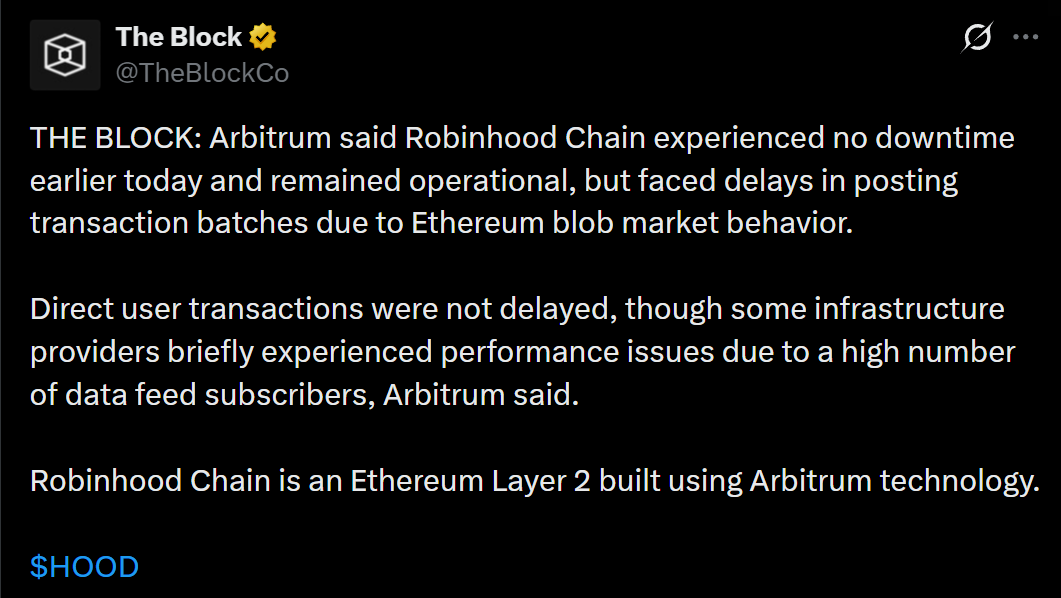
Source: The Block
That's essentially what happened here. A secondary report on the incident echoed the same explanation, noting that some infrastructure providers briefly experienced performance issues simply because a high number of subscribers were pulling from the same data feed at once, not because anything had stopped functioning.
Breaking Down the Technical Cause
To understand why today's Robinhood Chain outage scare happened at all, it helps to look at what a blob market actually is.
Ethereum's blob space is a dedicated, lower-cost data channel that Layer 2 networks use to post transaction batches back to the main Ethereum chain.
When there's unusual demand or congestion in that blob market, batch postings from any Layer 2 relying on it can get delayed.
A few points worth understanding:
-
Blob market delays affect how quickly batches get confirmed on Ethereum, not whether the Layer 2 is processing transactions
-
Users interacting directly with the network were not affected during this delay
-
Infrastructure providers depending on real-time data feeds were the ones who noticed a brief hiccup, due to a spike in feed subscribers rather than any failure on-chain
Was This a Genuine Failure or Just a Hiccup?
Based on both official statements, the picture is clear: this was not a shutdown in the traditional sense.
The network never stopped operating, and everyday users sending transactions didn't experience any interruption.
What did happen was a temporary delay in the batch-posting process, layered with a brief strain on some third-party infrastructure that depends on the chain's data stream.
Framing this as a genuine Robinhood Chain outage would overstate what actually occurred, even though initial chatter online made it sound more serious than it was.
This kind of distinction is worth paying attention to more broadly. Layer 2 networks have multiple moving parts, including their own transaction processing, their data posting to Ethereum, and the third-party infrastructure built around them.
A hiccup in one part doesn't necessarily mean the whole system is compromised, and today's event is a good example of exactly that nuance.
What This Means Going Forward
For everyday $HOOD-linked activity and network users, the practical takeaway is straightforward: transactions kept moving normally throughout this event.
For infrastructure providers and anyone building tools on top of the chain's data feeds, this incident is more of a reminder that blob market conditions on Ethereum can create downstream ripple effects, even when the underlying Layer 2 itself is functioning exactly as intended.
Conclusion
Despite the alarm that spread quickly online, both Arbitrum and The Block confirmed the network stayed operational the entire time, with the real issue being a temporary batch-posting delay tied to Ethereum's blob market, plus a brief strain on some data-feed infrastructure.
Direct user transactions were never interrupted, making this far more of a behind-the-scenes hiccup than a true failure of the system itself.
Disclaimer
This content covers financial markets and is for general information only. It is not financial, investment, trading, or legal advice. Crypto assets are volatile and can lose value fast. Always do your own research. Speak with a licensed financial advisor before making investment decisions.
0
0


 Կառավարեք ձեր բոլոր կրիպտարժույթները, NFT-ն և DeFi-ն՝ մեկ տեղից
Ապահովաբար կցեք ձեր օգտագործած պորտֆոլիոն՝ սկսելու համար:


