
Private Messaging in 2026: How Governments Balance Privacy, Security, and Lawful Access
1
0
A practical overview of the policies shaping end-to-end encryption, traceability, online safety, and digital privacy around the world.
Status: August 2026
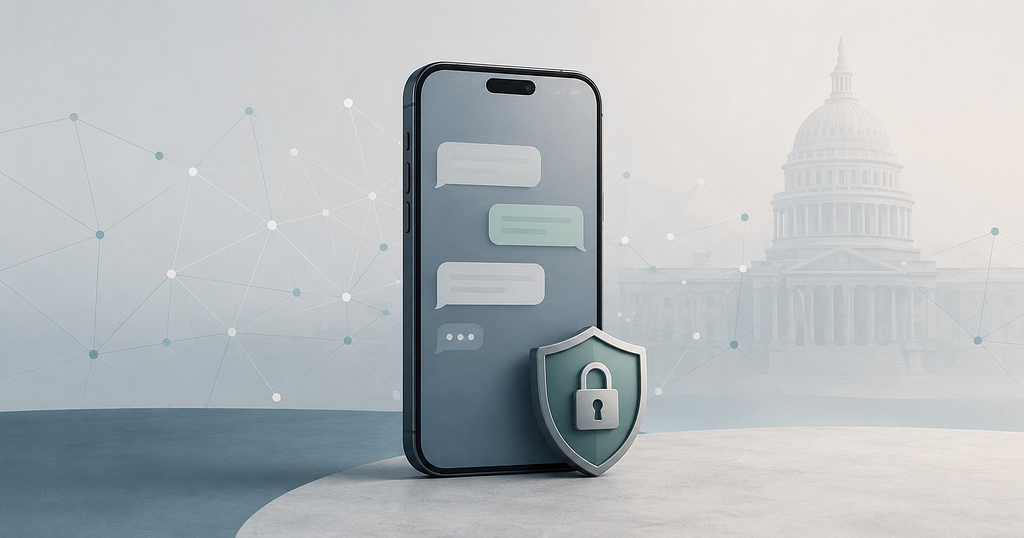
Private messaging has become part of critical digital infrastructure.
People use messengers for family conversations, business negotiations, medical information, political discussion, banking, authentication, and communication during emergencies. Governments use the same technologies. So do journalists, lawyers, military personnel, activists — and criminals.
This creates a policy problem with no simple solution.
Governments want communications to be secure from hackers, foreign intelligence services, fraudsters, and commercial surveillance. At the same time, law-enforcement agencies want to investigate terrorism, organized crime, fraud, and child sexual exploitation.
These goals sometimes reinforce each other. Sometimes they collide directly.
The result is not a simple global struggle between governments and privacy. Instead, countries are experimenting with very different answers to the same question:
How private should digital communication be, and under what circumstances should the state be able to reach it?
Privacy is not one thing
It helps to separate several layers that are often mixed together in public debate.
Message content is what people actually write, send, photograph, or say.
Metadata includes information such as who communicated, when, from which IP address or device, and sometimes with whom.
Identity concerns whether an account must be linked to a phone number, SIM card, government identity, or real person.
Cloud backups are another layer entirely. A messenger may encrypt messages end-to-end while an associated cloud backup is accessible under a different security model.
Finally, endpoint security concerns the phones and computers themselves. Even perfect cryptography cannot protect a conversation if an attacker or investigator gains access to an unlocked endpoint.
The distinction is important. Governments increasingly regulate these surrounding layers instead of simply trying to prohibit encryption.
Telegram offers a useful example of why terminology matters. Its Secret Chats use end-to-end encryption, while ordinary Telegram Cloud Chats use client-server encryption and are stored in Telegram’s cloud. Calling an entire application simply “encrypted” or “not encrypted” can therefore hide important architectural differences.
The international baseline: encryption is also a security technology
International human-rights institutions generally treat strong encryption as an important part of privacy and freedom of expression. The UN Office of the High Commissioner for Human Rights has described encryption as a key enabler of privacy and other human rights in the digital environment.
The European Court of Human Rights reached an important conclusion in Podchasov v. Russia in 2024. The case concerned legal demands relating to Telegram communications. The Court found a violation of Article 8 of the European Convention on Human Rights and emphasized the danger of measures that would require weakening end-to-end encryption for users generally in order to make particular communications accessible.
But recognition of encryption as a right-protecting technology does not eliminate legitimate law-enforcement interests. The real policy dispute is usually about necessity, proportionality, targeting, technical feasibility, and safeguards.
That distinction is visible almost everywhere.
European Union: strong privacy protection, unresolved access debate
The European Union probably illustrates the tension most clearly.
EU institutions strongly recognize the importance of encryption for cybersecurity, privacy, and data protection. At the same time, European authorities have spent several years debating how providers should detect child sexual abuse material and how investigators can obtain evidence when communications are encrypted. The European Commission is also developing a broader lawful-access strategy and said it would prepare a technology roadmap on encryption during 2026.
The child-safety debate remains especially important.
A temporary exemption from ePrivacy rules previously allowed providers to voluntarily detect child sexual abuse material. That regime expired on 3 April 2026 after the institutions failed to agree on an extension in time. In July 2026, the European Parliament adopted a more limited position explicitly seeking to exclude communications to which end-to-end encryption is, has been, or will be applied. That position was then sent back to the Council, while negotiations on a permanent framework continued.
So, as of August 2026, it would be inaccurate either to say that “the EU has banned scanning encrypted messages” or that “the EU has mandated Chat Control.” The legislation is still evolving, and different EU institutions have taken materially different positions.
The broader European trend is therefore privacy-preserving regulation combined with continued attempts to find targeted forms of lawful access.
United Kingdom: stronger regulatory powers, with encryption at the center of the debate
The United Kingdom has taken a more interventionist approach.
Under Section 121 of the Online Safety Act, Ofcom can ultimately require certain user-to-user or search services to deploy accredited technologies against terrorism or child sexual exploitation and abuse content when such a requirement is necessary and proportionate. Ofcom published its final Technology Notices guidance in May 2026, but the system still requires government-approved accuracy standards and an accreditation process before such technologies can be required through these powers.
This matters because applying content-detection technology inside end-to-end encrypted environments is technically and legally controversial. The law does not simply say “ban encryption,” but the interaction between safety duties and encrypted systems remains unresolved.
A separate UK controversy concerns Apple’s iCloud encryption.
Apple stopped offering Advanced Data Protection to new UK users. ADP normally keeps the encryption keys for most iCloud data solely on users’ trusted devices, meaning even Apple cannot decrypt that data. Apple says the feature is no longer available to UK users who had not already enabled it.
The dispute continued into 2026. Reuters reported in August that Apple had launched a new legal challenge against a UK Technical Capability Notice reportedly seeking access to encrypted iCloud backups belonging to British users. The UK government did not confirm the specific notice but stated that it supports strong encryption while also maintaining that law enforcement needs proportionate access in serious cases.
That statement captures the British policy dilemma remarkably well.
United States: cybersecurity wants encryption; law enforcement wants access
The United States does not have one unified position either.
On the cybersecurity side, the federal government has become increasingly explicit about the value of encrypted communications. After major telecom espionage campaigns, CISA recommended the use of end-to-end encrypted communications, and its updated 2026 guidance continues to emphasize protection against actors attempting to compromise secure messaging.
The FBI has also warned in 2026 about attackers targeting individual messaging accounts precisely because breaking strong application encryption itself is difficult; phishing and compromised endpoints can bypass encryption without defeating the cryptography.
At the same time, the Department of Justice has long argued that end-to-end encryption can make evidence “warrant-proof”: a court may authorize access, yet the provider may technically be incapable of producing readable content.
Existing U.S. telecommunications law also demonstrates an important boundary. Under CALEA, a carrier generally is not responsible for decrypting customer-supplied encryption unless the carrier itself provided the encryption and possesses the information needed to decrypt it.
The U.S. position is therefore institutionally split rather than simply pro- or anti-encryption: national cybersecurity benefits from strong cryptography, while law enforcement continues to seek mechanisms for lawful access.
Australia: assistance powers with an explicit “no systemic weakness” safeguard
Australia took an unusual approach with its Assistance and Access framework.
Authorities have three main mechanisms: voluntary Technical Assistance Requests, compulsory Technical Assistance Notices for capabilities a provider already possesses, and Technical Capability Notices that can require a provider to develop a capability.
At the same time, Australian law explicitly limits these powers. The government states that notices cannot require providers to introduce a systemic weakness or systemic vulnerability — what would commonly be described as a general backdoor.
The difficult question is what counts as “systemic.” A capability targeting one device, one account, or one implementation may be considered different in law from weakening a cryptographic system for everyone, while technologists may argue that supposedly targeted capabilities can still create reusable attack surfaces.
Australia therefore represents an attempt to draw a legal boundary between targeted technical assistance and general weakening of security.
India: traceability and identity are becoming central
India focuses heavily on traceability rather than simply demanding plaintext access.
Under India’s intermediary rules, a significant social-media intermediary whose service is primarily messaging can be ordered in specified serious cases to identify the first originator of information. The rules provide that such an order should not be issued when less intrusive means are effective and state that compliance with this particular requirement does not itself require disclosure of the message content.
For an end-to-end encrypted service, however, retaining the ability to trace the origin of forwarded information can have architectural consequences even when plaintext disclosure is not formally required. WhatsApp has challenged the traceability requirement, arguing that implementing it would undermine its encryption model.
India has also moved toward stronger identity binding. In late 2025, the Department of Telecommunications directed services including WhatsApp, Telegram, and Signal to keep accounts associated with Indian phone numbers linked to the corresponding SIM, initially also requiring web sessions to be periodically reauthenticated. The government described the measure primarily as an anti-fraud mechanism intended to stop remote abuse of Indian phone numbers.
Implementation has continued to evolve: Indian media reported in April 2026 that the compliance deadline was extended to the end of 2026 and that the rigid six-hour web logout requirement was being replaced with a more risk-based approach.
And in July 2026, Indian authorities scrutinized username-based messaging features on Telegram, Signal, and WhatsApp because they could allow users to communicate without exposing phone numbers to one another.
India is therefore a good example of a broader global trend: privacy policy is increasingly about identity and traceability, not only message decryption.
China: privacy from companies and privacy from the state are separate questions
China demonstrates why “strong privacy laws” and “anonymous communications” should not be treated as synonyms.
China has built a substantial legal framework governing commercial handling of personal information, including the Cybersecurity Law, Data Security Law, and Personal Information Protection Law. The government presents this framework as protecting citizens against misuse of their personal data and strengthening cybersecurity.
At the same time, Chinese internet governance relies extensively on real-name accountability. Official descriptions of the Cybersecurity Law refer to a real-name system for internet users, while anti-fraud legislation imposes identity-verification and cooperation requirements on telecommunications and internet service providers.
This produces a model where users can have substantial legal protection against unauthorized commercial exploitation of their information while having much less expectation of anonymity from state authorities.
That distinction is important far beyond China:
privacy from corporations, privacy from other users, and privacy from the government are three different policy dimensions.
Russia: digital sovereignty and platform control
Russia has moved further toward controlling which communication platforms can operate inside the country.
Authorities began restricting calls on WhatsApp and Telegram in 2025, citing fraud, terrorism, legal compliance, and failures to provide required information. WhatsApp was fully blocked in February 2026, while Telegram subsequently faced throttling and additional regulatory pressure.
At the same time, the government has promoted MAX as a national messenger and increasingly integrated it with public and commercial services. Russian government publications now routinely describe MAX as the country’s national messenger.
Russian officials present these policies in terms of security, fraud prevention, legal compliance, and digital sovereignty. Telegram and privacy advocates argue that they increase state control over communications. Both perspectives are important for understanding what is happening: Russia’s model is increasingly less about modifying the cryptography of foreign messengers and more about controlling access to the communications ecosystem itself.
The real trend: governments are moving around encryption
Looking across these jurisdictions reveals something more interesting than a simple encryption war.
Directly weakening a modern encryption algorithm is technically dangerous and politically difficult. Governments therefore increasingly pursue adjacent mechanisms.
They seek information from devices rather than the encrypted channel. They regulate cloud backups. They require identity or SIM binding. They seek metadata and originator information. They impose platform safety duties. They require providers to preserve capabilities they already possess. They restrict or block services that do not comply. And some governments support domestic platforms over foreign ones.
In other words, the policy frontier is gradually moving from cryptography itself to the architecture around cryptography.
That may become the defining privacy issue of the next decade.
Why governments have a legitimate problem
There is a reason this debate refuses to disappear.
End-to-end encryption genuinely makes some investigations more difficult. Criminals use the same secure communications infrastructure as everyone else. Child exploitation networks, fraud groups, organized crime, terrorists, and intelligence services all benefit from technologies that prevent third parties from reading their communications. Governments have an obligation to investigate serious crimes and protect citizens.
At the same time, weakening communication security creates its own public-safety problem.
The same cryptography protects hospitals, companies, infrastructure operators, government officials, military personnel, families, journalists, and ordinary citizens. A mechanism created for lawful access may become a target for criminals and hostile intelligence services. Recent cyber-espionage campaigns are one reason security agencies themselves increasingly recommend strong encrypted communications.
So both sides of the equation involve security.
The real disagreement concerns where the risk should be placed.
A better way to evaluate privacy regulation
Instead of asking whether a law is “pro-privacy” or “anti-privacy,” it is more useful to ask six questions.
Does the measure target a particular suspect, or every user of the system? Is independent judicial authorization required? Does the provider already possess the requested information, or must it redesign its product to create new access? Can the capability realistically remain targeted, or does it create a reusable vulnerability? What metadata, identity information, and secondary data are collected even if message content remains encrypted? And finally, are there transparency, oversight, appeal, and remedy mechanisms capable of detecting abuse?
Those questions work whether the policy comes from Brussels, London, Washington, Canberra, New Delhi, Beijing, Moscow, or somewhere else.
What this means for users and developers
For users, the word encrypted is no longer enough.
A better question is: encrypted from whom?
A messenger may protect message content from its own servers while still exposing metadata. It may protect live conversations but not cloud backups. It may offer strong encryption while requiring a verified phone number. It may be technically private but legally vulnerable to blocking. And a secure messenger cannot protect an already compromised endpoint.
For developers, regulatory architecture is becoming almost as important as cryptographic architecture.
Data minimization, separation of metadata from content, transparent key management, secure backups, minimal identity requirements, open security documentation, clear distinctions between public and private communication, and careful jurisdictional planning increasingly determine how resilient a communications system will be.
There is no global consensus — and probably will not be one soon
As of 2026, governments are not converging on a single model.
The EU is trying to reconcile a strong fundamental-rights framework with demands for child-safety and lawful-access mechanisms. The UK has created powerful regulatory and investigatory tools while continuing to state its support for strong encryption. The United States simultaneously promotes E2EE for cybersecurity and worries about inaccessible evidence. Australia permits compelled technical assistance while formally prohibiting systemic backdoors. India increasingly emphasizes traceability and identity. China combines strong regulation of commercial personal data with extensive real-name requirements. Russia is moving toward sovereign control over the messaging ecosystem itself.
None of these approaches removes the underlying trade-off.
Private communication protects citizens from criminals, hostile states, abusive companies, and sometimes their own governments.
Lawful investigative powers protect those same citizens from criminals who use private communication.
The difficult task for modern states is not to choose between privacy and security.
It is to build systems in which protecting one does not quietly destroy the other.
Private Messaging in 2026: How Governments Balance Privacy, Security, and Lawful Access was originally published in ADAMANT on Medium, where people are continuing the conversation by highlighting and responding to this story.
1
0
 Manage all your crypto, NFT and DeFi from one place
Securely connect the portfolio you’re using to start.