
Crypto Fear & Greed Index Plummets to 11: Navigating the ‘Extreme Fear’ Abyss

0
0
BitcoinWorld

Crypto Fear & Greed Index Plummets to 11: Navigating the ‘Extreme Fear’ Abyss
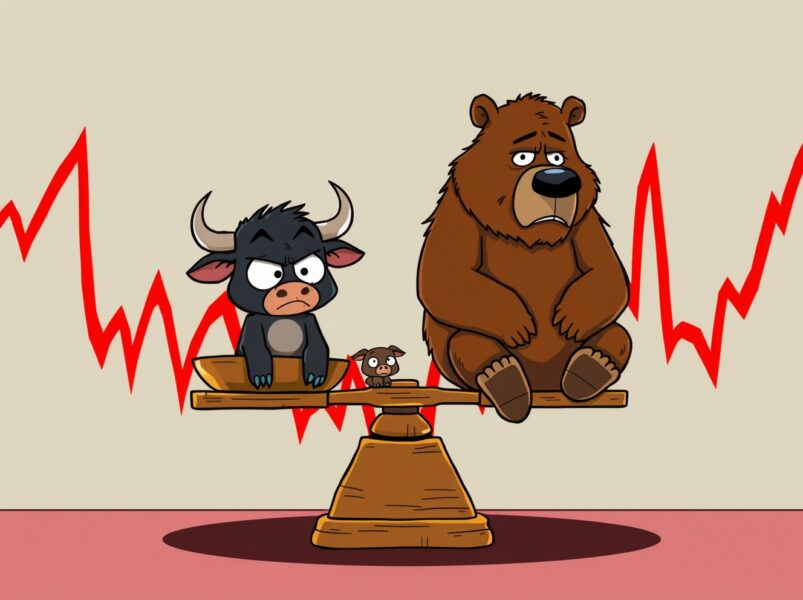
Global cryptocurrency markets remain gripped by profound anxiety as the widely monitored Crypto Fear & Greed Index registers a meager score of 11, firmly entrenched in its “Extreme Fear” classification for March 2025. This critical sentiment gauge, compiled by analytics firm Alternative, has inched up only three points from previous lows, reflecting a market landscape dominated by caution and risk aversion. The index’s stubborn position near the absolute bottom of its scale signals a period of significant psychological pressure on investors, often a precursor to volatile price action or potential long-term opportunity.
Decoding the Crypto Fear & Greed Index at 11
Analysts scrutinize the Crypto Fear & Greed Index as a crucial thermometer for market psychology. The index operates on a scale from 0 to 100, where 0 represents “Extreme Fear” and 100 signifies “Extreme Greed.” A reading of 11, therefore, sits just above the theoretical floor, indicating overwhelming negative sentiment. The calculation synthesizes data from six distinct market dimensions, each assigned a specific weight to create a composite picture. This methodology aims to quantify the often-intangible mood of the market.
The index’s components provide a structured breakdown of fear drivers. Firstly, market volatility and trading volume each contribute 25% to the final score. High volatility coupled with specific volume patterns typically pushes the score lower. Secondly, social media sentiment and market surveys each account for 15%, capturing the narrative and direct opinions of the crowd. Finally, Bitcoin dominance (10%) and Google Trends data (10%) round out the model, measuring Bitcoin’s market share relative to altcoins and public search interest, respectively.
Historical Context and Market Parallels
Understanding the gravity of an “Extreme Fear” reading requires historical perspective. The index has dipped into single-digit territory during several notable crypto winters and black swan events. For instance, the index recorded similarly depressed levels during the market capitulation following the LUNA/UST collapse in 2022 and the FTX exchange failure later that same year. Conversely, periods of “Extreme Greed,” with scores above 90, have often coincided with market tops and subsequent corrections.
This historical pattern suggests that sustained extreme fear can sometimes indicate a market bottom or a point of maximum pessimism, a concept popularized by legendary investor Sir John Templeton. However, analysts consistently warn that the index is a contrarian indicator and not a direct timing tool. A low score does not guarantee an immediate price rebound; it simply highlights a market environment where selling pressure may be exhausting itself and sentiment is overwhelmingly negative.
Expert Analysis on the Current Sentiment Drivers
Market strategists point to a confluence of factors sustaining the current climate of extreme fear. Macroeconomic headwinds, including persistent inflation concerns and hawkish central bank policies in major economies, continue to pressure risk assets globally. Within the crypto ecosystem, specific triggers include regulatory uncertainty in key jurisdictions, subdued institutional inflows compared to previous cycles, and a focus on network fundamentals over speculative narratives.
Furthermore, the behavior of Bitcoin dominance—a key 10% input in the index—offers additional insight. A rising dominance often signals a “flight to safety” within crypto, where capital retreats from higher-risk altcoins to Bitcoin, perceived as a more established store of value. This dynamic frequently occurs during fear-dominated periods and is reflected in the current index calculation. The subdued social media score further confirms a lack of bullish chatter and meme-driven euphoria that characterizes greed phases.
The Mechanics of Market Sentiment Measurement
The power of the Crypto Fear & Greed Index lies in its multi-factor approach. Relying on a single metric like price or volume provides an incomplete picture. By aggregating data from volatility, social buzz, and search trends, the index attempts to mimic how a seasoned trader might intuitively assess market mood. The following table illustrates the index’s component breakdown and their typical manifestation during an “Extreme Fear” phase like the current one.
| Component | Weight | Manifestation in “Extreme Fear” |
|---|---|---|
| Volatility | 25% | High, often with sharp downward price swings. |
| Market Volume | 25% | Can be elevated (panic selling) or depressed (lack of buyers). |
| Social Media | 15% | Negative sentiment, fear-driven narratives dominate. |
| Surveys | 15% | Polled investors express bearish outlooks. |
| Bitcoin Dominance | 10% | Often rising as capital flees altcoins. |
| Google Trends | 10% | Search interest may spike for “crypto crash” or decline for “buy crypto.” |
This quantitative framework helps demystify market psychology. It transforms subjective fear into an objective data point that investors can track over time. Consequently, many portfolio managers use the index not for making direct trades, but for adjusting their overall risk exposure and understanding the prevailing market regime.
Implications for Investors and the Ecosystem
Prolonged periods of extreme fear have tangible effects on the cryptocurrency landscape. For retail investors, the emotional toll can lead to panic selling at a loss or complete disengagement from the market. For developers and projects, funding environments may become more challenging, potentially slowing innovation but also separating serious builders from speculative ventures. On-chain data often shows reduced activity and increased accumulation by long-term holders during these phases.
From a strategic viewpoint, a low Crypto Fear & Greed Index reading presents a clear dichotomy. It undoubtedly signals high risk and potential for further downside. Simultaneously, for disciplined investors with a long-term horizon, it can highlight a zone for considered, dollar-cost-averaging entry points into fundamentally sound assets. The key differentiator is investment timeframe and risk tolerance. Short-term traders may see heightened danger, while long-term allocators might perceive undervaluation.
Navigating the “Extreme Fear” Environment
Seasoned market participants often advocate for a principles-based approach during sentiment extremes. Firstly, they emphasize conducting thorough fundamental research independent of market mood. Secondly, maintaining a clear risk-management strategy, including position sizing and stop-loss orders, becomes paramount. Thirdly, investors should avoid making decisions based solely on emotional reactions to fear-inducing headlines or social media posts.
Additionally, diversifying across asset classes and within the crypto sector itself can mitigate specific risks. Finally, treating the Crypto Fear & Greed Index as one of many tools in an analytical toolkit, rather than a standalone signal, provides a more balanced perspective. Historical data shows that markets can remain in fear or greed for extended periods, defying expectations for a quick reversal.
Conclusion
The Crypto Fear & Greed Index reading of 11 offers a stark, quantitative snapshot of a cryptocurrency market mired in “Extreme Fear.” This sentiment, driven by a mix of macroeconomic pressures and sector-specific concerns, is reflected across the index’s six measured components. While historically such depths of pessimism have sometimes preceded major market inflection points, they also represent periods of significant risk and volatility. For the ecosystem, navigating this phase will depend on fundamental resilience, regulatory clarity, and a shift in broader investor psychology. Monitoring the Crypto Fear & Greed Index provides valuable context, but ultimately, informed decision-making must rest on a foundation of robust research and disciplined strategy, irrespective of the prevailing fear or greed in the market.
FAQs
Q1: What does a Crypto Fear & Greed Index score of 11 mean?
A score of 11 indicates “Extreme Fear” in the market. It sits near the bottom of the 0-100 scale, suggesting investor sentiment is overwhelmingly negative, which is often associated with high volatility and risk aversion.
Q2: Who creates the Crypto Fear & Greed Index and how is it calculated?
The index is compiled by the analytics platform Alternative. It uses a weighted formula based on six factors: volatility (25%), market volume (25%), social media (15%), surveys (15%), Bitcoin dominance (10%), and Google Trends data (10%).
Q3: Is an “Extreme Fear” reading a good time to buy cryptocurrency?
While extreme fear can signal a potential market bottom and opportunity for long-term investors, it is not a timing signal. Markets can remain fearful for extended periods. It should be considered alongside fundamental analysis and personal risk tolerance, not as a standalone buy signal.
Q4: How often does the Crypto Fear & Greed Index update?
The index updates daily, providing a near real-time gauge of market sentiment based on the previous 24 hours of data from its various source components.
Q5: Has the index been this low before, and what happened afterwards?
Yes, the index has reached similar or lower levels during past major market downturns, such as in 2018 and 2022. Historically, these periods were followed by eventual recoveries, but the timing and path were unpredictable and often involved significant further volatility before a sustained upward trend began.
This post Crypto Fear & Greed Index Plummets to 11: Navigating the ‘Extreme Fear’ Abyss first appeared on BitcoinWorld.
0
0

 Manage all your crypto, NFT and DeFi from one place
Securely connect the portfolio you’re using to start.


