
How Metaverse Land Crash Wipes Out 99% of NFT Property Values

0
0
This article was first published on The Bit Journal.
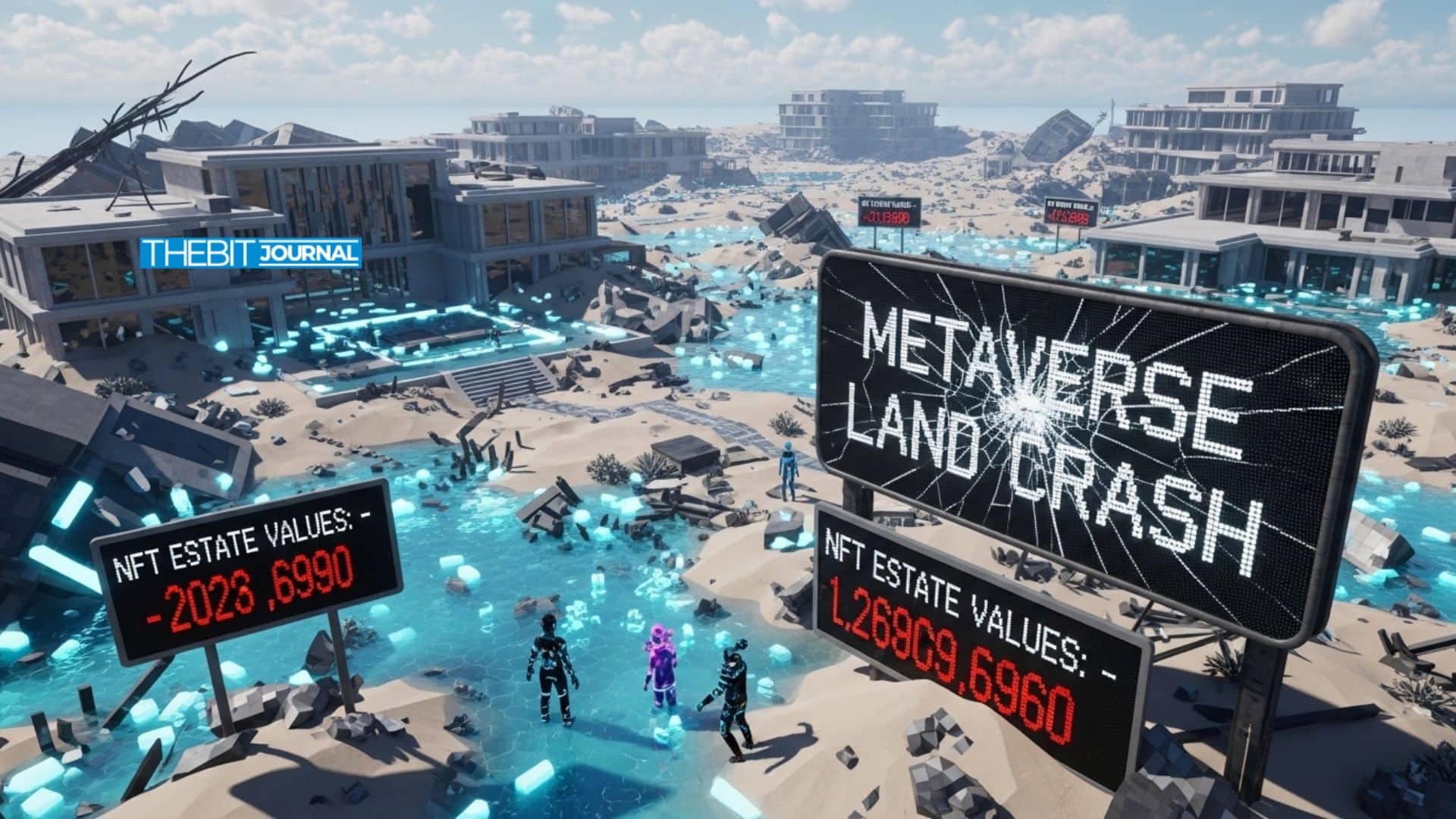
The current metaverse land crash is leading one of crypto’s biggest 2021 record into its clearest reversal. During the boom, digital land on platforms such The Sandbox and Decentraland was hot property, more like prime real estate. Investors spent millions betting that virtual destinations would become bustling digital cities.
However, that assumption has not held. As of 2026, those same assets are now valued in the four- and five-digit range, with many high-profile purchases down between 97% and close to 100%. Meanwhile, the wider NFT market still continues to function but at much lower price points.
From Peak Hype To 72% Average Drawdown In The Market
Data from CoinGecko confirms the metaverse land crash. Average metaverse land prices had already plunged 72% from peak values by mid-2024; with deterioration readily apparent across the major ecosystems.
Some individual platforms even experienced deeper drawdowns:
The Sandbox: down 95%
Decentraland: down 89%
Otherside (Otherdeed): down 85%
These numbers indicate that the drop is not just limited to one-off projects, it cuts across the category. What was once traded as rare digital real estate is now valued more like speculative optionality.
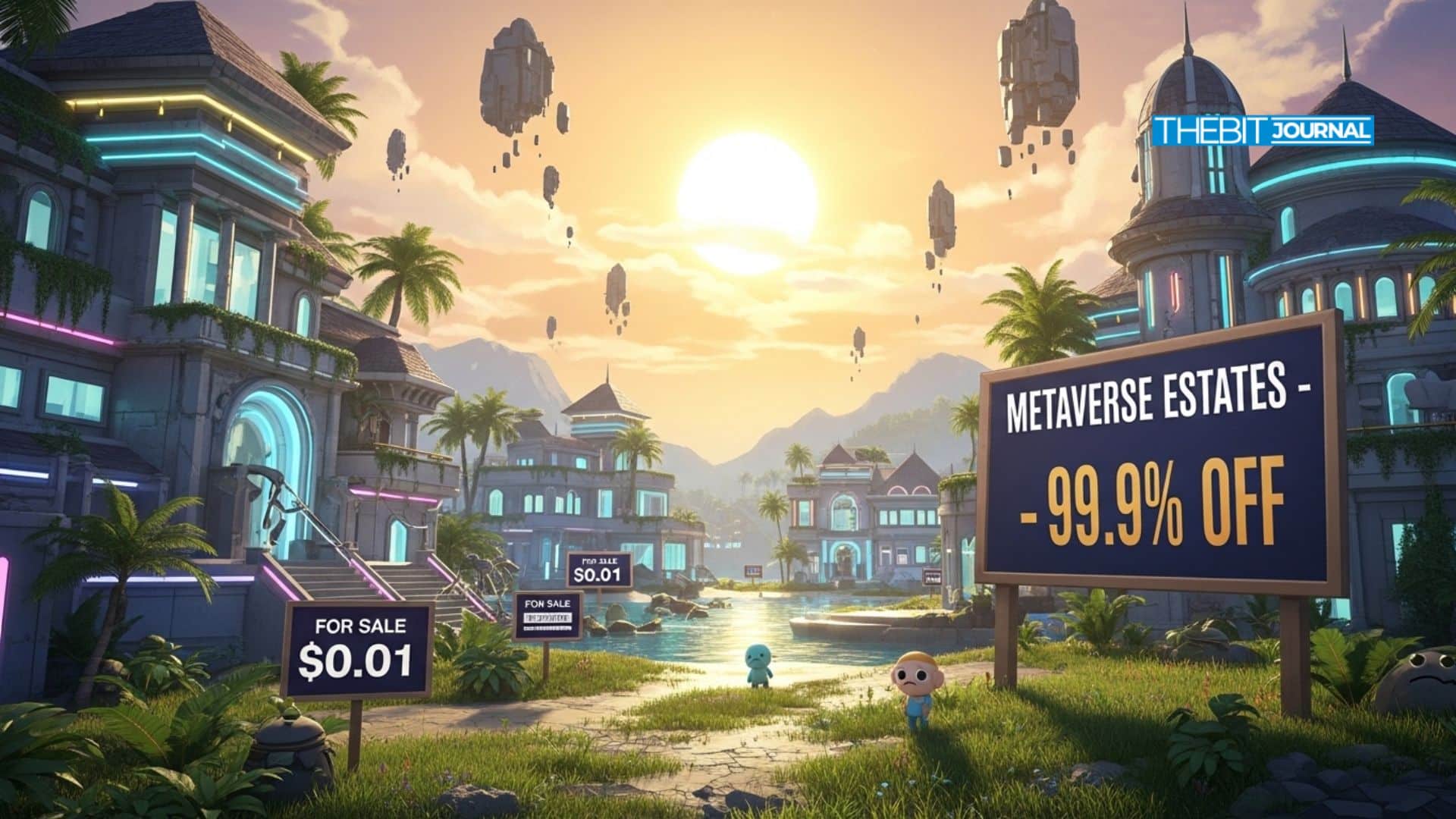
Trophy Deals Crash by 99.8%
The most vivid evidence to the metaverse land crash comes from high-profile transactions that defined the boom.
In December 2021; a nine-parcel Snoopverse estate in The Sandbox sold for roughly $450,000 (71,000 SAND). Today, that same estate is valued at approximately $1,025; a 99.8% decrease.
In Decentraland; a 116-parcel Fashion District estate that sold for $2.4 million is now worth about $8,929, a drop of 99.6%.
A separate Decentraland transaction of 259 parcels purchased for $913,228 now amounts to about $19,935, a drop of 97.8%.
A mega 576-parcel Sandbox estate (24×24 grid) that was acquired for $4.3 million; is now trading around $65,583, a drop of 98.5%.
Even single NFTs exhibited this pattern. At its peak, Otherdeed # 24 sold for 333 ETH (almost $1 million) in May 2022, according to DappRadar, but the floor price today is around $167; meaning almost total loss of value.
These examples serve as reminders of how quickly premium pricing tied to a celebrity, brand and even location; evaporates.
The NFT Market Didn’t Die; It Became Cheaper
In 2021, the NFT market hit $25.8 billion in trading volume, and even January 2022 alone saw at least $16 billion in sales, before wash trading adjustments. That level has not returned.
NFT trading volume fell 45% quarter-over-quarter to $867 million by Q2 2025, even as sales were up 78%, at 14.9 million transactions. The market saw $1.6 billion in volume across 18.1 million sales in Q3 2025, showing that activity continued although at significantly lower price points.
October 2025 put up one more signal, with $546M monthly volume and 10.1 million sales, both peak transaction counts of the year.
As it stands now, it can be argued that NFT trading didn’t go away; but buyers are paying much less per asset.
Blue-Chip NFTs and Lending Markets? They Also Crashed
The repricing happening in the metaverse land crash is reaching beyond just land. Even premier collections such as Bored Ape Yacht Club experienced sharp drops.
BAYC now sits at roughly 5.22 ETH (approximately $11,410); compared to an all-time high floor of 153.7 ETH (roughly $420,430). That is a fall of 96.6% in ETH and also a 97.3% drop in dollars.
The financing layer that used to prop up high valuations has dried up too. According to DappRadar data, the NFT lending volume, has dropped 97%, from almost $1 billion in January 2024 to barely over USD 50 million in May 2025
Borrowers dropped 90%; Lenders declined 78%; Average loan sizes declined from $22,000 (2022 peak) to around $4,000
With easy credit gone, the ability to maintain high-end NFT prices including metaverse land has effectively vanished.
New Market: Less Speculation, More Utility and Lower Prices
As of 2025, new categories of NFT found their way to prominence. Volume of RWAs NFTs increased by 29%, NFTs without gaming and utility found less consistent demand; Metaverse land, which relied heavily on narrative value, meanwhile, struggled to sustain interest.
Even when there are short-term rebounds, those rebounds come off of very low bases. Over the past 60 days, data shows gains across all major platforms: Sandbox: +153.9%; Decentraland: +95.5%; Otherside: +12.8%; Voxels: +41.8%.
However, these increases hardly make an impact against losses of 98% to almost 100% from peak valuations.
Conclusion
The crash in metaverse land is not a temporary pullback but a total repricing of the category.
The once high-profile deals which represented digital scarcity are now valued in a fraction of their original prices. NFT trading proceeds, but at vastly reduced price levels, and with far less leverage that once supported premium valuations.
Even as the wider NFT market adjusts, metaverse land remains one of the most badly punished sections because its value relied so much on optimism that never came to fruition.
Meaningful price recovery would require real user activity, sustained brand participation and consistent economic use cases in the market, not speculative demand.
Until that time, the existing market is shows that digital land is being valued for what it is today, not what it was once hoped to become.
Glossary
Metaverse Land: These are virtual plots of land that are sold as NFTs in metaverses.
Floor Price: The lowest asking price on an asset in a collection
NFT Lending: Borrowing against NFTs as collateral.
RWA NFTs: NFTs that encapsulate real-world assets, such as properties or financial vehicles.
Wash Trading: Inflating volume with artificial trading.
Frequently Asked Questions About Metaverse Land Crash
Why did metaverse land crash?
Due to speculation-driven demand dried up and actual use failed to keep pace.
Are NFTs still being traded?
Yes, activity is strong, but prices are far lower.
How much did prices fall?
The values of numerous metaverse land holdings fell by 95% to almost 100%.
Has the NFT market crashed completely?
No, it moved towards lower-priced assets and higher transaction volumes.
Can metaverse land recover?
If only genuine usage, user activity and economic value go up significantly.
References
Read More: How Metaverse Land Crash Wipes Out 99% of NFT Property Values">How Metaverse Land Crash Wipes Out 99% of NFT Property Values
0
0


 Manage all your crypto, NFT and DeFi from one place
Securely connect the portfolio you’re using to start.


0
0

