
Gear Up for the Fed’s ‘Gradual Print’ Strategy

0
0
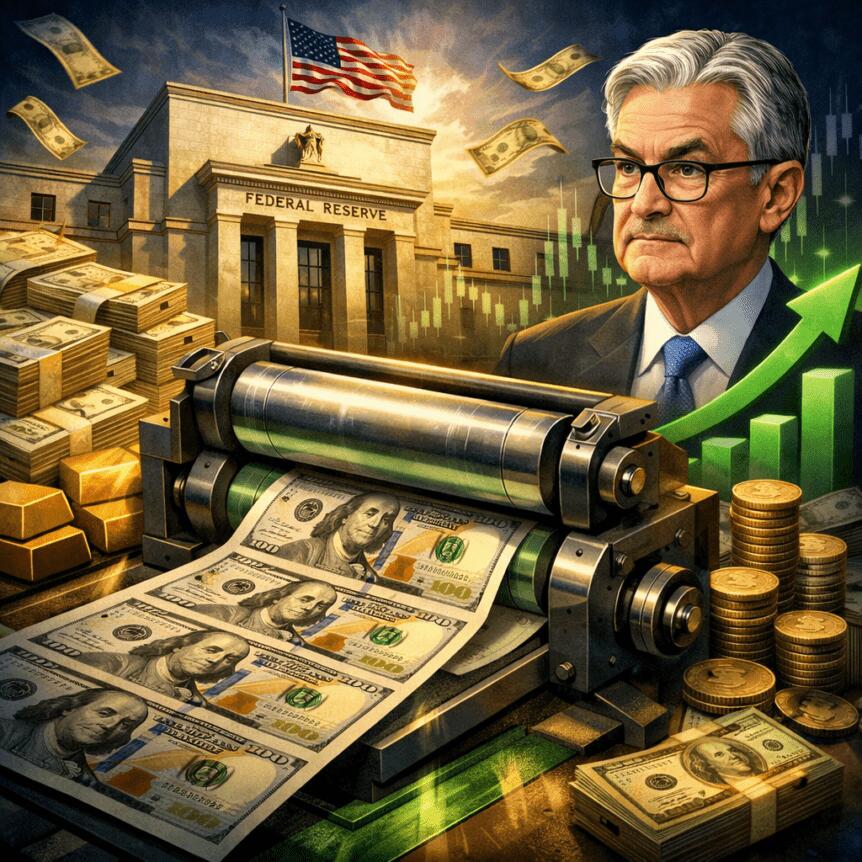
As the Federal Reserve navigates a gradual path of monetary expansion, investors increasingly view crypto markets through a macro lens. In a view echoed by Lyn Alden, a respected economist and Bitcoin advocate, the current regime is likely to spur asset prices in a measured way—enough to lift high-quality assets while avoiding the explosive rallies some on-chain enthusiasts once forecast. Alden argues the Fed’s balance sheet will grow roughly in proportion to nominal GDP, a framework that, she contends, supports a cautious reallocation toward scarce, resilient assets and away from crowded speculative bets. In this environment, Bitcoin (CRYPTO: BTC) remains a focal point for traders weighing how policy will ripple through liquidity and risk appetite.
The strategist’s stance sits against a backdrop of political and regulatory uncertainty shaping the Fed’s next moves. Alden’s February 2026 investment strategy newsletter suggests a continued emphasis on “high-quality scarce assets,” coupled with a strategic rebalance away from euphoric sectors toward areas that are under-owned but structurally robust. The broader context includes the ongoing debate about who will lead the Fed next, with market participants parsing how a potential chairmanship—whether Kevin Warsh or another figure—might tilt policy toward hawkish or dovish tendencies. The macro narrative is essential for crypto traders because interest-rate trajectories and liquidity cycles are historically linked to crypto price dynamics.
Historically, market outcomes hinge on the direction of credit and money supply. When policymakers expand credit by increasing the money supply, many assets—crypto included—tend to benefit in the near term. Conversely, a contractionist stance manifested through higher rates can dampen risk assets and compress prices. This duality informs current expectations: central banks have signaled a cautious, data-dependent approach, but investors remain vigilant for any signs that the balance sheet will outpace or merely keep pace with monitored economic growth. In late 2025, Powell pointed to a nuanced policy path, describing inflation and employment risks as two sides of a balancing act, and underscoring that policy carries no risk-free shortcut.
“Interest rate policy can influence crypto prices,” an established principle that investors continuously test. The flow of credit and the liquidity environment shape risk sentiment, and crypto markets—while diverse—are not insulated from such macro moves. The relationship between liquidity provision and asset prices remains central to how traders structure portfolios in the months ahead. Earlier this year, crypto observers noted how shifts in policy expectations could reprice risk, particularly for assets that benefited from prior rounds of monetary stimulus. A related analysis outlined how lingering policy ambiguity—especially around rate paths and balance-sheet expansion—can sustain volatility in the space.
Market observers have been tracking forward guidance and rate-path probabilities with particular attention to the upcoming FOMC decision window. Early signals suggested that a March rate cut was no sure thing, with traders estimating a roughly 20% probability of a cut at the next meeting, down from a prior reading near 23%. This shift reflects a broader re-pricing of risk as investors weigh the possibility that the Fed may remain cautious about inflation momentum and labor-market dynamics. The CME FedWatch tool has become a barometer for these expectations, showing a move toward pricing in steadier policy rather than aggressive easing.
At the same time, the policy backdrop remains unsettled. Powell, who leads the Federal Reserve, has faced questions about the speed and scale of future rate adjustments. Following the December FOMC meeting, he acknowledged that inflation risks appeared skewed to the upside in the near term, even as employment remained robust. With Powell’s term set to expire and Warsh’s confirmation still awaited by the Senate, investors must factor in the possibility that the committee’s consensus could shift as new data arrives. In such an environment, crypto traders increasingly view Bitcoin not merely as a speculative asset but as a potential hedge or cycle-levered instrument whose performance is tied to macro liquidity dynamics and the policy stance around money creation.
In the broader conversation about how policy affects asset prices, several interconnected themes emerge. First, the pace of balance-sheet expansion remains a critical variable; if the Fed continues to grow the monetary base in step with nominal GDP, the implication could be a gradual upward drift in risk assets, including crypto. Second, the market’s sensitivity to the chair’s temperament and the committee’s tightening or easing cadence means that any signals about policy discipline, inflation expectations, or financial-stability concerns can translate into intensified price movements across digital assets. Finally, the crypto space continues to wrestle with regulatory clarity and institution-building, which amplifies the impact of macro shifts on liquidity and diversification choices for investors.
Key takeaways
- The Fed is anticipated to maintain a gradual expansion of its balance sheet, aiming to grow in proportion to nominal GDP, a framework that could support broad asset prices without triggering extreme liquidity surges.
- Lyn Alden cautions that investors should rebalance away from euphoric sectors toward high-quality scarce assets, signaling a selective, value-oriented strategy for crypto holders.
- Market pricing for a March rate cut sits around 20%, down from prior levels, reflecting uncertainty about how inflation and employment data will unfold in the near term.
- Policy uncertainty, including the potential shift in leadership at the Fed, adds a layer of risk to crypto liquidity and risk sentiment in 2026.
- Crypto-price respond to money-supply signals, making Bitcoin a barometer for macro liquidity and policy expectations in the current cycle.
Tickers mentioned: $BTC
Market context: The macro backdrop remains characterized by ongoing liquidity considerations, policy guidance, and the broader risk-on/risk-off dynamic that has been shaping crypto markets as investors reassess long-term growth prospects and the trajectory of central-bank balance sheets.
Sentiment: Neutral
Price impact: Neutral. The policy path is seen as supportive for risk assets in a gradual way, but expectations for aggressive liquidity expansion have cooled, keeping volatility in check but not eliminating it.
Why it matters
For investors, the evolving policy framework matters because it defines the liquidity environment in which crypto markets operate. If the Fed sustains a measured expansion of its balance sheet alongside steady GDP growth, high-quality assets—often those with scarce supply or strong fundamentals—could outperform in a backdrop of resilient demand. Bitcoin, as the most mature cryptocurrency with significant liquidity and institutional interest, often reacts to shifts in money supply and policy expectations. The current outlook suggests a world where disciplined, data-driven decisions—rather than rapid-fire stimulus—could guide asset price trajectories, with crypto portfolios needing to adapt to changing risk premia and macro signals.
Builders and developers in the crypto space may also take cues from this macro environment. A more predictable policy path could reduce some downside macro risk, enabling longer-term experimentation and product development in decentralized finance, layer-1 ecosystems, and institutional-grade custody and liquidity solutions. Yet, the absence of a clear, easing-driven bull case could maintain a careful stance among investors who prize resilience and yield stability over speculative exuberance. In this setting, projects with robust on-chain economics, real-world utility, and sustainable governance could attract more durable capital, while speculative plays may experience more episodic volatility as market probabilities shift.
From a regulatory and institutional perspective, the interplay between central-bank signaling and crypto-market liquidity remains a focal point. If policymakers continue to emphasize cautious growth and gradual easing, the path of least friction for crypto institutions could involve deeper integration with traditional financial rails, enhanced risk controls, and clearer frameworks for custody, settlement, and reporting. The story remains dynamic, with policy, macro data, and market sentiment converging to shape the next phase of crypto adoption and price discovery.
What to watch next
- March FOMC outcome and the probability of a rate move, as reflected by CME FedWatch.
- Any new signals from the Fed about the pace of balance-sheet expansion and its relationship to nominal GDP growth.
- Nominal GDP growth data and inflation readings that could influence the committee’s guidance.
- Status of Kevin Warsh’s confirmation as Fed Chair and how leadership could influence policy tilt.
- Bitcoin price action in response to macro liquidity shifts and any notable shifts in institutional participation.
Sources & verification
- Lyn Alden’s February 2026 investment strategy newsletter (link to the original newsletter).
- Federal Reserve policy commentary and remarks by Chair Jerome Powell, including December FOMC statements.
- Market expectations for rates compiled by CME Group’s FedWatch tool.
- Related analyses on the impact of fed interest rates on crypto holders and investor sentiment pieces.
Fed policy signals, Alden’s outlook, and Bitcoin posture
Bitcoin (CRYPTO: BTC) sits at an intersection of macro policy and crypto market dynamics. Alden’s framework—favoring high-quality scarce assets and a measured reallocation away from speculative corners—suggests a patient, risk-aware stance for crypto investors. The notion that the Fed will pursue balance-sheet growth in line with nominal GDP implies a lingering but controlled liquidity environment, one that can support gradual asset price appreciation without igniting runaway inflation fears. In this context, BTC may benefit more from a steady money-supply backdrop than from sudden, outsized stimulus, aligning with a broader market preference for resilience and fundamentals. Readers can monitor the evolving policy narrative through linked discussions on Bitcoin’s price movements and broader crypto-market responses to rate expectations.
Powell’s cautionary framing—emphasizing no risk-free path for policy—highlights the asymmetry in policy outcomes. As the Senate weighs Warsh’s nomination, investors must weigh the likelihood of a hawkish tilt against the potential for cooler inflation readings later in the year. This balance matters for crypto liquidity, as a more cautious stance could prompt a shift in risk appetite, favoring assets with clearer on-chain utility and governance structures over more speculative bets. Taken together, the macro backdrop underscores the need for disciplined positioning, selective exposure, and ongoing scrutiny of liquidity signals as crypto traders navigate a landscape defined by gradual monetary expansion rather than rapid-fire stimulus.
This article was originally published as Gear Up for the Fed’s ‘Gradual Print’ Strategy on Crypto Breaking News – your trusted source for crypto news, Bitcoin news, and blockchain updates.
0
0

 Manage all your crypto, NFT and DeFi from one place
Securely connect the portfolio you’re using to start.

0
0

0
0


0
0