
Hedera Developer Highlights January 2026
1
0
By Michiel Mulders

Hi there,
This is Michiel from Hashgraph, bringing you the January developer highlights.
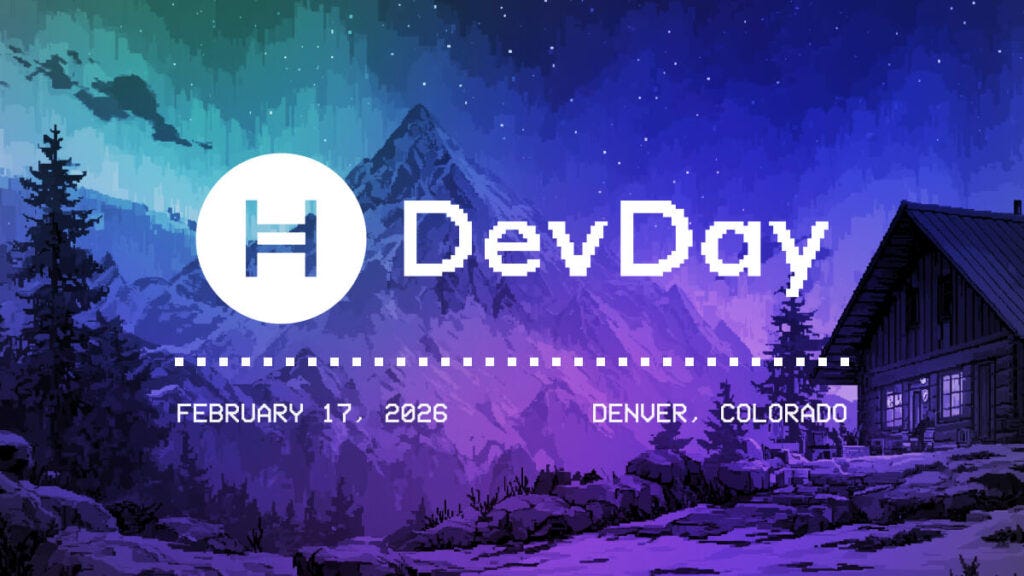
First, we’re excited to announce that Hedera DevDay will take place in Denver on February 17, 2026. This Hedera-focused event is designed specifically for our developer community and will be held alongside ETHDenver.
Be sure to also register for the final chapter of our hackathon series, Hedera Hello Future: Apex.
This edition features important protocol upgrades, including more precise smart contract throttling and high-volume entity creation. You’ll also find highlights from recent community calls and livestreams, plus a roundup of the latest HIPs shaping what’s next for Hedera. Let’s dive in!
- 01.05.26 — Join us at Hedera DevDay!
- 01.09.26 — Registrations Open for Hello Future Apex Hackathon
- 01.15.26—Final Reminder: Deprecation of Alpha State Proofs (ASP) on Hedera
Featured Media
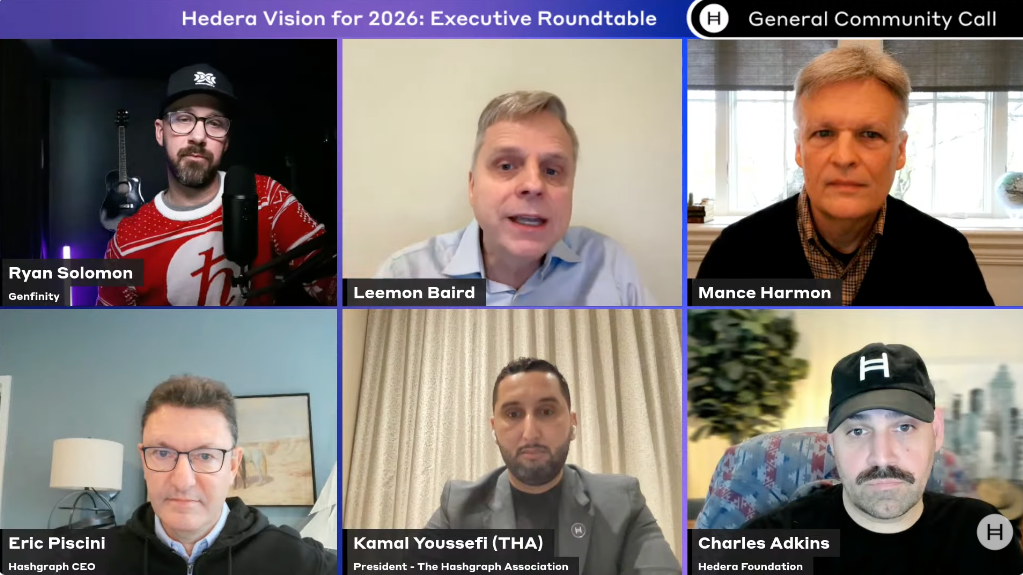
2025 End-of-Year Community Call
The End-of-Year Community Call brought together leaders, engineers, and ecosystem partners to reflect on a milestone year for Hedera and to look ahead to what’s coming next. The discussion covered progress across enterprise adoption, developer tooling, governance, and real-world use cases.
Developer Resources
Introducing the Python SDK for the Hedera Agent Kit
The Python SDK for the Hedera Agent Kit is now available, bringing AI-native developers an easy way to build agents that interact directly with Hedera. Python developers can utilize familiar frameworks like LangChain to create agents that manage accounts, tokens, smart contracts, and on-chain messaging, enabling crypto payments and microtransactions. With a modular plugin architecture and support for multiple AI providers, the SDK lowers the barrier to building AI-based blockchain applications on Hedera.

How to Fork the Hedera Network
Forking the Hedera network allows you to run smart contracts locally while interacting with real network state. It’s a powerful way to debug and iterate faster, without repeatedly deploying to testnet or mainnet.
- Hardhat (Part 1): Fork Hedera with a basic ERC-20 contract
- Hardhat (Part 2): Advanced HTS contract on a forked network
- Foundry: Fork Hedera with a basic ERC-20 using Foundry
Featured Community Projects
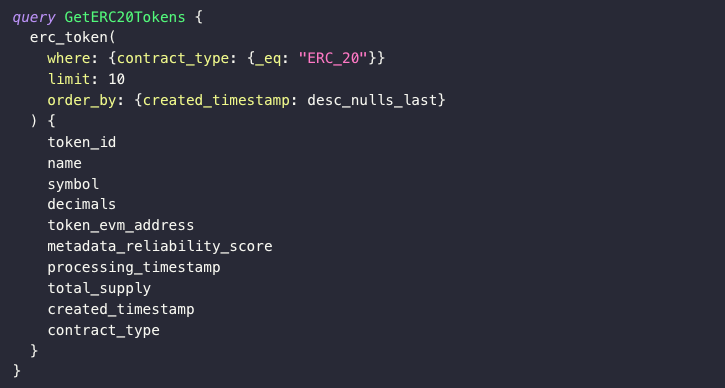
Announcing Hgraph’s ERC Token Data Indexer for Hedera
Hgraph just launched a new ERC token data indexer for Hedera, bringing ERC token analytics to a single, familiar real-time GraphQL endpoint. Developers can query token metadata, balances, transfer history, and NFT ownership without stitching logs or juggling multiple endpoints. It supports pure ERC-20, ERC-721, and ERC-1400 contracts deployed on Hedera’s EVM.
Hedera Improvement Proposals
HIP-1313: High-Volume Entity Creation
This HIP introduces high-volume throttles on the Hiero, allowing developers to create entities (like accounts or tokens) at much higher rates during busy periods. Developers can opt in with a simple transaction flag and pay a variable fee that increases with network usage, while standard throttles and fixed pricing remain unchanged for everyone else. The two systems run in parallel, ensuring regular users are unaffected. Pricing is predictable, capped, and governed by the network, with fairness preserved through normal transaction ordering.
HIP-1340: EOA Code Delegation
HIP-1340 EOA Code Delegation brings Ethereum’s Pectra-era account model to Hedera. It allows regular accounts (EOAs) to delegate execution to smart contract code, enabling more powerful, flexible account behavior while staying compatible with Ethereum tools and wallets. Developers can opt in to using either Ethereum-style transactions or native Hedera transactions, with no changes required to existing apps. Overall, this unlocks new design patterns while maintaining user control, fairness, and network security.

HIP-1261: Simple Fees
HIP-1261 proposes a clear, predictable fee model for Hedera: every transaction is “base fee + extras” (bytes, signatures, keys, gas, etc.), split into node, network, and service components. Fees are defined once in a deterministic JSON schedule (in USD tinycents) that tools and mirror nodes can reproduce exactly. The HIP standardizes how unreadable, invalid, unhandled, and bad transactions are charged, and supports congestion pricing.
HIP-1195: Hiero hooks and an application to allowances
HIP-1195 introduces hooks, which are programmable extension points on the Hiero network that enable users to attach custom logic (written as EVM contracts or lambdas) to native entities, such as accounts or tokens. As a first use case, it enables allowance hooks on accounts: when a transfer is attempted, the hook executes with context and can dynamically approve or reject the transfer.
Developer Events
Stay informed about upcoming Hedera developer events with our public events calendar at hedera.com/events.

Join the Hedera community!
Hedera Developer Highlights January 2026 was originally published in Hedera Blog on Medium, where people are continuing the conversation by highlighting and responding to this story.
1
0

 Manage all your crypto, NFT and DeFi from one place
Securely connect the portfolio you’re using to start.
