
Tokenization Decentralizes Value and Blurs the Line Between Old and New Markets

0
0
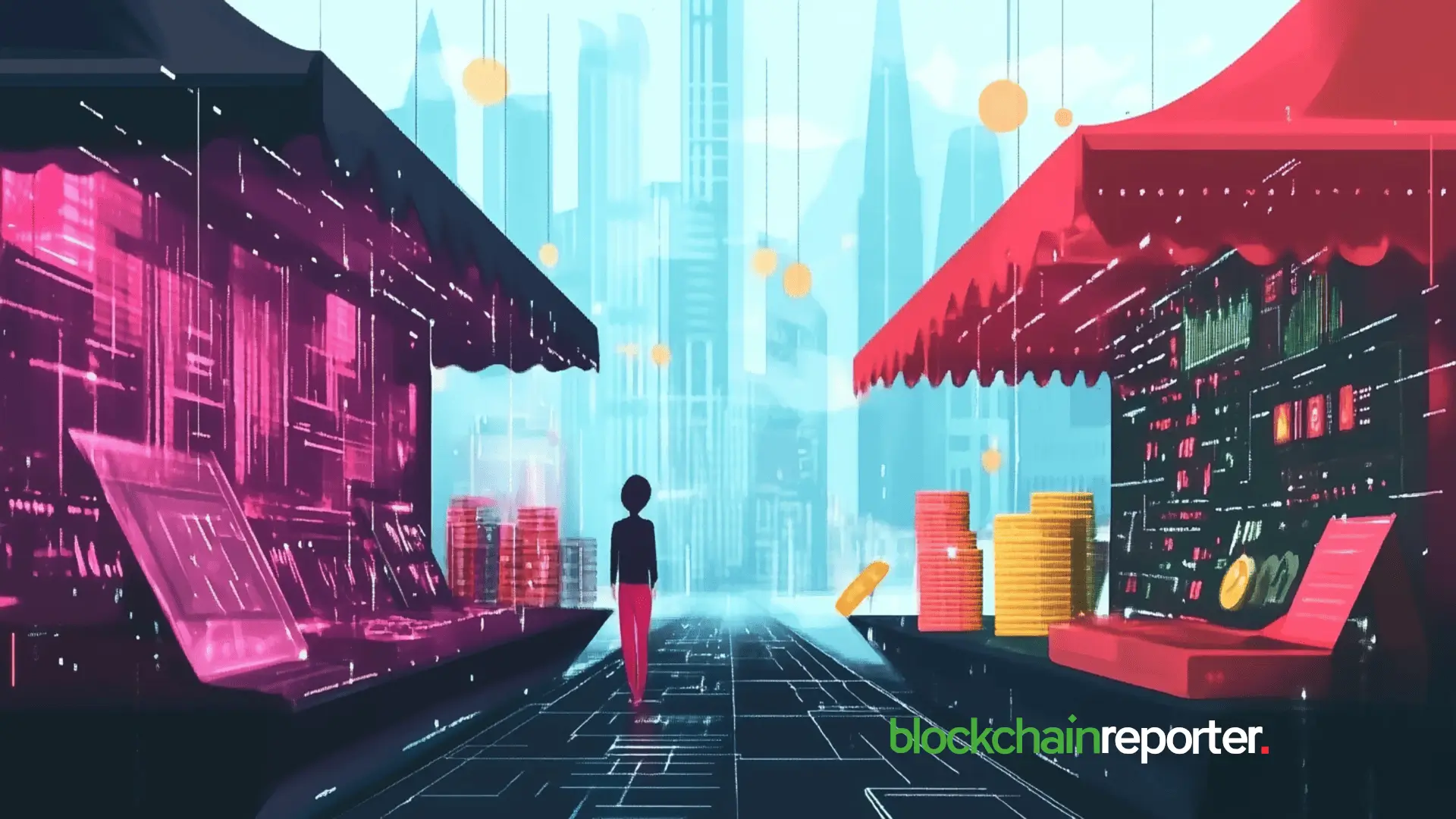
Crypto exchange Kraken unveiled a platform that allows retail investors to purchase tokenized versions of leading US equities, and Robinhood rolled out tokenized stocks to select international users last week. The assets can be exchanged around the clock on a blockchain with a global reach and almost immediate settlement, rather than trading through traditional clearinghouses where settlement occurs two business days after the trade date.
Tokenized stocks take volume away from traditional exchanges
Robinhood’s tokenization of stocks on Robinhood Chain, an Ethereum-compatible L2 blockchain on Arbitrum Orbit, is expected to shift trading volume away from traditional exchanges, undermining their core earnings from market data and trading fees. A new token engine running on Robinhood Chain will provide tokenized derivatives of users’ assets, allowing for interaction with decentralized applications or self-custody of these tokens.
Robinhood will mint token “wrappers” connected to real stocks that a US broker-dealer custodies and offer 24/5 trading, with 24/7 trading to follow soon.
The advent of tokenized art and its implications for art investments
Tokenized art is likewise expected to take away from traditional dealers’ share. The recent surge in tokenized art sales reflects the growing acceptance and adoption of blockchain technology among investors, collectors, and artists, as well as its disruptive role. Among the pioneers in this direction is Gleec, an ecosystem of centralized and decentralized exchanges, integrated blockchain infrastructure, crypto cards, and banking solutions.
Gleec’s secure and licensed infrastructure powers innovative projects like Raphael Coin (RAPH), launched in early 2025 with the mission to democratize fine art ownership. RAPH enables public access and fractional ownership of “Recto: Study for the Battle of the Milvian Bridge,” a recently rediscovered and authenticated masterpiece by Renaissance artist Raphael. RAPH token holders benefit from transparent ownership through blockchain technology and secure custody of Raphael’s physical drawing.
Apart from giving ordinary people a stake in culturally significant fine art, Gleec guarantees comprehensive regulatory compliance across multiple jurisdictions and is expanding to the UK and the US.
The benefits of tokenization over traditional art investments
Fractional ownership enhances liquidity by allowing smaller investors to buy and trade shares of an asset that is otherwise too expensive for them to acquire or that may have been previously unavailable. A decentralized ledger records all transactions, which renders them transparent, secure, and auditable. This increases confidence and trust in the asset while reducing the risk of fraudulent activity.
Assets are divided into smaller parts that investors own and trade independently, which increases flexibility in asset ownership and management and enables the creation of new investment products. Investors gain exposure to a broader range of asset classes and diversify their portfolios by tokenizing traditional assets.
Tokenized assets are easier to trade on exchanges than non-tokenized ones, thereby increasing liquidity, which is precisely what is lacking in traditional art investments. An investor who wants to resell a painting or a sculpture won’t get their money back as quickly or as easily as they would with assets in another form. The returns depend on the recognition of the artist, the appreciation of their work, and the prevailing market conditions for art at that given point in time.
Smaller investors face high barriers to entry to the traditional art market. Everyone’s connected, and gaining access to lucrative investments can be all about who you know, not your interest or even your art expertise. Auction houses traditionally act as intermediaries between the public and art owners, establishing the provenance and authenticity of artworks. However, the blockchain can also achieve this, and tokenization eliminates the often excessive commissions of intermediaries.
Apart from the high costs and fees, the art market struggles with the prevalence of counterfeits and a higher-than-average risk of asset loss or destruction. An artwork may appreciate if one plans on holding it for a long time, but there’s no guarantee. You could still spend a significant amount of money and be disappointed with the returns. The costs of storage, handling, insurance, and marketing are quite high, and you have to pay for maintenance and restoration in some cases.
Weakening safeguards and a lack of regulations challenge tokenization
There is a fine line between democratizing access to valuable assets and weakening safeguards. One of Robinhood’s tokenized offerings is “OpenAI tokens,” on which note OpenAI posted on X that the tokens weren’t OpenAI equity and OpenAI didn’t endorse the offering. OpenAI is a private, non-listed company that only sells shares to select investors, and any transfer of its equity requires its approval.
Lack of regulations remains an issue, but regulatory momentum is gathering in some jurisdictions. On June 24, Republican senators introduced a set of principles as a framework for developing US legislation for digital assets and cryptocurrency markets. Banks are considering blockchains as public infrastructure that they can rely on, and a federal framework will increase trust in the corresponding ecosystems.
A disappearing divide
Ultimately, the boundaries between traditional and decentralized finance are artificial and may dissolve more quickly than many anticipate, a process driven by enhanced infrastructure and an increasing willingness to collaborate. A decade ago, JPMorgan (now working on a new service to tokenize carbon credits) built its private blockchain due to the lack of suitable solutions, but that’s no longer the case. Investors will continue deploying capital into tokenized assets due to maturing blockchain infrastructure and increased regulatory clarity.
In a report published in collaboration with Boston Consulting Group, Ripple predicts the tokenization of real-world assets will increase from around $600 billion to $18.9 trillion between 2025 and 2033, representing a CAGR of 53%. Programmable yield products and whitelisted liquidity pools will attract investors seeking dynamic yet controlled markets, and 2025 is expected to be crucial for scaling adoption. These processes are underway, and crypto-native platforms’ first-mover advantage in agility, modular tools, and technical expertise will differentiate them and complement TradFi’s regulatory knowledge and scale.
0
0

 Manage all your crypto, NFT and DeFi from one place
Securely connect the portfolio you’re using to start.

0
0

0
0

0
0

0
0