
Dollar Bearish Bets Hit 14-Year High: What It Means for Crypto Markets

0
0
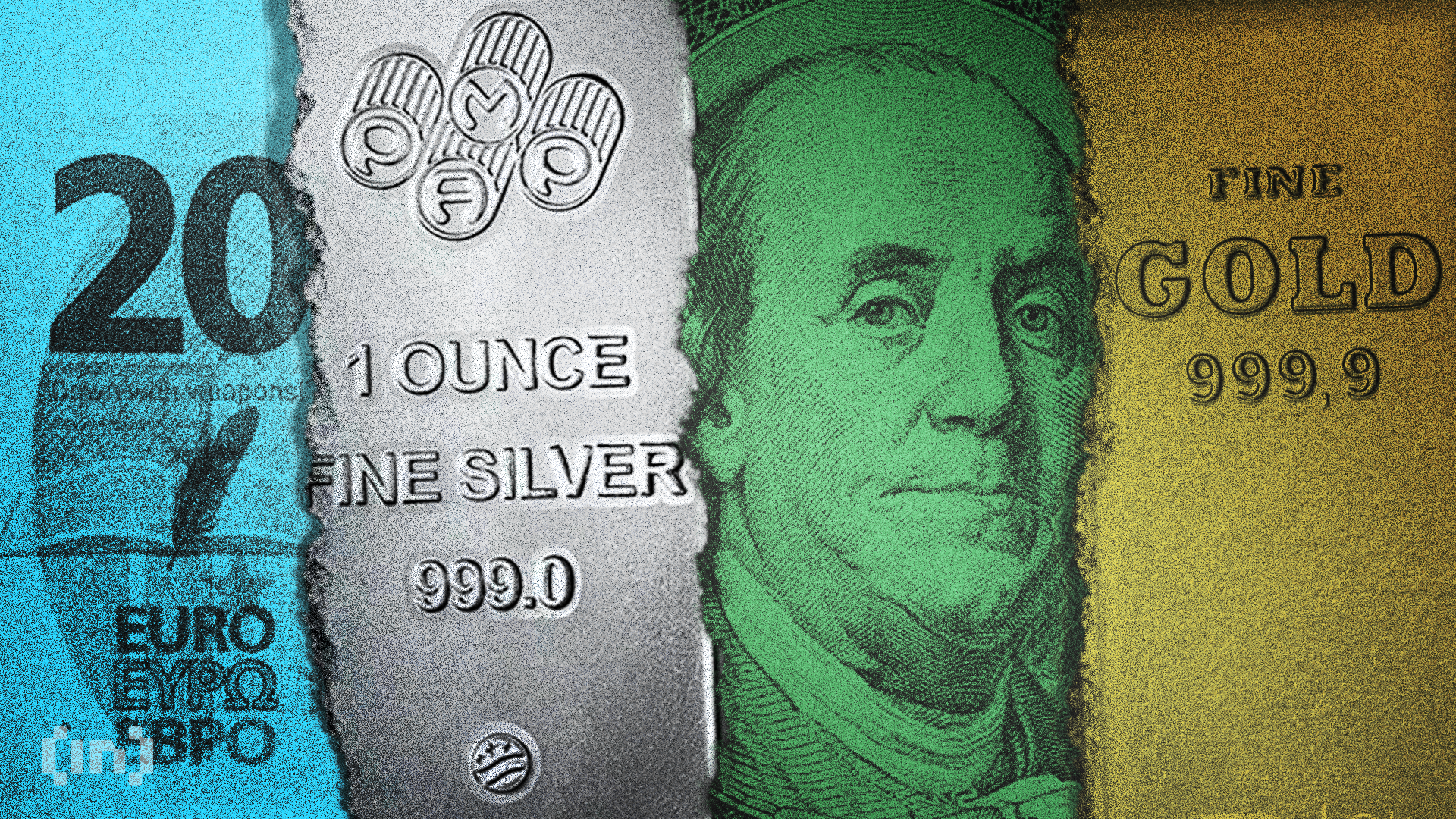
The market is increasingly turning against the US dollar, with short positions at their highest level since January 2012, according to Bank of America’s foreign exchange and rates sentiment survey.
This shift in sentiment comes as the US Dollar Index, which tracks the value of the greenback against a weighted basket of six major currencies, has declined 1.3% year to date.
Record Bearish Positioning Reflects Deep Skepticism About the Dollar
The latest Bank of America survey finds dollar positioning in February reached its most negative level in more than 14 years. Moreover, overall dollar exposure has fallen below the lows of April 2025, signaling continued loss of confidence among fund managers.
Despite efforts to restore confidence in the Federal Reserve, skepticism remains. President Trump’s January 2026 nomination of Kevin Warsh as Fed Chair aimed to reassure investors in US monetary policy. Nevertheless, this move has not lifted dollar demand.
“Survey respondents see further signs of US labor market weakness as the main risk for a lower dollar,” WSJ reported.
Meanwhile, the bearish sentiment comes amid a substantial slide in the US Dollar Index. In 2025, the index fell 9.4%, with declines continuing this year.
On January 27, DXY fell to 95.5, its lowest level since February 2022. At the time of writing, DXY recovered to reach 97.08.
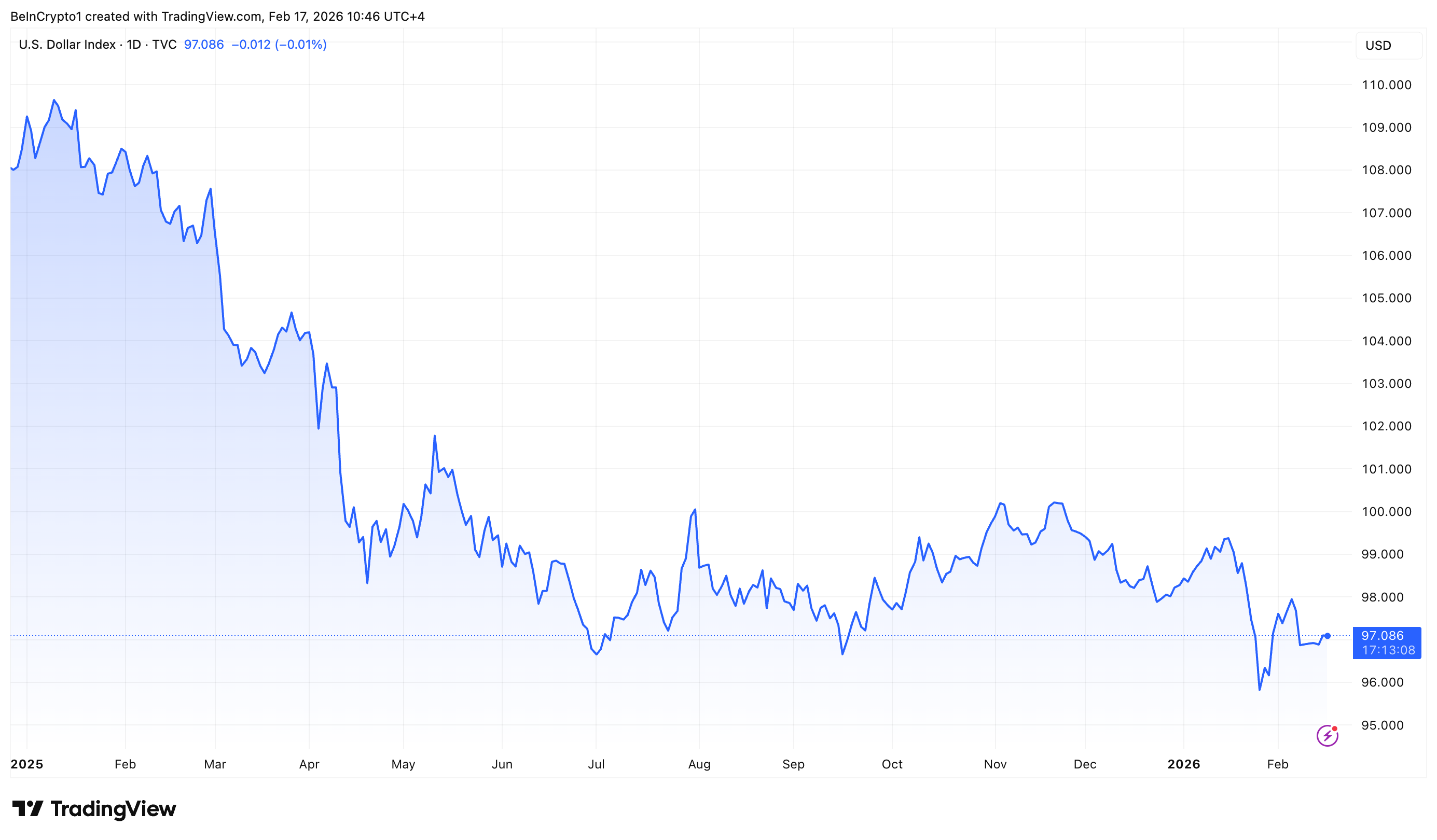 US Dollar Index (DXY) Performance. Source: TradingView
DXY at Crossroads as Traders Debate Breakdown Versus Bottom
Market analysts are increasingly pointing to technical signals that point to further downside for the US dollar. Trader Donny forecasted that the index could decline below the 96 level.
“I’m seeing another bearish leg forming on the DXY,” he wrote.
Other analysts are looking even further out. The Long Investor highlighted longer-term charts that, in his view, outline a much deeper structural decline. He suggested that bearish targets could extend into the 52–60 range over the 2030s.
However, some analysts see potential for a dollar rebound. The Macro Pulse stated recent behavior suggests the index may be entering a “potential bottoming process.”
“My base case is a recovery toward 103–104 by July 2026,” the post read.
Implications for Cryptocurrency Markets
A weaker US dollar typically creates more supportive conditions for risk assets, including cryptocurrencies. When the dollar declines, investors may rotate into alternative assets in search of higher returns or protection against the depreciation of fiat currencies.
Bitcoin, in particular, is frequently positioned as a hedge against monetary debasement. This can strengthen its appeal during periods of sustained dollar weakness.
Still, the connection between dollar weakness and crypto gains is not always straightforward. Broader macroeconomic conditions remain critical.
If a softer dollar reflects slowing US growth or rising recession risks, investors may adopt a defensive stance. In such an environment, capital could flow into traditional safe havens such as gold rather than into more volatile digital assets.
Recent positioning data supports that caution. Bullish bets on gold have increased, signaling that many investors remain optimistic about the metal’s prospects.
As the dollar slips and fund managers maintain historically bearish positions, the coming months will test whether crypto markets can capitalize on shifting currency dynamics, or whether persistent macro uncertainty will continue to temper upside momentum in digital assets.
0
0

 Manage all your crypto, NFT and DeFi from one place
Securely connect the portfolio you’re using to start.


