
US Tariffs: The Alarming Policy Paradox Weighing Heavily on the Dollar

0
0

BitcoinWorld
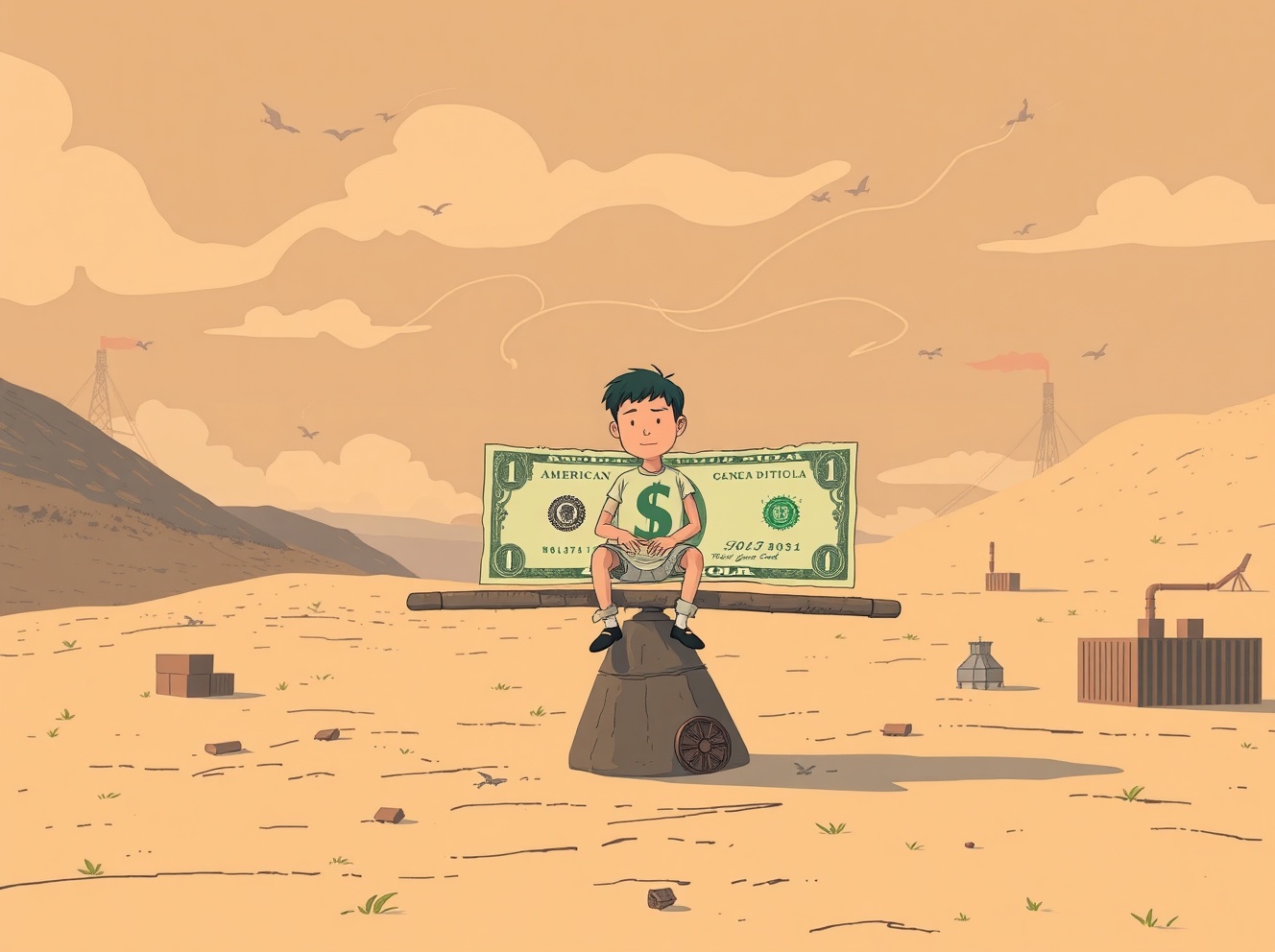
US Tariffs: The Alarming Policy Paradox Weighing Heavily on the Dollar
WASHINGTON, D.C. – May 15, 2025: A complex and seemingly contradictory economic phenomenon is unfolding as new US tariffs exert unexpected downward pressure on the US Dollar, creating what analysts term a ‘policy paradox’ that challenges conventional market wisdom and complicates the Federal Reserve’s strategic calculus.
The Core US Tariffs Policy Paradox Explained
Historically, protectionist trade measures like tariffs often strengthen a nation’s currency. These measures typically reduce imports, improve the trade balance, and can attract capital seeking shelter from trade disputes. However, the current US tariff strategy is producing the opposite effect. Consequently, the Dollar finds itself in an unusual position. Market participants are reacting not to the tariffs themselves, but to their anticipated secondary consequences. Specifically, analysts point to several interconnected factors driving this paradox.
- Growth Dampening Effects: Tariffs act as a tax on trade, potentially slowing economic growth by raising costs for businesses and consumers.
- Inflationary Pressures: Higher import costs can feed into domestic inflation, complicating the Federal Reserve’s monetary policy path.
- Retaliation Risks: Trading partners may enact countermeasures, harming US exporters and creating global economic uncertainty.
- Investment Uncertainty: Long-term capital investment may stall due to unpredictable trade policy, weakening the Dollar’s fundamental appeal.
This situation creates a feedback loop where policy intended to bolster economic sovereignty inadvertently undermines currency strength. Market data from the past quarter clearly illustrates this trend, with the Dollar Index (DXY) showing notable sensitivity to tariff announcement timelines.
Market Mechanics and Currency Reactions
The immediate financial market reaction provides clear evidence of the paradox. Following the latest tariff announcement, the US Dollar Index fell against a basket of major currencies, including the Euro and Japanese Yen. This movement defied many short-term forecasts. Traders and algorithms quickly priced in a more cautious outlook for US economic performance. Furthermore, bond markets signaled concerns about growth, with Treasury yields dipping as capital sought safe-haven assets that were not directly tied to US trade policy volatility.
Forex analysts at major institutions have revised their near-term Dollar forecasts accordingly. A recent report from JPMorgan Chase noted, “The traditional playbook is broken. Tariffs are no longer a simple bullish signal for the Dollar. Markets are now discounting the longer-term growth impairment and policy uncertainty.” This sentiment is echoed across trading desks, where the focus has shifted from the direct balance-of-payments effect to the broader macroeconomic implications.
Expert Analysis: The Federal Reserve’s Dilemma
The policy paradox places the Federal Reserve in a difficult position. Typically, a weaker Dollar could be seen as supportive for exports, partially offsetting the drag from tariffs. However, the same tariffs are also stoking imported inflation. This forces the Fed to choose between combating price rises and supporting growth—a classic central bank dilemma now amplified by trade policy. Dr. Anya Petrova, Chief Economist at the Brookings Institution, explains the bind: “The Fed now faces imported cost-push inflation from tariffs simultaneously with potential demand destruction. Their reaction function becomes incredibly complex, and this uncertainty is itself a weight on the Dollar.” Historical data shows that in past episodes of trade tension, the Dollar’s performance has been highly dependent on the Fed’s perceived policy path more than the trade actions alone.
Global Context and Historical Comparisons
This episode is not entirely without precedent, though its scale is significant. Examining past trade actions provides crucial context. For instance, the steel and aluminum tariffs imposed in 2018 initially provided modest, short-lived support for the Dollar, which then faded as growth concerns mounted. The current policy environment differs due to its broader scope and the existing global economic backdrop of moderating growth. Key trading partners and competitors are adjusting their own policies in response.
| Factor | Traditional Expectation | Current Paradox Outcome |
|---|---|---|
| Trade Balance | Improves, strengthening currency | Improves marginally, but growth fears dominate |
| Capital Flows | Seek safe-haven in issuing country | Seek alternative havens or stay sidelined |
| Central Bank Policy | More hawkish due to inflation | Uncertain, potentially delayed tightening |
| Market Sentiment | Short-term bullish for domestic currency | Short-term bearish on growth prospects |
The European Central Bank and Bank of Japan are closely monitoring these developments. A persistently weaker Dollar could alter their own export competitiveness, potentially influencing their monetary policy communications. This global interplay adds another layer to the paradox, where a national policy decision creates international monetary ripples that can circle back to affect the originating economy.
Long-Term Implications for Trade and Finance
Sustained Dollar weakness driven by policy paradox carries several long-term implications. For multinational corporations, currency volatility becomes a major planning hurdle, potentially impacting earnings and investment decisions. For the US government, financing deficits could become more expensive if foreign demand for Treasury securities wanes alongside Dollar sentiment. Perhaps most importantly, the episode challenges the foundational notion of the US Dollar’s unassailable safe-haven status during periods of US-generated economic uncertainty.
Structural shifts in global supply chains, accelerated by trade policy, may also have lasting currency effects. As production relocates to other regions, demand for those regions’ currencies may rise organically, creating a more multipolar currency landscape over time. This gradual shift represents a fundamental, albeit slow-moving, consequence of the current policy environment.
Conclusion
The US tariffs policy paradox presents a clear case where intended economic armor functions as an unexpected weight. The Dollar’s decline is not a sign of policy failure in a vacuum, but a market verdict on the complex trade-offs between protectionism, growth, inflation, and monetary policy. Navigating this paradox requires policymakers to acknowledge these interconnected feedback loops. The ultimate resolution will depend on whether growth or inflation proves to be the dominant force, and how deftly the Federal Reserve can steer between them. The world’s financial markets will be watching this delicate balance closely, as the outcome will resonate far beyond US borders.
FAQs
Q1: Why would US tariffs weaken the Dollar instead of strengthening it?
Typically, tariffs improve the trade balance, which can strengthen a currency. However, markets are currently focusing more on the potential for tariffs to slow US economic growth and create uncertainty, which reduces the Dollar’s attractiveness to investors.
Q2: What is the main risk for the Federal Reserve in this situation?
The main risk is a policy dilemma. Tariffs can cause inflation (requiring higher interest rates) while also potentially slowing growth (requiring lower rates). This conflicting data makes setting monetary policy exceptionally challenging.
Q3: How are other countries’ currencies reacting to this US policy paradox?
Currencies like the Euro and Yen often strengthen against the Dollar in this environment, as capital may seek alternatives. However, their central banks are also cautious, as a much weaker Dollar could hurt their own exporters.
Q4: Could this paradox lead to a lasting decline in the US Dollar’s global role?
In the short term, it’s a cyclical pressure. For a lasting decline, sustained loss of confidence or a structural shift away from Dollar-denominated trade would be needed. The current paradox highlights a vulnerability but does not immediately dethrone the Dollar.
Q5: What should investors watch to gauge if this paradox is deepening or resolving?
Investors should monitor key indicators: the US Dollar Index (DXY) trend, Treasury yield movements, statements from the Federal Reserve regarding growth versus inflation, and hard data on US import/export volumes and economic growth forecasts.
This post US Tariffs: The Alarming Policy Paradox Weighing Heavily on the Dollar first appeared on BitcoinWorld.
0
0


 Manage all your crypto, NFT and DeFi from one place
Securely connect the portfolio you’re using to start.


0
0

