
Whales Scoop Up 240 Million Dogecoin While the Price Falls: What Is Behind It

0
0
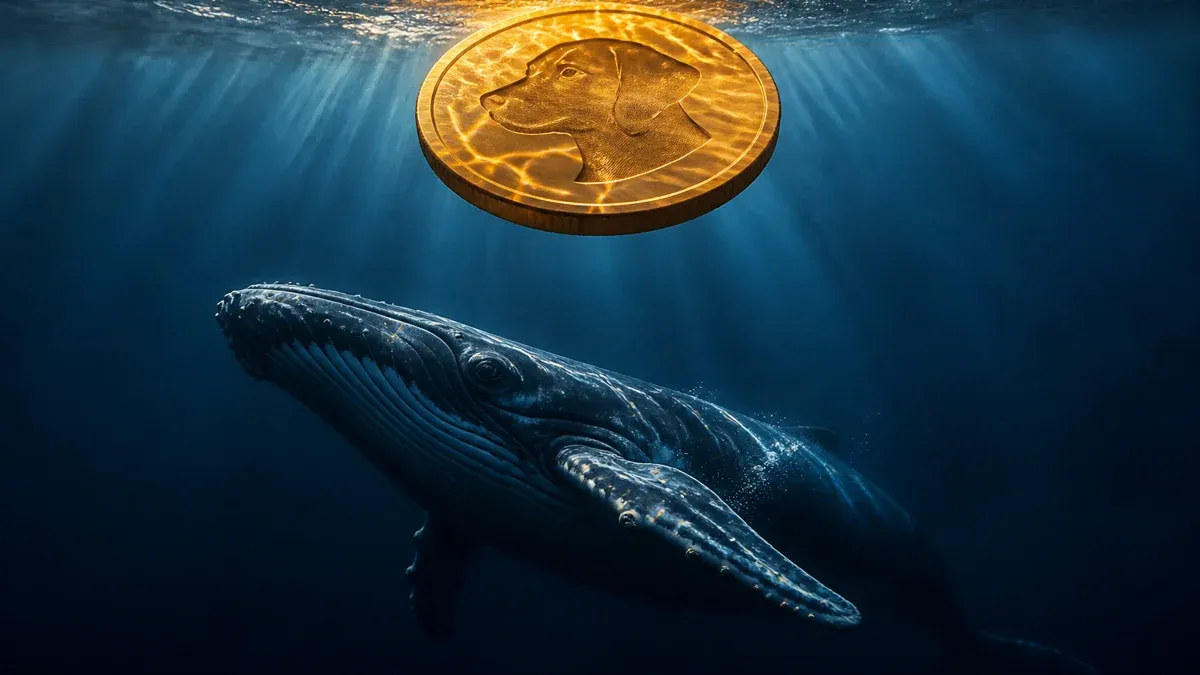
Dogecoin is caught between two opposing moves. Large addresses collected 240 million DOGE between September 9 and 14, while over the same period the price slipped from $0.091 to $0.081. On Sunday, September 20, 2026, DOGE stands at $0.0847 according to CoinGecko data, the equivalent of 7.4 cents, and is therefore 3.5 percent below the previous day.
What is documented in this article is the price data, the purchases by the large addresses and the fund figures. Where the text turns to further price movement, it is an assessment by the editorial team, and we mark it as such.
Dogecoin price: the figures at a glance
The daily range ran from $0.0846 to $0.0911. Over the week DOGE is up 1.4 percent, over 30 days 0.4 percent. Market capitalization stands at around $13.2 billion, which puts Dogecoin in 12th place. DOGE worth roughly $1.04 billion changed hands within 24 hours. Just under 156 billion tokens are in circulation, and unlike Bitcoin there is no upper limit: new ones arrive every minute. The price is a good 88 percent away from its all-time high of $0.73 from May 2021.
240 million DOGE in five days: what the large addresses did
The figure comes from a blockchain analysis by the analyst Ali Martinez and was picked up on September 16 by CoinGape. Over those five days the price fell, and the large addresses bought all the same. At a price of around $0.085, 240 million DOGE amount to some $20 million.
A second figure from the same week belongs alongside it: according to CoinGlass, $39 million more flowed out of the trading venues than arrived there. Anyone withdrawing tokens from an exchange cannot sell them at short notice. That is exactly what leads many articles to conclude that a price rise is imminent. It is not that simple, and the next section explains why.
Why outflows from the exchanges are not a buy signal
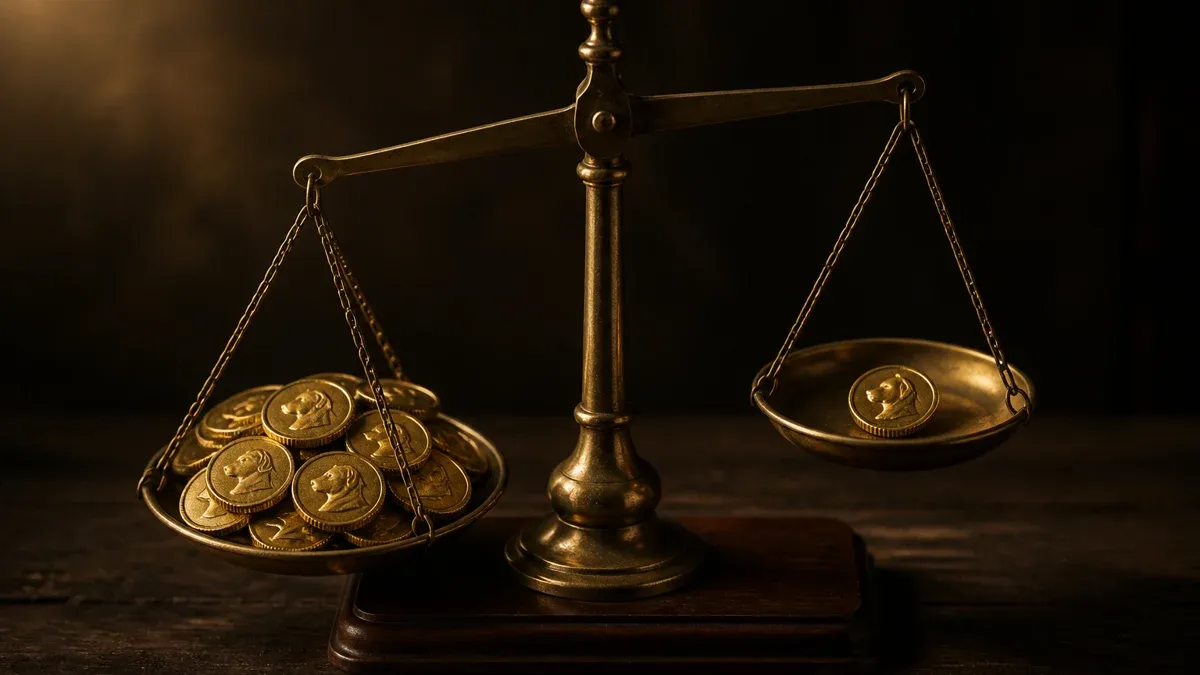
A wallet holding many tokens does not necessarily belong to someone betting on rising prices. Exchanges shift holdings between their own addresses, custodians pool customer balances, and a single move from a hot to a cold wallet looks like a purchase in the analysis. The blockchain shows addresses, not intentions.
Only one thing about those 240 million is therefore solid: the tokens are now somewhere else. Whether a fund, an exchange or a handful of private individuals sits behind them, the figure does not say. Anyone reading it as a reason to buy is leaving the territory of what has been measured.
The funds paint a different picture
On September 16, money flowed into Grayscale's Dogecoin fund according to SoSoValue data, specifically $248,510. That is the entire movement of the day across the exchange-traded products. Two further funds, the one from Bitwise and TDOG from 21Shares, recorded no inflow at all that day.
One fund collects, another shuts down
The Bitwise fund is being wound up in October. What that means for shareholders and which deadlines apply we have written up in our article on the closure of the Bitwise Dogecoin ETF. Placing both figures side by side produces a sober picture: $20 million in purchases by individual large addresses stands against a quarter of a million via the regulated route. The institutional demand so often invoked is still small in the case of Dogecoin.
Dogecoin and taxes: holding period and exemption limit
In Germany, crypto assets held privately are subject to the one-year holding period under Section 23 of the Income Tax Act. Anyone holding for longer than a year and selling afterwards pays no tax on the gain. Anyone selling earlier pays tax on the gain at their personal rate, provided all private disposal transactions of the year together reach the exemption limit of 1,000 euros.
Two things are often overlooked here. First, it is an exemption limit and not an allowance: at a gain of 1,000 euros everything stays tax-free, at 1,001 euros the full amount becomes taxable. Second, every swap counts as a sale, including swapping DOGE for another coin. The period then starts again.

Buying Dogecoin: what you check before getting in
Three checks are worth making before you react to the movement of large addresses. First, the provider: platforms serving customers in Germany have needed authorization as a crypto asset service provider under the EU regulation MiCA since the transition period ended at the close of 2025. Second, the order size: with a token that swings between $0.0846 and $0.0911 within a single day, you are better off spreading your entry across several purchases. Third, custody: anyone intending to hold for longer needs a wallet whose seed phrase they control themselves.
Which exchanges combine low fees with EU authorization is set out in our overview of the best crypto exchanges.
Dogecoin price: which levels count now
On the downside, the daily low at $0.0846 serves as a first marker, below it lies the area around $0.079, which the price last saw on September 16. On the upside, the daily high of $0.0911 is the next hurdle, followed by the round mark of 10 cents. Our scenarios for the coming months are set out in the Dogecoin price prediction.
Our assessment: purchases by large addresses are an indication, not a roadmap. With Dogecoin there is the added point that the price has for years depended more on sentiment and attention than on figures from the network. Anyone getting in should decide beforehand at which price they will secure gains or cap losses, rather than settling that under the impression of a headline.
Dogecoin and the whales: what you take away from it
- The 240 million are documented, their meaning is not. The blockchain shows addresses, not intentions. A move into self-custody looks exactly like a purchase.
- The regulated route is small in the case of Dogecoin. An inflow of $248,510 on September 16 is matched by the closure of a second fund, as set out in our article on the ETF closure.
- Document every swap. Swapping into another coin is also a sale and restarts the holding period. A crypto tax tool records that automatically.
(As of September 20, 2026, 12:30 p.m. This article is not investment advice. Prices and fee structures change; check the terms with the provider before you buy.)
0
0

 Manage all your crypto, NFT and DeFi from one place
Securely connect the portfolio you’re using to start.


