0
0

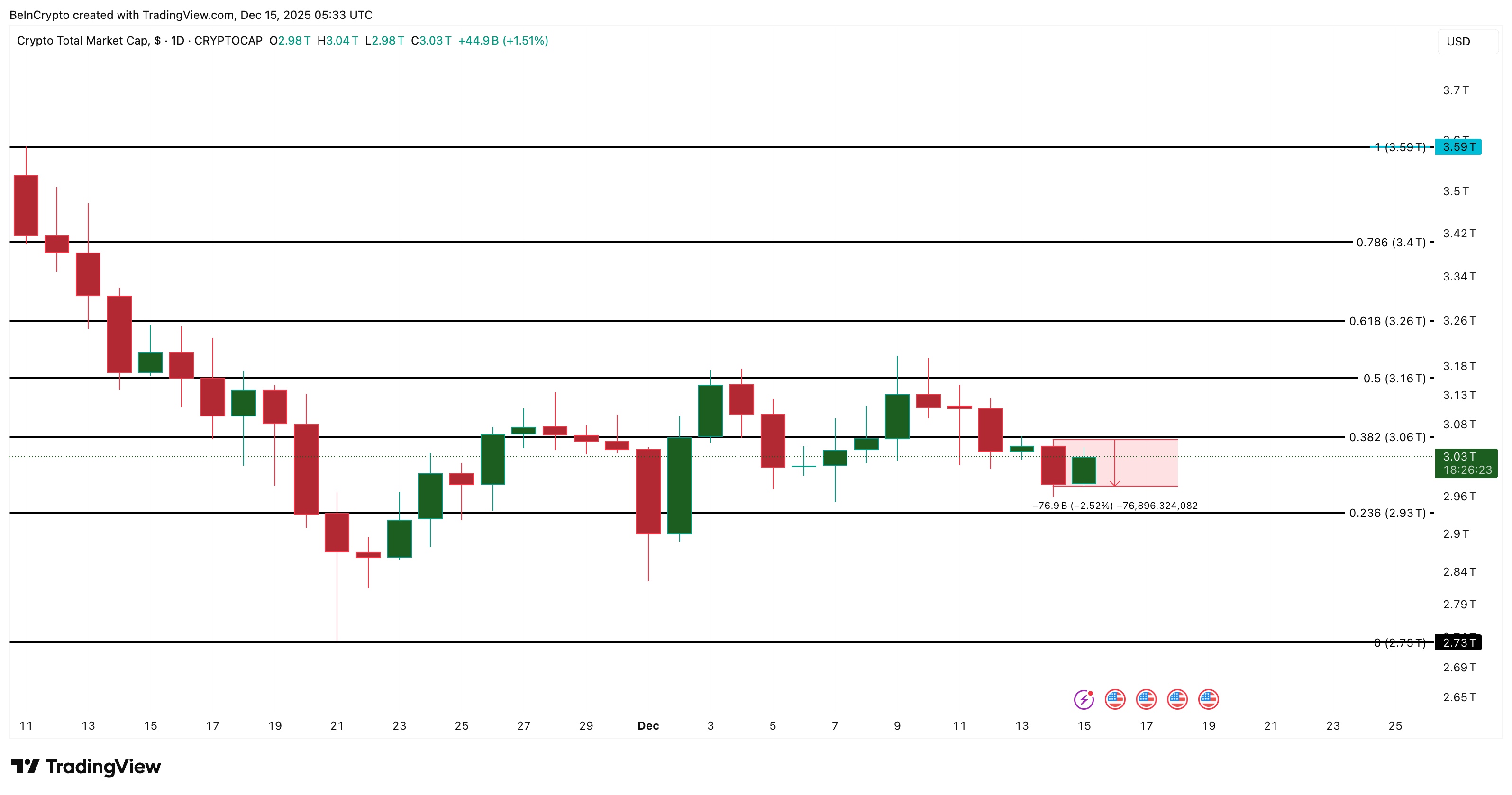
The crypto market tried to scare traders overnight. Total crypto market cap dropped about 2.5% from yesterday’s high, then bounced back most of the losses. It now sits just 0.5% lower on the day, holding above the key $2.93 trillion level — a key decision point.
Bitcoin and Ethereum barely moved through the shakeout. Bitcoin is flat to slightly down (0.4%), while Ethereum is quietly green (up 0.5%). Zcash (ZEC), meanwhile, didn’t receive the bounce alert and is down another 6.6%, making it the weakest large-cap token for a second straight session.
In the news today:-
The crypto market’s rebound since correcting 2.5% from yesterday’s high has been real, but it has also been fragile. The price action stalled quickly near a key resistance zone, explaining why the market is still in the red.
The market continues to respect the $2.93 trillion level as firm support. Buyers stepped in aggressively around this zone, preventing a deeper slide toward $2.73 trillion. However, upside strength remains capped near $3.06 trillion, a resistance area the market has failed to reclaim convincingly over recent sessions. Until that level changes into support, rallies remain vulnerable to stalling.
 TOTAL Price Analysis: TradingView
Want more token insights like this? Sign up for Editor Harsh Notariya’s Daily Crypto Newsletter here.
Bitcoin’s behavior helps explain this hesitation. BTC corrected roughly 2.7% from its local high before stabilizing, and the broader market moved in sync. This tight correlation has been unusually strong, meaning hesitation in Bitcoin quickly limits upside across altcoins.
Macro uncertainty is adding to that pressure. Polymarket odds now price a near-certain 25 basis point rate hike from the Bank of Japan. Markets are already front-running the risk of a yen carry trade unwind, which historically pressures both equities and crypto. That could be the primary reason why the crypto market leans bearish today.
In short, the rebound held support, but resistance and macro caution are still in control.
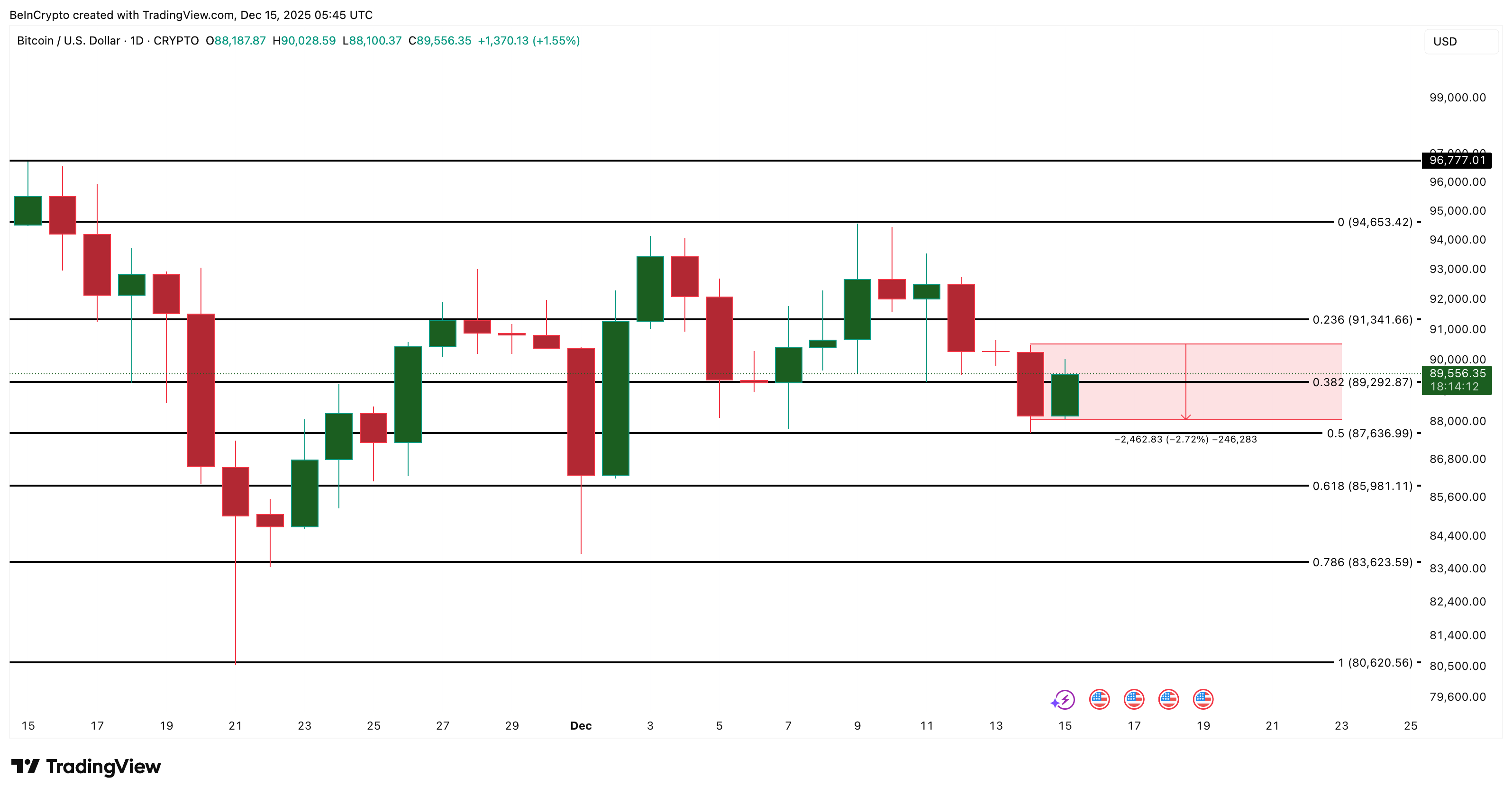
Bitcoin also pulled back, dropping about 2.7% from yesterday’s high before recovering most of the move. The decline was sharp, but the response mattered more. Buyers stepped in quickly, keeping Bitcoin above key support zones and preventing a deeper slide.
One reason for the dip may have been large, visible selling from Wintermute. Blockchain data shows the market maker moved over $1.5 billion worth of Bitcoin across exchanges in short bursts.
That kind of flow can pressure price in the short term, especially in a thin market. Still, the selling did not trigger a breakdown.
Bitcoin continues to hold above the $89,200 zone, which has acted as a demand zone throughout December. As long as this range holds, downside risk stays limited. On the upside, Bitcoin needs to reclaim $91,300 to regain short-term momentum. That level has capped price since December 13.
 Bitcoin Price Analysis: TradingView
If $91,300 flips into support, the next key test sits near $94,600. A move above that zone would open the path toward $96,700 and higher. Until then, Bitcoin remains in a tight range, absorbing selling rather than accelerating lower.
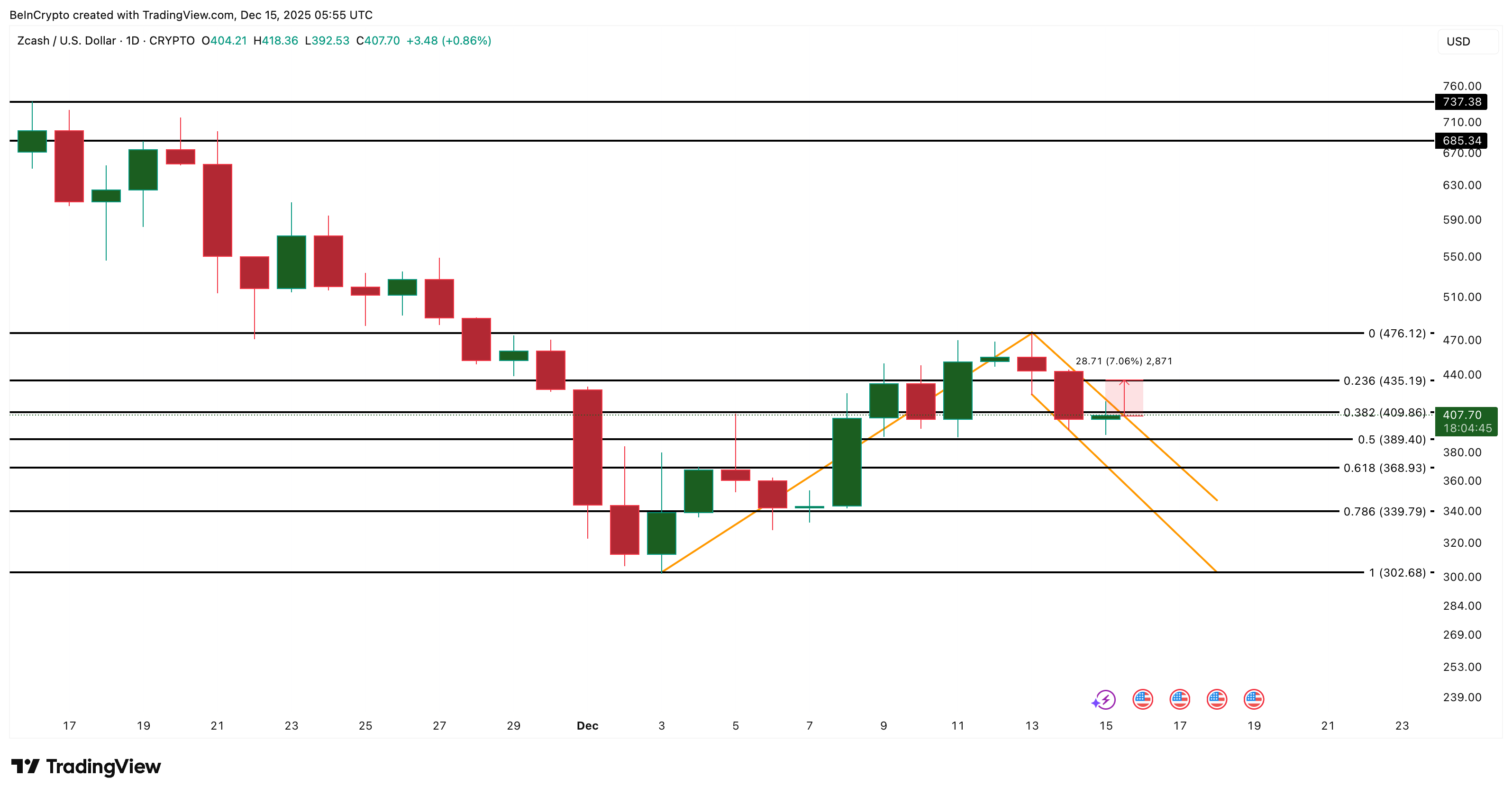
While most of the crypto market stabilized alongside Bitcoin’s rebound, Zcash did not follow. ZEC fell nearly 7% over the past 24 hours, making it one of the weakest large-cap movers during a session where correlations across major assets remained unusually high.
The divergence stands out. As Bitcoin and the broader market recovered part of their losses, Zcash failed to attract the same dip-buying interest. On-chain and derivatives data show traders increasingly leaning to the downside, even if leverage remains relatively modest.
Price action reflects that caution. Zcash is still trading within a broader consolidation structure rather than an outright breakdown, but momentum has clearly stalled. The $435 level now acts as the key line in the sand. A clean daily close above it would signal renewed upside interest and open the path toward higher resistance zones near $685 and $737.
 ZEC Price Analysis: TradingView
Until that happens, confidence remains fragile. Short exposure has increased, not aggressively, but steadily. This suggests traders are positioning defensively rather than betting on a sharp reversal.
On the downside, a loss of $368 would weaken the structure significantly and raise the risk of deeper retracement.
0
0
 Manage all your crypto, NFT and DeFi from one place
Securely connect the portfolio you’re using to start.


0
0